
Text resize: A A
Change contrast

Goodbye communism

The pace of dealing with the communist past has been uneven across Central and Eastern Europe. While Poland intensely debated de-communization in the 1990s,

December 8, 2025 - Kinga Gajda Michał Kuryłowicz

From revolution to souvenirs

The selling of communism across Central and Eastern Europe reveals more than the region’s ingenuity in repurposing its past – it exposes how memory

December 8, 2025 - Jovana Janinovic

Sensory memory and creating a community of memory

The feeling of coarse toilet paper bought after hours in a queue, the scent of sweat on a train to a Bulgarian summer camp, the fizz of Soviet shampanskoye

December 8, 2025 - Magdalena Banaszkiewicz

The memory of forgetting

After the end of communist rule, many societies sought recognition of their own wartime suffering as part of Europe’s shared memory. Although the Allies

December 8, 2025 - Dymitr Romanowski

Rediscovering the People’s Poland

In Poland, after the initial rejection of the legacy of the Polish People’s Republic, a gradual re-evaluation of the communist period has begun. Certain

December 8, 2025 - Elżbieta Żak

The gradual “forgetting” of communism in Poland

Featured in communist times as a symbol of abductions, the black Volga has lost its aura now. Today few young Poles even recognize the car or recall the

December 8, 2025 - Aleksander Niepokój Michał Kuryłowicz

Recovering Moldovan identity through literature

Contemporary Moldovan novels offer fresh perspectives on how linguistic, social and ethnic identities are formed in the shadow of the Soviet past. Written in

December 8, 2025 - Oxana Gherman

Looking for heroes. Experiences in Latvia

Latvia’s understanding of heroism has been rewritten repeatedly over the past century, shaped in turn by Soviet occupation, the struggle for independence

December 8, 2025 - Vita Zelče

Lithuania’s memory of communism

The opening of Grūtas Park, an open-air museum with statues from the Soviet era, in 2001 provoked considerable public debate, with leading politicians

December 8, 2025 - Paweł Plichta

Russia’s religion of victory

In Russia, the May 9th Victory Day celebration has become a disciplinary date. It enforces participation in the cult and delineates the boundaries of loyalty to the state. Outside, the myth of Soviet victory of fascism has become one of the central instruments of Russian foreign policy.

December 8, 2025 - Bartłomiej Brążkiewicz

Poland’s borderland on fire

Russian hybrid attacks are meant to increasingly disrupt our everyday reality. When positioned together, these incidents form a troubling pattern: disinformation campaigns, foreign intelligence groups, acts of sabotage, explosives discovered in cemeteries or mailed in envelopes – all contributing to a general state of anxiety and heightened alert. Strengthening preparedness to meet security challenges is one of the most reliable ways to mitigate such concerns.

December 8, 2025 - Jan Farfał

Establishing NATO’s “East Shield”

The situation on the Polish eastern border has demonstrated that threats to Poland and the European Union are no longer purely military. Hybrid warfare directed westwards is made up of a composite of orchestrated migration, cyberattacks, disinformation and acts of border sabotage. This complex threat landscape demands an equally sophisticated and multidimensional response.

December 8, 2025 - Alicja Zyguła Tomasz Stępniewski

When grief becomes routine

After the start of the full-scale invasion, I began recording the first stories of those affected by the war. Every conversation struck me. The pain of others, which I had to let pass through me, was so exhausting that I still do not remember what happened to me in those months. Over the course of three years, I wrote down more than 200 stories. I remember each of them. They are a huge part of my consciousness.

December 8, 2025 - Polina Vernyhor

Taking Ukraine’s corruption seriously

Ukraine’s fight against corruption has become a cornerstone of both its democratic transformation and EU integration efforts. The current political establishment rose to power with Zelenskyy’s campaign promise of zero tolerance for corruption. Yet, despite undeniable progress in the last few years, it remains deeply systemic and persistent.

December 8, 2025 - Alessandro Vitiello

Ukraine’s education reform amidst the war

In Ukraine, the new school curriculum allocates between 70 and 105 hours per school year to civic education and history for fifth to eighth grade pupils. This amounts to just one hour per week for Ukrainian history, half an hour for world history and half an hour for civic education. In Russia, the situation is the reverse.

December 8, 2025 - Oleksii Lionchuk

A test of Sandu’s success

Have Moldova’s ruling leaders correctly interpreted the outcome of the recent elections? If they take the results as proof of their own infallibility and political invincibility, the country’s European path could encounter serious obstacles. This is especially true as Russia may change its approach towards Moldova. And that is hardly good news.

December 8, 2025 - Piotr Oleksy

Moldova’s pro-West forces need to set a new agenda

In the September 2025 parliamentary elections, Moldova’s pro-West Action and Solidarity Party won with 50.20 per cent. During the campaign the party promised nothing new, and it appears to have been enough. In the end, Moldovans voted for no change and trusted the current set of affairs. The new goal is to sign the EU accession treaty by 2028 and for this to happen, a set of ambitious reforms should be implemented and the government should look beyond adopting new European laws.

December 8, 2025 - Dan Nicorici

Shifting ground in Russia–Azerbaijan relations

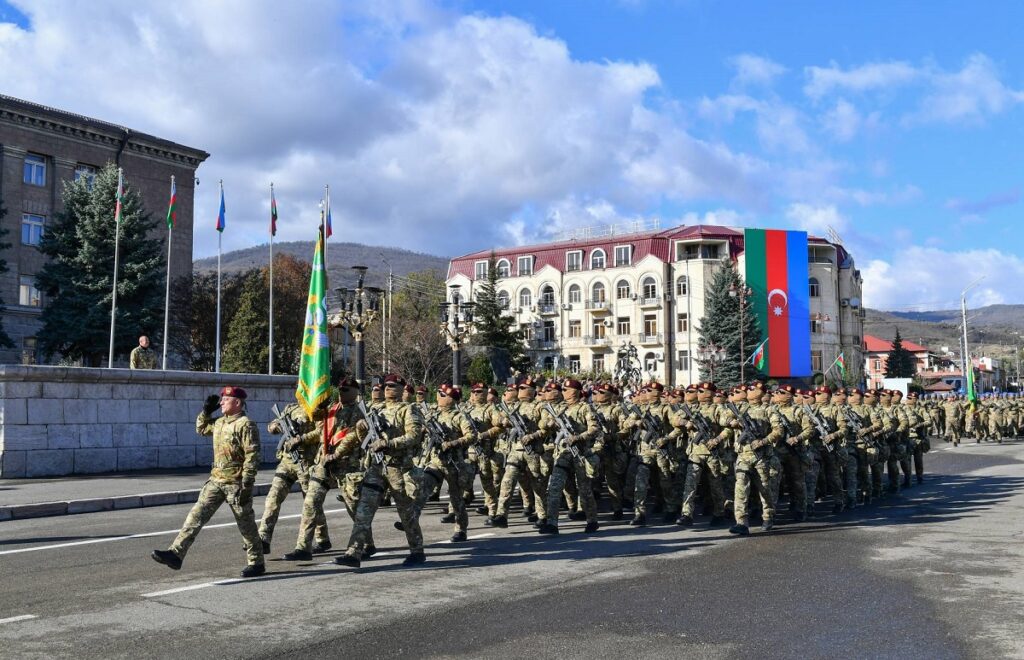
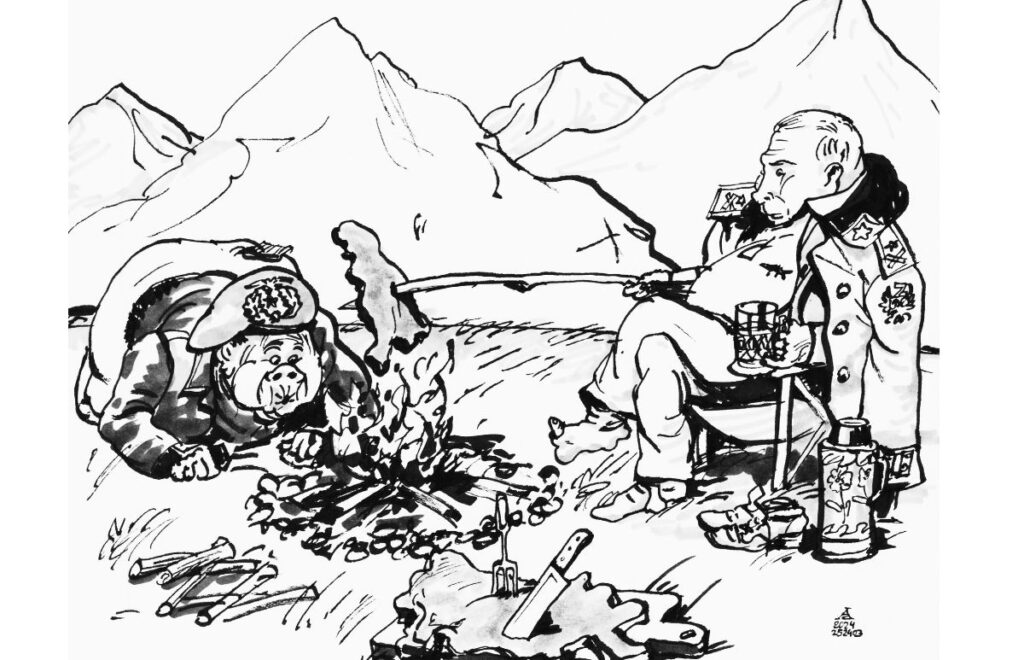
The tensions between Moscow and Baku seemed to thaw in Dushanbe this past October, as Vladimir Putin and Ilham Aliyev met for the first time since the catastrophic downing of an Azerbaijani passenger jet last year. In a rare gesture, Putin offered a guarded apology – a move seen as an attempt to halt months of escalating hostility. Yet, beneath the optics of reconciliation, the meeting revealed the limits of the two leaders’ once pragmatic relationship.

December 8, 2025 - Murad Muradov

Putin’s goal has always been a greater Russia

An interview with Ann Linde, a Swedish politician of the Social Democratic Party and former minister for foreign affairs. Interviewer: Adam Reichardt

December 8, 2025 - Adam Reichardt Ann Linde

Our duty is to safeguard the memory of Auschwitz

A conversation with Piotr Cywiński, director of the Auschwitz-Birkenau State Museum. Interviewer: Aureliusz Marek Pędziwol

December 7, 2025 - Aureliusz M. Pędziwol Piotr Cywiński

A stop off at the gambling hall on the way to school

In rural Romania, gambling rooms stand just steps away from schools, drawing in students long before lessons start. Despite legislation banning betting halls near educational institutions, lax enforcement and local habits mean minors still find easy access – a reflection of how gambling regulation often fails to reach beyond the country’s big cities.

December 7, 2025 - Raluca Cristea

The fight to preserve Kyiv’s past and Ukraine’s future

Beneath one of Kyiv’s most iconic squares lies an archaeological site that reveals the story of Ukraine’s past and its deep Orthodox Christian roots. Despite its importance to Ukrainian identity, activists are fighting daily to protect it from corrupt developers. Their struggle takes on even greater meaning amidst the ongoing war, as Ukrainians continue to defend not only their land but also their heritage.

December 7, 2025 - Theodore Griffin

How Poland stole UK universities’ lunch in Africa

In recent years, Poland has quietly emerged as an unlikely magnet for African students, drawing thousands away from traditional destinations like the United Kingdom. Attracted by low tuition fees, accessible visas, and good educational standards, young Africans are finding in Central and Eastern Europe what Britain can no longer easily offer: affordability and opportunity.

December 7, 2025 - Ray Mwareya

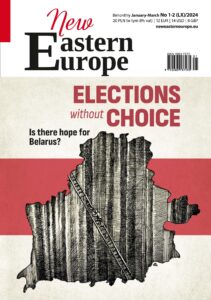
Belarus between a spin dictatorship and a dictatorship of fear

Five years after the 2020 protests, Belarus has entered a phase of authoritarian consolidation, further entrenching its overtly dictatorial character and deepening its dependence on Russia. Real power remains concentrated in the hands of the entrenched ruling elite, which has redoubled its efforts in the realms of propaganda, historical policy, and state ideology.

December 7, 2025 - Maxim Rust

An alliance of creepy uncles

In a letter to the Belarusian dictator Alyaksandr Lukashenka, Donald Trump wrote that he and his wife were “praying for your health and well-being, as well as for further progress in pursuing our common goals on behalf of the people of the United States and Belarus”. Equally charming towards Trump, on the day of the release of political prisoners Lukashenka said: “our main task is to stand by Trump and help him in his mission to establish peace. He stopped seven wars and conflicts, or six”.

December 7, 2025 - Kacper Wańczyk

A dictator’s attempt to enforce timelessness

Alyaksandr Lukashenka’s obsession with time suggests that it has become one of the regime’s main enemies. To counter it, the regime has been mobilizing considerable resources in an effort even if not so much to win the battle, but at least to delay the inevitable.

December 7, 2025 - Tatsiana Astrouskaya

In search of a new “Global East”

Belarus has long been preparing for the arrival of a new world order. It has been working on it politically, economically, diplomatically and culturally, but above all, through sustained propaganda efforts. The question is: what exactly does Minsk mean by referring to the Global East

December 7, 2025 - Justyna Olędzka

Hybrid relations in times of war

The deterioration of Belarusian-Ukrainian relations after February 2022 did not mean the absence of Belarusians on the Ukrainian side. On the contrary, while Lukashenka aligned himself with Moscow and allowed Russian forces to use Belarusian territory for the assault on Kyiv, many of his opponents chose a different path.

December 7, 2025 - Yevhen Magda

Losing people, losing growth

Over the past five years, Belarus has faced a shrinking labour market, which is a serious problem for its economic future. While demographic factors have played a role in this regard, it is the large-scale emigration of Belarusians that has had the most damaging effects.

December 7, 2025 - Anastasiya Luzgina

From the classrooms to the farms

In Belarus, the rise in tuition-free education is most unlikely to be the result of a renewed commitment to social justice on the part of the country’s authoritarian leadership. More plausibly, it reflects an effort to forcibly fill vacant positions in the public sector, which has been increasingly caused by the large emigration of working-age people from Belarus.

December 7, 2025 - Aliaksandr Papko

Partners

Agencja digital: hauerpower studio krakow.
We use cookies to personalise content and ads, to provide social media features and to analyse our traffic. We also share information about your use of our site with our social media, advertising and analytics partners. View more
Cookies settings
Accept
Decline
Privacy & Cookie policy
Privacy & Cookies policy
Cookie name Active
Poniższa Polityka Prywatności – klauzule informacyjne dotyczące przetwarzania danych osobowych w związku z korzystaniem z serwisu internetowego https://neweasterneurope.eu/ lub usług dostępnych za jego pośrednictwem Polityka Prywatności zawiera informacje wymagane przez przepisy Rozporządzenia Parlamentu Europejskiego i Rady 2016/679 w sprawie ochrony osób fizycznych w związku z przetwarzaniem danych osobowych i w sprawie swobodnego przepływu takich danych oraz uchylenia dyrektywy 95/46/WE (RODO). Całość do przeczytania pod tym linkiem
Save settings
Cookies settings