
Text resize: A A
Change contrast

Hot Topics

Anti-colonial hybrid defence: how Ukraine’s resistance fights in the occupied territories

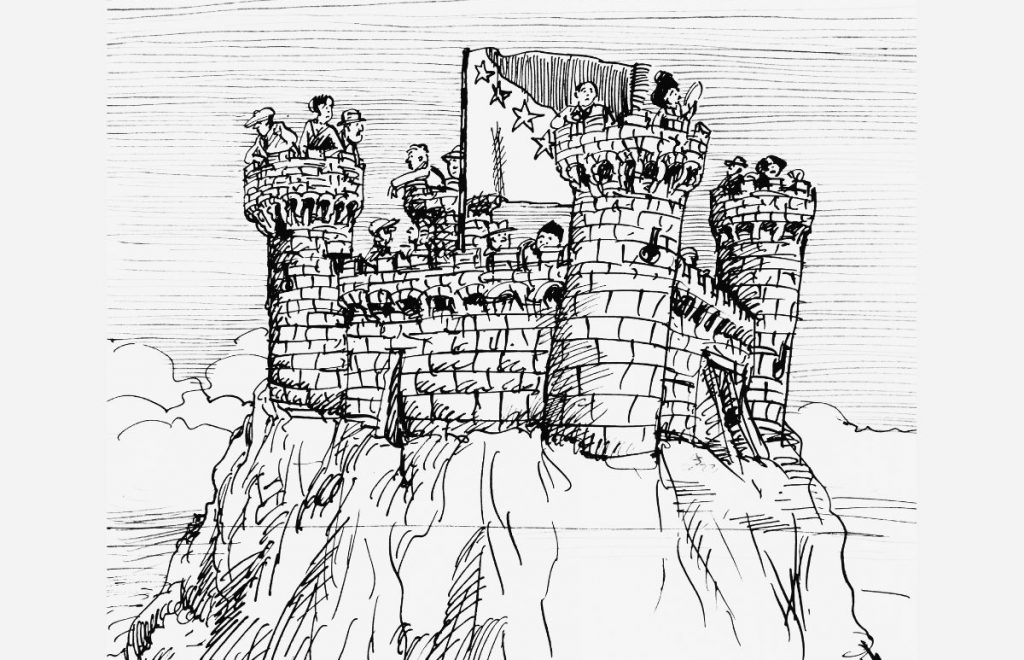
Between 2022 and 2025 Ukraine’s resistance managed to inflict persistent losses and disruption on Russian forces in the occupied territories. The kinds of operation – from bombs and bullets to spies and sabotage as well as raids and ambushes – show a comprehensive guerrilla strategy aimed at eroding the occupier’s control. Ukrainian partisans first blunted the occupation through fear and attrition and later became an integral part of Ukraine’s broader hybrid defence strategy to reclaim its territory.

“Join the ranks of Atesh – we call on every conscious person who is ready to help us defeat the occupiers to join our ranks,” reads a leaflet from Ukraine’s partisan movement. The leaflet was not distributed in Crimea, where Atesh – meaning “Fire” in the Crimean Tatar language – originated. Nor was it distributed in Mariupol, Berdyansk, Donetsk or Luhansk, where Atesh’s partisans have struck and continue to strike.
May 6, 2025 - Omar Ashour

Why the Trump-Putin negotiations on Ukraine might bury the Eastern Partnership

Since 2009 the main EU instrument of engaging and integrating with the region of Eastern Europe has been the Eastern Partnership programme. However, Russia’s full-scale invasion of Ukraine in 2022 and the evolving geopolitical situation have forced the EU to rethink its approach towards the aspiring states in the region. The new administration in the United States has added a new dimension to this complex dynamic. Where do these states stand in their bid for EU membership today?

With Donald Trump's return to the White House, the geopolitical dynamics surrounding the war in Ukraine have undergone significant shifts. Trump's rhetoric emphasizes the necessity of ending the war, whereas Ukraine’s priorities are not limited to the cessation of hostilities but also include the terms under which the conflict concludes, i.e. the provision of security guarantees.

May 5, 2025 - Tatevik Hovhannisyan

How Central and Eastern Europe perceives the Russian threat

The war in Ukraine has brought back debate on possible new aggression from Russia. But for Central and Eastern Europe, the risk of being annexed and erased from the map is centuries old. Without a doubt, the lessons of history are essential for forming judgments about today's events.

According to a pattern that was somewhat predictable, but with a completely unexpected impact, Donald Trump's return to the White House is upsetting the dynamics of international politics, creating insecurity and fuelling instability. It is also bringing back into focus a topic that periodically emerges in European public debate and was already discussed during the first term of Trump’s presidency: the need to establish a common European defence.

May 5, 2025 - Andrea Pipino

A time for unconventional leaders: Croatian assistance to Ukraine

With its remarkable post-conflict transformation, Croatia may have something unique to offer Ukraine at this critical juncture for European security. The Croatian government is punching above its weight in terms of humanitarian assistance, but the country will need to overcome serious domestic rifts and manage the failures of its transition to become a true geopolitical leader.

The first months of Donald Trump’s second term as US president have already put Ukraine’s existence and Europe’s prevailing security architecture at great risk. Trump’s style of foreign policy, including his undermining of long-held alliances and major international institutions, is creating a vacuum that may have to be filled by leaders in unlikely places. Croatia has the potential to be one of those leaders if Prime Minister Andrej Plenković wins out in a domestic political battle that exposes deep-seeded deficiencies in Croatian democracy.

May 5, 2025 - Alexandra Karppi

North Macedonia’s US pivot raises questions about its EU ambitions

North Macedonia has emerged as one of NATO’s most committed supporters of Ukraine, consistently ranking among the top military contributors. However, recent shifts in its foreign policy suggest a recalibration of its strategic priorities.

For the past three years North Macedonia has ranked among the top four NATO countries in military assistance to Ukraine. Despite its small size and a population of fewer than two million, this country has remained one of Kyiv’s top military contributors, supplying tanks, helicopters, attack aircraft, ammunition and other critical equipment. Its unwavering support has solidified its role as a key ally in Ukraine’s resistance against Russian aggression.

May 5, 2025 - Bojan Stojkovski

Rediscovering democracy in Serbia

Even if not acting recognizably political or within the frame of party politics in Serbia, the student movement is slowly and substantially changing the political culture. Students have helped people regain courage and optimism. Although they missed their lectures, they lectured the nation in democracy, solidarity and social responsibility.

Spring has arrived early in Serbia this year, but justice for the victims of the canopy collapse at the train station in Novi Sad still seems far away. The tragic event that took the lives of 16 people and severely injured one on November 1st, 2024 stunned the nation and soon came to symbolize the corruption of the country’s public officials. The initial grief was followed by reflective dismay. How can this seemingly ultramodern building, reconstructed (and dubiously overfunded) to great fanfare just a year ago, be so rotten? Can we trust our politicians about anything?

May 5, 2025 - Andrej Ševo

Overcoming the crisis of hope

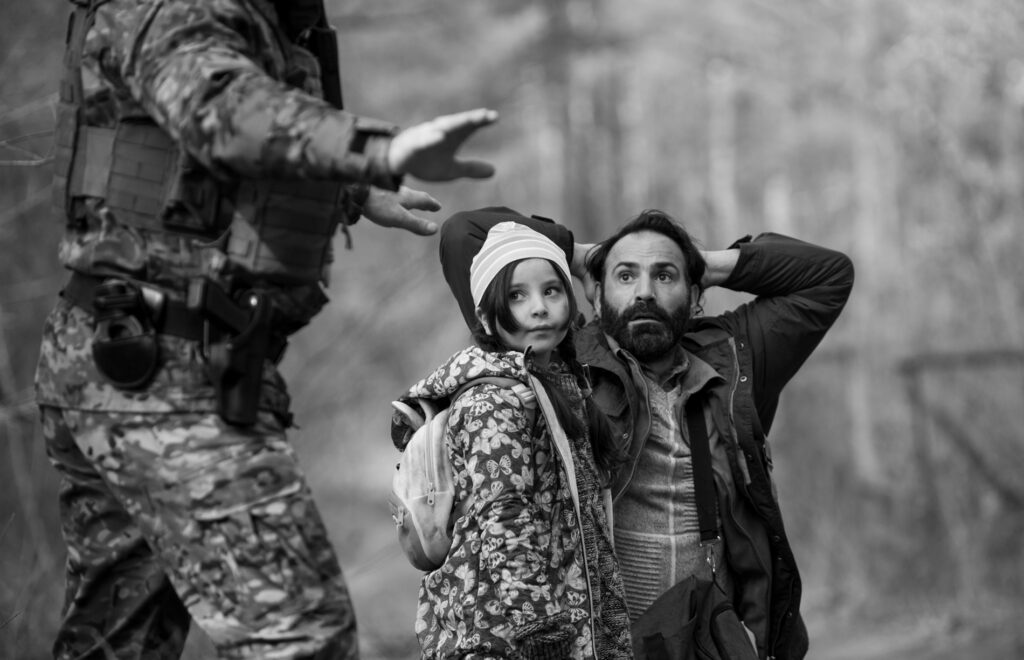
An interview with Agnieszka Holland, a Polish film director. Interviewer: Joanna Mosiej, editor in chief of the Sestry magazine

JOANNA MOSIEJ: You once said that your biggest dream is for the world to wake up and for us to have a future. Are we now living in a reality that resembles the Weimar Republic in its final days? Meaning, there is no hope and no return? That history needs to repeat itself?

AGNIESZKA HOLLAND: I am worried that it will be difficult to reverse from this path, unless there is a true will to do so. Of course we know that hope is what dies last, but this hope needs to be a collective, and not individual, experience. At this moment, when I am observing those who decide on our fate, I see that they neither have any ideas, nor will. And there is no courage.

May 5, 2025 - Agnieszka Holland Joanna Mosiej

A pagan canary in a Catholic coal mine

All across Eastern Europe a decline in membership in long-established religions is being counterbalanced by rising interest in various alternative forms of religion and spirituality. The case and struggles of Romuva, a neo-pagan religious movement that claims that its traditions go back to the ancient period before the Christian conversion of Lithuania, illustrate the tensions between heritage, identity and modern religious norms.

In discussions on the development of democracy in post-Soviet societies in Eastern Europe, the role of religion is not often accorded great importance by political scientists. Yet, a more sociological perspective reveals that religion often serves as a driving factor in public sentiment, policy debates and political decisions. While the constitutions of Eastern European countries generally guarantee a generic freedom of religion, the question of how this freedom plays out for particular religious groups is far more complicated.

February 28, 2025 - Michael Strmiska

Oriental or local? Poland’s Tatar community

The Tatars of Poland remain one of the country’s most enduring ethnic minorities. Arriving in the area as early as the 14th century, this group has maintained its own distinctiveness while adapting to many wider Polish customs. This process has involved as much positive as negative developments.

Had you, 30 or 40 years ago, visited Kruszyniany, a village near the Belarusian border that is home to one of the two traditional Tatar settlements in Poland, you would have encountered the tranquil rhythm of community life centred around bayrams (a Turkic word for festivals or celebrations). In Muslim tradition, religious holidays are moments for families to gather in prayer at a mosque or a cemetery (mizar). To join their relatives in these celebrations, descendants of Tatars from all around Poland would flock to Kruszyniany. However, once the festivities were over, only a few Tatar families stayed in the village, enjoying its tranquillity and the slow pace of life.

February 28, 2025 - Michał Łyszczarz

Tracing 700 years of Armenian heritage in Poland

Cemeteries, khachkars, churches and bakeries all point to the Armenian presence in Poland that stretches far back to medieval times. Though often overlooked, Armenian communities once played a vital role in trade, diplomacy and culture, traces of which remain in cities dotted around Poland. A new wave of Armenian migration is mixing with the “Old Polish Armenian” communities, adding a fresh influence to the enduring legacy of Armenian heritage in Poland.

February 28, 2025 - Ottilie Tabberer

Polish language and nation: a rather recent pairing

Standing fast by Poland’s national “master narrative”, the country’s schools teach that the Polish nation, defined as all the speakers of the Polish language, is a millennium old. Yet, this pairing of the Polish nation and language dates back only to the late 19th century.

In Polish popular opinion, the view that the Polish nation consists of all the speakers of the Polish language is not controversial. Hence, the Polish speech community is unreflectively equated with the Polish nation. In turn, all the territories where speakers of Polish reside compactly are deemed to rightfully constitute the Polish nation-state. 

February 28, 2025 - Tomasz Kamusella

Multiculturalism in the Balkans. Prospects and perils

In the Balkans, multiculturalism has come to represent a defining feature and a cause of conflict simultaneously. The region, shaped by centuries of migrations, conquests, political upheavals and civil wars, with its complex mix of cultural diversity and political instability, serves as a global example of the failure of multicultural policies. Consequently, “Balkanism” and “Balkanization” have emerged as technical terms denoting conflict driven by identity-based fragmentation.

Multiculturalism refers to 1) the coexistence of diverse cultural, ethnic and religious communities within a society, and 2) the social and political theory that promotes cultural diversity. It uses legal and administrative logic that seeks to regulate the coexistence of different cultures within a polity, as well as social theory that addresses the plurality of perspectives on society, the state, science, education and culture itself. It is most commonly understood in two primary ways: descriptively, as a characterization of cultural diversity, and normatively, as a theory asserting that culture plays a significant role in politics and as a practice of granting culturally distinct groups (for instance, minorities) certain special rights. Ideally, it seeks to enable their full equality. In this sense, multiculturalism has captivated generations of academic authors, journalists, politicians, NGO workers and human rights advocates. 

February 28, 2025 - Miloš Milenković

Partners

Terms of Use | Cookie policy | Copyryight 2025 Kolegium Europy Wschodniej im. Jana Nowaka-Jeziorańskiego 31-153 Kraków
Agencja digital: hauerpower studio krakow.
We use cookies to personalise content and ads, to provide social media features and to analyse our traffic. We also share information about your use of our site with our social media, advertising and analytics partners. View more
Cookies settings
Accept
Decline
Privacy & Cookie policy
Privacy & Cookies policy
Cookie name Active
Poniższa Polityka Prywatności – klauzule informacyjne dotyczące przetwarzania danych osobowych w związku z korzystaniem z serwisu internetowego https://neweasterneurope.eu/ lub usług dostępnych za jego pośrednictwem Polityka Prywatności zawiera informacje wymagane przez przepisy Rozporządzenia Parlamentu Europejskiego i Rady 2016/679 w sprawie ochrony osób fizycznych w związku z przetwarzaniem danych osobowych i w sprawie swobodnego przepływu takich danych oraz uchylenia dyrektywy 95/46/WE (RODO). Całość do przeczytania pod tym linkiem
Save settings
Cookies settings