Text resize: A A
Change contrast

Author: Nikodem Szczygłowski

The fourth government of Janez Janša is becoming a reality in Slovenia

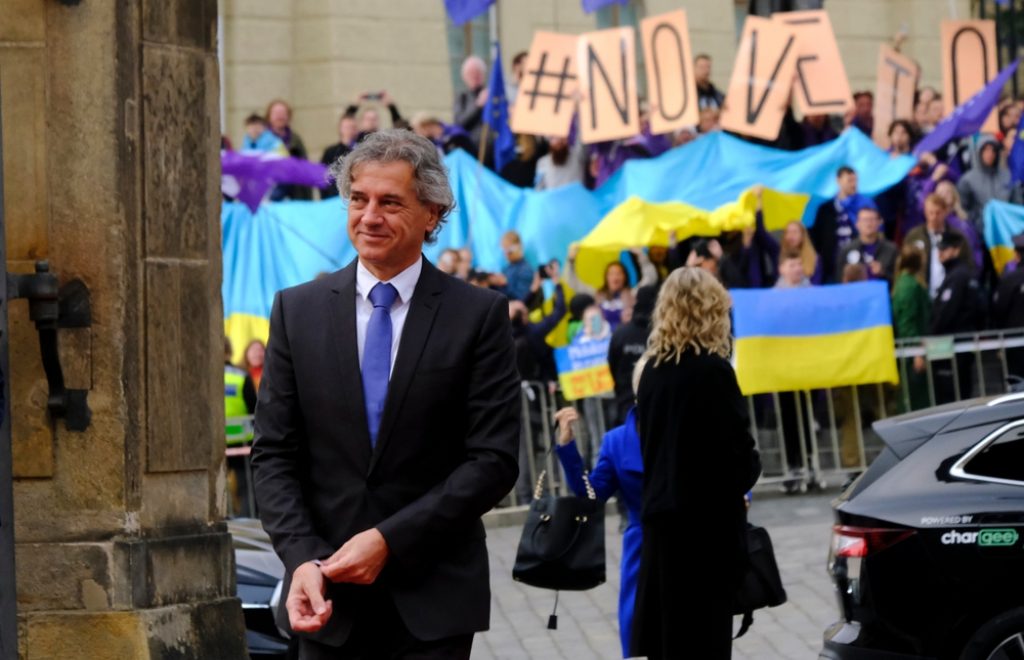
Janez Janša is returning to the post of prime minister. This will be his fourth time leading the Slovenian government. After his defeat in 2022, when voters decisively ousted his COVID-era coalition, the consensus was that Janša would never return to the halls of government. However, that will not be the case.

May 29, 2026 - Nikodem Szczygłowski

The imperial mindest knows no borders

A conversation with Vitaliy Dribnytsia, a Ukrainian historian. Interviewer: Nikodem Szczygłowski

April 21, 2026 - Nikodem Szczygłowski Vitalii Dribnytsia

The future of Slovenia’s new government coalition remains uncertain

The recent election in Slovenia has created as many questions as answers to the future of the country’s politics. While a close race will mean a coalition government is necessary, a foreign interference scandal suggests relevancy beyond the small country’s borders.

April 14, 2026 - Nikodem Szczygłowski

A murder in a Slovenian town exposes deep-rooted problems surrounding integration

Slovenia was shaken by a tragedy that took place in late October in the southern town of Novo Mesto, reopening the debate on the integration of the Roma minority (and others) into Slovenian society.

November 14, 2025 - Nikodem Szczygłowski

The Polish-Lithuanian Commonwealth was far from being just “Poland”

A conversation with Tomas Venclova, Lithuanian philosopher and writer. Interviewer: Nikodem Szczyglowski

February 28, 2025 - Nikodem Szczygłowski Tomas Venclova

We need to fight for democracy in Slovakia once more

Interview with Samuel Marec, a Slovak translator, publicist and writer. Interviewer: Nikodem Szczygłowski.

February 3, 2025 - Nikodem Szczygłowski Samuel Marec

“Serbs suffer from some kind of eternal victim syndrome”

Interview with Ivan Milenković, Serbian philosopher and literary scholar. Interviewers: Iwona Reichardt and Nikodem Szczygłowski.

December 22, 2024 - Ivan Milenković Iwona Reichardt Nikodem Szczygłowski

The ability to reconcile is a mark of a nation’s maturity

A conversation with Milan Kučan, the first president of Slovenia from 1991 to 2002. Interviewer: Nikodem Szczygłowski

NIKODEM SZCZYGŁOWSKI: In 2004, at the time of the EU’s enlargement, Slovenia was considered one of the most developed countries in the region – much more so than Poland, the Czech Republic or Lithuania. Now, 20 years later, we can see that the achievements of Poland or Lithuania were greater than those of Slovenia. Slovenia was at the highest level when it joined the EU, and it is still at a high level, but Poland or Lithuania have caught up much more and are much closer to Slovenia. What are the reasons for this?

MILAN KUČAN: Slovenia was ahead of all these countries in terms of development parameters at that time. But then, it actually developed more slowly. This was due to the specific features of the economic and privatization reforms in Slovenia, but also a number of other factors. At a certain point, Slovenia actually stopped or paid much less attention to economic development than to internal ideological debates, political divisions and so on.

June 22, 2024 - Milan Kučan Nikodem Szczygłowski

“We need to tame Przemyśl with its own complex history”

Interview with Igor Horkov, director of the Ukrainian House in Przemyśl. Interviewer: Nikodem Szczygłowski.

May 17, 2024 - Igor Horków Nikodem Szczygłowski

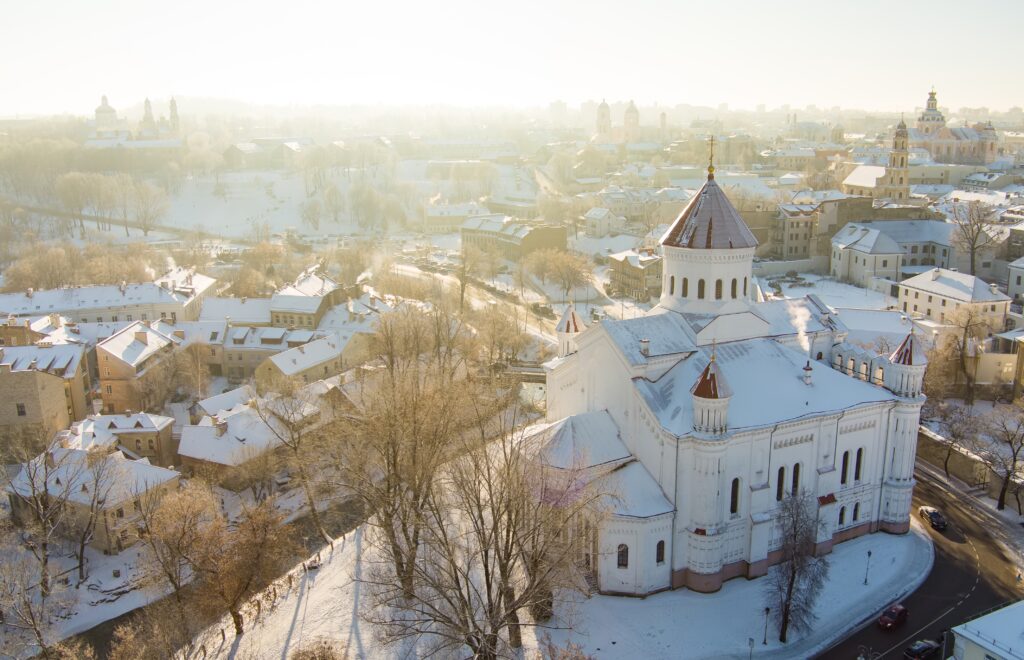
The Patriarchate of Constantinople is finalizing the creation of its own structures for the Orthodox Church in Lithuania

Russia’s ongoing invasion of Ukraine has caused reverberations in the world of Orthodox Christianity. While the church in Moscow has fully backed the Kremlin’s war, many priests in places such as Lithuania have found adherence to this belief an impossible task.

February 7, 2024 - Nikodem Szczygłowski

Former Yugoslav nations deserve peace

An interview with Gojko Božović, a Belgrade-based Serbian poet, literary critic and publisher. Interviewer: Nikodem Szczygłowski

NIKODEM SZCZYGŁOWSKI: It has been 30 years since the break-up of Yugoslavia. In an essay published in 2021 titled Yugoslavia. 30 Years, the Slovenian writer Drago Jančar compared the countries that once made up Yugoslavia to islands in an archipelago. The publishing house which you head is also called Arhipelag, which in English means archipelago. What is your mission and what kind of literature do you opt to publish?

GOJKO BOŽOVIĆ: The Arhipelag was founded in 2007. At that time the reality was very different from the one we live in today. It was before the global economic crisis, before the great wave of populism that swept the world and still has no intention of leaving it. At that time, there was much more democracy in Eastern European and Balkan states and societies, especially in Serbia.

September 11, 2023 - Gojko Božović Nikodem Szczygłowski

A regional player?

Following the elections in April 2022, the new Slovenian government has displayed ambitions to make the country an active regional player and an intermediary between the Western Balkan states and Central Europe. However, the geopolitics of the wider region, including Russia’s war in Ukraine, may force it to face some uncomfortable trends.

In the Balkans July and August are always the peak tourist season, with flocks of North European vacationers coming here to enjoy the beauty of the Adriatic coast and the warm Mediterranean sun. Traditionally, their preferred destination is Croatia, with its stunning Dalmatian beaches, beautiful Istria, numerous islands and national parks. Neighbouring from the north Slovenia is less popular. It is more often used as a transit country for travellers who are en route to Croatia.

September 11, 2023 - Nikodem Szczygłowski

Partners

Terms of Use | Cookie policy | Copyryight 2026 Kolegium Europy Wschodniej im. Jana Nowaka-Jeziorańskiego 31-153 Kraków
Agencja digital: hauerpower studio krakow.
We use cookies to personalise content and ads, to provide social media features and to analyse our traffic. We also share information about your use of our site with our social media, advertising and analytics partners. View more
Cookies settings
Accept
Decline
Privacy & Cookie policy
Privacy & Cookies policy
Cookie name Active
Poniższa Polityka Prywatności – klauzule informacyjne dotyczące przetwarzania danych osobowych w związku z korzystaniem z serwisu internetowego https://neweasterneurope.eu/ lub usług dostępnych za jego pośrednictwem Polityka Prywatności zawiera informacje wymagane przez przepisy Rozporządzenia Parlamentu Europejskiego i Rady 2016/679 w sprawie ochrony osób fizycznych w związku z przetwarzaniem danych osobowych i w sprawie swobodnego przepływu takich danych oraz uchylenia dyrektywy 95/46/WE (RODO). Całość do przeczytania pod tym linkiem
Save settings
Cookies settings