
Text resize: A A
Change contrast

Between “Trojan horses” and an “Anti-China Vanguard”?

While China may be growing into an economic, military and technological giant, the experience of Central and Eastern Europe indicates that this “hegemon in the making” is much more vulnerable and isolated than it likes to believe. At the same time, wishing China away is impossible. Ignoring the fact that it is already a stakeholder in the complex European landscape comes with great risk.

On the pleasant sunny morning of June 14th 2023, pedestrians crossing the iconic Charles Bridge in Prague found themselves navigating through multiple meticulously-staged Chinese couples. These groups were taking their pre-wedding photos against the scenic skyline of the city. Locals have probably become accustomed to this sight. Ever since the Taiwanese singer Jolin Tsai released her Mandopop hit “Prague Square”, hundreds of thousands of Chinese tourists have been flocking to the city to enjoy its romance.

November 20, 2023 - Emilian Kavalski - Hot TopicsIssue 6 2023Magazine
While outsiders may have found such photoshoots curious, for those crossing the bridge to attend the European Values Summit that day, the sight must have been particularly jarring. This was because they were about to witness the president of Czechia, Petr Pavel, share a podium with the foreign minister of Taiwan, Joseph Wu. The high-level meeting at Kaiserstein Palace appeared to confirm a radical shift in relations not only between China and Czechia, but the countries of Central and Eastern Europe (CEE) as a whole.

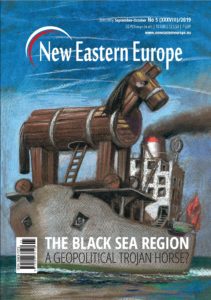
This shift might appear puzzling to some observers. It was not that long ago that Beijing’s cooperation with the region was touted as a real feather in China’s foreign policy cap. In fact, the evolution of China–CEE cooperation – better known as the “17+1” group because it brought together in 2012 Albania, Bosnia and Herzegovina, Bulgaria, Croatia, Czechia, Estonia, Hungary, Latvia, Lithuania, North Macedonia, Montenegro, Poland, Romania, Serbia, Slovakia, Slovenia, as well as Greece in 2019 – played a significant part in the EU’s designation of China as a “systemic rival”. Ensuring that the point was not lost on anyone, the then EU Commissioner for Enlargement and European Neighbourhood Policy Johannes Hahn decried the participating CEE states as “Trojan horses” undermining European unity. Hahn’s designation was puzzling, not least because it conveniently overlooked the fact that the bulk of Chinese trade and investments were (and still are) with the western part of the continent. China was equally forthright in flaunting the significance of its cooperation with CEE countries. In January 2020, just as the Covid-19 pandemic was about to begin, Beijing made the unexpected announcement that President Xi Jinping will be taking over the hosting of all future “17+1” summits. At the time, Chinese media was hailing Beijing’s cooperation with the CEE countries as evidence of the successes of “Xiplomacy”. Today, however, the very same outlets are lambasting regional states for spearheading an “anti-China vanguard”. How accurate are these representations? Answering this query requires an overview of the brief history of China’s cooperation with the CEE countries.

Lack of history as a prologue

In international affairs any relationship will seek to utilise the past experience of its actors to inform the future trajectories of their interactions. For instance, after the fall of the Berlin Wall, the countries of Central and Eastern Europe deployed the narrative of a “return to Europe” in order to justify their demand for membership in Euro-Atlantic institutions. Likewise, Beijing amplified the 15th century exploits of Admiral Zheng He in its public diplomacy across the Global South to emphasise that China has historically shunned colonialism and imperialism.

Yet when it comes to the relations between the CEE countries and China, there do not appear to have been any specific or imagined pasts on which to base their contemporary interactions. This is not to say that there have been no attempts at creating such narratives. For instance, in 2011, the former Croatian President Stipe Mesić proclaimed on a visit to China that “Marco Polo is a world explorer, born in Croatia, who opened China to Europe.” Such attempts notwithstanding, China has been far too distant geographically, historically and ideationally to have any meaningful resonance in the political, cultural and (until very recently) economic imaginaries of the region. The same applies to China as well. Conspicuously, the dearth of such experience makes it difficult both to root contemporary interactions and to use history as a means of addressing the exigencies of the present.

Even during the Cold War, most of Central and Eastern Europe (apart from Albania and to an extent Romania) sided with Moscow during the Sino-Soviet split. The fall of communism across the region seemed to reinforce this trend. Some of the protesters who began gathering in Tiananmen Square in April 1989 took inspiration from the nascent democratisation of the CEE countries. Motivated by a fear of contagion, the Chinese leadership ordered the violent suppression of the protesters on June 4th 1989 – the very same day as the first multi-party elections in a communist CEE country were taking place in Poland.

Consequently, for much of the post-Cold War period, both China and the CEE countries remained largely isolated from one another. The political chaos, ethnic tensions and economic turbulence that marked the post-communist transition in the CEE region provided the Chinese leadership with ample evidence of the dangers of a political “opening up”. Chinese media narratives drew on this experience to “teach” its audience that “under no circumstances can capitalism bring peace and happiness to the people.” At the same time, the CEE countries remained primarily focused on their integration into European and Euro-Atlantic institutions, which did not leave many opportunities to develop a foreign policy focused on developing relations with other regions and parts of the world.

When an afternoon fish turns out to be fresh

The EU and NATO accession of the majority of the CEE states appears to have shifted international outlooks both within and outside the region. Following the 2004-07 “Big Bang” enlargement of the EU, CEE representatives became involved in the whole spectrum of issues and levels within the EU policy-making process. This included Brussels’ outreach to China. Beijing’s growing economic footprint was also becoming difficult to ignore. This became particularly pronounced in the wake of the 2008 Global Financial Crisis (GFC), which impacted profoundly the legitimacy of western institutions and economic models. China appeared to benefit from these developments owing to its seeming immunity to the crisis.

One of the unintended effects of the GFC was to bring the CEE region to Beijing’s attention. Greece, whose economy was severely affected by the crisis, came under immense pressure from its creditors to sell off the country’s national assets. One of the first items on the privatisation chopping block for the Greek government was the port of Piraeus. The China Ocean Shipping Company (COSCO) acquired the operating rights for the container terminal in 2008 and by 2021 it controlled a 67 per cent stake in the port. The then president of the COSCO group, Wei Jiafu, acknowledged that the Piraeus investment far exceeded his expectations and compared it to “buying an afternoon fish only to find out that it was fresh.”

COSCO’s investments in Piraeus put the CEE region firmly on China’s investment and foreign policy map. In 2009 the automaker Great Wall Motors opened a joint venture in Bulgaria, which involved oversight from then Vice President Xi Jinping. In 2010 Premier Wen Jiabao visited Piraeus to demonstrate China’s contribution to European economic recovery and a few months later he visited Budapest to attend the China-CEE economic and trade forum. It was during Premier Wen’s 2012 trip to Warsaw that Beijing’s bespoke framework for cooperation with the CEE countries was formally launched. Chinese commentators started to refer to this cooperation as “one of the most important achievements of China’s diplomacy”.

The end of the affair?

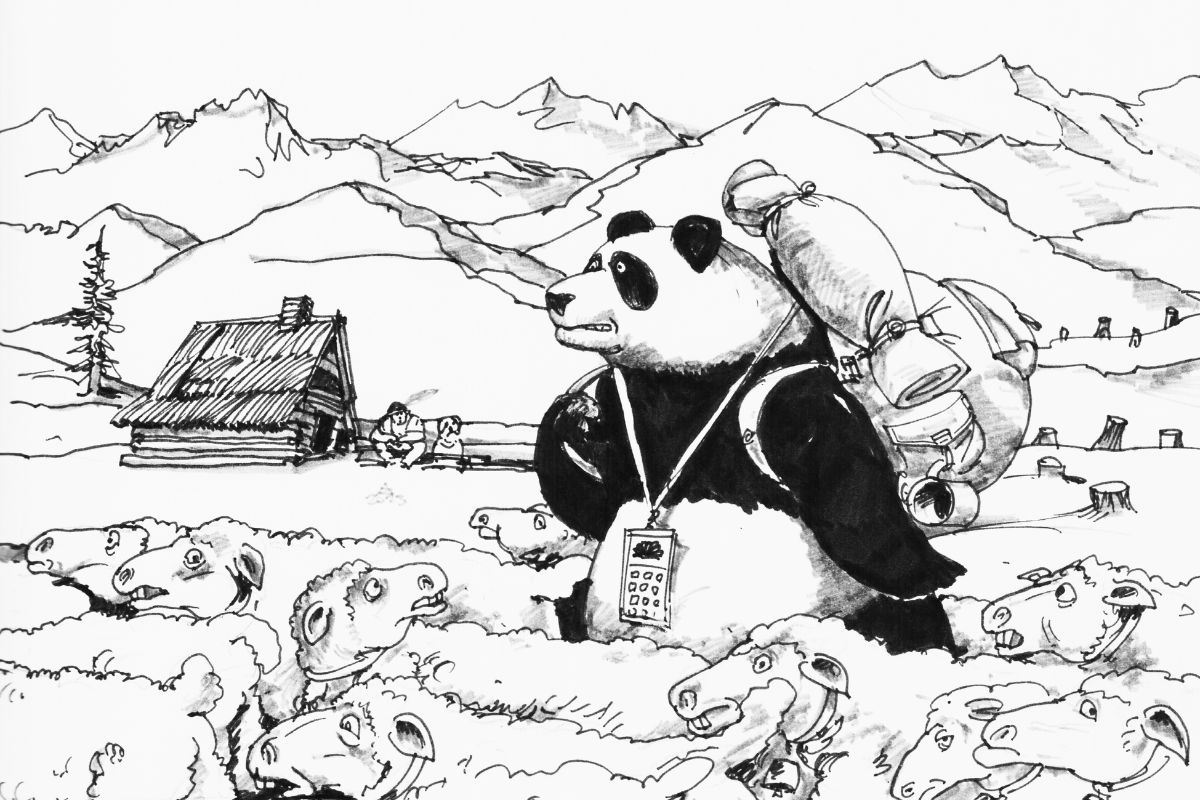
The new-found centrality of the CEE countries created the perception that the region was moving steadily into China’s orbit. Yet, perceptions and reality rarely overlap. China’s failure to meet the stratospheric expectations generated by the lavish promises of large-scale investment provided the main reason for some CEE countries to give China the cold shoulder. For instance, Prague Mayor Zdeněk Hřib, who famously ended a “sister city” relationship with Beijing in 2019, stated half-jokingly that Czechia has not gotten so much as a panda for the Prague Zoo, let alone any of the other investments promised by China.

Some of the cracks in the “17+1” framework appear to have been prompted by a lack of knowledge about the region in China. This became apparent as early as 2009, when China’s COVEC construction company won a tender to build a 50-kilometre section of a highway running from the German border to Warsaw. The success of COVEC’s bid was significant as it marked the first time a Chinese construction company had won a public competition in the EU. Yet by 2011 it was apparent that the company had miscalculated the impact of EU road infrastructure standards and labour legislation on the price of the project. Lack of local know-how also precipitated the collapse of the Great Wall Motors car manufacturing plant in Bulgaria in 2017. More surprisingly, in September 2023, China cited an inability to meet EU safety standards as a reason for suspending work on the flagship Budapest–Belgrade railway line.

At the same time, after years of “17+1” summits, CEE policymakers were venting privately that rather than developing initiatives in the region, the organisers of these forums were using them to advance their careers in China. Beijing was also becoming a political punching bag for diverse local grievances in the CEE region, most of them having little to do with China and more to do with spats between government and opposition parties. While there does not seem to be a common denominator for pro- and anti-China attitudes in the CEE region, in general political formations with anti-liberal, Eurosceptic or pro-Russian sentiments tend to be more favourable to Beijing. For instance, the 2021 protests against the establishment of a Fudan University campus in Budapest had more to do with the opaque and authoritarian nature of Orbán’s regime than the academic credentials of the Chinese university.

In this respect, it was during the 2019 pro-democracy protests in Hong Kong that some of the tensions in “17+1” burst into the open. Coinciding with the thirtieth anniversary of 1989, the Hong Kong protests triggered memories of the largely peaceful revolutions in the CEE countries. Furthermore, Hongkongers’ use of the tactics developed by CEE dissidents – such as the Lennon Wall and the Baltic Way – resonated in the region. Across the Baltics, commemorations of 1989 involved support for the plight of Hong Kong. These also provoked negative Chinese reactions. For instance, in August 2019, Chinese diplomats in Lithuania attacked a gathering intended to show solidarity with Hong Kong. A month later, a group of self-styled “Chinese patriots” defaced the original Lennon Wall in Prague, with graffiti celebrating the 70th anniversary of the founding of the People’s Republic of China. The Covid-19 pandemic only intensified the split within the “17+1” group between countries such as Hungary and Serbia, who were developing ever closer relations with China, and the rest of the CEE countries, who were becoming either lukewarm or outright hostile to Beijing. In May 2021, Lithuania became the first CEE country to pull out from China-CEE cooperation as a whole. Vilnius now stressed its normative commitment to support “those fighting for freedom from Belarus to Taiwan”. The following year, Estonia and Latvia also suspended their participation in the forum.

The Russian invasion of Ukraine last year and China’s perceived support for Moscow reinforced the view that Beijing “does not get” the CEE countries. Even in Poland, which had tended to adopt a more “pragmatic” approach to relations with China, there has been a palpable shift both in public perceptions and government attitudes towards Beijing. A foreign ministry communiqué in June 2023 mentioned potential “grave consequences for the bilateral relationship between Europe and China” if Beijing were to provide any military aid to Moscow. At the same time, the crude assertiveness of Beijing’s “wolf warrior diplomacy” has not helped China’s case either. For instance, in April 2023 the Chinese ambassador to France, Lu Shaye, stated that the post-Soviet countries have no “effective status” in international law. The Baltic states immediately issued a strong response, with the Lithuanian Foreign Minister Gabrielius Landsbergis tweeting that “If anyone is still wondering why the Baltic States don’t trust China to “broker peace in Ukraine”, here’s a Chinese ambassador arguing that Crimea is Russian and our countries’ borders have no legal basis.”


There is also growing evidence that Beijing is trying to interfere in CEE affairs through cultural diplomacy, media manipulation and espionage. China is also using the support of its “ironclad friends” in the region to shape their policy outlook. For instance, in a September 2023 phone call Foreign Minister Wang Yi urged his Hungarian counterpart Péter Szijjártó to “push the EU to adopt a more open policy towards China”. Such statements demonstrate China’s abandonment of the rhetoric of non-interference when it comes to the affairs of other states.

Vulnerable and isolated

Are the countries of Central and Eastern Europe “Trojan horses” for China or the leaders of an “anti-China vanguard”? Well, neither description seems to be entirely right. Serbia and Hungary are probably the only countries in the 17+1 format that come close to the “Trojan horses” end of the continuum, while the Baltic states (and especially Lithuania) are the main protagonists in the “anti-China vanguard”. The rest of the group was motivated by expectations of economic gain. Yet, after more than a decade of interactions with Beijing, most members of the 17+1 format are becoming either suspicious or disappointed with China’s inability to deliver on its economic promises. Consequently, more and more, the countries of the region seem willing to challenge China’s so-called “red lines” – such as the status of Taiwan or Beijing’s treatment of minorities. China never developed sufficient expertise with regard to the countries and, in particular, their economies. Instead, its presence in the region became quite divisive and contested. As a result, Beijing gradually found itself dragged into the squabbles of local stakeholders.

The unravelling of the 17+1 format illustrates that Beijing does not possess a very versatile diplomatic toolbox – beyond bullying or buying support. And while China may be growing into an economic, military and technological giant, the experience of the CEE region indicates that this “hegemon in the making” is much more vulnerable and isolated than it likes to believe. At the same time, wishing China away is impossible. Ignoring the fact that it is already a stakeholder in the complex European landscape comes with great risk. In a rapidly changing world, with volatile transatlantic relations, rising populism and a fragile European neighbourhood, the experience of the CEE countries illustrates the challenges of finding a consistent strategy for dealing with China. Perhaps paradoxically, both for Beijing and for the region’s capitals, the future trajectory of their relations will likely depend on interactions with other international stakeholders.

Emilian Kavalski is the NAWA Chair Professor at the Jagiellonian University in Kraków (Poland) and the editor for Routledge’s “Rethinking Asia and International Relations” series. His work explores the interconnections between the simultaneous decentring of international relations by post-western perspectives and non-anthropocentric approaches. He is the author of four books including: The Guanxi of Relational International Theory (Routledge 2018) and he is the editor of 12 volumes, including World Politics at the Edge of Chaos (State University of New York Press, 2016).

, , ,

Partners

Terms of Use | Cookie policy | Copyryight 2026 Kolegium Europy Wschodniej im. Jana Nowaka-Jeziorańskiego 31-153 Kraków
Agencja digital: hauerpower studio krakow.
We use cookies to personalise content and ads, to provide social media features and to analyse our traffic. We also share information about your use of our site with our social media, advertising and analytics partners. View more
Cookies settings
Accept
Decline
Privacy & Cookie policy
Privacy & Cookies policy
Cookie name Active
Poniższa Polityka Prywatności – klauzule informacyjne dotyczące przetwarzania danych osobowych w związku z korzystaniem z serwisu internetowego https://neweasterneurope.eu/ lub usług dostępnych za jego pośrednictwem Polityka Prywatności zawiera informacje wymagane przez przepisy Rozporządzenia Parlamentu Europejskiego i Rady 2016/679 w sprawie ochrony osób fizycznych w związku z przetwarzaniem danych osobowych i w sprawie swobodnego przepływu takich danych oraz uchylenia dyrektywy 95/46/WE (RODO). Całość do przeczytania pod tym linkiem
Save settings
Cookies settings