
A mountain of controversies leaves Czech-China relations with little room for progress
The window of opportunity that was once wide open for China to establish a robust presence in the Czech Republic has closed due to a multitude of unfulfilled pledges and growing tensions in bilateral relations. Furthermore, China’s pro-Russian neutrality in the Ukraine war has sparked concerns about its appeal as a viable partner.
After the Velvet Revolution in 1989, the newly independent Czech Republic, under the leadership of Václav Havel, took a strong stance against China’s human rights record and expressed scepticism towards cooperation with communist regimes. However, changes in the political scene gradually influenced this values-based foreign policy, as it was replaced by a more pragmatic approach aimed at attracting potential investment. Setting the foundations for the Czech Republic to become the gateway for Chinese investment in Europe, Petr Nečas’s government, ruling the country from 2010 to 2013, saw China as a new and attractive partner.
November 20, 2023 -
Veronika Blablova
-
Hot TopicsIssue 6 2023Magazine
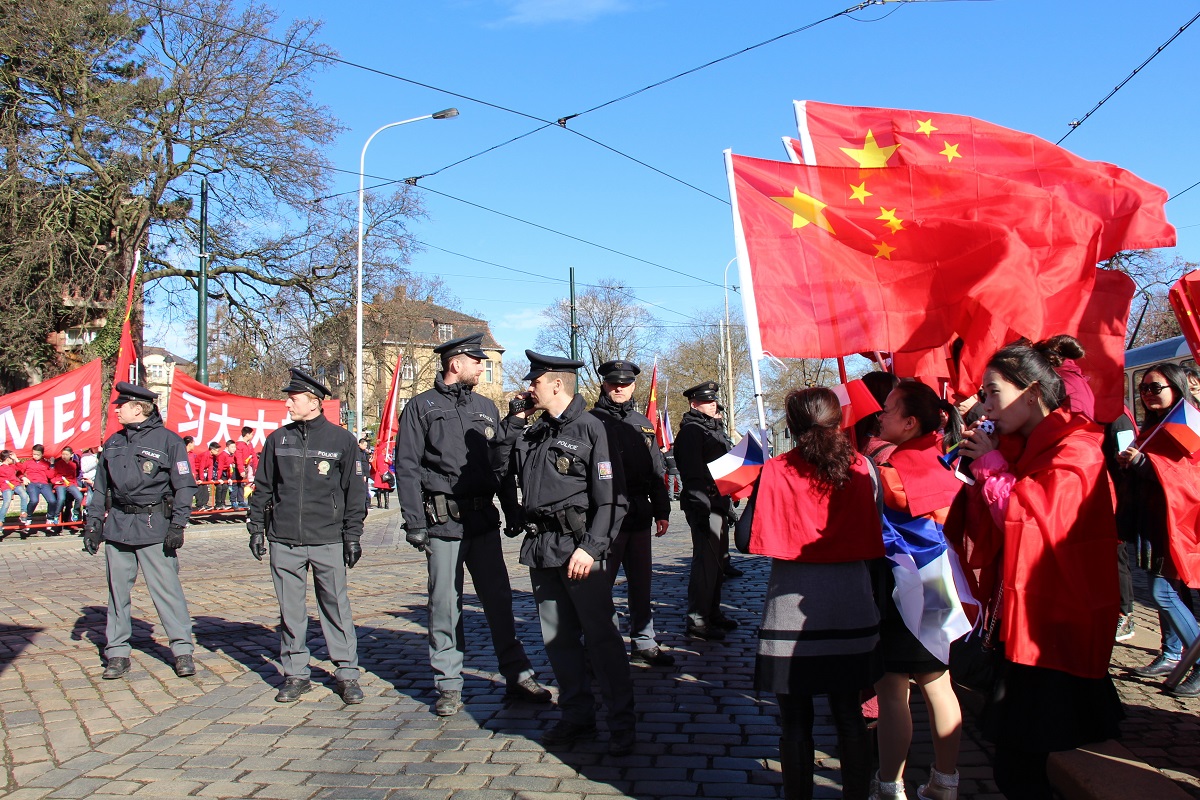
Chinese nationals came out to greet President Xi Jinping's visit to Prague in March 2016. Chinese-Czech relations have soured considerably since then, with most high-level politicians distancing the country from China. Photo: Eva Lai / Shutterstock
Overall, Beijing was seen as an alternative that could help diversify Prague’s economic relations, with the country having to deal with the dire impacts of the recent economic crisis. This was followed by the social democratic government from 2014 to 2017, when political enthusiasm for strengthening economic relations with China reached its peak. However, the promised investments and anticipated projects failed to materialise, leading to widespread disillusionment with the relationship.
Promising the Moon
The promised investment mostly took the form of acquisitions, bringing little added value to the Czech economy. At the same time, besides investing in engineering factories, an airline, a brewery, luxury hotels and a football club, the Chinese CEFC company, the flagship of China’s investment in Europe, also bought stakes in a media company, significantly distorting television broadcasting to show China solely in a positive light. The following government, led by Andrej Babiš between 2017 and 2021, mostly delegated foreign policy to its coalition partners, the Social Democrats, bringing no significant alteration to the previous course of relations.
Apart from these governments, the former Czech President Miloš Zeman was among the most vocal proponents of deepening ties with China. During his two terms, he travelled to China five times and would have likely visited China again if it was not for restrictions related to COVID-19. Zeman even appointed a Chinese national, Ye Jianming, who was the founder and chairman of the CEFC company, which promised multi-billion investment in the Czech Republic, as his advisor. Ye Jianming was later investigated by the Chinese authorities due to suspicions that he was engaging in economic crimes and bribery. He disappeared in 2018 and has not been seen since. Meanwhile, the CEFC struggled with debts and the Chinese state company CITIC intervened and paid them off in an attempt to rescue the group’s reputation. Ye Jianming’s disappearance and the CEFC’s bankruptcy raised serious concerns about the transparency and accountability of Chinese investment in the Czech Republic.
Moreover, the CEFC played a crucial role in establishing a network of local politicians and businessmen with interests in China, which was crucial for advancing China’s interests in the Czech Republic. The majority of those involved came from the Social Democrats, who are currently not in the parliament. With Zeman’s departure from office, China has also lost one of its crucial political connections. Despite his huge support, even Zeman expressed dissatisfaction with the lack of investment that China promised to deliver, with mounting controversies prompting significant shifts in China-related debate.
Growing list of burdens
In 2018, the Czech National Cyber and Information Security Agency issued a warning against the involvement of the Chinese companies Huawei and ZTE in the construction of strategic infrastructure. Citing Chinese laws requiring the cooperation of Chinese private companies with Chinese intelligence, the agency was the first to issue such a warning, setting a trend for other countries. In this context, Zeman voiced apprehensions about potential retaliatory actions by Beijing in response to such precautions, alluding to potential consequences for Czech companies conducting business in the country.
Another issue in Czech-China relations was the end of the “sister city” agreements signed between Prague and Beijing. This was caused by a clause in the agreement ensuring Prague’s commitment to the One China policy and acknowledgment of Taiwan as an inseparable part of China. In response, China cancelled music concerts with “Prague” in their title. Prague established sister-city agreements with Taipei a few months later.
Investigative journalists further revealed the Chinese embassy’s interference in the prestigious Charles University, sponsoring a course depicting China’s Belt and Road Initiative in a positive light. A study trip to China for students and an academic conference was also criticised for promoting Beijing’s interests. As evident from these examples, the space to navigate Czech-China relations has been gradually shrinking, significantly limiting the opportunities to find common ground. Similarly, with a growing number of experts, journalists, political representatives and institutions documenting examples of bad practice and issuing warnings about potential risks, Beijing simply does not seem as much of a viable partner compared to a decade ago.
The current centre-right government led by Petr Fiala, which has been in power since late 2021, promised to further distance itself from China and initiate a revision of bilateral ties, emphasising democratic values in foreign policy. Nevertheless, efforts not to sow discord with Zeman, who was finishing his second term in office, coupled with the Russian invasion of Ukraine, which stood as a foreign policy priority, likely postponed alterations to the Czech China strategy. The election of the new Czech president, Petr Pavel, who entered office in the spring of 2023, significantly underscored the changing political atmosphere towards China. After his election, he also accepted a congratulatory call from the Taiwanese president, Tsai Ing-wen, which made him the first EU head of state to do so. He even mentioned his willingness to meet with the Taiwanese president in person in the future.
The Czech Security Strategy published in June 2023 directly refers to China as a systemic challenge endeavouring to transform the existing international order. The document further warns that China conducts cyber espionage, seeks to control global data traffic and employs various forms of socio-economic coercion and other hybrid tools of influence. The strategy also specifically warns about the links between Chinese companies and the state apparatus. Such wording underlines the complete shift from the previous pragmatic approach focusing on economic relations, omitting political and security implications.
Freezing the relations
The Chinese platform for cooperation with Central and Eastern Europe, known also as the 14+1 platform (previously 17+1), poses one of the key questions for the current government: whether to remain or leave this format. After the Baltic countries left the platform in previous years, some Czech deputies began to call for ministries to adopt a similar approach. Importantly, any specific involvement in the 17+1 agenda remained rather scarce during the whole period. The government usually viewed cooperation as a disappointment due to the lack of implementation of envisioned projects. However, whereas the current political atmosphere favours a withdrawal from the platform and the Czech Foreign Minister Jan Lipavský ensures that Prague is inactive in the format, any concrete steps are currently absent. The platform’s annual meetings of heads of state or other high-level government members, which have been held since 2012, are effectively frozen.
Viewed as a “Trojan horse” by Western European countries, the initiative seems to have resulted in the exact opposite, with most of the initial enthusiasm to promote cooperation with China now gone. Instead, Western Europe’s ties with China have grown over the years, making it more difficult for countries to adapt to the current geopolitical situation and potentially reduce their dependence on China.
The Russian invasion of Ukraine clearly emphasised the need to assess the geopolitical aims of economic partners. Dependencies in the energy sector on Russia prompted European countries, including the Czech Republic, to revisit their strategic dependencies to identify potential bottlenecks. China’s approach and loose rhetoric concerning the war in Ukraine, which partly echoed Moscow’s narratives, further damaged China’s image (not only) in the Czech Republic, which has stood at the forefront of support for Ukraine. Moreover, China’s eagerness to buy Russian gas and deepen trade relations significantly strengthen Moscow’s ability to overcome the sanctions imposed by the US and European countries. The number of partnership agreements between the two authoritarian states shows their mutual interest in challenging the liberal democratic world order.
Moreover, the remarks of the Chinese Ambassador to France, who contested the sovereignty of the post-Soviet countries, indicated the covert views of China’s foreign policy elites. Pro-Russian neutrality impacts perceptions of China, with many Czech political leaders drawing a parallel between Beijing and Moscow, shifting the rhetoric towards China being increasingly viewed as a threat.
Pivot towards Taiwan
In this context, Czech political leaders seek to enhance cooperation with other countries in Asia, including Taiwan. In September 2020, Czech Senate President Miloš Vystrčil visited Taiwan accompanied by a large delegation. Declaring “I am Taiwanese” in his speech, this visit opened a new era in bilateral relations. Whereas China reacted with its usual critical rhetoric, the real result amounted to the cancellation of a piano purchase.
However, with Zeman still in office at that time, the visit was criticised by the head of state and members of the government, including the prime minister, revealing the lack of unity in Prague’s approach towards deepening ties with Taiwan. In another milestone in bilateral relations, a delegation led by the speaker of the Chamber of Deputies, Markéta Pekarová Adamová, followed the trend this year. This group brought about 150 political representatives, scientists and businessmen to the country. Not only was this delegation the largest to date, it also represented the whole government, compared to the previous visit.
After China’s backlash against Lithuania’s approval of a Taiwanese Representative Office in Vilnius, the visit of the largest Czech delegation to date also served as a litmus test for China’s reaction. Besides the usual rhetoric opposing any diplomatic interactions with Taiwan, the lack of any strict measures from the Chinese side could have sent a signal to other countries that China tolerates a certain level of interaction with Taiwan.
One of the frequent arguments promoting economic cooperation with Taiwan focuses on the perception that Taiwan is a more important economic partner than China. Such a conclusion, however, depends on the choice of data. For instance, the trade exchange between China and the Czech Republic, although in long-term deficit from the Czech side, inevitably exceeds the trade exchange with Taiwan.
Nevertheless, in terms of the number of jobs created, Taiwanese activities have created more employment opportunities in the Czech Republic. Taipei is also a crucial partner in technologies, namely in the semiconductor field, in which the countries could cooperate in research and development. Czech students and researchers also benefit from training and education in Taiwan.
Giving Taiwan a voice
Together with other Central and Eastern European countries, such as Lithuania, the Czech Republic currently stands at the forefront of European relations with Taiwan. The small countries located in Central and Eastern Europe may not play a decisive role in sensitive geopolitical questions, however, they may serve as valuable partners in times when Taiwan is gradually losing its official diplomatic partners, with Honduras being the latest country to switch its political orientation towards China.
Similarly, these countries may play an important role in formulating policies towards Taiwan within the European Union and other international organisations, such as the United Nations, of which Taiwan is not a member.
Faced with the current geopolitical situation and disappointment with unfulfilled promises, China simply no longer seems a plausible partner for the region. With the Russian invasion of Ukraine reviving memories of the decades-long Soviet occupation of Czechoslovakia, the country is even more prone to deepen relations with Taiwan, which needs to deal with constant pressure from mainland China. Overall, the Czech government seems to refrain from developing relations with China as the opportunities for cooperation are now limited. Prague is subsequently focusing its efforts on gradually deepening ties with Taiwan, primarily with regard to developing economic relations.
Veronika Blablová works at the Prague-based Association for International Affairs (AMO) as a data analyst for AMO’s China-focused projects MapInfluenCE and CHOICE. She is also the project coordinator of the Future CHOICE initiative.