
Text resize: A A
Change contrast

Gagauzian youth contemplate their future

In the semi-autonomous Moldovan region of Gagauzia, young people seem to be at a crossroads, grappling with issues of identity. The direction the region will take depends on finding a balance between preserving independence, heritage and tradition and embracing opportunities for growth and cooperation at both regional and international levels.

Gagauzia, a little-known semi-autonomous region covering 1,848 square kilometres in Moldova’s south, comprises a cluster of cities, towns and villages amongst mainly rural and agricultural landscapes. This unique region is predominantly inhabited by an ethnic Turkic group whose origins remain somewhat enigmatic. Presently, facing significantly worse economic conditions than Moldova’s capital (Chișinău) and limited opportunities, young Gagauzians find themselves torn between preserving their community and embracing a more European-aligned lifestyle and outlook.

September 11, 2023 - Madeleine Cuckson - Issue 5 2023MagazineStories and ideas

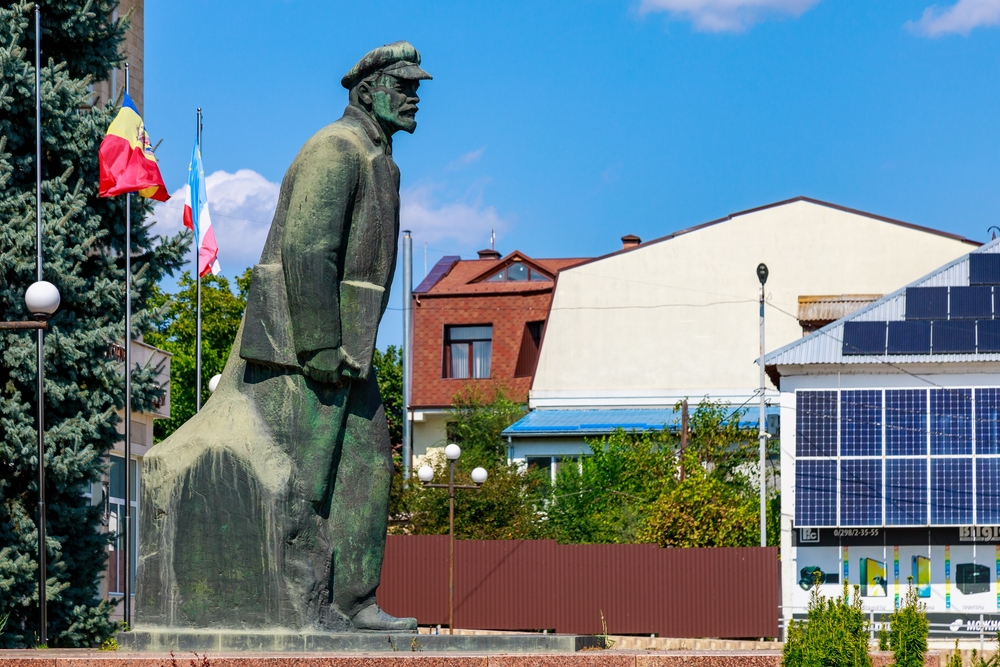
The Lenin monument which is located in the center of Comrat, Gagauzia. Photo: Gagarin Iurii/Shutterstock


This is leaving them uncertain about their future prospects in a region that is increasingly leaning away from a pro-European government in favour of a pro-Russian agenda.

Gagauzia’s history has been tumultuous. After the collapse of the Soviet Union, Gagauzia’s leadership formed the Gagauz Soviet Socialist Republic, determined to remain a part of the USSR. This led to an almost bloody conflict between the Moldovan authorities and Soviet troops. Both Gagauzia and Transnistria declared independence, sparking the beginning of the Transnistrian War (1990-92). Although Gagauzia has some political and economic autonomy, its powers are limited, and any decisions conflicting with the Moldovan constitution can be nullified.  The future of Gagauzia would be unclear if Moldova were to merge with neighbouring Romania – although the autonomy of Gagauzia was guaranteed in the 1994 Gagauz Autonomy Act, the law in Romania does not allow sovereignty on an ethnic basis.

Disappearing youth

Travelling from Chișinău to Comrat (Gagauzia’s capital) on a sweltering July day I am surrounded by fields of crops on a small but fully-packed minivan with no air conditioning. Winding through the roads, past traditional Moldovan countryside and shack-style houses, is a stark contrast to the row upon row of communist flats in Chișinău. For the capital city of the region (population of 20,000), there are relatively few people walking the streets of Comrat on a Saturday afternoon. The town itself is inconspicuous but boasts a dazzling white and gold Orthodox church in the town square. One Comrat citizen, 27-year-old Liuda, jokes while giving me a tour of the city centre, “Did you know, Comrat famously has not one single elevator in it?”

On arrival, you would be forgiven for thinking there were almost no young people living in Comrat. National statistics show that 27,518 youth, aged between 15 and 35, live in Gagauzia. This makes up about 4.7 per cent of the 585,104 young people living throughout Moldova. The resident population of Moldova is around 2.5 million, according to recent statistics, and migration in the south of the country is not like other regions, with an absent family member in about one in every three families. Bringing back those who chose to work overseas is a hugely important part of the agenda pursued by Maia Sandu’s government. As the country shifts to an EU-focused future, it needs manpower to continue improving infrastructure, the economy and industry. Despite this, the population keeps falling.

I was advised that the best way to speak with young Gagauz adults was at Comrat’s only club – Cherdak (Чердак, meaning attic). Walking up some dimly lit stairs into a large open room with flashing purple strobe lights on a Saturday evening, excited teens and young adults danced while others smoked hookah from the faux leather booths at the sides of the dancefloor. Not a single Romanian-language song played the whole night. Instead, Russian pop hits, past and present, took their place.

Dima was sitting in one booth at the club – a dark featured 28-year-old vet, working and living in Comrat. “I have always identified as Gagauzian, never Moldovan,” he says. Unlike some Gagauz who have Moldovan or Russian origins, Dima is ethnically Gagauz. Speaking Russian and Gagauz, and not Romanian, it would have been hard for him to study in Moldova. Instead, he studied for free at a Russian university. Dima could have naturalised as a Russian citizen after finishing his studies but chose not to as he does not agree with the political situation there. “Plus, I don’t want to do compulsory military service in Russia – I am safer here in Moldova,” he adds.

The existence of partnerships between Gagauzia’s university and Russian institutions presents an appealing opportunity for these young people, who often lack proficiency in Romanian and therefore find it hard to study or work in Chișinău. President Sandu has emphasised the need for Romanian-language classes in Gagauzia to counter Russian propaganda. However, the prevalence of Russian-language media in the region contributes to its influence. In July of this year, the TV Gagauzia channel was fined for not broadcasting enough Romanian-language programmes. The requirement is that at least 25 per cent of the shows broadcast must be in Romanian.

The issue of language

Language is a contentious topic in Moldova. The “Moldavian” language was officially removed from documents earlier this year and replaced with Romanian in all constitutional forms. The Moldovan president, Maia Sandu, in office since December 2020, has emphasised the importance of Romanian as the official language. “We speak the Romanian language and it is abnormal for something else to be written in the laws,” she stated.  The term “Moldavian” is believed by many to be a Soviet concept, aimed at severing Moldova from a wider Romanian identity and culture. Romanian-language books were banned under the USSR. Some differences did exist, like the use of the Cyrillic alphabet in spite of the absence of a Moldavian-Romanian dictionary. Hybrid dialects influenced by Russian also exist among the locals.

The town of Comrat stands as a unique place, with its central square home to both Lenin and Ataturk statues, reflecting its Turkic and Soviet ties. Although Comrat has a Turkish-language library due to similarities with Gagauz, the Gagauz language is rarely used officially. It is possibly facing decline among the younger population. “The only time I speak Gagauz is with Turkish clients. But, in general, the Gagauz language has begun to appear less in the life of young people,” Dima tells me. 

Dima and his Moldovan fiancé live together in his mother’s modest two-bedroom flat, located in a city centre bloc. Dima’s mother has lived in Greece for the last few years, working on a pig farm. “She would like to return, but due to the lack of work for her here at a comparable salary, she will stay in Greece for at least another five years.” Dima’s mother is one of many Gagauz who have moved abroad for better wages.

Regarding their future plans, Dima expressed some uncertainty about Gagauzia’s prospects: “I don’t have much hope for Gagauzia. I myself haven’t fully decided whether I want to live in this country. But if I stay in Moldova, I would like, first of all, for them to increase wages, so that prices for utilities become lower, and the state gives lower interest on loans.” As they save money for the future, they contemplate the possibility of staying in Moldova and hope for improvements in the country’s economic conditions.

Russia has “pushed our youth away with their actions”, Dima says. Despite Gagauzia’s general pro-Russia stance, Dima does feel assured that youth culture is shifting away from the Russian sphere of music, films and fashion, towards European influences. However, he believes that language remains the main barrier to this process.

Dividing lines

The Gagauz region operates its own legislative system through the People’s Assembly of Gagauzia, whilst the “Bashkan” serves as its governor. Recently-elected Yevgenia Gutsul, backed by the infamous Shor Party, is taking a harsher right-wing approach in comparison to her predecessor, Irina Vlah, a moderate left figure who had served in the role since 2015.

The pro-Russia Shor Party, supported by exiled Moldovan politician and businessman Ilan Shor (currently residing in Israel), conducts its campaigns through screened appearances of Shor at anti-government rallies. Ilan Shor, once the mayor of Orhei in Moldova, received a seven and a half-year jail sentence in 2017, leading him to flee to Israel in 2019. His sentence was doubled in absentia earlier this year, and his Moldovan assets are now frozen.

On June 19th 2023, the Shor Party was declared illegal and was forced to dissolve due to “unconstitutional” anti-government protests in Chișinău, where some attendees were allegedly paid to participate. However, the move is largely symbolic, as the party is expected to rebrand itself as the Vozrozhdenie (Rebirth) party.

The recent resurgence of nationalism in Gagauzia has come partly in the form of anti-liberalism. This is especially true after gay pride events were banned in 2022 for their non-traditional standpoint. However, 21-year-old personal fitness trainer Ekaterina, who was born in Comrat, remains optimistic about inclusivity in Moldova: “I especially want to note the importance of freedom. I am very confident that our country will become absolutely free for everyone, especially for sexual minorities – there are young people who want this in our country.”

Following the full-scale war, another division emerged between Moldova’s reforms and Gagauzia’s separatism when Moldova banned the use of the Saint George’s Ribbon in April 2022. This was then overturned by the Gagauz People’s Assembly. The black and orange striped ribbon, originally a symbol used to commemorate the soldiers of the Great Patriotic War, has now, since the start of the 2022 Russian war in Ukraine, become associated with pro-Russian military propaganda and Russia’s 9th May Victory Day celebrations.

Facing challenges

Ekaterina rents her house with her husband in Comrat, but knows the reality on a basic Gagauz salary is dire for most. She explains that “people can scarcely afford daily food.” Life for the poorest remains difficult in Moldova – the inflation rate as of this year is 16.3 per cent. There is a sense from talking to Gagauzians that they just want a simple life with enough food for their family, removed from politics and questions of territorial integrity.

Ekaterina, like some other Gagauz I have spoken to, faces challenges in defining her identity as an ethnic Moldovan born in Gagauzia.  “I do not feel like myself among the Gagauz, I even encountered bullying and abuse from the Gagauz because of my nationality.”

She comments that Gagauz generally have an insular perspective on other cultures and nationalities. “When they go abroad they voice negative comments about other countries, that there is too much freedom and people have no brains, they say that people behave terribly, they don’t understand this way of life.”      

It is theorised that the Gagauz people could have settled in the southern Bessarabia region after fleeing Ottoman rule during the 18th and 19th centuries. Speaking a Turkic language, they are believed to have connections with Turkic nomadic tribes from the Eurasian steppes or have their origins in Anatolia.

The number of ethnic Gagauz today is estimated at around 200,000, with the majority residing in Moldova, Ukraine, Turkey and Russia. Evidence suggests that prior to Ottoman rule the Gagauz may have already lived in the Balkans, as they were already Eastern Orthodox Christians when they settled, not Muslims.

Ekaterina expresses some discomfort about Moldova’s future and would not favour any kind of unification with Russia: “My main fear for the future of Moldova is any political ties with Russia and the Russification of the country.”

It is important to interrogate the feasibility of Gagauzia aligning itself with the Russian-backed breakaway region Transnistria in the event of an invasion of Moldova. Although Gagauzia may appear to be a potential primary target, the presence of rumoured caches of arms from the Soviet era notwithstanding, the number of militarily trained individuals with the motivation to overthrow the Moldovan government is likely limited. Presently, Transnistria has approximately 1,500 Russian troops deployed on its soil.

Over the course of the last year and a half, Moldova has witnessed demonstrations both for and against European integration, with the most recent instance boasting an estimated 80,000 pro-EU supporters in a march on Chișinău’s central square. During the event, notable figures including Roberta Metsola (president of the European Parliament) and Sandu delivered encouraging speeches, emphasising Moldova’s trajectory towards closer ties with western nations.

Gagauzia has also experienced a series of protests in 2022, advocating for continued relations with the Russian Federation and countries associated with the Commonwealth of Independent States (CIS). These demonstrations included protests against fuel prices as links with Russian oil ceased. The People’s Union of Gagauzia, allegedly led by Viktor Petrov (a prominent businessman and public figure from Comrat), spearheaded these protests with the goal to “protect the rights and freedoms of Gagauzia and its inhabitants” and to “develop good relations with the historical friends of the Gagauz people – Russia and other countries from the Eurasian Economic Union”.

Over the years, Russia’s region of Tatarstan, along with other Turkic nations, has supported Gagauzia financially. However, with a left-wing pro-EU government in Moldova, relationships with former CIS countries are waning. Tellingly, Tatarstan’s leader, Rustam Minnikhanov, was denied entry to Moldova during a planned visit to show support for a pro-Russia representative during the April 2023 Gagauzian general elections.

No clear vision of the future

For high school music teacher Grigory, a 25-year-old ethnic Gagauzian, governing systems in his country always inevitably lead to the abuse of power. “The more people sit there, the crazier the decisions. Of course, this applies specifically to our country, a country with a Soviet past,” he tells me.

Unlike Ekaterina, who wants the complete cutting of ties with Russia, Grigory wants a quiet, simpler existence. “I think in such a small country it is better to be friendly and not bring the situation to a head,” he says in reference to the unrecognised breakaway region of Transnistria and whether it should eventually be returned to Moldovan hands. “Moldova must build friendly relations with all its neighbours, we should show that we can all live here.” I have also noted an opinion of indifference to Moldova’s territorial situation amongst young Chișinău residents.

Grigory is a proud Gagauz resident. For him, a potential future in the EU should not affect Gagauzia. “I am neither against nor for a European future. Gagauzia should develop individually, without focusing on a European or pro-Russian future.”

Gagauz people have historically faced marginalisation, which previously resulted in limited access to education during the 19th century and subsequently led to significant emigration. Indeed, Gagauz nationalism in the past has correlated with shifting territories. For example, in the 1980s this was caused by Moldovan ambitions to separate from the USSR and a general fondness for the economic and cultural progress made under communism. Another element in this surge of nationalism was the fear of being wiped out, that possible integration with Romania might lead to the Gagauz losing their identity. Grigory states his Gagauz school students “doubt the future of our region”, making it unclear what prospects await the next generation of Gagauzians.

Complete independence as a sovereign state is not something Grigory strives for. Having studied at a university in Transnistria, as is common for Russian-speaking Gagauz, Grigory warns that “because of the effects of monopoly there we would not want such a future for our region, I know what I’m talking about because I lived and studied there.”

While he admits that the current figures of authority in Gagauzia do not enhance the region’s development, “our people do not yet learn from their mistakes and choose people who are not wise or competent.” There is an element of spectacle and show to politics in Gagauzia, which Grigory believes people enjoy when electing the Bashkan.

In April 2023, during the Gagauz mayoral elections, Sandu commented that some of the eight candidates for the semi-autonomous region were “agents of the Russian Federation rather than politicians who want to work for citizens”. Notably, she did not attend the inauguration of Gagauzia’s new Bashkan, commenting that “I consider it wrong to go to the inauguration of a person who was supported by a criminal group during the election campaign and who is a member of a party declared unconstitutional.” This led to comments that Sandu is prejudiced against the Gagauz, as well as rumours that the Moldovan authorities could decide to expel the new Bashkan from the country’s Cabinet of Ministers.

Gagauzian youth seem to be at a crossroads, grappling with issues of identity. The direction the region will take depends on finding a balance between preserving independence, heritage and tradition and embracing opportunities for growth and cooperation at both regional and international levels. Gagauzia may now be Russia’s main focus in Moldova as a vehicle for causing instability in the country, as the region lies shoulder to shoulder with war-torn Ukraine and an unrecognised Russia-affiliated state. In a rapidly changing global context, what I have heard loud and clear from Gagauzians is that they do not want to, once again, be in a situation in which they have to fight for the autonomy of their homeland.

Madeleine Cuckson is a freelance journalist and full-time humanitarian aid worker. She currently heads a Ukraine aid programme in Bucharest, Romania and covers stories from Russia, Romania and Moldova for various news outlets including the Moscow Times and Universul.net.

, , , ,

Partners

Terms of Use | Cookie policy | Copyryight 2025 Kolegium Europy Wschodniej im. Jana Nowaka-Jeziorańskiego 31-153 Kraków
Agencja digital: hauerpower studio krakow.
We use cookies to personalise content and ads, to provide social media features and to analyse our traffic. We also share information about your use of our site with our social media, advertising and analytics partners. View more
Cookies settings
Accept
Decline
Privacy & Cookie policy
Privacy & Cookies policy
Cookie name Active
Poniższa Polityka Prywatności – klauzule informacyjne dotyczące przetwarzania danych osobowych w związku z korzystaniem z serwisu internetowego https://neweasterneurope.eu/ lub usług dostępnych za jego pośrednictwem Polityka Prywatności zawiera informacje wymagane przez przepisy Rozporządzenia Parlamentu Europejskiego i Rady 2016/679 w sprawie ochrony osób fizycznych w związku z przetwarzaniem danych osobowych i w sprawie swobodnego przepływu takich danych oraz uchylenia dyrektywy 95/46/WE (RODO). Całość do przeczytania pod tym linkiem
Save settings
Cookies settings