
Text resize: A A
Change contrast

Tag: Youth

Neither Kaczyński, nor Tusk. Who gets the vote of the Polish youth?

An interview with Paweł Marczewski, sociologist and head of research at the ideaForum at the Batory Foundation. Interviewer: Iwona Reichardt

September 26, 2025 - Iwona Reichardt Paweł Marczewski

Are young voters a threat to democracy?

Across the region there has been a lot of talk about the power of young voters. While this group was seemingly responsible for a recent shift towards the centre in Poland, young people are also linked to growing radicalism. This has seen the youth vote increasingly correlated with a potential threat to democratic values and norms.

The 2023 elections in Poland were historic with a record turnout exceeding 74 per cent. The dissatisfied youth moved against the ruling party, leading to many headlines declaring that “young voters and women saved the elections.” Indeed, many polling stations remained open well past closing time, as videos circulated on social media of queues of voters stretching far down the street. There is no doubt that the youth vote played a decisive role in preventing another term for the populist Law and Justice (PiS) party. But did they also stop the far right from gaining influence?

September 17, 2024 - Giorgi Beroshvili

Gagauzian youth contemplate their future

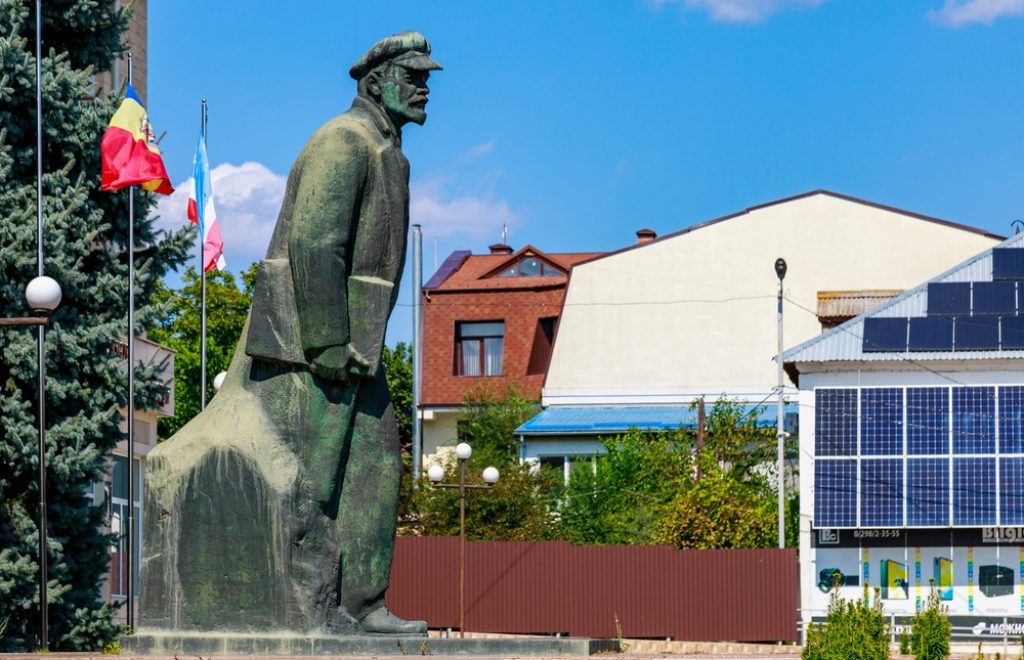
In the semi-autonomous Moldovan region of Gagauzia, young people seem to be at a crossroads, grappling with issues of identity. The direction the region will take depends on finding a balance between preserving independence, heritage and tradition and embracing opportunities for growth and cooperation at both regional and international levels.

Gagauzia, a little-known semi-autonomous region covering 1,848 square kilometres in Moldova's south, comprises a cluster of cities, towns and villages amongst mainly rural and agricultural landscapes. This unique region is predominantly inhabited by an ethnic Turkic group whose origins remain somewhat enigmatic. Presently, facing significantly worse economic conditions than Moldova's capital (Chișinău) and limited opportunities, young Gagauzians find themselves torn between preserving their community and embracing a more European-aligned lifestyle and outlook.

September 11, 2023 - Madeleine Cuckson
Pinecone: The fringe political party saving the youth from political nihilism in Georgia

Libertarian party Girchi is known on the Georgian political scene for its original approach. It appears to have a growing appeal among younger voters tired of the more mainstream parties.

December 4, 2020 - Eva Modebadze

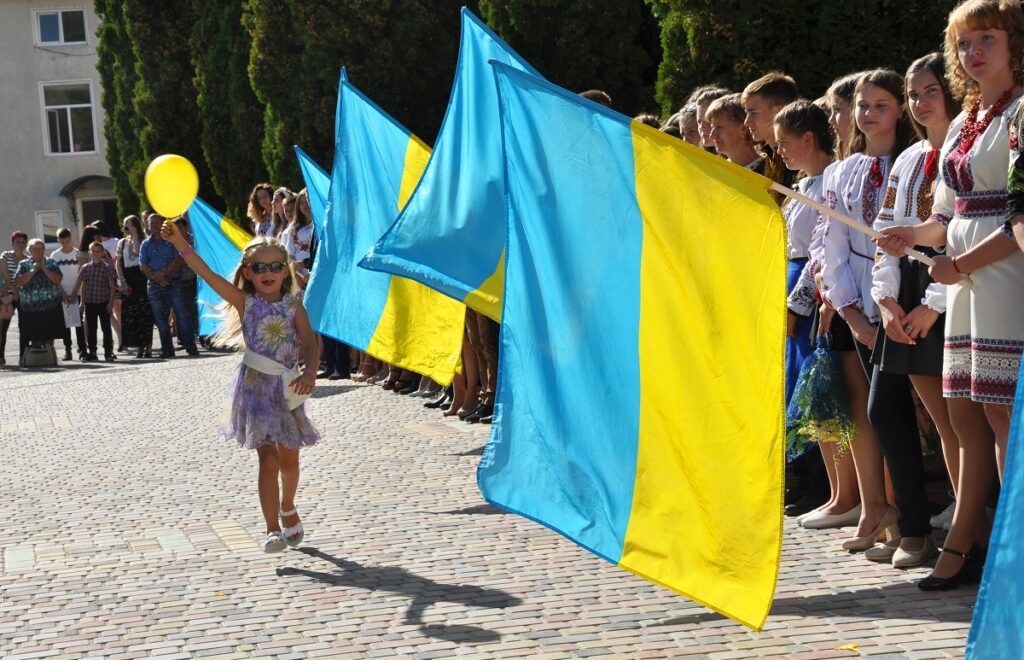
The power of Ukrainian youth

Young Ukrainians tend to put the values that are related to their lives first. These include family, health, well-being and love. They also value clear conscious, service to the homeland and having open debates on social issues. Over half declare that they feel responsible for the future of their state and want to contribute to it.

The first 25 years of independent Ukraine is already behind us. In attempts to help understand the changes that have occurred over this time, there are countless political, economic and social analyses, commentaries, recommendations and prognoses. The vast majority of them have referred to this period as one of wasted opportunities. In our research, which we have been carrying out in this regards, we focus on the role the youth has played in the democratic transformation and its future potential.

November 16, 2020 - Natalia Dolgopolova, Anna Surkova, Kinga Anna Gajda, Alina Meheda

Youtubers, influencers and creative activists are the new vanguard in Central Asia

It is a decisive moment for Central Asia. Societies of the region are receptive to the EU’s messages of transparency, democracy and rule of law, but they are also under pressure from other regional powers. If the European Union wants its new Central Asia Strategy to have a positive impact, it should reach out to innovative groups and individuals calling for change.

Over the past decade, the European Union has ceded ground in Central Asia, not only to Russia and a newly assertive China, but also to the Gulf states and Turkey, and experts forecast its influence is set to further decline. As EU Special Representative Peter Burian once quipped, “China is coming with an offer nobody can refuse, while the EU is coming with an offer nobody can understand.”

April 7, 2020 - Barbara von Ow-Freytag

Hello, generation Lukashenka

Thousands of Belarusians are now coming of age but have only known one leader of their country. Little is known about the Lukashenka generation. But these are young people who soon will determine its country’s future. A recent online video depicts a young man playing the piano accompanied by a singer who performs in Chinese. The interior of the room has a rather solemn appearance: the camera pans to a framed photo featuring the Chinese President Xi Jinping and his wife in the company of Belarusian President Alyaksandr Lukashenka and his youngest son Kolya – the same person playing the piano. After the song, the teen stands up and reads out a prepared text in Chinese. In February this year, the Belarusian ambassador to China posted the video on Twitter calling Kolya “the most famous Belarusian teenager in China”.


September 1, 2018 - Hanna Liubakova

The Georgian Dream’s two sword agenda

Following this past weekend’s use of special forces in a Tbilisi night club, serious allegations and questions have emerged regarding the game of “victim and bully” between government-backed clubs where drugs are freely available to the youth and the government agencies hunting the young drug users and dealers through excessive force.

May 15, 2018 - Beka Kiria

Survey: Attitude of young Georgians towards Abkhaz-Georgian relations

A generation of young Georgian students at the Tbilisi State University consider Georgian-Abkhaz relations an important issue. A vast majority of them recognise Abkhazia as an integral part of Georgia.

May 11, 2018 - Agnieszka Tomczyk

Russia’s generation P

Russian digital natives have espoused a national identity that unites several governmentally sponsored narratives. The question, however, is how long Putin’s appeal to the younger generations will last. Even though they have not known anybody else in power, they might still be willing to trade great power aspirations for fresh tomatoes in winter.

With the presidential election looming, few people in Russia doubt that Vladimir Putin will remain the president. Google has already proclaimed Putin to be the winner. The Russian president might no longer enjoy 80 per cent support, but he is still by far the most popular politician in the country. A generation that has never known anyone else in power is now entering adulthood. And members of “Generation P” are going to vote this spring.

February 26, 2018 - Elizaveta Gaufman

Russia’s young and restless speak up

Today’s young Russian generation was born in the mid to late 1990s. They grew up with the internet and mobile phones. They witnessed the country grow rich and believed they too would receive the benefits of oil revenue and live happily. But alas it has turned out that the internet is censored, the benefits are gone and they are not going to get much in life.

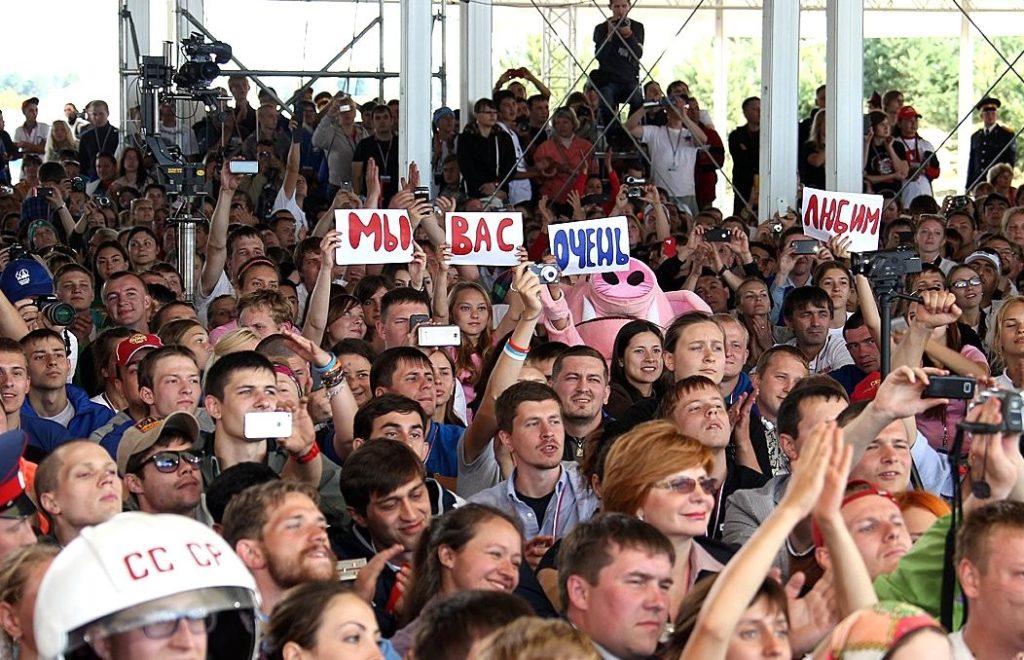
In early 2017 Alexei Navalny announced that he will run against Vladimir Putin in 2018. In less than a year, he managed to raise, through crowdfunding, 200 million Russian roubles (roughly three million euros), which is an unprecedented amount for a Russian politician. He opened 80 headquarters across the country and organised a series of protest rallies that were attended in March and June 2017 by tens of thousands of people. These demonstrations were the first mass gatherings that swept across Russian provinces (some were organised even in small towns) since the 1990s.

Barriers and restrictions, attempts to discredit the demonstrations, media censorship and attacks by thugs did not deter the protestors. What is more, it was clear, starting with the first March rally, that a large number of the protesters were very young. They were primarily high school students and teenagers. This is a fairly new situation for the protest scene in Russia.

January 2, 2018 - Anastasiia Sergeeva

A generation in transition

Last year, the European Union finally decided to allow Georgians to travel to the EU visa free. Many Georgians like to joke that the current generation, unlike their parents, take weekend getaways in Berlin, not Moscow. Yet in reality, many young Georgians cannot afford to leave the country as they are faced with economic and social hardships.

Georgia's geographical position between Asia and Europe is both an advantage and a challenge for the country. After the collapse of the Soviet Union and the restoration of independence, the country had gone through war and devastation; it lost 20 per cent of its territory and currently struggles to find a development path with the threat of Russian intervention. Yet, as local political leaders like to repeat, Georgia has made its civilisational choice.

Tbilisi is confident the European model of democracy, and the Euro-Atlantic security system, will help preserve the country's stability and sovereignty. Despite the open aggression of Russia, which does not want to lose its sphere of influence in the South Caucasus, Georgian officials actively co-operate with the EU and dream of one day becoming a NATO member. Like their peers in the West, young people in Georgia struggle to make a start in life, but they also hope for a brighter future.

January 2, 2018 - Marta Ardashelia

Partners

Terms of Use | Cookie policy | Copyryight 2025 Kolegium Europy Wschodniej im. Jana Nowaka-Jeziorańskiego 31-153 Kraków
Agencja digital: hauerpower studio krakow.
We use cookies to personalise content and ads, to provide social media features and to analyse our traffic. We also share information about your use of our site with our social media, advertising and analytics partners. View more
Cookies settings
Accept
Decline
Privacy & Cookie policy
Privacy & Cookies policy
Cookie name Active
Poniższa Polityka Prywatności – klauzule informacyjne dotyczące przetwarzania danych osobowych w związku z korzystaniem z serwisu internetowego https://neweasterneurope.eu/ lub usług dostępnych za jego pośrednictwem Polityka Prywatności zawiera informacje wymagane przez przepisy Rozporządzenia Parlamentu Europejskiego i Rady 2016/679 w sprawie ochrony osób fizycznych w związku z przetwarzaniem danych osobowych i w sprawie swobodnego przepływu takich danych oraz uchylenia dyrektywy 95/46/WE (RODO). Całość do przeczytania pod tym linkiem
Save settings
Cookies settings