
Off-SHORe politics: how Gagauzia was sold to a pro-Russian oligarch
The Gagauz minority in Moldova represents a unique blend of Turkic ethnicity and Orthodox Christian identity. But it was neither its authentic culture nor mysterious history that brought it into the media spotlight recently. Instead, it was a number of outrageous events signalling that Gagauzia is increasingly becoming a destabilising force for the pro-European government in Moldova.
Constituting only 4.5 per cent of the population of the Republic of Moldova, the Gagauz minority is concentrated in the Autonomous Territorial Unit of Gagauzia in the south of the country. Although Gagauzia, for various reasons, has always been more inclined towards Russia than the rest of Moldova, since Russia’s invasion of Ukraine in 2022 this region has turned into the main stronghold of the pro-Russian opposition.
November 19, 2023 -
Irina Percemli
-
Issue 6 2023MagazineStories and ideas
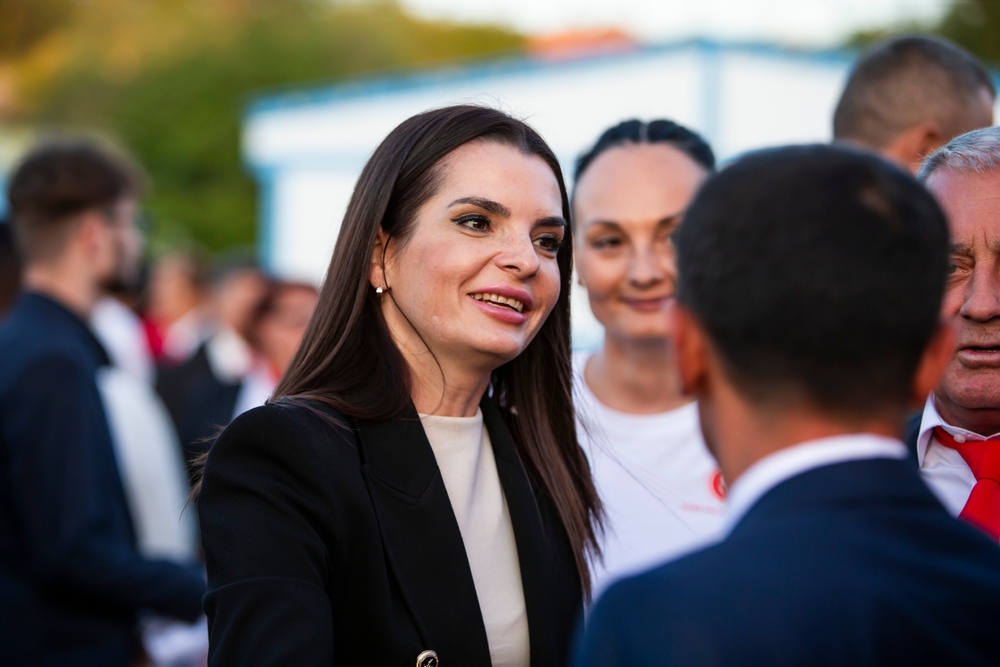
Head of the Gagauz Autonomy (Bashkan) Evgenia Gutsul Photo: Victor Mogyldea/Shutterstock
One would expect this role to be played by Transnistria, the unrecognised breakaway republic with actual Russian troops on its territory. However, while Transnistria, which borders Ukraine’s Odesa region, has been keeping relatively quiet, in Gagauzia, an intense and loud pro-Russian power struggle has been unfolding throughout the 19 months of the war in Ukraine. Gagauzian political elites entered into a competition concerning who could voice more support to Russia, passing controversial anti-LGBT and “pro-Victory Day” laws and supporting numerous protests against the national government. This culminated with the entrance of a scandalous oligarch based abroad into Gagauzian politics.
Power struggles
In the recent elections for the Bashkan (the executive head) in Gagauzia, the “no-name” Evgenia Gutsul emerged victorious as the candidate endorsed by the Shor Party. The party’s founder and leader, Ilan Shor, is a fugitive oligarch who has been orchestrating his political activities against Moldova’s pro-European government from exile in Israel. He was sentenced in absentia to 15 years in prison for fraud and money laundering in the case of a “theft of a billion” from 2014 – the biggest banking scandal in all of Moldova’s history. He was then deprived of his position in parliament and the party itself was declared unconstitutional in June. All of its members were banned from participating as candidates in elections for the next five years.
Even though the investigations and raids by government bodies resulted in evidence of numerous violations in the Gagauzian elections, such as illegal campaign financing and meddling with the voter lists, the People’s Assembly (the legislative body) of Gagauzia, as ever, opted for confrontation instead of cooperation with Chișinău. And Gutsul, only months ago a completely unknown figure in Gagauz society, was inaugurated as the new Bashkan with unprecedented festivities. By this point such a loud approach has become Shor’s signature (the source of financing is still unknown).
Immediately after Gutsul’s victory, a two-month-long saga of struggle for executive powers emerged between the People’s Assembly and Shor’s henchmen. On September 20th, the People’s Assembly finally approved the composition of the Executive Committee, which was a clear win for Shor, even though, in practice, it gave control of both legislative and executive organs to Dmitry Konstantinov, the speaker of the People’s Assembly. But this is clearly not the end of the story. There are some pressing questions to be asked here. First, why is Gagauzia now Russia’s main tool of influence in Moldova? Second, how did Shor gain support in Gagauzia? And most importantly, what does it mean for Moldova’s future?
In the April elections won by Gutsul, seven other candidates vied for the position of Bashkan, with most of them advocating for closer ties with Russia. The pro-European government in Chișinău did not even try to nominate a candidate due to the low level of support from among the local population. It may seem strange that geopolitics plays a more important role in local elections than the pressing issues of social welfare, the redistribution of resources or even the preservation of ethnic identity. The reasons for all this become clear when we look at the historical context.
Identity crisis
The Gagauz are a stateless Turkic Orthodox Christian ethnic group scattered throughout the Balkan peninsula. Their origins are disputed, and there are as many as 21 different theories on where they come from. What history is sure about, however, is that in the 19th century, tsarist Russia offered some of them conditions to move to southern Bessarabia, which it annexed in 1812. Later, this land was allocated to the Moldovan and Ukrainian Soviet Socialist Republics. Intensive Russification policies in the region during tsarist and Soviet rule did not exactly help develop Gagauz national identity, but the language was still preserved in informal spoken form.
In the 1990s, with the collapse of the Soviet Union and radical nationalisms popping up everywhere, including Romanian nationalism in Moldova, the Gagauz people declared their own republic. Narrowly escaping a bloody civil war, with a great deal of mediation from Turkey, they were granted a special legal status with a degree of economic and political autonomy protected by the Constitution of Moldova. Out of 126,000 Gagauz currently living on the territory of Moldova (according to the national census from 2014), 89 per cent are concentrated in Gagauzia.
With the whole economy on its knees after the collapse of the USSR, labour migration became a widespread phenomenon across Moldova. Many Gagauz migrated either to Turkey or Russia because they spoke the local languages. Paradoxically, the rediscovery of Turkey did not bring about a renaissance in Gagauz identity. On the contrary, many Gagauz have been distancing themselves from the Turks, stressing their Orthodox Christian culture. Despite the EU and the US being the main donors in projects designed to promote Gagauz identity and economic development, the sentiments in the region are still primarily pro-Russian. Russian remains the language of education and official communication, while Russian TV channels dominate the media and entertainment landscape.
Since the declaration of the Gagauz Republic in 1989 and throughout the whole history of the autonomous region, Gagauzian political elites have been using geopolitical discourses and manipulating fears of a “unification with Romania” to distract people from socio-economic problems. This enabled them to get generous financial and political support from Russia while also misappropriating public money from the Gagauzian budget.
But when it comes to Ilan Shor, it was not only the pro-Russian narrative that resonated with voters. After all, other local candidates were also oriented towards Russia. What enabled Shor to consolidate his power in the Gagauz region (normally very cautious towards politicians from outside) was his manipulation of the deteriorating socio-economic situation in Moldova. This has been caused by inflation and the energy crisis, direct consequences of the full-scale war raging in Ukraine. Shor’s party promoted anti-government narratives stressing specifically the soaring cost of living and organised massive protests. At one point the party even openly admitted that it had arranged cash payments and transport for the protesters.
Disillusionment and apathy
Shor’s tactics did not stop at that, however. Throughout and after the election campaign, numerous grandiose promises were made to the public. Five days prior to the initial round of the Bashkan elections, Shor declared that his party had effectively “secured a special deal on gas and electricity prices in the areas we oversee”. The party also promised immediate benefits for voters: 500 million euros of investment for Gagauzia, 7,000 jobs in the region, and an increase in public sector salaries by 30 per cent. Furthermore, shiny 3D models of an airport and an amusement park (“GăgăuziaLand”) planned to be built in the area started circulating in social media.
While some parts of the population fell for these promises or the cash handouts, a much more concerning trend is the Gagauzians’ disillusionment and apathy concerning local politics. This has led to inaction in the face of election fraud and other violations of the law. People increasingly express a lack of trust in politicians and see no point in voting. This enables political actors like Shor to get away with crimes, all the while bribing the impoverished society during election campaigns with mere crumbs of stolen public money. Politicians stealing money has become a norm in the region. That is why the “at least they also share some with us” attitude has become the only way to deal with the situation for some people.
Shor’s increasing influence has significant implications not only for Gagauzia but (currently) pro-European Moldova as well. Arguably, Shor’s main intention was to gain power in Gagauzia and use it as a springboard to reach national politics. Since the Bashkan is legally also a member of the Cabinet of Moldova, they can be a useful tool in hindering Chișinău’s aspirations for Europeanisation. The position also gives Shor access to the highest level of decision-making. He has now successfully achieved the first step towards his ultimate goal, as Gutsul’s role is, as one former Gagauzian MP put it in an interview, “that of a piece of furniture in the Bashkan office”.
Along with this grand goal, Shor clearly needs access to the Gagauzian budget, which is possible only through control of the Executive Committee. He also seems to have achieved this. After two months of tensions and bargaining, with rumours about some MPs receiving as much as 200,000 euros for their vote in the assembly, the appointed Executive Committee now includes his loyal servants. Securing control of financial flows is also crucial for Shor because the organisation of aggressive electoral campaigns, dozens of protests and inaugurations with famous artists and red carpets cost a lot of money. Gutsul spent 1,784,841 lei (92,400 euros) in one month in the first election tour, which is almost 12,000 euros more than all the other candidates put together. And these are only the numbers officially declared for the electoral committee, which do not include expenses such as the remunerations for the world-famous artists who allegedly performed “for free”.
At the same time, Shor’s team understands that it was their glittering but shallow populist promises that enabled their ascent to power. Therefore, his public relations employees are working day and night. On September 20th Gutsul announced that she had made her first official visit to Ankara as Bashkan. She claimed to have talked to many investors ready to cooperate with Gagauzia, but on the Turkish side, the visit was not even duly covered by officials. Moreover, in an interview for Turkish media, she gave promises which are either impossible to keep or are already being implemented through the initiatives of previous legislators. These projects include introducing Gagauz language classes in kindergartens.
Gutsul also claimed that a mysterious “investor” has already agreed to provide 200 million euros to build an airport in the town of Ceadîr-Lunga. However, the investor’s name was hidden, and the town administration claimed not to be officially informed of this initiative. Furthermore, since the territory chosen for the airport is located 30 kilometres from the border with war-torn Ukraine, it does not seem possible to get approval in any way for building an airport in this area. A similar shady story is currently unravelling with the construction of the aforementioned amusement park in the village of Congaz.
Wider aspirations
All of the issues above are indicators of Shor’s attempts to create an appearance of keeping up with his given promises. This might also signal the party’s further ambitions to win the local elections in Moldova, which are scheduled for November. Using the same tactics and the success achieved in Gagauzia, Shor’s candidates might get elected in many more towns and villages throughout Moldova and might even aim for the parliamentary elections. Even though the current central government has been relentlessly trying to purge the political landscape of Shor’s influence, banning the party did not help. Shor has already announced three new movements which have been gaining popularity. Some of the Gagauzian political movements have already announced a merger with Shor’s new political projects.
Nonetheless, the investigations concerning the illegal financing of Gutsul’s campaign are still ongoing, and there are hopes that she will be impeached. However, a proper justice mechanism by nature works thoroughly and slowly, whereas criminal activity is quick. Coupled with an already dire socio-economic situation, these underhanded moves could cause irreversible damage to Moldova’s fragile democracy.
The war in Ukraine has shown that it is Gagauzia, not Transnistria, that is Russia’s main tool for influencing Moldovan politics. Being a legitimate entity with a legal right to affect local and national elections, Gagauzia is much more influential than the de facto independent Transnistria. While the Kremlin wins in any case, since it does not matter which puppet it gives money to, it is the Gagauz people who are the losers in all this. While relations with Chișinău are rapidly deteriorating, and the budget allocated for the region’s development is pouring into some questionable pockets, the degradation of the political class and the indifference of the local community are increasing. All the while, the Gagauz people are becoming depleted, disempowered and stripped of their future and identity.
Irina Percemli is an MA student of European Politics and Society, a joint programme by Charles, Jagiellonian and Leiden Universities. She is interested in the EU’s foreign policy, enlargement and democratisation in Central and Eastern Europe.