
Ukraine and NATO. Five lessons after Russia’s full-scale invasion
The upcoming NATO summit in Vilnius will be dominated by discussions on the Russian invasion of Ukraine. While member states have continued to provide all manner of aid to Kyiv, the Alliance has yet to take any concrete steps on Ukraine’s potential membership. Guidelines are now needed more than ever to strengthen both the security of Ukraine and the region.
Russia’s full-scale aggression against Ukraine not only radically changed the security situation for the Euro-Atlantic space, but also affected the global balance of power and the interests of both individual states and the alliances they belong to. NATO, which directly borders Russia, had to respond to a qualitatively new security and political landscape in the region. And this reaction will not be comprehensive without political lessons, which should be drawn from Russia’s full-fledged war against Ukraine.
July 4, 2023 -
Mariia Zolkina
-
Hot TopicsIssue 3-4 2023Magazine
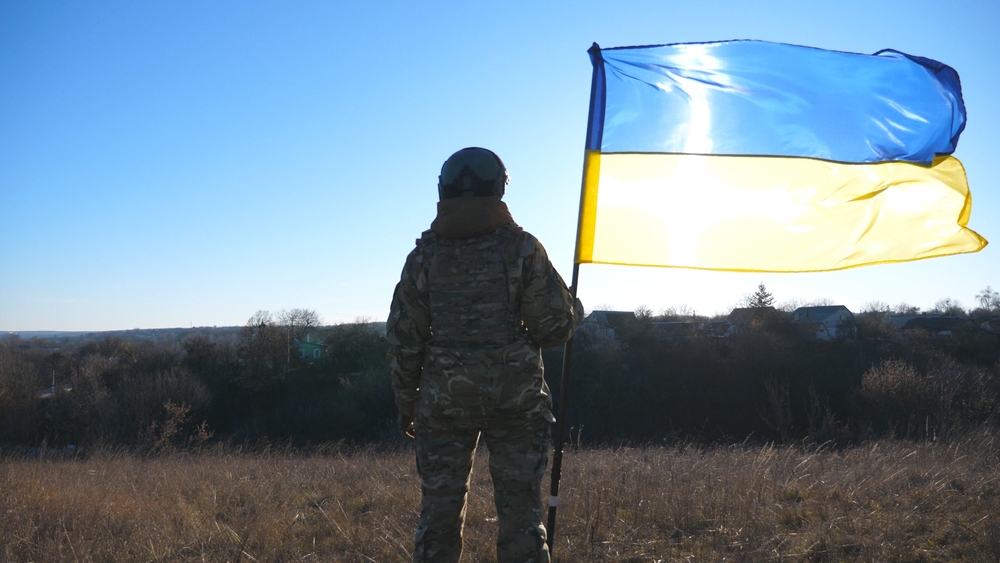
Photo: OLEH SLEPCHENKO / Shutterstock
Lesson 1. Fast accession track
Russia’s full-scale aggression against Ukraine has made NATO politically reconsider the accession track for countries with membership aspirations, namely Finland and Sweden. The Membership Action Plan, which appeared to be the established political instrument for the domestic transformation and preparation of candidates to join NATO since 1999, was consciously omitted in this process. This was directly explained by two major factors. First, the main political trigger for this quick accession option was the new stance of military forces in Europe because of the unprecedented scope of the war started by Russia. Second, this decision was technically backed by both Finland and Sweden, who were already being integrated into many of the Alliance’s mechanisms. There were no real obstacles related to the state of democracy, functioning of political institutions or military standardisation between these countries and general NATO requirements.
Though it was not Ukraine who immediately benefitted from the decision to accelerate NATO accession, this option should remain crucial for the future consideration of Ukraine’s NATO aspirations. The de facto integration of Ukraine’s defence capabilities with NATO will inevitably ease at least the technical side of its membership and help Ukraine militarily integrate with the Alliance before fully joining. Thus, political decisions regarding institutional capacities, as well as the political decisiveness of NATO members concerning Ukraine’s accession, will likely be the leading factors in the case of Ukraine. The rapid NATO reaction to the applications from Finland and Sweden has created a fundamental political precedent, suggesting that Ukraine will not have to go through the action plan process.
Lesson 2. Defence at the borders
Russia’s unprovoked large-scale invasion has forced NATO to reassess its overall strategic vision of the security landscape in the Euro-Atlantic space. Russia is now being treated as “the most significant and direct threat to the Allies’ security”, which was stressed at the NATO Madrid summit in 2022. Also, following this political signal, NATO was in essence pushed to reshape its defence and military strategy in case of any Russian aggression against one of its member states. In particular, NATO is shifting from so-called deterrence by retaliation to deterrence by denial.
The atrocities carried out by the Russian army in temporarily occupied Ukrainian territories, like in Bucha, Irpin and other towns, were the main reason why NATO started to focus on preventing the occupation of any territories in case of invasion. This is designed to stop Russian forces from potentially moving somewhere deeper into their territories. The military and political logic behind this re-evaluation is directly drawn from the fast movement of Russian forces within the first months of their large-scale invasion of Ukraine. Consequently, NATO as a single actor, as well as its member states, will have to concentrate troops in border areas on a constant basis, increase their defence and military budgets, and synchronise most of their plans more than ever before.
Lesson 3. Intergovernmental defence cooperation should encourage NATO’s policy as a collective actor
Another lesson in light of Russian aggression is that defence spending, as well as defence strategies, can differ from one member state to another depending on how serious the threat for them is from either conventional or hybrid aggression. A NATO of various speeds is highly likely to emerge in the near future. This could mean that defence and security policies will be upgraded in countries bordering Russia and Belarus, in contrast to less significant changes in the respective policies of other NATO member states.
In particular, while Poland, for instance, has been rebuilding its own defence capacities and learning how to implement territorial defence forces as an instrument of resilience in case of aggression, the majority of NATO member states have not even increased their military spending.
However, the securitisation of foreign and partially domestic policies in countries bordering Russia will most likely encourage changes at the subnational level of NATO, rather than affect only the national level in these states. Russia’s invasion of Ukraine has proven that even if some NATO member states were not interested in upgrading their own military and defence capacities, they will directly or indirectly contribute to it at least in NATO border states.
Another aspect in this regard, is that there must be a clear understanding of the correlation and interdependence between financial support to Ukraine now for its victory, on the one hand, and the future scope of defence spending for NATO and EU member states, on the other. Thus, if Ukraine fails to liberate the currently occupied territories and no sustainable peace is found in the region, the defence and military spending of NATO member states will inevitably increase for years to come. This rise will be dramatically beyond the NATO guideline of two per cent of GDP, and will involve not only the Eastern Flank of NATO. In 2022 only seven NATO member states met this defence expenditure guideline and exceeded a two per cent share of their GDP.
Lesson 4. Security through inclusion
The policy of keeping Ukraine out of NATO has failed to guarantee security in the region and prevent Russia from territorial expansionism. This is one of the most crucial political lessons which is not still fully understood by all NATO member states. Viewing Ukraine’s probable accession to NATO as a factor that would lead to potential Russian escalation proved to be a strategic miscalculation both before and after 2014.
The escalatory plans of Moscow have no direct connections to Ukraine’s ambitions towards NATO. Thus, at the beginning of 2014, when Russia occupied Crimea and one-third of the Ukrainian Donbas region, Ukraine was still a neutral state. This was in line with the respective changes made to Ukraine’s domestic and foreign policies in 2010 by then President Viktor Yanukovych. The official elimination of this neutral status took place only in December 2014, when decisive battles in Donbas were taking place. Moreover, in 2021 before the large-scale invasion, Ukraine was no closer to NATO membership than it was in previous years.
This is why keeping Ukraine outside of NATO both failed to deter Russia from invasion and to a certain extent even created favourable conditions for it to attack. Despite the official arguments of western countries regarding the lack of compliance on the side of Ukraine, especially concerning a number of technical and political standards for NATO membership, NATO’s policy towards Ukraine was constantly affected by some members’ policies towards Russia. The fear of a possible Russian reaction has proven to be one long-lasting counter argument against the acceleration of Ukraine’s possible NATO membership. Starting at least since the Bucharest summit in 2008, this approach has allowed Russia to essentially treat the invasions of both Georgia and Ukraine as actions without serious consequences. Yet, in contrast to the lessons mentioned above, this did not lead to NATO learning from its past. In particular, because of tough discussions between Ukraine and NATO members in light of the upcoming Vilnius summit, Kyiv faces rather similar obstacles today. Some members are reluctant to either start the accession process of Ukraine, or even give a clearer signal beyond the already existing formulations from the Bucharest summit declaration. This is despite the fact that circumstances have crucially changed and the former policy of politically deterring Russia by keeping Ukraine in the NATO waiting room has proven to be fundamentally wrong.
That is why Ukraine not only started its NATO application in 2022 but also insisted that NATO’s overall approach should change. Of course, Kyiv is hoping for clearer guidelines that will help it join the Alliance after Sweden.
As of now there are not only political, but also security arguments behind this push. First, a sustainable peace not only for Ukraine but for the entire region seems to be impossible without the liberation of all the Ukrainian territories currently occupied by Russia. This includes Crimea and the parts of Donbas occupied since 2014. Any piece of Ukrainian territory left occupied will serve as a military base for Russian forces and a starting point for new assaults in the future. Moreover, the continued occupation of Crimea will prevent any free navigation in the Azov and Black Seas, not only blocking Ukrainian exports but also harming the security and economic interests of other Black Sea countries.
Second, the post-war security architecture in the region must react to this new aggression of the Russian Federation by providing Ukraine with security guarantees. Despite ongoing discussions of bilateral or multilateral security guarantees provided by certain countries to Ukraine, none of these options are likely to work better than a collective defence guarantee offered by NATO membership. Consequently, from Kyiv’s point of view, security in the region should be guaranteed by including Ukraine in NATO, rather than keeping it outside the Alliance.
Lesson 5. Defence capacities must be backed by the resilience of society and state
The potential resilience of local communities is frequently underestimated, although this factor proved to be of crucial importance in the case of Ukrainian resistance against Russia. The general lesson and conclusion in this regard is that while preparing for deterrence by denial at the very borders of NATO member states, this strategy should include not only upgrading militaries and territorial defence forces, but administrative measures. This would strengthen the resistance and rapid crisis-management capacities of local communities.
Ukraine’s experience with front line communities in the period of 2014-22 provides several recommendations in this regard. First, there should be a legal basis for a rapid switch from a civil form of governance at the local and regional level, to a civil and military, or purely military, mode of administrating local communities. This procedure must be secured in advance and made as fast and easy as possible in the case of a direct external security threat. Second, it is clear that decentralisation, including in terms of administration and financing, helped to develop the respective skills of governance and self-sufficiency in local communities and increased their resilience potential in relation to the large-scale war. Third, there should be updated and upgraded working plans for the evacuation of civilians from high-risk zones, as well as crisis response plans for every object of critical importance. Thus, the resilience of local border communities does not necessarily mean their militarisation, but to a greater extent means the advancement of the administrative and self-governance capacities of local communities. This will help them operate in the case of an emergency or security threat.
How to move forward
Though Ukraine has been receiving unprecedented political, military and financial support from its western partners, one of the main security issues important for post-war arrangements in the Euro-Atlantic space remains unanswered. This involves clarity on when and how Ukraine will become a part of the pan-European and Euro-Atlantic security architecture. Clarity in this regard has fundamental significance not just for Ukraine and Central Europe, but for broader norms in the system of international security.
Thus, the first priority for Ukraine is to liberate its entire territory and prevent the conflict’s continuation. After all, this could lead to a decrease in support and the further entrenchment of Russia’s occupation. The second priority is to set up a path towards the inclusion of Ukraine in a post-war security framework. This could potentially include the bilateral or multilateral cooperation of Ukraine with certain partners, as well as the development of Ukraine’s own defence capacities and capabilities. Yet, only NATO membership would make all this truly comprehensive and complex.
Security guarantees, if provided to Ukraine by some of its partners, must be in the form of international agreements that are legally binding, in contrast to the Budapest Memorandum of 1994. It will be critically important that such guarantees are not treated as a substitution for NATO membership. They should play a role both before and alongside Ukraine’s accession to the Alliance, but not instead of it. At the same time, Kyiv should not only be asking for temporary security guarantees, but offering its own contribution to the security of those states who will provide these guarantees to Ukraine. This would ease both domestic and international discussions about the scope and content of such guarantees for Ukraine. While negotiating any future security architecture and Ukraine’s membership in NATO, there should also be an acceleration in NATO policy towards Russia and the Alliance’s relations with Moscow in the mid-term perspective.
While all these tasks still require some time, giving Ukraine a clear signal on the practicalities of its accession to NATO is a necessary political step, preferably to be made at the upcoming NATO summit in Vilnius. This is true even if the main decision of the Alliance on relations with Ukraine is consciously postponed to the period after Ukraine’s counteroffensive and closer to next year’s summit in Washington.
Mariia Zolkina is the DINAM Fellow (2022-2023) in the department of international relations at the London School of Economics. She is a Ukrainian researcher and political analyst working in the fields of regional security, reintegration policies in occupied territories and wartime diplomacy.