
Text resize: A A
Change contrast

From workers to refugees to workers again. What’s next for Ukrainians in the EU?

Europe’s active response to the millions of Ukrainian refugees who fled Russia’s invasion has often been viewed as a positive approach to migration policy. Despite this, the future remains uncertain for these new residents. Government decisions across the continent will now play a role in deciding not just the economic future of the EU but Ukraine itself.

Russia’s decision to launch a full-scale war in Ukraine has resulted in millions of Ukrainians fleeing the country via its western border. According to the United Nations High Commissioner for Refugees (UNHCR), as of April 2023, 8,174,189 people have been recorded as refugees from Ukraine across Europe. Exactly 5,044,039 of them registered for temporary protection schemes in Europe.

July 4, 2023 - Lesia Dubenko - AnalysisIssue 3-4 2023Magazine

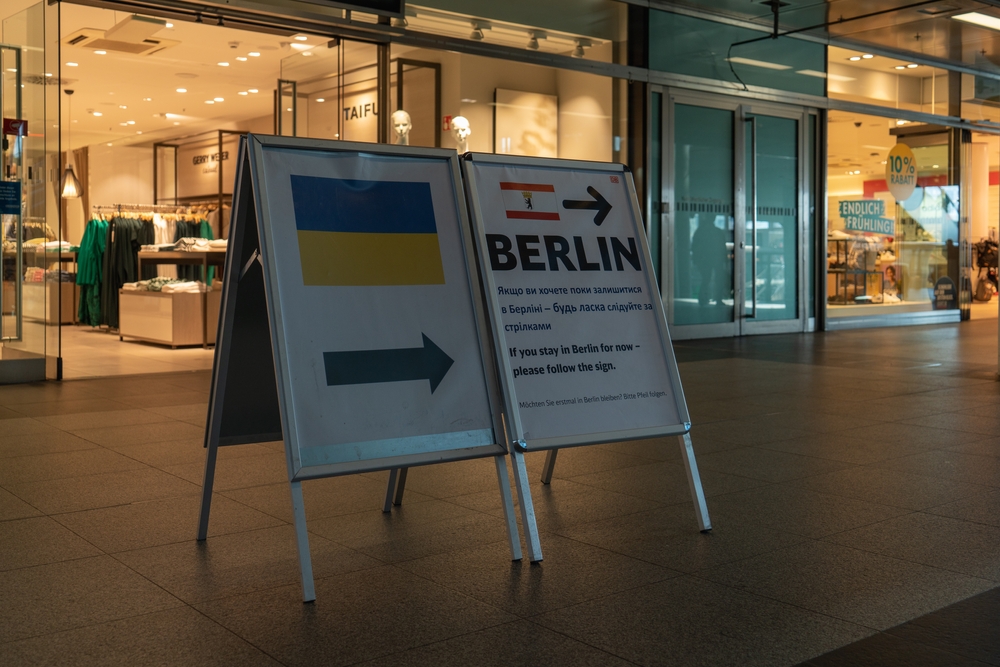
Arrival of Ukrainian refugees at Berlin Central Station. Photo: Mo Photography Berlin / Shutterstock

Some have already found employment. Others are struggling to do so due to a host of barriers. This is despite the EU’s recurring mantra of the bloc’s ageing population and the need to attract an external workforce. Meanwhile, Ukraine is facing a possible shortage of people in the long term for rebuilding the war-torn country. 

“Ukrainianised” EU

In spite of the widespread emigration of Ukrainians already in the 19th century to North and Latin America – as well as the mass repatriation of Jews to Israel in the late 1980s – Ukrainian migration flows have only recently become subject to scrutiny. Traced to the 1990s, the greatest emphasis in studies is placed on the Ukrainian workforce abroad that emerged when Ukrainian women went to work in Italy as caretakers and menial workers. This was a move much demonised in Ukrainian society, with the then President Leonid Kuchma suggesting that these women are sex workers.

Over the years, the host countries for the Ukrainian workforce varied due to the accession of the Visegrad countries to the EU in 2004 – a popular destination for menial workers and traders alike especially from Western Ukraine. Russia, the top country for Ukrainian workers for many years, served as an alternative, especially – but not exclusively – for people from the eastern regions. The situation drastically changed after Russia instigated a war in Donbas and seized the Crimean Peninsula in 2014. As a result of both political reasons and restricted transportation means – Ukraine terminated direct flight connections with Russia in 2015 – Ukrainians from all over the country once again have started to look to the Visegrad states and beyond.

According to the 2021 International Centre for Migration Policy Development report “Ukrainian Labour Migration to the EU State of Play, Challenges and Solutions”, during 2014-19, Poland, Czechia, Hungary, Slovakia and Lithuania were the top EU destinations for Ukrainians. These countries issued all types of permits that range from three to 12 months mostly for seasonal and menial work. Some of these involved a special visa for countries with stricter immigration rules.

While the outbreak of COVID-19 slowed down Ukrainian labour migration, it did not fully stop it, as exemplified by the 2020 Atlantic Council article “Ukraine needs a whole new approach to labour migration.”  The trend continued in 2021, as 600,000 Ukrainian workers left the country, the highest number in 11 years. As a result of such migration flows, already before the full-scale war, the presence of Ukrainians, documented and undocumented alike, in the EU was sizeable. According to the Economist, in Poland the Ukrainian diaspora has reached 1.4 million people, while in Italy it now amounts to 250,000. This is one of the likely reasons why the EU’s response to the Ukrainian refugee crisis was coordinated and strong in comparison, for example, with the 2015 refugee influx.

When Russia launched the full-scale war on February 24th 2022, millions of people, foremost women and children, crossed Ukraine’s western border with Poland, Hungary, Slovakia and Romania. Different agencies provide slightly varying data as to the number of people registered in each EU member state. However, the consensus is that the main host countries include Poland, Germany, Czechia, Italy, Spain and Bulgaria, with Poland and Germany hosting over a million Ukrainian refugees each.

To deal with such a great influx, on March 4th 2022, the EU home affairs ministers unanimously agreed to activate the Temporary Protection Directive, which allows Ukrainians (as well as some other groups of people defined in the document) to receive a temporary residence permit, the right to work and live, social protection, the right to receive asylum in the future, and the right to return to Ukraine anytime. As of April 2023, 5,044,039 Ukrainian refugees have registered for temporary protection schemes in Europe, receiving the right to work. 

Some of them have already found employment. Data from the European Central Bank indicates that in Estonia, around 55 per cent of working-age Ukrainian refugees with temporary protection have found a job, while in Lithuania this share is around 50 per cent. In Poland, nearly 750,000 Ukrainians have been employed, while in Germany an estimated 65,000 Ukrainians have found employment. Meanwhile, the Polish Economic Institute revealed that almost 14,000 businesses were created by Ukrainians in Poland in the first nine months of 2022.

As a result of such prompt employment, some countries like Poland, Czechia and Germany saw slightly reduced unemployment rates thanks to the newcomers, as noted by the Ukrainian think tank “Europe without Barriers” in a special report.

The mantra of an ageing EU 

Labour migration from Ukraine to the EU, as well as from other non-EU states, did not happen by chance. It is the outcome of societal dynamics in the Union that have long been the focus of researchers and politicians alike due to the dwindling working-age population. In 2020 Germany, which belongs to the group of countries with stricter immigration policies, relaxed its work permit rules in the hope of attracting much-needed professionals, including highly-skilled ones, from third countries via dedicated platforms. In 2021, Volt Europa’s Member of the European Parliament Damian Boeselager wrote an op-ed for Euractiv titled “Don’t forget the 95% – why Europe needs to seize opportunities of labour migration,” where he indicated that an ageing society will result in huge skill shortages and hamper the EU’s productivity and economic relevance in the world. “Over the next 30 years, our active workforce will decrease by almost 50 million,” he indicated.

The latest assessments only serve to reinforce the narrative. According to Eurostat, the EU’s statistical arm, the proportion of people of working age in the EU is shrinking, while the relative number of those retired is expanding. The agency states that the share of older people in the total population is poised to increase significantly in the coming decades.

The ramifications of these changes are already felt throughout the bloc and are currently best exemplified in France, where protests against pension reform, which looks to increase the retirement age, have been ongoing since mid-January. The retirement age in other EU member states is slated to increase too, with Sweden, for example, planning to raise the age limit in accordance with increasing life expectancy starting in 2026.

To tackle the problem and preserve, among other things, the robust social welfare systems in Europe, in January, the EU Observer reported that the European Commission is looking to launch of a new mechanism encouraging migration from third countries to the EU, hoping to mitigate regional and industry-specific labour shortages. Yet the prospects of this endeavour are questionable as it is becoming increasingly clear that not all EU states, in spite of worrying societal dynamics, are ready to truly tackle the problem. The case of the Ukrainian refugees in the EU only serves to underscore it. 

While it is both true that many Ukrainians have been working in the EU for decades and others have found employment after February 24th, it is also true that only some EU countries chose to capitalise on the potential of such a great influx of people who, as noted by the OECD, have an educational profile, existing social networks and immediate access to employment. Already in March 2022, Poland introduced a simplified procedure – with employers simply having to notify the authorities of their employment – to grant Ukrainian refugees easier access to the labour market. According to Poland’s Family and Social Policy Minister Marlena Maląg, this process has already been used over 900,000 times. 

In Germany, which also hosts over a million Ukrainian refugees, the situation is not as straightforward. Although in June 2022, Germany’s Federal Labour Agency reported almost 900,000 job vacancies, especially in transport and logistics, sales, service, and healthcare, language and the hesitation to employ people who are in the country for a short period of time is proving to be a serious obstacle. Furthermore, to work in a regulated industry in Germany, for example, as a truck driver or pharmacist, applicants need to have their professional qualifications recognised. 

In France, according to Didier Leschi, who heads the French authority in charge of hosting refugees, the situation is likewise complicated, with access to housing and employment remaining arduous. This is more so due to the language barrier. 

Other states also seem to view Ukrainian nationals as only temporary residents. Svitlana Odynets, a migration researcher who is part of a University of Nottingham project in Poland, Romania, and the UK that looks to compare policies and practices of integrating displaced Ukrainians, says that Sweden is one of the main countries in this regard. In 2022, in her article for Sydsvenskan titled “Give Ukrainians a chance to contribute to society,” she emphasised the advantages of a better and long-term strategy for integrating Ukrainians into Swedish society that would be both beneficial for the host country and the refugees. Asked why Sweden is not keen on doing it, she responds that the current government – led by the centre-right Ulf Kristersson with backing from the far-right anti-immigration party “Sweden Democrats” – is focused on integrating people who are already in the country rather than the newcomers who are often leaving. Data from the Swedish Migration Agency confirms that while around 50,000 Ukrainians came to Sweden after February 2022, many of them are already leaving for other destinations in the hope of better integration conditions and job opportunities.

What about Ukraine?

It is unclear how the EU and the member states will go about integrating Ukrainians under the Temporary Directive or some other means, including member states’ national legislation or attracting a new workforce from non-EU member states, which is arduous due to paperwork, waiting times and language barriers. Still, for Ukraine the discussed migration flows play an equally paramount role. Undoubtedly, labour migration has had a positive impact in some areas. According to World Bank Data, during the period of 2014-19, Ukraine received 67.914 billion US dollars in remittances, with this source of income accounting, on average, for 9.5 per cent of annual GDP.

This, alongside other types of migration such as study permits, also resulted in the transfer of skills and the less measurable yet nonetheless tangible transfer of values – an aspect that is likely to have played a serious role in changing Ukrainian societal dynamics that have often involved Russia, which views Ukraine through a colonial lens. However, while these advantages certainly carry weight, Ukraine cannot afford for people not to return in the long term from refuge abroad. To that end, some data is worrying. 

According to a recent survey carried out by several bodies, including the German Federal Office for Migration and Refugees, 37 per cent of Ukrainian refugees would like to stay permanently or at least a few years. Though the percentage of those who want to return is almost similar – 34 per cent – this does not bode well for Ukraine, as 37 per cent means that roughly 340,000 people do not wish to go home.

Data from a survey by the Polish employment agency Gremi Personal show somewhat similar results. While 55 per cent of Ukrainians are planning to return home, with the majority stating that they will do so after their country’s victory, 38 per cent plan to stay in Poland while another seven per cent are planning to relocate. Relying on remittances as a means of funding the post-war reconstruction of Ukraine, though viable, is not optimal. Ukrainian society is a somewhat mystical creature, not least because the last nationwide census was carried out in 2001 and is thus long outdated. However, it is well known that Ukraine suffers from low birth rates and low life expectancy.

Furthermore, before the full-scale war, the forecast was that by the end of 2030, the number of working-age Ukrainians will have shrunk by three million people. The war losses are likely to further increase that number as young men and women continue to die on the front. With that being said, we return to the question of what’s next for Ukrainians in the EU? 

Will Ukrainians return?

Although there is no clear answer, several factors need to be considered. First, temporary protection is obviously not permanent and can be extended to up to three years. If Ukraine indeed manages to liberate its territories or the intensity of combat is reduced, then temporary protection may be revoked. It is unclear what status the remaining Ukrainians will possess and for how long this will be the case. It is also uncertain how easy it will be to gain this new legal status. The German government’s recent endeavour to relax citizenship rules does, however, suggest that at least some EU member states are mulling over these issues. 

Second, even though over 8,174,189 Ukrainians are now in the EU, many indeed have returned. According to the UNHCR, since February 24th 2022, 20,421,761 Ukrainians crossed the border, meaning that at least some proportion of people has returned home. If there is momentum for return, there is a chance that only a small proportion will choose to stay abroad. Finally, once the war is over, reconstruction and investment will inevitably take place, which translates into jobs, and this prospect may heavily entice Ukrainians to come back.

Whether it plays out like this or not is unknown right now. One thing, however, is clear: both the EU and Ukraine will have a hard time fixing their economies in the long run.

Lesia Dubenko is a Ukrainian political scientist and analyst. She is a graduate of Lund University (MSc in European Affairs) and covers issues relating to international affairs, migration and disinformation.

, , , ,

Partners

Terms of Use | Cookie policy | Copyryight 2026 Kolegium Europy Wschodniej im. Jana Nowaka-Jeziorańskiego 31-153 Kraków
Agencja digital: hauerpower studio krakow.
We use cookies to personalise content and ads, to provide social media features and to analyse our traffic. We also share information about your use of our site with our social media, advertising and analytics partners. View more
Cookies settings
Accept
Decline
Privacy & Cookie policy
Privacy & Cookies policy
Cookie name Active
Poniższa Polityka Prywatności – klauzule informacyjne dotyczące przetwarzania danych osobowych w związku z korzystaniem z serwisu internetowego https://neweasterneurope.eu/ lub usług dostępnych za jego pośrednictwem Polityka Prywatności zawiera informacje wymagane przez przepisy Rozporządzenia Parlamentu Europejskiego i Rady 2016/679 w sprawie ochrony osób fizycznych w związku z przetwarzaniem danych osobowych i w sprawie swobodnego przepływu takich danych oraz uchylenia dyrektywy 95/46/WE (RODO). Całość do przeczytania pod tym linkiem
Save settings
Cookies settings