
Text resize: A A
Change contrast

A story about the Elbe. A story about Europe

European civilisation has developed by means of a few large leaps: Rome, Renaissance, Enlightenment and the European Union. Of course, the EU’s role is still underway and thus we do not know what its end will look like. But what all these leaps have in common is their connection to the land. In this way, the story of the Elbe river and its surroundings is the story of European history as a whole.

I was commissioned to write a book about the Elbe river by the Labirynt Publishing House in Czechia. I have known the publisher – Joachim Dvořák – since 1990. Labirynt is known for publishing good books with very nice covers. That is why I was happy to receive its offer and more than anything else that the topic of my new book would be about the river. In my youth, I was racing in fast-flowing upper rivers.

November 16, 2023 - Jan Šícha - Issue 6 2023MagazineStories and ideas

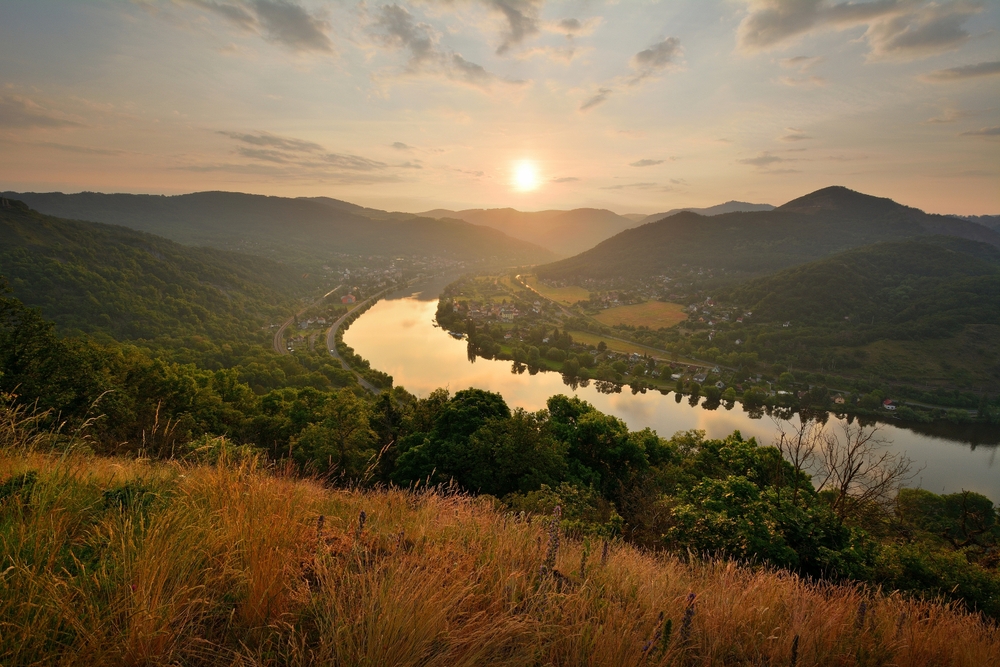
Sunrise over the Elbe River. Photo: Vojtech_706 / Shutterstock


Today, I opt for calmer waters and sail in larger boats. To me, a river is like the stream of life. Before I would kayak in the fast mountain streams, today I float in calmer waters with my children and grandchildren.

Influences that came from Saxony

In Czech the word Elbe has, grammatically speaking, a neutral gender. In German, on the other hand, it is feminine noun. It is as if at the border between Germany and Czechia a girl becomes a woman. The life of a woman is longer, just like the Elbe is longer on the German side. The Elbe allows you to look back in time, into Europe’s ancient history. It allows you to ponder and ask questions about the past, but also about the ecology and trade or even the ways in which people like to spend their free time. There is indeed a plethora of topics that the river inspires you to address. This is because when sailing on its waters, you encounter Europe.

In Litoměřice when you turn towards the border, you can see the Central Bohemian Uplands with the beautiful Labské pískovce (Elbe sandstones) in the background. This area is known for its canyons, deep gorges and rocky towns. It is difficult to imagine more beautiful scenery. Romanticism and its love of nature came to this area from Saxony, also thanks to the Elbe river. Today, the beauty of the canyons attracts thousands of hikers and climbers who flock here from both countries.

For centuries, the border between Czechia and Saxony was not a language border. The language that was used by the Czech Germans derived its vocabulary and pronunciation from the language that was spoken in Saxony. The border rather marked a division between two religions. While Catholics lived in Czechia, which was part of the Austro-Hungarian Empire, Protestants lived in Saxony. At the moment, this area is inhabited by the fewest believers in all of Europe.

The 17th century Saxon Renaissance left beautiful buildings also in Czechia. But its legacy is also that of great ideas and large reforms. These include state and church reforms, reforms of the means of production and other aspects of life. They all arrived here from Saxony. The Enlightenment and its emphasis on reason and rationality are also seen as products of the Protestant knowledge system, which originated in Wittenberg and Halle and spread throughout Europe.

Therefore, when you are in the place where the Elbe crosses the border, all these interdependencies come to mind and call for reflection. While it was true that Czechia was encountering the great ideas that were coming to it from the German lands, it was also experiencing aggression and pressure. Polabian Slavs, also known as Elbe Slavs, gradually disappeared because they were the weaker side (they were largely conquered by the Saxons and Danes starting in the ninth century and subsequently included and gradually assimilated within the Holy Roman Empire – editor’s note). Now, we, the Czechs, have the chance to live in times when the European Union is helping those who are weaker. This is a unique time for our land. And quite new as well.

Where our river flows

Czech history loves dates that end with eight. One of them is the year 1618, when religious disputes led to the famous Defenestration of Prague, which in turn is said to have led to the Thirty Years’ War. Because of the war, Pavel Stránský, a great Czech intellectual, fled the country. He later wrote a book in Latin about Czechia titled About the Czech State. This was later smuggled to the Kingdom of Czechia. The book contained a description of the country’s geography, nature and politics. Most importantly, Stránský’s reflection focused on the question of the degree of Czechia’s independence. This question remains valid today and for sure will not lose its relevance in the future. We are a small country with a minority language that has been nestled between Germany and Russia for 15 centuries.

This brings us to Stránský’s message, which reads as follows: “The question whether Czechia is attached to the German Reich and is subject to the so-called fiefdom law is indeed complex and difficult. Many make our country a fief to Germany and our dukes vassals or fiefs to the emperors. Others, in turn, are defending a conviction that their loyalty should not be towards any secular ruler but only towards the King of Heaven. They do not grant any rights over them to the German lords and say that the Czech noblemen receive power and they wield it over the nation, which, as they say, is free only thanks to God’s grace and the will of the people.”

At the moment, we are asked about how independent we are from the EU. This is not a well-formulated question. In my book I would like to broaden our horizon beyond where the Czech eye cannot currently go. In Czech thinking, the Elbe river ends somewhere in Dresden, in Meissen at its furthest. And later the word Hamburg appears. The word Cuxhaven, which is where the Elbe enters the sea, is too difficult. In that case, for the majority of Czechs, the Elbe enters the sea at Hamburg. I would thus like to focus Czech attention on other cities such as Magdeburg, Dessau, Wittenberg, Tangermünde and Torgau, where “our” Elbe also flows. In all of them there is a piece of Europe which is worth telling – and it is worth telling here.

The Czech Litoměřice, which is one of the most beautiful cities on the Elbe river, was once a seat of the higher court of the Magdeburg (German) law. Before the Thirty Years’ War the non-Catholic Czech clergy from here would go to Wittenberg to be consecrated. The more talented ones studied here at the university, while the less gifted ones would be freed from this duty, despite the strict requirements for educating the pastors. The Czechs were the inhabitants of the country of Jan Hus, who had been rehabilitated and appreciated by Martin Luther. Thus if we were to point to something that took place on the Elbe river and which changed European, or maybe even world, history, it was for sure the Reformation. But also, the very last stage of Bauhaus development took place here. It happened before the Nazis forced some of the main representatives of this school of modern life and thinking to flee to America. Paradoxically, by this act they ensured Bauhaus’s global influence. 

Looking at the Elbe, we can see more ties and interdependencies. According to historical sources the first saint who lived here by the river was Wenceslaus I, or Václav the Good. Now regarded as the patron of Czechia, he indeed made a great contribution to the Czech state. Since the tenth century, the Czechs have had their saint who came from a royal family, allowing them to become a part of the Christian family of nations. Charles IV proclaimed Václav the Good to be the eternal prince of Bohemia. The crown of the Czech Kingdom is called the Crown of Saint Wenceslas, and all of the Czech rulers who wore it were, symbolically, Saint Wenceslas’s subjects. As a result, we could even ask how would Václav the Good view our current government and its members?

The story of the Elbe river and its surroundings is European history. Hence we have had Saint Wenceslas of Stará Boleslav, Saint Benno of Meissen, Saint Norbert of Magdeburg, and Saint Ansgar, who was the first bishop of Hamburg in the ninth century. Benno, in turn, was the tenth bishop of Meissen in the 11th century. Saint Norbert, who was the founder of the Premonstratensian order, was the archbishop of Magdeburg in the 12th century. He is buried in Prague, where he has been revered since the Czechs collected his remains from a burning Magdeburg during the Thirty Years’ War. As a result, there is a sad connection between Magdeburg, which was burnt during the Thirty Years’ War, and Dresden, which was destroyed during the Second World War.

Dresden

We can find some parallels that follow the course of the river. For example, among those who arrived in Dresden shortly after the end of the Second World War was Zdeněk Tmej, an extremely talented Czech photographer. Since his camera had been stolen, he only left us with an oral testimony of what he saw. It reads: “When we were crossing the border and approaching Dresden we thought that ahead there was a sea. Dresden was grounded into powder. We saw a tram which was completely misshaped by the heat of a fire bomb, we could smell a sweet fragrance and hear an army of flies, we saw a crazy, quiet old lady, a river full of human bodies, and charcoaled food that belonged to already non-existing people. An ‘unbelievably’ destroyed classicist building full of sculptures, picturesque views of the remains of the once perfect ancient bodies which were now looking at us through the wall ruins.” The burning of Dresden must have looked like a glow over the Ore Mountains. The flames were seen by the prisoners of the Theresienstadt Ghetto. For them, the sight meant hope for the end of the war. This story is also the story of the Elbe river.

European civilisation has developed by means of a few large leaps: Rome, Renaissance, Enlightenment and the EU. Of course, the EU’s role is still underway, and thus we do not know what its end will look like. The truth is that at each stage we process the legacy of the preceding stage. The Elbe valley is an area composed of very diverse regions. In the past, their residents were waiting for their neighbours to get weaker in order to knock them down and take over their territories. Today this is no longer the case, which is something new.

There are three capitals located along the Elbe River. Dresden is the capital of Saxony, Magdeburg is the capital of Saxony-Anhalt, and Hamburg is a capital in itself because it is a free Hanseatic city. There are even more capitals of old German lands, which could also be found along the river. Magdeburg in fact is more populous than the cities of Hradec Králové and Pardubice, which oversee two Czech regions. Together, they make up a territory of about half of Saxony-Anhalt and the same is true for their population.

Navigation chain

When sailing along the Elbe river you will eventually reach Hamburg. This second city of Germany, in terms of size, is home to over 1.85 million people. It is an important trade, cultural, media and modern tech centre. It is a city which has always been in the lead. The waterway which leads to Hamburg is strategically important for the Czechs, however, it has been neglected in the last few decades. I believe that after current talks about the Elbe, in two years the river will once again be available for ships, and its harbours will once again be full of life.

In my book about the Elbe, I am examining how this river could become reunited in the 21st century. Back in history there was a very strong uniting link. It was the navigation chain. In fact, “navigation on the Elbe River has enjoyed freedom” since Napoleon’s defeat in 1821. Once the political screws started to tighten, the elite opted for free trade over the sovereignty of local rulers. This means that the development of trade was more important than obtaining money from customs. For centuries, the Elbe river was an artery of civilisational and trade exchange, but it was the industrial era which brought serious changes to transport.

The novelties of the industrial era included both the railways and the mass use of coal. Until then, to travel against the current, people or animals had to drag boats along the river. They also used sails, which we can see in some old paintings and prints. Sailing rafts too could sail against the current, but they were later dismantled and used for constructing buildings. In Hamburg, for example, houses were built with wood from the Bohemian Forest.

In the 19th century the Czech lands were the industrial heart of old Austria. It was here that the technical schools were built and many patents proclaimed. The Prague Shipping Company (Prager Schiffart-Gesellschaft) was established in 1822, once it was confirmed that the Elbe was a free river. The entrepreneurs of the time had to trust the politicians, as the investments in navigation were massive and were to bring back big profits.

Rail transport was faster, independent of weather and, since the beginning, designed in such a way that it could operate without larger breaks. Water transport was burdened with established customs and privileges. Despite that, a chain was placed on the bottom of the river to allow boats to float. At first glance, the functioning of the navigation chain may seem easy. A strong chain is installed on the bottom of the river and throughout the entire length of the vessel, from the peak to the back. The chain is then wound into a reel, which was propelled first by a steam machine and later a wheel propeller. The steam blades, powered by water, were later replaced by the much more efficient ship propeller.

The first five-kilometre-long trial section of this chain navigation was opened on August 15th 1866 near Magdeburg. It was a place with a strong water current. The trial was successful and a 288-kilometre chain was placed on the route from Hamburg to Magdeburg. Anyone who had a boat and wanted to travel faster could attach it to a steam tugboat. The volume of transported goods did not grow by much, however. In Dresden, the concession for chain navigation was granted in 1869, while in Austria the first river trip to Usti using a tug took place on May 5th 1872. Coal consumption was lower compared to railways. Boats were 40 to 50 metres long and seven to eight metres wide. They were also from 50 to 65 centimetres deep. This allowed ships to sail, even in summer when the water level is low.

The example of chain navigation demonstrates the life of a river. The new technology came from France, but the boats were manufactured along the Elbe. This was thanks to a technically talented resident of Dresden. His name was Ewald Bellingrath and he was the director of a local shipping company. It was him who introduced the chain wheel to the river system.

Nevertheless, chain travel was gradually abolished north of Hamburg. This process began in 1895. The last steam boat was sailing near Usti on the Elbe until 1948. The industrial era on the Elbe ended in the 1990s, but the abandonment of chain transport was its harbinger.

By discovering the Elbe, you can get to know a part of Europe. Our small European continent is a place full of great differences. To cope with them, people had to develop a set of legal and communication rules. This practice could serve as an inspiration for the wider world: how to set rules, persevere and do well, sometimes.

I cannot wait for the summer, when we will sail on the Elbe on an inflatable raft and meet people along the river. We will start beyond Meissen – beyond the border to which the Czech eye usually reaches. I look forward to talking to people who repaired the only remaining chain steamer. They reconstructed it in 2010. It is preserved because it served the rowing club from 1933 to 2005. The steamship can be seen in the port of Magdeburg. The reconstruction was certainly done by enthusiasts who will tell me many stories. I will capture them and save them, and I am sure there will be many more to come.

Europe shown along the Elbe points to both the beginnings of Christianity, the disappearance of the Polabian Slavs, religious struggles, scientific discoveries and the industrial age. It also points to today’s efforts in an open Europe to find a balance between entrepreneurship and environmental care, between the depopulation of some areas and the overpopulation of others. On the Elbe, it is easy to see that in Europe we cannot do without a keen understanding of what lies behind us if we want to rationally approach what lies ahead.

This essay first appeared in the Czech publication Listy, a bimonthly magazine for culture and dialogue.

Jan Šícha is a diplomat and journalist. He comes from Usti and focuses on the Czech-German borderland, Germany and the European Union. He was the head of the Czech Centre in Munich.

, , , ,

Partners

Terms of Use | Cookie policy | Copyryight 2025 Kolegium Europy Wschodniej im. Jana Nowaka-Jeziorańskiego 31-153 Kraków
Agencja digital: hauerpower studio krakow.
We use cookies to personalise content and ads, to provide social media features and to analyse our traffic. We also share information about your use of our site with our social media, advertising and analytics partners. View more
Cookies settings
Accept
Decline
Privacy & Cookie policy
Privacy & Cookies policy
Cookie name Active
Poniższa Polityka Prywatności – klauzule informacyjne dotyczące przetwarzania danych osobowych w związku z korzystaniem z serwisu internetowego https://neweasterneurope.eu/ lub usług dostępnych za jego pośrednictwem Polityka Prywatności zawiera informacje wymagane przez przepisy Rozporządzenia Parlamentu Europejskiego i Rady 2016/679 w sprawie ochrony osób fizycznych w związku z przetwarzaniem danych osobowych i w sprawie swobodnego przepływu takich danych oraz uchylenia dyrektywy 95/46/WE (RODO). Całość do przeczytania pod tym linkiem
Save settings
Cookies settings