
Text resize: A A
Change contrast

How Ukraine breaks Russia’s weaponised propaganda and disinformation

Ukraine’s fight against Russian aggression continues to make headlines around the world. However, what has not been discussed to any great extent is the fight against disinformation and collaborators on the home front. With no end in sight to the fighting, it is clear that such espionage could prove pivotal to the war’s outcome.

More than a year into Russia’s full-scale war on Ukraine, the fight with Moscow’s propaganda is entering another important stage. Despite all the efforts of Ukraine’s special and secret services, there are still some pro-Russian Ukrainians or Russian citizens themselves who are spies, trying to provide essential information to the Russian Federal Security Service.

April 29, 2023 - Vladyslav Faraponov - Hot TopicsIssue 2 2023Magazine

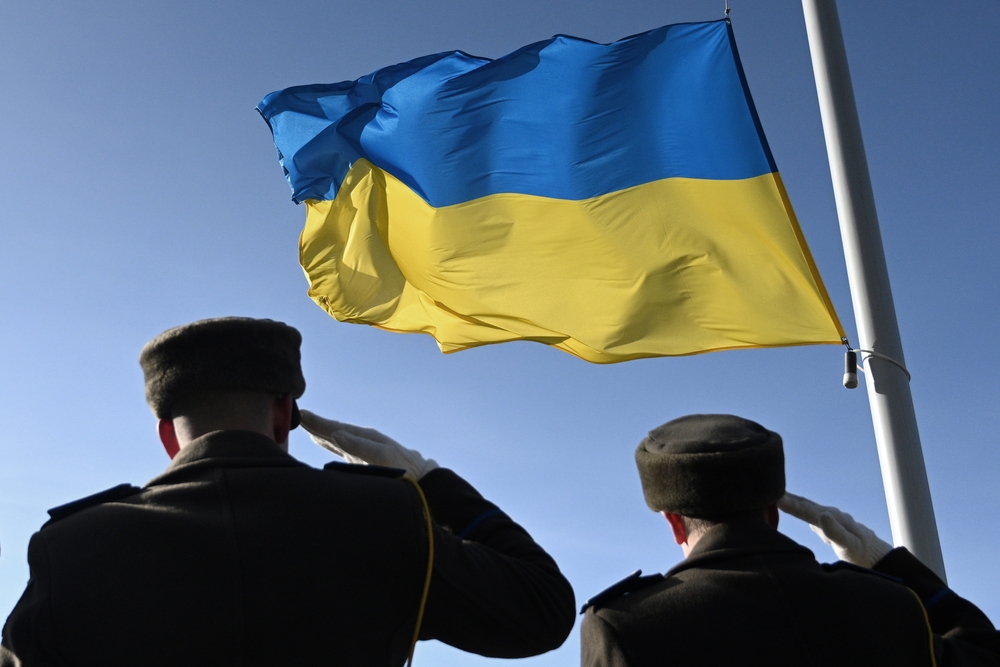
Photo: Bumble Dee / Shutterstock

First, these people collect information on military movements and military, civil and energy infrastructure. As Russia’s military gains have been slowed after Ukraine recaptured territories in the east and south of the country, the fight with pro-Russian informers and collaborators is another important front for Ukraine to win the long-lasting war.

It would be wise to assume that Russia’s attempts to recruit collaborators in Ukraine started before the full-scale invasion that started on February 24th 2022. It is, and it will be, painful to acknowledge for Ukrainians, but the number of military forces that were coming to attack Ukraine from various sides could not have been placed as they were without preliminary information gathering. Those events of the first days and weeks of the war are being investigated, and there is no doubt that Ukraine’s civil society will demand accountability for those who committed these crimes. However, more important for Ukraine’s survival and restoration of its internationally recognised borders is the fight with pro-Russian informers and collaborators.

A country-wide danger

First, it is important to clarify that there is no specific number when it comes to “cases of betrayal”, as investigations are ongoing every day and they vary from region to region. What is clear as of late February 2023 is that the vast majority of cases of betrayal have been identified in the regions that are the closest to the occupied territories, but not only them.

Several of Ukraine’s regions will be described in this article, where the pro-Russian collaborators have been revealed mostly. One aspect to understand is that the Russian forces do not have direct access to territories that Ukraine’s army has recaptured, in particular, southern Kherson, the only regional city Russia seized in early March 2022, and a large part of the Kharkiv region in the east, where as of September, the Ukrainian military had freed 388 settlements with at least 150,000 people present there. There is no indication that the Russians will succeed in another attempt to capture Ukraine’s capital Kyiv, or seriously advance in the south and east of Ukraine.

Second, the Russians thought that such “eyes” on the ground were necessary to conduct attacks on civilian and energy infrastructure in Ukraine’s cities. They try to find a resident, most likely someone who is not so politically educated in terms of critical thinking and cannot recognise the enemy’s narratives, so they can offer him/her money for information to use while planning missile attacks.

In that regard, several examples should be analysed. During the very first days of the war, Russians attacked aerodromes all over Ukraine. In particular, they tried to destroy all the airplanes and helicopters parked at the airfields of regional cities. That was the case for aerodromes located in Western Ukraine, in particular, in the cities of Ivano-Frankivsk and Lutsk. Such cases highlighted once again the dangers of dual loyalty. For example, a man in Lutsk, with some connections to Russian intelligence agents, betrayed his country and provided sensitive information to the enemy. He used to live close to the aerodrome, thus having access to sensitive information about Ukraine’s military capabilities. The same happened in Ivano-Frankivsk, one of the largest cities in Western Ukraine. It is commonly believed that in Western Ukraine, patriotism and self-determination regarding Ukraine’s national identity are much higher than in Eastern and southern Ukraine, as these areas used to be part of the Russian Empire before all of modern Ukraine became a part of the Soviet Union. But more importantly, such examples, especially in Western Ukraine, are dangerous too, as they demonstrate that due to the war, everyone’s motivation to choose one side or another is different. On the other hand, such news has made Ukrainians treat checkpoints with patience and understanding, as Russian agents and their pro-Russian supporters have been learning to hide inside the nation for years.

In addition, it is necessary to say that after martial law was imposed in Ukraine, the country’s lawmakers passed a bill that significantly increased the penalties for individuals convicted of collaboration with enemy forces. The new law raises the maximum prison sentence for collaboration from eight to 12 years and allows for the confiscation of property and assets belonging to collaborators. The legislation is aimed at strengthening Ukraine’s legal framework for prosecuting individuals who work with foreign powers to undermine national security.

More needs to be done

However, it has become evident that this is still not enough. In mid-2022, for instance, in Mykolaiv, the city’s newly-renovated medical care building was almost destroyed early one morning. Mykolaiv’s Mayor Oleksandr Senkevich revealed that this attack was arranged with the help of an “informer”, who helped the Russians because his daughter was deprived of her right to study school subjects in Russian. However, the Russian language was only banned in local schools immediately after the invasion started.

In this sense, such attacks were typical from spring till late autumn of 2022, before Kherson’s liberation, when the Russians launched those missiles. The most crucial part of such Russian tactics was the fact that Ukraine’s air defence systems had not been strengthened enough and the air-alert system could not warn Ukrainians fast enough too. So, those “informers” played a big part in such attacks, which cost Mykolaiv, for example, around one billion US dollars at least in physical damage, not to mention people’s lives.

Another example that also happened in Mykolaiv, which devastated many locals, was the arrest of a chair of the local funeral bureau during the local city council meeting. This man handed over to the enemy some data on the number of servicemen in the Armed Forces of Ukraine in the region, employees of law enforcement agencies, and lists of dead Ukrainian defenders. He also provided information about defence and fortification structures in the city. It appears that anonymous Telegram accounts were used to communicate and transmit intelligence information. Furthermore, it is clear that the narratives of “defending the Russian language” and, therefore, the population, is used to make Ukrainians cooperate with Russians and harm their cities and villages.

Third, speaking about Kherson, which Russians controlled for more than half a year, and for example, Mariupol, which the Russian occupiers almost destroyed, it is almost impossible to state how many cases of collaboration happened in those territories. What is more, it is also not possible to assess right now how many Ukrainians have been kidnapped and tortured on occupied lands. But Ukraine’s liberation of territories has already revealed a lot of cases where people were helping the occupiers.

Russia attempts to recruit Ukrainians

Another aspect of Russian efforts to gain an advantage in the war is the conscription of Ukrainians. Surprisingly or not, even after the war approached its first anniversary, some pro-Russia “activists” hoped to recruit people for the internationally sanctioned Wagner private military company. Ukraine’s Security Service exposed a traitor in Vinnytsia, who recruited former prisoners for Wagner in the city. For joining the Russian criminal group and participating in hostilities against the Ukrainian military, the perpetrator offered each “recruit” a monetary reward of 2,000 to 4,000 US dollars per month. In Odesa, a city which Russians like to claim is Russian, as it is believed that the Russian language is very popular there, there have been some particular cases of betrayal too. The Security Service exposed another Federal Security Service agent during large-scale counter-subversive activities close to the seashore of the Odesa region. The perpetrator collected intelligence on the deployment and armament of the armed forces units in the southern region. First of all, he tried to identify the combat positions of the Ukrainian air defence near the Black Sea. In addition, the Russian agent recorded the results of enemy missile strikes on critical infrastructure, including the bridge across the Dniester estuary. This intelligence information benefited the occupiers as it helped them adjust their repeated air attacks on Ukrainian objects.

It may seem like the Russo-Ukrainian War has become a war of attrition, and in some western capitals, this may seem like something Russia favours. So, the efforts of Russian special agents may be intensifying. So far, Ukraine’s special services and national police have been doing their best to identify and neutralise such threats. It could be summarised that the brutal Russian war on Ukraine has proved that real propaganda and disinformation cost lives and that critical thinking and patriotism remain vital features of the civilised world.

In that regard, Ukraine’s new minister of internal affairs, Ihor Klymeko, has demonstrated that he knows the risks regarding what can be called dangerous elements in those territories that Kyiv has recaptured with the true heroism of Ukrianian soldiers. On this subject, Klymenko noted that the Ministry of Internal Affairs carried out stabilisation measures for all of the people who lived in these territories. Together with the Security Service of Ukraine, and the Prosecutor General’s Office, they identify collaborators. According to him, Ukraine’s public authorities know who held and organised “elections”, who campaigned, who taught “Great Russian History” in schools, and who ultimately wanted to distort Ukraine.

Vladyslav Faraponov is a political analyst with Internews Ukraine and Ukraine World. He is also a co-host of the Rubryka – Solutions from Ukraine podcast.

, , ,

Partners

Terms of Use | Cookie policy | Copyryight 2026 Kolegium Europy Wschodniej im. Jana Nowaka-Jeziorańskiego 31-153 Kraków
Agencja digital: hauerpower studio krakow.
We use cookies to personalise content and ads, to provide social media features and to analyse our traffic. We also share information about your use of our site with our social media, advertising and analytics partners. View more
Cookies settings
Accept
Decline
Privacy & Cookie policy
Privacy & Cookies policy
Cookie name Active
Poniższa Polityka Prywatności – klauzule informacyjne dotyczące przetwarzania danych osobowych w związku z korzystaniem z serwisu internetowego https://neweasterneurope.eu/ lub usług dostępnych za jego pośrednictwem Polityka Prywatności zawiera informacje wymagane przez przepisy Rozporządzenia Parlamentu Europejskiego i Rady 2016/679 w sprawie ochrony osób fizycznych w związku z przetwarzaniem danych osobowych i w sprawie swobodnego przepływu takich danych oraz uchylenia dyrektywy 95/46/WE (RODO). Całość do przeczytania pod tym linkiem
Save settings
Cookies settings