
Text resize: A A
Change contrast

Grim reality after a colourful revolution

The left-wing government that came to power in North Macedonia after the 2016 mass protests is facing new challenges. Symbolic politics is significant for showing that the new North Macedonia is indeed a country for all, but it may not be enough. What the citizens want, first and foremost, is a functioning state.

When you use a water pistol filled with paint as a weapon against the government no one takes you seriously. The situation changes, however, when tens of thousands of enraged fellow citizens join you in this fight. This is exactly what happened when Macedonian citizens succeeded in overthrowing the nationalist government that had been in power for a decade. They wanted to put a stop to corruption and the mafia connections but also set up extremely high demands for the Social Democrats who have gained power. The new government brought along a change in the name of the country – now called North Macedonia – and long-awaited freedom, but also many disappointments.

April 6, 2020 - Aleksandra Zdeb - Issue 3 2020MagazineStories and ideas

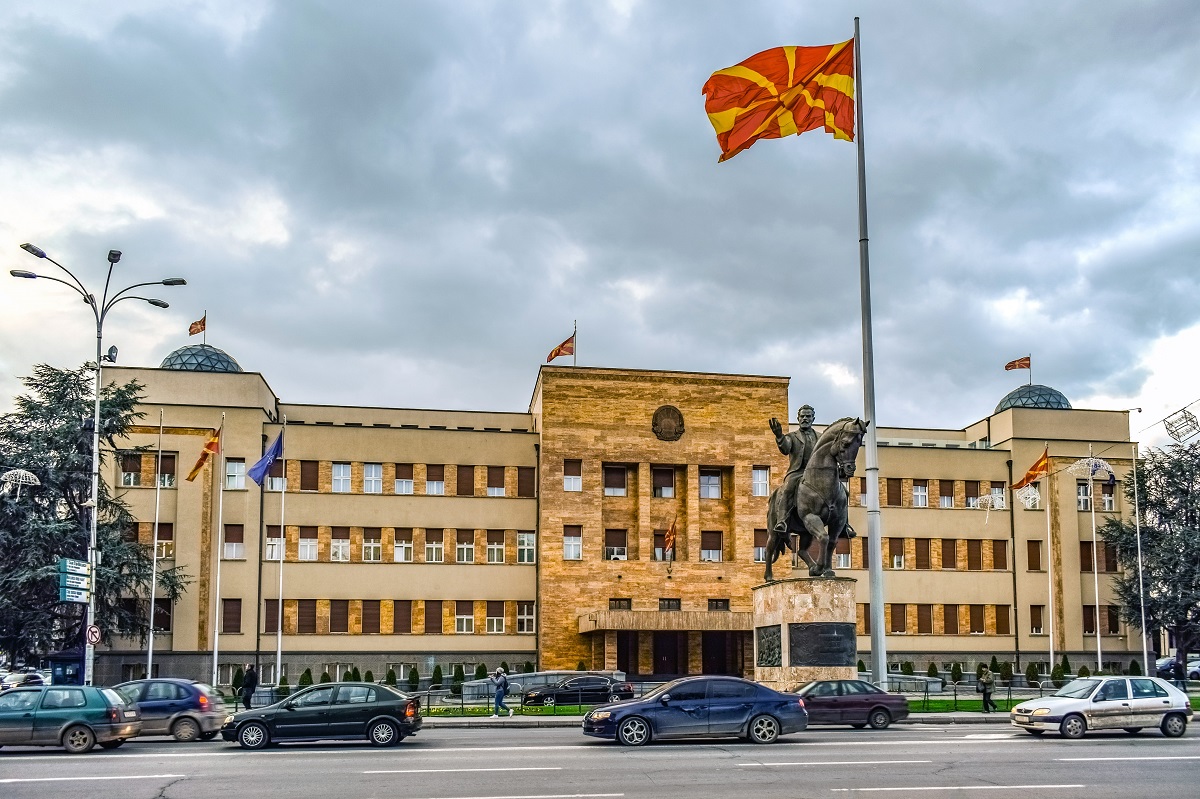
Photo of North Macedonia’s parliament building (CC): https://www.pxfuel.com/en/free-photo-xsajx


Freedom is important but so is life

“We are free at last. One can feel it in the air. You must have heard from many that nothing has changed, but it is not true. Before the revolution criticising the government was virtually impossible. One day when I was sitting in a cafe with a friend I openly criticised the Skopje 2014 project. A man I didn’t know heard that, turned around and just stared at me for the next five minutes. In what country can this behaviour be considered normal?” said one woman currently working with the government.

The so-called colourful revolution, which took place in 2016, got its name from protesters who happened to throw paint at government buildings. Mass protests were triggered by a wiretapping scandal and the halting of an investigation into Nikola Gruevski, the former prime minister, and his role in the scandal. The protesters demanded fair elections which eventually led to a change in government. Yet that was almost two years ago, and my interlocutor’s position is quite exceptional. She comes from an affluent Albanian family and has never had to worry about having to make ends meet. Most citizens of North Macedonia are not so lucky though. For ordinary people freedom matters, but, while the new prime minister, Zoran Zaev, promised it would take no more than two years for everyone to see their lives improve, poverty has not vanished, the national health service is as inefficient as ever, while public administration remains as corrupt as before.

“Young people who are well-educated and could make a difference are leaving and the government does not know how to stop them”, said Srdzjan, an activist working for the Roma community in Skopje, the only administrative unit in Europe managed by the Roma people. “The Roma people who make it out never return. They say they don’t want to come back to this ghetto with no prospects for them. Even though it is hard to blame them, we are aware that without them there is no chance for change. We are the only people who can strengthen and rebuild the community. That is why I have returned. I now work for the public sector to prove that it can be done.”

Finding employment in the public sector is a dream come true for many as it comes with a fixed salary and job security. Until recently this type of employment was only for those associated with the ruling party. The new government’s aim is to introduce changes in this respect and transform the revolutionary call for responsibility, transparency and multiculturalism into its own values and goals. Liberal slogans and modern public relations are even reflected in the latest Freedom House’s Freedom in the World report where North Macedonia is mentioned as one of a very few countries bucking the trend in the region, avoiding a slow slide into the abyss of authoritarianism and illiberalism.

When the revolutionary dust settles

The victory of the joint forces of the protesters and the largest opposition party, the left-wing SDSM, resulted in free elections in 2016, as well as a technocratic government for the transformation period. There was a feeling that this time the loathed government would be brought to justice. The impeachment procedure for President Gjorge Ivanov and others was initiated; immunity for numerous politicians associated with the ruling party was lifted. Moreover, a decision was taken to restart the Gruevski investigations. Nonetheless, despite being convicted of corruption, he accepted the political asylum offered by his ideological ally, Hungary. The new anti-corruption commission initiated hundreds of other investigations. Yet as soon as the revolutionary dust settled, North Macedonians started noticing that while the process of holding the former government accountable for its actions was still far from over, their everyday reality remained the same.

The new government that was appointed in May 2017 decided to focus on foreign policy, including unblocking the process of accession to the European Union and NATO. This approach brought a good neighbourhood agreement with Bulgaria as well as a ground-breaking deal with Greece over changing the country’s name.

“We have been sold. I am not a nationalist, yet I have every right to be proud of my country and my nation. Zaev has deprived me of this. He has robbed the whole nation. How can you change the name of the country just like that?”, one of Skopje’s guides gets agitated when discussing the issue with me. And he is not the only one. While the citizens of Macedonia were given the chance to have a say in a consultative referendum, the opposition called for a boycott and the majority of voters stayed at home. The referendum turnout was only 37 per cent. In the end it was a wake-up call for the government, despite 90 per cent of votes embracing the change. It did not stop the authorities, however, from signing an agreement with the Greek government in Prespa.  It came into force in June and as its direct effect, North Macedonia engaged in a complex process of changing all public nameplates bearing the name of the country.

In accordance with the “one step at a time” approach, foreign affairs overshadowed the development of domestic reforms. The government neglected its election promises, including the vital ones regarding restoration of the rule of law, tackling corruption, and improving the economic situation. A reform package, with de-politicisation of the judiciary and the public sector, was to provide for a comprehensive set of changes suggested by the European Commission – also known as the “3-6-9 Plan” – but was never fully implemented.

“People here are struggling and the latest presidential election showed that their patience is beginning to wear thin. When one of the Albanian politicians publicly assured the ruling party that he could guarantee a certain number of votes, many decided not to vote since it would have a minimal influence on the reality”, a local activist sums up the situation in the country.

Politics in a multi-ethnic melting pot

Both the referendum and the presidential election last year illustrated that the nationalist party VMRO-DPMNE, now side-lined as the opposition, is not intending to surrender and is still supported by a large number of ethnic Macedonians. Ethnic, because 30 per cent of the citizens of North Macedonia are Albanians and VRMO accuses the Social Democrats of handing power to them. A brawl in the parliament which took place when the first Albanian, Talat Xhaferi, from the ruling Albanian party, was appointed speaker; proved that the current opposition would stop at nothing to regain power. The same argument was also used last March when parliament passed a new language law and significantly extended the possibility of using Albanian in the public sphere. In binational North Macedonia, a country which aspires to be perceived as a multinational state, the ethnic division card can easily be played in the current political game.

Apart from ethnic Albanians, there are also others the opposition blame for the country’s problems. One of them is George Soros. If one goes to any post-communist European country and one’s interlocutor starts a conversation by blaming Soros for all the evils in that part of the world, one instantly knows who s/he is dealing with. VMRO-DPMNE has made the “de-Sorosisation” of the country a top priority. “The protests took place because Soros had paid people to break the country apart,” says a secretary of a party that represents Macedonian Serbs, one of the larger minorities in the country. “This government is a disaster for our economy and foreign policy. They give away everything we own, including our dignity.”

Upon reflection, she moves on to attack a “closer” enemy: “What revolution? It was organised and carried out by the Albanians. The ruling Social Democrats are giving them the country in return for their support. If this does not end, the Serbs will be left with nothing but the label of a ‘genocidal’ nation, ignored in their own country.”

A state for its citizens

The way the state treats its most vulnerable citizens and those facing discrimination often faithfully reflects the relations between the government and its citizens. In North Macedonia it is ethnicity in general, and Macedonian-Albanian relations in particular, that dominate the public sphere. Yet there are other divisions. There are a number of small ethnic minorities in the country, the most numerous are Roma and Turks, but there are also Bosnians, Serbs and Vlachs, although the latter group is well integrated into Macedonian society. The peace agreement, which ended the conflict in 2001, ensured all of them participation in the power structures. Even if it is purely symbolic and the minorities feel dominated by the largest minority – Albanians, one can see that their participation matters for the authorities. An interesting example is the Roma people who, according to the 2002 census, make up 2.66 per cent of the population, which translates into 53,879 people. Many organisations claim, however, that this number is much higher.

“Macedonian Roma people still live in poverty, without jobs, and on the margin of society. Recently social media has waged a hate campaign against a local journalist simply because he was Romani,” an activist advocating for Roma people’s participation tells me. “However, positive discrimination is gradually improving our situation. Despite the massive amount of prejudice in North Macedonian society, since 1996 there have been four primary schools that offer teaching in the Romani language. What is more, the Roma people have access to media in their language. On the other hand, we still lack initiatives for preserving Romani culture and traditions. This is despite the fact that Roma politicians actively participate in the political life of the country. The peace treaty has ensured them a proportionate representation in the public sphere as well as access to education.” This means that 2.66 per cent of positions in the public administration should belong to that group. Currently this number is on the rise but it has not reached this level. The same situation applies to the number of students, although the number of Roma people with higher education is growing. They also have several political parties, including two in the governmental coalition, and some positions in the council of ministers and parliament.

All of these measures were also applied during the previous government, but now there is greater hope for change in light of the government’s novel and liberal strategy. The strategy, entitled One society for all, is to open and transform North Macedonia – in accordance with the example-from-the-top rule the government believes that the document will create a civil society with space for otherness, including those from different ethnic groups.

A society that is opening up?

This inclusion also applies to sexual minorities who have been struggling in North Macedonia for years. It was only the anti-discriminatory law passed last year that made sexual discrimination a crime. Previously, the legal system guaranteed no protection whatsoever. Moreover, the former regime (the previous government is frequently referred to as a regime rather than a government) left behind painful memories of exclusion and violence. However, when Irena, an LGBT activist, moves on to discuss the latest changes, her voice changes. She is eager to talk about the visit of the minister of culture to the opening of an event related to the Pride Week in Skopje. It was a purely symbolic gesture but it made a difference.

“You see, in 2019 the first Pride took place here, but people still remember what it was like a decade ago when we were subjected to threats. At that time we were the underdogs fighting for space for the most excluded ones. The minister who turned up at our event was a tangible example of change and the audience had tears in their eyes. The new government still puts symbolism over expected tangible results, but this is also important. Due to a different atmosphere, people finally begin to report cases of sexual discrimination. While it is obvious that not every case has legal consequences, it still means a change in people’s mentality. They finally believe in the system. In the state. It no longer has the face of a police officer beating them up but the one who is on their side and for them. This means a lot.”

The left-wing government, which was appointed after a wave of protests, is facing a challenge. The symbolic politics is a significant beginning as the SDSM wishes to prove its point, namely, that the new North Macedonia is a country for all, regardless of their ethnicity or sexual orientation. It may not be enough, however. What the citizens want, first and foremost, is a functioning state. They want to “colour” their grey reality. The current government must take into account that with the April election, its entire future is at stake. At the same time, return of the former administration could mean Macedonia re-joining a group of illiberal countries led nowadays, among others, by Poland and Hungary.

Translated by Justyna Chada

Aleksandra Zdeb is a researcher and photographer. Her work concentrates on the post-Yugoslav area, conflict management, democratisation and minorities.

, ,

Partners

Terms of Use | Cookie policy | Copyryight 2026 Kolegium Europy Wschodniej im. Jana Nowaka-Jeziorańskiego 31-153 Kraków
Agencja digital: hauerpower studio krakow.
We use cookies to personalise content and ads, to provide social media features and to analyse our traffic. We also share information about your use of our site with our social media, advertising and analytics partners. View more
Cookies settings
Accept
Decline
Privacy & Cookie policy
Privacy & Cookies policy
Cookie name Active
Poniższa Polityka Prywatności – klauzule informacyjne dotyczące przetwarzania danych osobowych w związku z korzystaniem z serwisu internetowego https://neweasterneurope.eu/ lub usług dostępnych za jego pośrednictwem Polityka Prywatności zawiera informacje wymagane przez przepisy Rozporządzenia Parlamentu Europejskiego i Rady 2016/679 w sprawie ochrony osób fizycznych w związku z przetwarzaniem danych osobowych i w sprawie swobodnego przepływu takich danych oraz uchylenia dyrektywy 95/46/WE (RODO). Całość do przeczytania pod tym linkiem
Save settings
Cookies settings