
Text resize: A A
Change contrast

Through Lendvai’s eyes. A unique perspective on Austrian politics

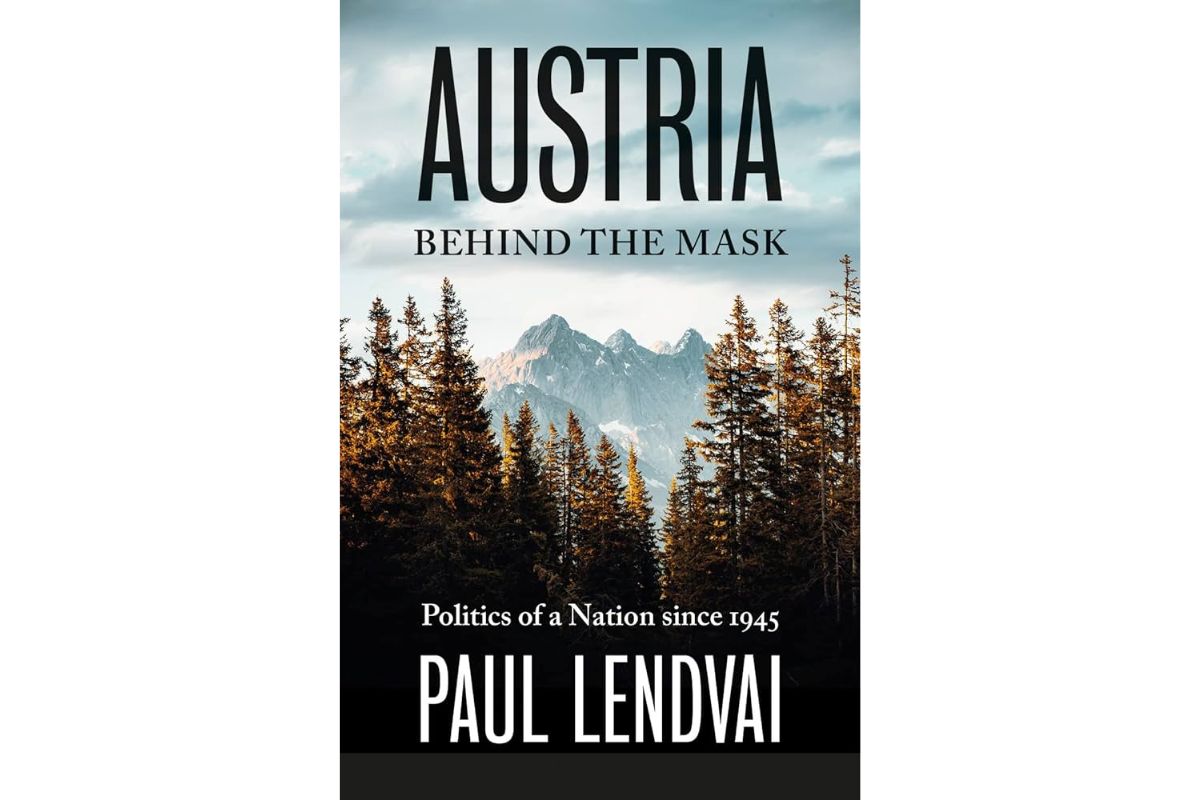
A review of Austria Behind the Mask. Politics of a Nation since 1945. By: Paul Lendvai. Publisher: Hurst, London, 2023.

February 7, 2024 - JP O'Malley - Books and ReviewsIssue 1-2 2024Magazine
The Habsburg Empire once stretched across nearly 700,000 square kilometres of Europe. Its origins can be traced back to 13th century Switzerland. In addition to Austrians, the empire’s 50 million inhabitants included Czechs, Hungarians, Serbs, Croats, Bosnians, Slovenes, Romanians, Italians, Poles, Jews and Ruthenians. In 1700 the empire was reduced to several territories in Central and Eastern Europe. By 1804 it was known as the Austrian Empire.

Franz Joseph became emperor of the Austrian Empire in 1848. Following the Prussian victory over Austria in 1866, however, the Ausgleich (compromise) of 1867 transformed the empire into the dual monarchy of Austria-Hungary. Franz Joseph ruled the multi-national cosmopolitan monarchy with benevolent tolerance until his death in 1916. His nephew, Charles I, reigned as emperor until the Central Powers were defeated in the First World War on November 11th 1918. With the sudden collapse of the Habsburg monarchy went Austria’s status as a major global power with serious political influence.

From buffer to independent state

By 1922 Austria’s First Republic was sliding into hyperinflation and pauperism. “During this interwar period, Austria was very weak, and Austrians regarded themselves as Germans,” Paul Lendvai explains from his home in the mountainous spa town of Altaussee in Styria, Austria.That is why in 1938, Austria was annexed into Hitler’s Third Reich so easily.”

The 94-year-old Hungarian-born Austrian journalist has published more than twenty books on the history and politics of Central and Eastern Europe. He has also received numerous awards for his journalism, including the Grand Decoration of Honour for Services to the Republic of Austria (1986) and the Austrian State Prize for Cultural Journalism (2005). Last July, Lendvai published Austria Behind the Mask (2023).

The book provides a detailed analysis of how Austria’s politics has evolved over the last eight decades. The complex and paradoxical nature of the country’s identity, Lendvai argues, stems from the numerous political forces that have shaped it, including Christian Democrats, Social Democrats, right-wing populists and Greens.

The author notes how the Allies initially treated Austria’s Second Republic (1945-63) with distrust and suspicion. After the Third Reich’s defeat in the Second World War, Austria was divided into four occupation zones. “In 1945, east Austria was occupied by the Russians. While the other parts of the country were occupied by the British, the Americans and the French,” Lendvai explains. Unlike Germany, however, Austria became independent as a united and neutral state in 1955.  So the real freedom for Austrians came with the State Treaty.”

Signed in May 1955, that treaty saw Austria – then a Cold War buffer zone between East and West – become a fully independent, neutral country. With no loyal military alliances, Austria did not join NATO. Lendvai was then in his late 20s, living in neighbouring Hungary. He was born into a Jewish family in Budapest in 1929 and received his education in the Hungarian capital. During the Second World War, Lendvai survived the persecution of the Jews in Budapest. Most of Hungary’s Jews did not. By the end of the Holocaust, 565,000 Hungarian Jews had been murdered by the Nazis. Most ended up in the Nazi gas chambers of Auschwitz.

Lendvai lost 29 relatives. “For me, as probably for most people directly affected by the Shoah, many things cannot simply be forgiven and forgotten,” he says.

In 1945, when Lendvai was still a teenager, Hungary was occupied by Soviet forces. The Stalinist regime didn’t look kindly on idealistic Trotskyites, which Lendvai then identified as. “I was arrested and imprisoned, and I was one of the youngest political prisoners [in Hungary] at the time,” he explains. This was the period of the permanent purges in the communist countries of [the Eastern Bloc].”

In October 1956, thousands of protestors gathered in Budapest to demand the withdrawal of Soviet troops from Hungary, setting off a revolt across the country. The Soviet Union ordered its troops to crush the rebellion in Budapest. The uprising lasted 12 days. But the damage inflicted by Moscow on Budapest lasted decades. Thousands were killed and wounded and nearly a quarter of a million Hungarians fled the country.

Insider access

Lendvai thus found himself as a wandering refugee. He briefly took up residence in Warsaw, where he found work as a journalist. Eventually, he made the westward journey across the Iron Curtain to Vienna, which became his adopted homeland. In 1959, Lendvai became an Austrian citizen. He also landed a job with the Financial Times, becoming their correspondent for Central Europe, a position he kept for 22 years. 

The job at the British broadsheet gave Lendvai insider access to Vienna’s most influential power brokers and politicos. Among them was Bruno Kreisky. In 1972 Lendvai, along with the Austrian journalist and publisher Karl Heinz Ritschel, co-authored Kreisky: Portrait of a Statesman. A Jewish emigrant and intellectual from an upper middle-class background, Kreisky helped the Social Democrats emerge from the 1970 elections in Austria as the strongest party. He subsequently became chancellor of Austria, a position he served in for 13 years.

Lendvai describes Kreisky as the most successful politician in Europe at the time. But his political success story was also “the greatest paradox of Austrian post-war history”, says the author. Many people in Austria and further afield were stunned that Kreisky, who had lost 21 relatives in the Holocaust, appeared as a vocal defender of former Nazis. In the first Kreisky government, for example, there were four ministers who in their youth were members of the Nazi party. “Kreisky always held the opinion that even an SS man must be allowed to hold any political office in Austria as long as no crime is proven against him,” says Lendvai. “This attitude strained Austria’s relations with the United States, Israel, and many Jewish organisations, for years to come.”

After the horrors of Nazim, the far right had become a shameful taboo in Austrian society. But Kreisky’s willingness to do business with extremist parties brought the far right back into the respectable political mainstream. The author points to the importance of the “Kreisky–Peter Pact” (1970-71). This saw Kreisky initiate a political relationship with a former Nazi, Frederich Peter, who was then the chairman of the far-right Freedom Party of Austria (FPÖ).

“When Kreisky lost his majority in [the Austrian parliament] he pushed the Social Democrats to make a coalition, with the FPÖ,” says Lendvai. “In those days the FPÖ were more reserved. But under their very able leader, Jörg Haider, they became stronger, and more socially acceptable.”

Under the leadership of Haider, the FPÖ drifted further and further to the right, often winning votes on an ultra-nationalist, anti-immigration and anti-EU agenda. Haider’s greatest victory as leader of the FPÖ came in 1999, when the party captured 27 per cent of the vote in Austria. In early 2000 Haider made a deal with the conservative Austrian People’s Party (ÖVP) to form a coalition government. It was the first time since the end of the Second World War that a party with Nazi origins had become part of a European government.

Shady dealings

Haider stepped down as leader of the FPÖ in February 2000 and formed the Alliance for Austria’s Future in 2005. He died in a car crash in October 2008. As a journalist, Lendvai met Haider on several occasions, in both public and private settings. He remembers an intelligent, sympathetic, but flawed individual. “Haider was a very sick person who was brought up in a Nazi family and could not get rid of these traces in his upbringing,” says Lendvai. “Nevertheless, he was a unique figure who helped to make the FPÖ the second largest party in Austria.”

In the Austrian parliamentary elections in October 2017, under the leadership of Heinz Christian Strache, the FPÖ achieved the second-best result in the party’s history, winning 26 per cent of the vote. They went on to form a coalition government with the Austrian People’s Party (ÖVP), led by Sebastian Kurz, who became the youngest chancellor in Austrian history.

That far-right coalition government was toppled from power in May 2019, however, after the “Ibiza affair”. This resulted from then FPÖ leader, Heinz-Christian Strache, making shady deals with a woman he believed was the niece of a Russian oligarch. Lendvai claims there are still Kremlin lackeys lurking in the corridors of power in Vienna, even after Putin launched the full-scale invasion of Ukraine in February 2022. This is also the case in neighbouring Hungary.

Hungary’s far-right prime minister, Viktor Orbán, is a vocal opponent of the West’s military support for Ukraine and for Kyiv’s proposed entry into the EU. In late October, Orbán met Russia’s president, Vladimir Putin, in Beijing. This meeting was officially meant to involve a so-called discussion on energy cooperation and peace. Really, though, it was Orbán’s way of signalling to Brussels who his real allies are. In mid-December, meanwhile, members of the Hungarian Institute of International Affairs and staff from the Hungarian embassy in Washington met for a two-day event hosted by the conservative Heritage Foundation think tank. This was done to show solidarity between far-right conservatives in Europe and in the US, who ultimately want to put an end to US military support for Ukraine.

Lendvai has been critical of Orbán in books like The Hungarians (2003) and Orbán: Europe’s New Strongman (2017). The second book, which won the Prix du Livre Européen, documented how Hungary, under Orbán’s authoritarian rule, has become an outlier in the EU. Championing the concept of illiberal democracy, Orbán and his Fidesz government have used a far-right populist ideology that has led to the gradual deterioration of Hungary’s rule of law. It has also led to the end of the separation of powers, gerrymandering, the creation of an oligarchy, corruption, mass clientelism and the erosion of a free press.

The Hungarian way?

Is Austria, which became a member of the EU in 1995, on course for a similar destiny?

 “The EU has been very good for Austria,” says Lendvai. “But, as in other countries, there is a right-wing lunatic fringe in Austria, which has become stronger since 2015, when the first big wave of refugees came from the [Middle East].” The author points to census figures from the beginning of 2021, which showed that every fifth inhabitant of Austria (20.1 per cent) was born abroad, and in Vienna 37.1 per cent of people there had a foreign place of birth. “This is something the far right has capitalized on and used to put fear into the electorate,” says Lendvai.

Still, “I don’t think that Austria will go the Hungarian way,” says Lendvai. “Mainly because in Austria there is still an independent justice system, an independent constitution, an independent media, and a stronger civil society in general.” Lendvai also stresses that, in contrast to, say, Hungary or Poland, the dark years of antisemitism in Austria are being dealt “with in an exemplary manner by scholars with official support”.

Nevertheless, in Austria over the last decade, “the Russian factor was severely underestimated,” says Lendvai. This was true “particularly as far as the economy, and the energy supplies are concerned”. He also points out that like supporters of Orbán and the Fidesz party in Hungary, most supporters of the FPÖ in Austria are pro-Russian, “in the sense that they want a ceasefire in the Russo-Ukrainian War, even under circumstances which Russian troops remain on land that is today considered [Russian-occupied] territories of Ukraine”.

 Lendvai also remains sceptical of Austria’s current chancellor, Karl Nehammer, from the ÖVP. In recent times he has publicly shown his support for Hungary’s Viktor Orbán, as well as Serbian President Aleksandar Vučić. Both of these figures are close allies of Moscow.

“This all casts a shadow over the standing of Austria in Europe today,” Lendvai concludes. “Ultimately, though, I believe that Austria will stick to a firm, anti-Russian and pro-Ukrainian foreign policy and won’t become the second Hungary of Central Europe.”

JP O’ Malley is a freelance journalist and critic.

, ,

Partners

Terms of Use | Cookie policy | Copyryight 2026 Kolegium Europy Wschodniej im. Jana Nowaka-Jeziorańskiego 31-153 Kraków
Agencja digital: hauerpower studio krakow.
We use cookies to personalise content and ads, to provide social media features and to analyse our traffic. We also share information about your use of our site with our social media, advertising and analytics partners. View more
Cookies settings
Accept
Decline
Privacy & Cookie policy
Privacy & Cookies policy
Cookie name Active
Poniższa Polityka Prywatności – klauzule informacyjne dotyczące przetwarzania danych osobowych w związku z korzystaniem z serwisu internetowego https://neweasterneurope.eu/ lub usług dostępnych za jego pośrednictwem Polityka Prywatności zawiera informacje wymagane przez przepisy Rozporządzenia Parlamentu Europejskiego i Rady 2016/679 w sprawie ochrony osób fizycznych w związku z przetwarzaniem danych osobowych i w sprawie swobodnego przepływu takich danych oraz uchylenia dyrektywy 95/46/WE (RODO). Całość do przeczytania pod tym linkiem
Save settings
Cookies settings