
Curbing China’s sway in Eastern Europe
In the evolving landscape of international relations, it has become increasingly clear that the US and Europe must join forces to address China’s growing influence in Eastern Europe. The recent Russian aggression against Ukraine has reshaped regional dynamics and intensified the global struggle for power and influence.
The Russian full-scale aggression against Ukraine had an evident impact on regional and global ties in Eastern Europe. While Russia was seeking opportunities to attract more allies in its war of aggression, like Iran and North Korea, its major objective internationally was to create an alliance with China. However, China sees the Russia-Ukraine war as an opportunity to change the status quo and raise the stakes to outlast the United States economically and militarily.
November 20, 2023 -
Vladyslav Faraponov
-
Hot TopicsIssue 6 2023Magazine
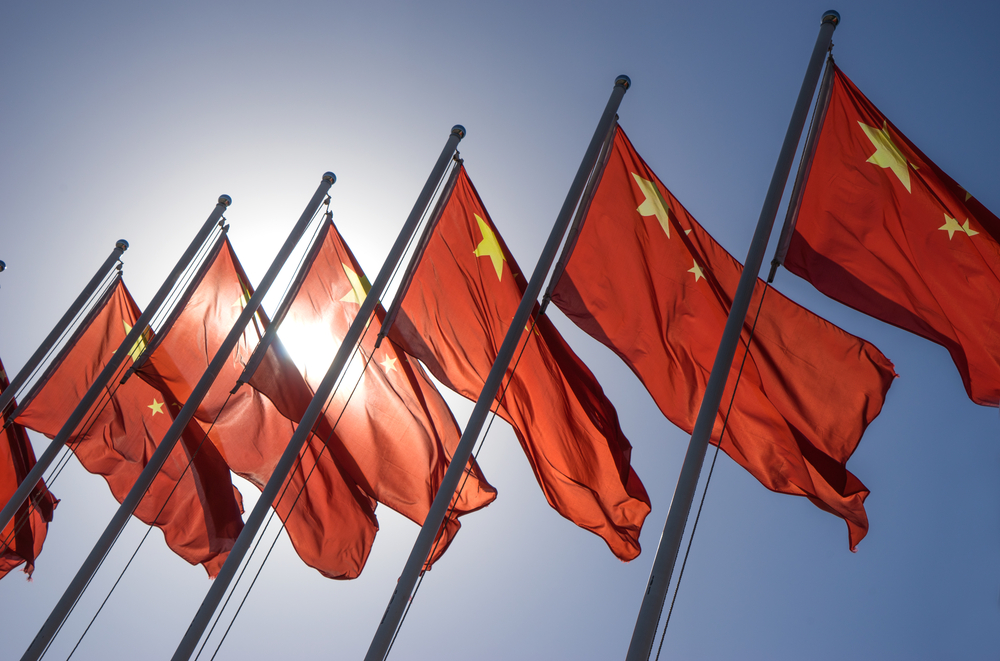
Photo: crystal51 / Shutterstock
It is conventional wisdom that any war shapes political and military posture at both regional and global levels. Apparently, the Russia-Ukraine war in its current form will likely last for years. However, the changes in Russia’s alliances are quite clear. Among the global powers, only China can really provide substantial assistance to Russia. At the same time, more than one and a half years into the most major war in Europe since 1945, the US and Europe are trying to stabilise their ties with China, mostly focusing on bilateral economic relations. However, this may be more complicated than it seems at first glance.
De-risking and its discontents
As an organisation and its key member states, the European Union leaders have tried several times since last year to talk with China about normalising bilateral relations. Presidents Emmanuel Macron of France and Ursula von der Leyer of the European Commission recently visited China, seeking a “de-risking formula resolution”. They saw this opportunity and managed to seize it. From the Ukrainian perspective, going to China amid a period of Beijing-Moscow cooperation looks like the old procedure of getting jarligs or edicts in Mongol times, when rulers of the Kyivan Rus’ had to receive orders from the khan, who authorised their rule. At the same time, it is clear that Macron tried to gain leadership in this regard and leverage it over other European leaders. He did not need to worry about re-election after he won a second term in 2023.
It is even more unnatural to see European politicians going to China after the so-called Zeitenwende speech, an address delivered to the Bundestag by the German Chancellor Olaf Scholz, on February 27th 2022. Scholz had hoped to relaunch the German way of thinking about foreign policy. And in relation to assisting Ukraine, Berlin truly changed its attitude by providing massive security aid to Kyiv.
Even though economic cooperation will dominate EU discussions on China in the coming years, European leaders should not forget about the impact of China’s role in fostering Russia’s full-fledged war against Ukraine. Of course, before the invasion, Xi Jinping and Vladimir Putin agreed to deepen their cooperation. However, as the EU High Representative and Vice-President Josep Borrell mentioned, the EU had learned how dependencies can be weaponised. It would be right to assume so, especially concerning energy and infrastructure. If Europe is not cautious enough, before or after Ukraine’s victory, it may be trapped in a situation where Chinese economic influence spreads into Eastern European countries and Russia dictates energy prices. Thus, Russia will likely seek compromises in that regard, hinting at the lifting of sanctions and other changes. This lesson is very important for Europe.
Clearly, the Mercator Institute for China Studies think tank has noticed this trend. It stated that 88 per cent of China’s investments mostly concentrate on four countries: the United Kingdom, France, Germany and, surprisingly, Hungary. These four countries received a major amount of greenfield investments from Chinese battery makers. At the same time, it is reported that the Chinese Contemporary Amperex Technology company will open its second European battery plant in Hungary, with an investment of 7.3 billion euros, more than three times the previous one.
Mercator also reports that battery investments are now the leading type of Chinese investment in Europe. Thus, it would be correct to assume that establishing local vehicle production, particularly in the same four countries, would be considered a small victory for Beijing. In addition, the republican candidates for US president in the 2024 election have described the possibility of Chinese electric car expansion as a tragedy for US national security and economic interests. Another reasonable assumption regarding China’s economic expansion in Europe might include developing semiconductor companies as one of the most crucial tools in influencing European markets.
Different games
In that context, it would be correct to mention that the Biden administration took several essential steps to ensure proper semiconductor investment in the US internally, thus hinting at more competition with China. In 2022, Biden’s team advocated for Congress to pass the “CHIPS and Science Act”, which is worth 52 billion US dollars in investments. The White House even said that American businesses have announced nearly 166 billion dollars in additional investments spurred by the passage of the CHIPS and Science Act of 2022. This brings total business investment to more than 200 billion dollars. These chip manufacturers are now building factories in Phoenix, Arizona, (a TSMC chip plant); Syracuse, New York (a Micron chip plant); Austin, Texas (a Samsung chip plant); and Columbus, Ohio (an Intel chip plant), among other places. It would be wise to assume that these factories may want to deepen working opportunities with Europe and maybe expand manufacturing to the continent. The Biden administration noted that American businesses will be restricted from investing in China’s semiconductor and artificial intelligence industries for national security reasons.
Apparently, there are not so many people among the EU leadership willing to talk with China directly. As aforementioned, one of them is Ursula von der Leyen. She openly stated that Xi is maintaining his “no-limits friendship” with Putin. At the same time, China would like to be the only winner of the Russia-Ukraine war by having the Russian army devastated and European and American stockpiles empty.
However, the idea of talking to the Chinese leadership, which has oppressed its own people and even some high-ranking officials, indicated that Europe and China are still playing different games in parallel. While Europe and the US are democratic, China is authoritarian. Another aspect of China-US-Europe relations relates to Taiwan and China’s ambitions to take the island. There are rumours that China has prepared to invade Taiwan in 2027, right before the start of the next presidential campaign in the US.
Europe, unlike the United States, does not have internal legislation requiring that weapons be provided to Taiwan. The American “Taiwan Relations Act” states that Washington would provide “Taiwan with arms of a defensive character, and maintain the capacity of the United States to resist any resort to force or other forms of coercion that would jeopardise the security or the social or economic system of the people on Taiwan”. That factor, on the one hand, tightens the Americans’ grip on the issue and, at the same time, serves as a security guarantee. However, despite many analysts saying that China is watching the Russia-Ukraine war in terms of arms usage and the European-American reaction to the conflict, China seems to be mostly watching and focusing on its economic expansion. It is important to remember that Taiwan produces around 60 per cent of the world’s semiconductors and holds great significance for the US and Europe, not only China.
Divergent strategies
On the other side of the Atlantic, the US cannot even think about closer cooperation with China or at least reducing tensions. Washington is not sure that China will not provide Russia with weapons or help them bypass sanctions restrictions, which Washington has worked so hard on. Washington did much to rally more support among its allies and so-called “neutral” countries.
Both China and Europe have adapted to the conditions of war. At the same time, as the Economist has put it: “Europeans are being told that America wants to profit from the war, while Europe pays the price in soaring oil and gas prices and a flood of Ukrainian refugees. It is time for Europeans to seek more autonomy from America and deepen ties with China.” This was also the key narrative that Russia and its proxies promoted worldwide in 2022. This had the clear aim of reducing support for Ukraine with regards to weaponry.
Another essential example that shows China and Russia have completely different strategies in the war is how Beijing and Moscow reacted to the Grain Deal initiative brokered by the United Nations and Turkey in July 2022. China did not even try to persuade Russia to return to the deal. As Politico mentioned, China was one of the top destinations for grain shipments from Ukraine’s southern ports. However, China did not see this opportunity as forthcoming and decided to play by Russia’s rules, which meant zero respect for international law. Speaking about the fleet, China may also be interested in how the Russian fleet left occupied Crimea after Ukraine’s naval drones significantly damaged its ships. In that regard, China would be interested in observing what kinds of vessels really suit a conflict like the Russia-Ukraine war.
Moreover, the US and Europe are responsible for implementing and auditing the previous sanctions imposed on Moscow since 2014, when Russia annexed Crimea and intervened in Donetsk and Luhansk, Ukraine’s most eastern regions. It is widely accepted that the sanctions did not have the required preventive impact from 2014 to 2022. This is why the work on sanctions is much more critical now. One may argue that since the summer of 2022, when it became apparent that the sanctions’ imposition would not have an immediate impact, Ukraine has urged its western partners to continue monitoring Russia’s compliance with sanctions.
These efforts have been mostly arranged through the Yermak-McFaul International Expert Group, a leading platform for promoting sanctions against Russia. This is named after the co-chairs of the group, Andriy Yermak, the head of Ukraine’s presidential office, and Michael McFaul, a Stanford professor and former United States ambassador to Russia. The group’s major objective is to provide evidence in order to sanction Russia and its proxies that help Moscow produce and launch missiles and drones. Recently, in early October 2023, the US Department of Commerce added 42 Chinese companies to a government export control list over support for Moscow’s military and defence industrial base. These efforts include punishing companies by limiting their access to both the market and finances that are used in the production of microelectronics. Russia uses this money for guidance systems in its deadly missiles and drones that have been launched against civilian targets in Ukraine. Ukraine and its partners have also completed the same scope of work with regard to Iran’s involvement in the war.
Strength in unity
The United States still hopes to reach a consensus with China, even if it is just a short-term one. In mid-2023, Washington and Beijing created two working groups to tackle economic and financial issues in the latest effort to increase engagement and stabilise their turbulent relationship. At the same time, the US signalled its support for the EU in its anti-subsidy probe against China, as Europe thinks that Beijing has flooded global markets with electric cars at prices artificially driven down by state subsidies. After the Biden administration came into office, the US and EU established the Trade and Technology Council (TTC) in 2021. Both sides likely use this to coordinate their positions on China. However, the public communication of the Biden administration implies that they wanted to deal with China alone and at least publicly did not want to tell European counterparts what to do.
In the evolving landscape of international relations, it has become increasingly clear that the US and Europe must join forces to address China’s growing influence in Eastern Europe. The recent Russian aggression against Ukraine has reshaped regional dynamics and intensified the global struggle for power and influence. While Russia sought to forge alliances with nations like Iran and North Korea, its primary objective was to form a strategic partnership with China, presenting a formidable challenge to the established world order. However, China views the Russia-Ukraine conflict as an opportunity to assert its dominance on the international stage, aiming to surpass the United States economically and militarily. This shifting global landscape demands a unified response from the US and Europe, particularly in their relations with China.
One significant challenge facing Europe, especially Eastern European countries, is their engagement with China. While efforts have been made to normalise bilateral relations, it is essential to recognise the potential consequences of deepening ties with Beijing, especially amidst a period of Beijing-Moscow cooperation. The recent visits by European leaders like Macron and von der Leyen to China signal a desire to leverage economic relations. Still, they must remain cautious and not overlook China’s role in enabling Russia’s aggression against Ukraine.
China’s extensive investments in some European countries, such as the UK, France, Germany and Hungary, should be considered. These investments, particularly in the battery and semiconductor industries, could grant China significant influence in the region. Europe needs to be proactive in safeguarding its economic interests and strategic autonomy.
Furthermore, the US and Europe must be mindful of the delicate balance in their relations with China. While cooperation is needed on various fronts, including in semiconductor production, it is imperative to ensure that such collaboration does not compromise national security interests or enable China to support Russia in circumventing sanctions. The contrasting political systems of democratic Europe and authoritarian China highlight the complex nature of their interactions. While Europe seeks to engage with China, it must do so with its eyes wide open, understanding the fundamental differences in their values and objectives.
The issue of Taiwan adds another layer of complexity to the US-China-Europe dynamic. As China’s ambitions toward Taiwan become increasingly apparent, Europe must navigate this sensitive issue without the legislative framework that guides US policy on the island. This underscores the importance of the US-Europe partnership in maintaining regional stability.
The shifting global landscape brought about by the Russia-Ukraine conflict and China’s ambitions necessitates a coordinated response from the United States and Europe. While economic cooperation with China is crucial, both transatlantic partners must prioritise safeguarding their interests, maintaining their democratic values, and ensuring their engagement with China does not inadvertently support aggression or compromise security. In this challenging era, a united front between the US and Europe is essential to address China’s influence in Eastern Europe and shape the future of international relations.
Vladyslav Faraponov is a political analyst with Internews Ukraine and Ukraine World. He is also a co-host of the Rubryka – Solutions from Ukraine podcast.