
Text resize: A A
Change contrast

Jewish connections in the Balkans and Eastern Europe

The great influence that Balkan Jewry had on their co-religionists from Eastern Europe is one of the best examples of the close historical and cultural ties connecting both regions. It also shows how both of these groups were bound to the rest of the continent in a display of Europe’s multicultural heritage.

In June 2022, Ukraine and Moldova received EU candidate status and subsequently joined the ranks of the countries of the Western Balkans, which for 20 years have been the main area of EU enlargement policies. The Union justifies the accession of these states through reference to a common European historical and cultural legacy, of which both the Balkans and Eastern Europe are an integral part.

September 11, 2023 - Adam Balcer - History and MemoryIssue 5 2023Magazine
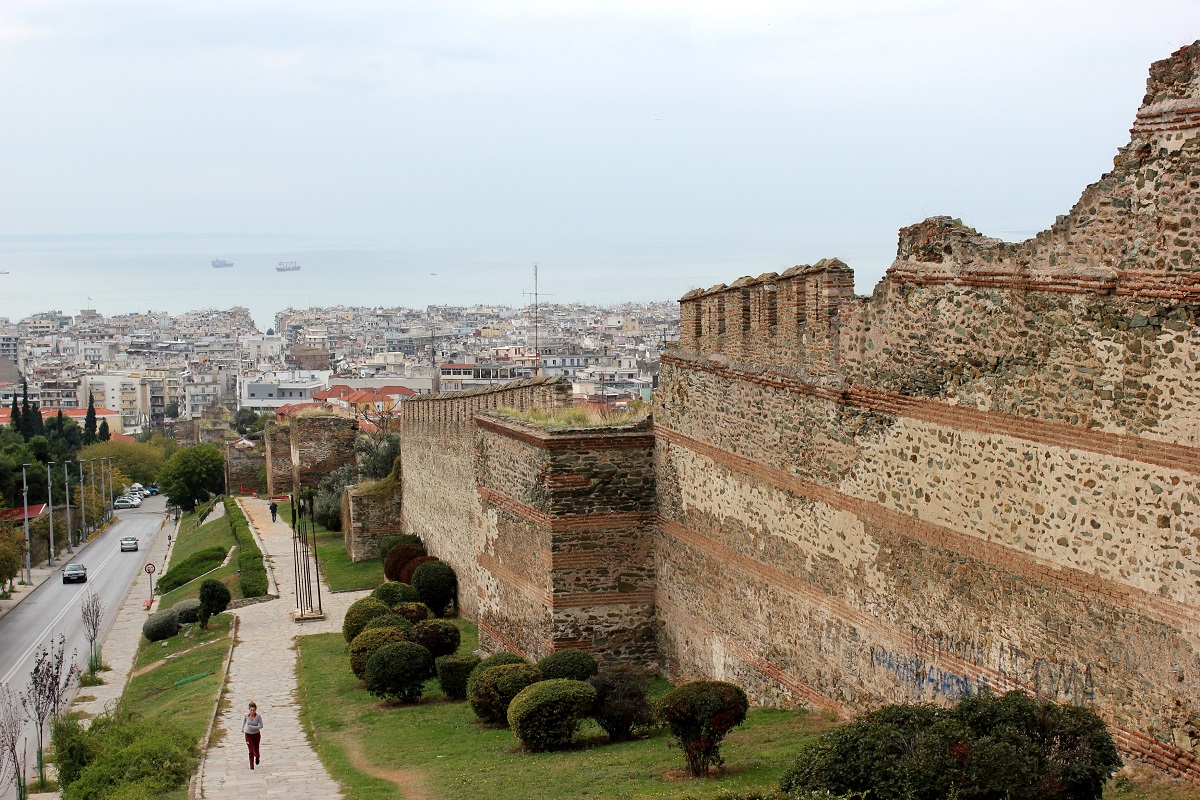
The old city walls in Thessaoloniki, Greece, once considered the largest Jewish city. Photo: Julian Nyča (CC) wikimedia.commons.org


Such an approach means there is a tacit acknowledgement that a European heritage devoid of Islam and Judaism is unfathomable. The local awareness of these close historical and cultural relationships is growing in both the regions and the EU, although it is far from sufficient.

One of the greatest representations of this network are the Balkan Jews. They had great influence concerning the history and culture of the Jews of Eastern Europe. The interaction between these two groups was the result of the growth of trade between different regions of Europe and between continents. It was especially intense in the borderlands between Ukraine and Moldova, an area which could be dubbed a transition zone between the Balkans and Eastern Europe.

 Ancient colonies and medieval globalisation

The Jews arrived in the Balkans during antiquity alongside the conquests of Alexander the Great (fourth century BC). As a result, this region can boast one of the oldest Jewish presences in Europe. They would gradually become Hellenised. As part of Magna Graecia – the Greek colonisation of the Mediterranean and Black Sea – these Jews left the Balkans for the coast of today’s Ukraine in the first century CE. The Jewish history of Ukraine is therefore much longer than that of the Slavs, the main ancestors of the Ukrainians. The Balkan Jews of the Byzantine Empire (the Roman Empire’s successor) took on the name “Romaniotes” (Romans). Their language – Yevanic (from the Hebrew name of Greece which refers to the Ionians, one of the ancient Greek tribes) – was very similar to Greek. In the tenth century the Romaniotes in the Balkans and Ukraine were joined by the Karaites, adherents of Judaism who had come under strong influence from Islam in the Middle East. They would gradually form a separate monotheistic religion with strong connections to Judaism.

In the ninth century intercontinental trade emerged on a scale never seen before. It would connect Europe with Asia and Africa, and its development was closely linked to the Islamic expansion. John M. Hobson, author of The Eastern Origins of Western Civilisation, named this period an “oriental globalisation”. Intercontinental trade would see an unprecedented rise in the 13th century during the Mongol conquest. The Romaniotes and the Karaites would also join this “oriental globalisation”. They would carry their goods northwards deep into Ukraine. They would travel along the Dnieper, Europe’s key trade route, nicknamed the “Route from the Varangians (Vikings) to the Greek”. This is because it ultimately connected Constantinople with the Northern Europe. In Kyiv, this trail intersected with the arterial roads leading to the Silk Road, running from Northern Italy and Southern Germany through Central Europe, Ukraine and the Great Steppe on to China through Central Asia. Another arterial road went through Iran and Anatolia towards the Middle East and back through Anatolia up into the Balkans.

As a result of the northward migration of the Karaites, this group would end up speaking a Turkic language similar to Crimean Tatar. It was on the Ukrainian section of the Silk Road that Balkan Jews encountered Ashkenazi Jews, who had arrived in Eastern Europe from Germany and spoke Yiddish – a language similar to German. The great significance of this Eastern trade in Ashkenazi history is underlined by the fact that this self-applied term comes from the biblical designation for the Scythians (an ancient Iranian nomadic people that ruled the Great Steppe from the eastern Balkans to Lake Baikal at the height of their power). Over the next centuries the nomadic peoples that would roam the steppes of Ukraine and the eastern Balkans would also be known as Scythians. In claiming that they were descendants of the Sarmatians (another Iranian nomadic people), Poles and Ukrainians would indirectly refer to the Scythians, as according to Greek mythology the Sarmatians were the sons of Amazons and Scythians.

 Sepharad and the Balkans

This “oriental globalisation” led to the creation of numerous colonial trade outposts on the coastlines of the Black Sea and the Balkans. These were established by Italian maritime powers such as Amalfi, Ancona, Gaeta, Genoa and Venice, as well as the Croatian Dubrovnik. Just like during the time of the ancient Roman Empire, the Balkans and the Black Sea were once again connected with the Mediterranean through a sea route. Furthermore, the sea routes would expand from the Mediterranean further up to the countries of the North Sea, especially the Netherlands. Many population centres of the Low Countries belonged to the Hanseatic League, a trade union of cities located alongside the North and Baltic seas. This would develop into a dense network of trade routes that would cover the entire coastline of Europe in the late Middle Ages. Jews would also participate in this trade. These maritime trade routes would have a crucial role in their history, as they would use them to escape persecution in the Iberian Peninsula towards the end of the 15th century. This expulsion was a disaster for all Jews, as this region had been the most important centre for Jewish culture. It had experienced its Golden Age thanks to an intense absorption of the achievements of Islamic and Christian civilisation, but also through holding the role of intermediary between Muslims and Catholics. The Jewish refugees from Spain would become known as Sephardic Jews, meaning that they hailed from Sepharad – the Hebrew Biblical name for the Iberian Peninsula. Their native language was Ladino (“Latin”), a language very similar to Spanish. The Sephardic Jews would mostly find safe refuge in the Ottoman Empire and Morocco but they would also reach the Netherlands and Italy. One of their greatest points of concentration became the Ottoman Balkans. Over the following centuries, the Sephardic Jews absorbed a majority of the Romaniotes. The unofficial capital of the Balkan Jews became Thessaloniki. For a few centuries, it had a Jewish majority and was also known as the world’s largest Jewish city for some time. The Sephardic Jewish poet Samuel Usque called it Madre de Israel (Mother of Israel). Other important Jewish centres in the Balkans were Vlorë (Albania), Skopje and Bitola (North Macedonia), and Sarajevo (Bosnia and Herzegovina).

“Polish Corridor” and borderland

In the late Middle Ages, the trade network surrounding Europe would come full circle with the expansions of the union between Poland and Lithuania (known as the Commonwealth from 1569) and the Ottoman Empire. Consequently, the region between the Baltic Sea and the Mediterranean Sea in Eastern Europe came under the control of Poland-Lithuania and the Ottomans. A new land-based trade route would then emerge connecting Central and Eastern Europe with the Balkans, through the Vistula, Dniester and Prut rivers, all the way to Istanbul. Fernand Braudel, a prominent French historian, named it the “Polish Corridor”. One of the most important towns located in this corridor was Lviv, which had earlier been a crossroads for trade caravans just like Kyiv. It is not a coincidence that Lviv was the second largest city of the Commonwealth for some time, while also being the largest Jewish centre in the Polish-Lithuanian state. Sephardic Jews from the Balkans would migrate through this “Polish Corridor” in the northern direction alongside other traders and craftsmen settling in Lviv, among other places. They would come to create their northernmost community in Zamość, located on the lands of the Kyivan Rus’ (in today’s eastern Poland). It was there that they would encounter fellow Sephardic Jews who had arrived from northern Italy. Over time these Sephardic migrant communities became assimilated with local Ashkenazi Jews. Meanwhile, Ashkenazi Jews would themselves leave for the Ottoman Balkans as “economic migrants”, captives or refugees fleeing the Cossacks. The Ottoman Turks called these Ashkenazi Jews Lehli (Poles). It was in the borderlands between the Union/Commonwealth and this so-called Pax Ottomana that wars were waged, trade flourished and an unprecedented cultural métissage simmered. More precisely, this took place in the regions of Podolia and Pokuttia (Ukraine) on the one side, and the Ottoman vassal of the Principality of Moldavia (today’s Republic of Moldova, eastern Romania, and the region of Bukovina divided between Romania and Ukraine) on the other. This borderland of religions, languages, cultures and ethnoses was also the frontier between the Balkans and Eastern Europe, between the Great Steppe and the Carpathian mountain range, and finally between the Balkan Sephardic Jews and the Eastern European Ashkenazi Jews.

Painted hipped roof synagogues and klezmers

Among the most spectacular material representations of this cultural melting pot in Podolia and Pokuttia were the painted wooden hipped roof synagogues, of which the oldest were located along the Prut and Dniester rivers. Several dozen such synagogues were constructed in the lands of the First Polish Republic. Unfortunately, none remain today, having been destroyed during the world wars. The first paintings on the wooden walls were made in the middle of the 17th century, although the number of synagogues with such features grew significantly in the 18th century. It could be said that a separate Jewish school of painting emerged, with artists reaching all the way to Bavaria, where painted wooden synagogues were called “Polish synagogues”. The only remaining original can be found in the Israel Museum in Jerusalem, where it was moved from Horb am Main. The paintings depict a typical town from Podolia or Pokuttia with Greek Catholic churches right next to the walls of Jerusalem. The hipped roof style had biblical connotations, as it was inspired by the tents where the Hebrews dwelled once they had escaped Egyptian slavery, crossing the desert towards the “Promised Land” led by Moses. The tabernacle essentially functioned as a temple in the desert. However, the shape of the synagogues and their colourful paintings are especially reminiscent of the tents of Crimean Tatars and Ottoman Turks. Their interiors featured a beautiful array of tapestries and other forms of woven carpets. Ottoman art was an inspiration for all the citizens of the Commonwealth regardless of ethnicity and religion. Not only did they import a vast range of artefacts, but they also produced them on a large scale, especially in Lviv and the surrounding towns.

The Jews would also take part in this endeavour. In 1659 Lviv presented the Polish King John II Casimir Vasa with a beautiful Turkish tent made by the Jews of the city after they had won a competition. The Polish architects Maria and Kazimierz Piechotka noted that “the walls and vaults of synagogue rooms were covered with polychromes imitating the interiors of representative eastern tents. … The walls were divided into vertical fields, resembling the ‘fences’ of tents. In these fields, framed similarly to mihrabs, tablets with texts of psalms and prayers were placed. … The flat way of painting resembled tent appliqués and embroidery. The impression of textile character was emphasised by carved decorations: cut out of boards, hanging dentils, pelmets and fringes.” (Mihrab is a niche in the wall of a mosque that indicates the direction of Mecca).

This Ottoman influence was further enhanced once Podolia became part of the empire for a few decades towards the end of the 17th century. Meanwhile in Khotyn, a frontier fortress on the banks of the Dniester, a large Ottoman garrison was stationed. It was composed mainly of Balkan Muslims (Albanians, Bosniaks and Turks). The architecture of the hipped roof synagogues was also influenced by the wooden Orthodox churches found in the Ukrainian and Romanian parts of the Carpathian Mountains (the ancestors of the builders often came from the Balkans), or the Polish baroque, which was influenced by Italy. In neighbouring Moldova and Pokuttia this mix of cultures was mostly seen in Jewish music. It is here that “klezmer music” was born in the 18th century, combining Ashkenazi and Sephardic music. However, one could detect a true “Tower of Babel” if one listens carefully: a combination of Ukrainian folk music, the sounds of Balkan highlanders, the rhythms of Istanbul, Roma melodies, Cossack dumkas and the vibrations of Tatar instruments. From the legendary hora danced in the Balkans and Anatolia, to the Bulgar (Bulgarian), Sirba (Serb) and Ukrainian Kolomeike (from Kolomyya, the capital of Pokuttia), the music form possessed many influences. Klezmer music confirmed its syncretism also through the Kozachok (from the Cossacks), kasap (Turkish for butcher) and Terkisher dobriden or dobranich (a Yiddish-Slavic name for “the Turkish good afternoon ” or “good night”). This was all played in the rhythm of the Greek sirto.

 Sabbatai Zevi and Jakub Frank

Sephardic Jews of the Balkans also had a great influence on the Ashkenazi Jews of Podolia and Pokuttia in the sphere of religion. Towards the end of the 17th century the Jews of the Pokuttia region became attracted to Sabbateanism, a religious movement created by Sabbatai Zevi (1626-76), a rabbi born in Izmir in a Romaniote family from the Peloponnese. It was in the Turkish coastal town that he joined a Sephardic community influenced by the teachings of a rabbi from Skopje, the modern capital of North Macedonia. Zevi announced himself as the messiah. The phenomenon of Sabbateanism is connected to the Khmelnytsky Uprising (1648-54), which was a tremendous shock for the entire Jewish community. Ukrainian Cossacks murdered, expelled or forcibly converted large numbers of Jews. When Sabbateanism emerged it was supported by many Jews around the world, but in the end it was rejected by the majority.

It was then that Zevi converted to Islam, combining its mystical tradition with that of Judaism and Christianity. Zevi spent some time in the Balkans residing in Istanbul, Thessaloniki and Ulcinj, where he died and was buried. The wife of Sabbatai Zevi Sarah was an Ashkenazi Jew from Podolia. She was a central figure in the Sabbatean movement, having prophecies of her own. Many incredible stories were told about her. After she lost her family in the Khmelnytsky Uprising she had been forced to convert to Catholicism and was raised by Polish nuns. Later she was also adopted by a Polish noble family. According to one of the legends, an angel visited her in a dream before she was about to be wed. He made it clear that she was the daughter of a rabbi who survived and escaped to Iran where he died. The angel took her to his tomb in Iran and revealed she would become the wife of the messiah.

Sarah was clearly a person of many contradictions. According to one tale, she had been a prostitute before becoming Sabbatai’s wife, while another claimed she was a virgin. Her position in the movement was not a coincidence. The Sabbateans promoted a greater role for women in religious and social life. According to the Israeli-British scholar Ada Rapoport-Albert, a source of their “feminism” was the Bektashi Order – an influential non-orthodox Muslim brotherhood with members among the Janissaries (the elite units of the Ottoman army). The members of the Order were mostly Balkan Muslims. The capital of the Sabbatean movement became Thessaloniki, where its members became known as Dönme (Turkish for turncoat). The city became a magnet for the movement’s supporters from around the world, including Podolia and Pokuttia. One particular battleground between the Sabbateans and their opponents who also came from Eastern Europe (Ashkenazi and Sephardic, from both Podolia and the Balkans) was Amsterdam. In the 16th and 17th centuries this city became a refuge for many Jewish refugees from both the Iberian Peninsula and Ukraine. At the same time, Amsterdam was a global metropolis with strong trade relationships with the Ottomans and the Commonwealth.

The most important Sabbatean in Podolia was Jacob Frank (1726-91), who lived and roamed the “Polish Corridor” on to Ukraine, Romania, Bulgaria, North Macedonia, Greece (Thessaloniki) and Turkey, connecting Ashkenazi and Sephardic Jewry. His first language became Turkish and he converted to Islam during his stay in the Balkans. He became both a janissary and a Bektashite, and later returned to Poland where he converted to Catholicism in Lviv. It is also possible that he died as an Orthodox Christian. The followers of Frank would convert to Catholicism in the Commonwealth and Islam in the Ottoman Empire. Frank saw no issue in this split. On the contrary, he justified it by saying that “when a man holds on with one hand and does it for several years, his hand will become numb and fall down, but when a man holds on with two hands to two places, when one hand becomes numb, the other still holds on. When the second hand becomes numb, he can hold on with the first. This is why many men fell, because they did not think about it and held on to one place. These two (places) are Ishmael and Esau.” Ishmael was the personification of Islam, while Esau symbolised Christianity. Many outstanding writers, poets and politicians from Eastern Europe and the Balkans have Frankist ancestry. The character of Jacob Frank became known worldwide thanks to The Books of Jacob, the magnus opus of Olga Tokarczuk, the Polish recipient of the Nobel Prize in literature.

Hasidism

In the 18th century a new movement was formed in Podolia and Pokuttia based on Jewish mysticism. Some researchers believe Hasidism was based on Sabbateanism, but others claim it was developed as a reaction to it. The truth might be in the middle, with Hasidism being both for but also against it. What remains clear is that Hasidim did not condemn Sabbateanism. Israel Ben Eliezer (1698-1760), also known as “Besht” (an acronym for “Master of the Good Name” in Hebrew), was of the opinion that Sabbatai had a spark of the messiah in him, hoping to attract his followers to join his own movement.

Although Hasidism was formed among Ashkenazi Jews, its rituals and rules are mostly based on Sephardic Judaism. This is understandable if we take into account that “Besht” was a Sephardic Jew from the Balkans. He was born in Podolia when it was under Ottoman rule. His biography notes his visits to the Balkans, including a crucial visit to Istanbul on his way to Jerusalem. It was at the Bosphorus that he decided to turn back towards Podolia and become a mystic. “Besht” had been inspired by Muslim mystics in the Balkans (Sufis/Dervishes), who pray in an ecstatic way combining song and dance. According to scholars on religion, Hasidism also includes Tatar influences, including shamanism from the Great Steppe, and Orthodox, even Ukrainian Hutsul (Carpathian highlanders) beliefs from Pokuttia. It is worth noting that the centre of Orthodox mysticism at the time was in a Carpathian monastery in Ottoman Moldova, in close proximity to “Besht’s cave”. The holy man in that monastery was the Ukrainian Paisius Velichkovsky (1722-94), who himself had Jewish ancestry. Just like the Jewish mystics of Podolia, he would frequently search for the spark of the messiah in the Balkans.

It is possible that Besht learnt to enter a state of trance in other ways than dance. He would frequently smoke something known as a Turkish pipe. Jan Doktór, a renowned researcher of Hasidism, does not rule out that there was more than tobacco in the pipe, namely hashish. The grandson of the mystic wrote that “when ‘Besht’ wanted to elevate himself to higher worlds he smoked the pipe. Whenever he inhaled, he moved from one world to another.” According to one of the stories, the pipe was a gift from Oleksa Dovbush (1700-45), a famous Ukrainian Hutsul highwayman from Pokuttia. Besht and Dovbush met there because the Jewish mystic meditated in a cave, fasting and eating one loaf of bread a week.

The Ottoman influence from the Balkans also influenced the Hasidic garment. A cape used by Hasidim on most days is called a khalat. This is an Arabic word that came through Turkish from the Balkans. It is modelled on the Turkish zhupan. Hasidim also wear Turkish kapce without ankles. Yarmulke is again a Turkish word. On holidays a Hasid wears a shtreimel. It is a round hat made from fox fur based on the Turkish kalpak. The Hasidim were not unique in this regard. Turkish and Tatar fashion also had a great influence on the dress of the nobility, burghers and even the peasants in the Commonwealth, which again proves just how deeply the Ottoman Balkans shaped the culture of Eastern Europe.

Adam Balcer is the Programme Director at the Jan Nowak-Jeziorański College of Eastern Europe in Wrocław, a think tank and publisher of New Eastern Europe.

, ,

Partners

Terms of Use | Cookie policy | Copyryight 2026 Kolegium Europy Wschodniej im. Jana Nowaka-Jeziorańskiego 31-153 Kraków
Agencja digital: hauerpower studio krakow.
We use cookies to personalise content and ads, to provide social media features and to analyse our traffic. We also share information about your use of our site with our social media, advertising and analytics partners. View more
Cookies settings
Accept
Decline
Privacy & Cookie policy
Privacy & Cookies policy
Cookie name Active
Poniższa Polityka Prywatności – klauzule informacyjne dotyczące przetwarzania danych osobowych w związku z korzystaniem z serwisu internetowego https://neweasterneurope.eu/ lub usług dostępnych za jego pośrednictwem Polityka Prywatności zawiera informacje wymagane przez przepisy Rozporządzenia Parlamentu Europejskiego i Rady 2016/679 w sprawie ochrony osób fizycznych w związku z przetwarzaniem danych osobowych i w sprawie swobodnego przepływu takich danych oraz uchylenia dyrektywy 95/46/WE (RODO). Całość do przeczytania pod tym linkiem
Save settings
Cookies settings