
Text resize: A A
Change contrast

NATO 2023: Embracing a paradigm shift

While it is clear that there are a number of challenges and pending issues, the newly established sense of solidarity with Ukraine and urgency when it comes to territorial defence are driving domestic processes regarding NATO’s adaptation and flexible response. Even if it is yet to be seen how quickly NATO states will adapt to the new environment and collectively share new commitments within the bloc, the new mentality is clearly being felt.

In the run up to the NATO Vilnius summit in July 2023, the Alliance is facing new challenges, but at the same time is benefiting from several opportunities stemming from the newly created sense of relevancy. The Russian aggression against Ukraine and the West has helped to revamp and restore the original purpose of NATO dating back to the post-Second World War period, especially in terms of the principle of collective defence.

July 4, 2023 - Pavel Havlíček - Hot TopicsIssue 3-4 2023Magazine

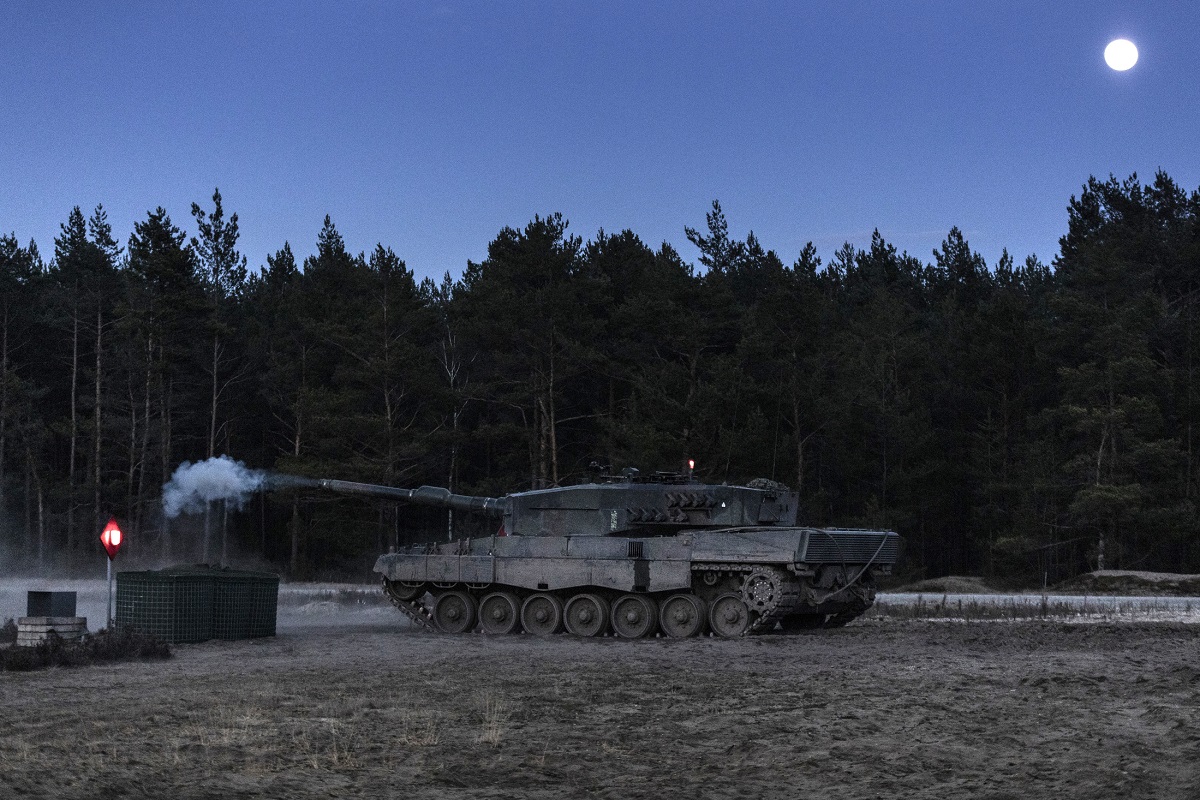
Ukrainian soldiers train on a Leopard tank in Poland under the auspices of a NATO training mission. Today, substantial expectations towards NATO are articulated not only by Ukraine but also a number of other actors still standing outside of the transatlantic community. Photo courtesy of NATO


Within the next couple of weeks, some tough negotiations can be expected among the 31 NATO members (which now include recently joined Finland), focusing on the Alliance’s internal adaptation to the new security environment in Europe and the world. At the same time, NATO will be expected to react more robustly to the Russian aggression against Ukraine, whose status should be enhanced – not only as a solidarity measure but also as part of a long-term NATO goal dating back to 2008.

Internal challenges and dilemmas

Beyond the two large sets of tasks outlined at the previous NATO summit in Madrid, the Alliance is in dire need of more robust internal dialogue and discussion about its future, its values and internal operations. There is also a need for continuous adaptation to old-new threats and challenges with a new sense of urgency. This has been caused not only by the Russian leadership but also some of the Alliance’s member states with increasing authoritarian tendencies.

Following the start of the new wave of Russian aggression against Ukraine in February 2022, the Alliance had to start thinking about new ways of coming to terms with its original mission – territorial defence, concentrating primarily on deterrence and defence posture, namely on its eastern flank.

In that regard, the NATO Madrid summit in the summer of 2022, outlined a number of ambitious tasks and new missions, which meant a fundamental shift from the previous era of so-called “out of area operations”. This led many NATO members to focus on specific sets of capabilities concerning the War on Terror and fighting outside of the Alliance’s territory.

The new security environment, as well as the swift withdrawal from Afghanistan, meant that the Alliance had to embark on a new journey, focusing on the protection of its members, boosting their capacity to defend themselves and enhancing cooperation and coordination when facing external enemies at its borders. This has particularly been the case with Russia and the Eastern Flank of NATO, which has made the Alliance promise that it would deliver for its eastern regions neighbouring Russian territory, namely Central and Eastern Europe, South-East Europe and the Black Sea region.

NATO’s promise to increase the battalion-sized force operating in the region, with the Enhanced Forward Presence increasing to the level of brigades, has been a tangible expression of this new trend. A recently established presence in Slovakia, Hungary and on the shore of the Black Sea region has emerged as well. Nevertheless, a number of tasks and pending challenges still remain. The issue of costs and efficiency plays a key role in the decision-making process regarding whether the forces in the region should be kept there physically on a permanent basis or continue with rotations. It appears that the first option would be strongly preferred by the most exposed members when responding to Russian aggression. In that regard, the Alliance’s command and control structure is being seriously tested and adapted. The same is true when it comes to the military mobility potential of exchange between the Western and Eastern European pillars within the Alliance.

Long-term military spending deficits also hamper the swift adoption and implementation of the new level of ambitions collectively promised in Madrid. The rapid efforts to boost military capacity and equipment further make the situation worse when considering the competition among the members. This may remind members of the times of vaccine diplomacy, with the prices of commodities and other equipment skyrocketing.

External dimension of NATO

Today, substantial expectations towards NATO are articulated not only by Ukraine but also a number of other actors still standing outside of the transatlantic community. Sweden is still waiting for a positive answer from Turkey, which has just witnessed another victory for the President Recep Tayyip Erdoğan and his political party. These forces are important in gradually helping to unblock the situation but some serious problems are still present.

Most importantly, however, is Ukraine – a highly divisive case for the Alliance, with many wishing for a recommitment to the country’s NATO future and concrete steps towards such goals at the summit. At the same time, several influential members rather resolutely opted for a careful position and no radical solutions, at least for now. Some influential ideas, including establishing a NATO-Ukraine Council as a replacement for the previously operating and less equal committee, are currently being floated. This looks to be a more feasible solution when compared with the Membership Action Plan or any kind of other concrete plan involving deadlines and sets of tasks for Ukraine’s integration into NATO.

For many, including Czech President Petr Pavel, it is the end of the war and large-scale hostilities on Ukraine’s territory that would open up the path towards membership in NATO. It would benefit not only Ukraine, but also the Alliance to have such an experienced army among its ranks. Nevertheless, it is the difficult in-between period that is most cumbersome, requiring a more serious debate among the members. In any case, the upcoming NATO summit in Vilnius will certainly set the course and determine the new strength of Ukraine-NATO relations.

Finally, internal debate about China and the Indo-Pacific region is also taking place within the Alliance now. This is due to pressure from Beijing’s assertive posture in the region and the new dilemmas that this opens up in the transatlantic community.

While it is clear that there are a number of challenges and pending issues, the newly established sense of solidarity with Ukraine and urgency when it comes to territorial defence are driving domestic processes regarding NATO’s adaptation and flexible response. The emerging rapid response force and practical need for swift deployment might put pressure on the members and their available capabilities, but at the same time they will force them to really deliver and seriously review their potential and capacities at hand. Plans currently in development for a more efficient regional security structure, alongside deployment, enhanced deterrence, military investment and adaptation will put into practice a new set of opportunities and response measures in case of an emergency situation.

Stronger than ever

One outstanding area of deficiency and unfulfilled potential is clear in relations with the EU, its economic might and potential investment into resilience or military mobility, particularly in Central and Eastern Europe. While all members realise that this needs to change, much more political will needs to be mobilised in order for this to succeed.

Even if it is yet to be seen how quickly NATO states can adapt to the new environment and collectively share new commitments within the bloc, the new mentality is clearly being felt, as coined by the Germans with the term Zeitenwende – representing a clear change from what it used to be in the past inside of the Alliance.

While there are still some question marks, including who will lead NATO after next year or when exactly Ukraine could enter the Alliance, or on domestic issues especially in France or the United States, it is clear that NATO is here and stronger than ever when facing the Russian threat in the East. This is also true with regards to more and more pressure from China in the Indo-Pacific area.

Again, NATO will require adaptability, flexible solutions and political will to support the Alliance’s resilience and help it to overcome difficult times. These necessities, however, will in the end come about as they always have in the past, as crises have made NATO stronger and more prepared to face threats from the outside.

Pavel Havlíček is a research fellow at the Association for International Affairs (AMO) in Prague. His research focuses on Eastern Europe, especially Ukraine and Russia, and the Eastern Partnership programme. He also deals with questions of strategic communication and disinformation, as well as democratisation and civil society support.

, ,

Partners

Terms of Use | Cookie policy | Copyryight 2025 Kolegium Europy Wschodniej im. Jana Nowaka-Jeziorańskiego 31-153 Kraków
Agencja digital: hauerpower studio krakow.
We use cookies to personalise content and ads, to provide social media features and to analyse our traffic. We also share information about your use of our site with our social media, advertising and analytics partners. View more
Cookies settings
Accept
Decline
Privacy & Cookie policy
Privacy & Cookies policy
Cookie name Active
Poniższa Polityka Prywatności – klauzule informacyjne dotyczące przetwarzania danych osobowych w związku z korzystaniem z serwisu internetowego https://neweasterneurope.eu/ lub usług dostępnych za jego pośrednictwem Polityka Prywatności zawiera informacje wymagane przez przepisy Rozporządzenia Parlamentu Europejskiego i Rady 2016/679 w sprawie ochrony osób fizycznych w związku z przetwarzaniem danych osobowych i w sprawie swobodnego przepływu takich danych oraz uchylenia dyrektywy 95/46/WE (RODO). Całość do przeczytania pod tym linkiem
Save settings
Cookies settings