
Streamlining soft power
Over the last five to seven years, there has been a growing understanding in the West that engagement in the post-Soviet area needs to be differentiated. As much as we need to keep communication channels open in order to prevent the emergence of new divisive blocs, we must not forget about our values and what stands behind them. Therein lies the potential to build, to improve and to unite. A positive agenda is all the more important given what the COVID-19 pandemic has revealed.
We will all remember 2020 as the year when the COVID-19 pandemic arrived. The rapid spread of the virus brought significant changes to our lives: closed borders, businesses closing and limited social interactions. More importantly, it forced us to rethink the present and the future – an exercise that is increasingly needed as the scale of challenges continues to overwhelm us. At the dawn of 2021, the world’s attention has been drawn to the first steps to sort things out – namely, the vaccination process.
June 23, 2021 -
Miłosz Zieliński
-
Issue 4 2021MagazineStories and ideas
Arrival of the first batch of Sputnik V vaccines to Argentina. Photo: Casa Rosada (CC) commons.wikimedia.org
January filled us with hope as the European Medicines Agency and European Commission announced the approval of several vaccines. Yet shortly thereafter problems with deliveries emerged. After weeks of patience, some national governments turned their eyes to alternative supplies offered by Russia and China. Discussions about whether to accept Sputnik-V arose in Hungary, Slovakia and Italy.
It comes as no surprise that the issue was heavily exploited by the Russian media. They presented EU solidarity as temporary, ineffective and Russophobic in essence. Sputnik-V, on the other hand, was announced as an innovative intervention thus proving that Russian researchers are capable of developing cutting-edge technologies. Oddly enough, the same outlets were not keen on presenting data suggesting potential side effects of the Sputnik vaccine. It quickly turned out that Moscow treats the supply vaccines as yet another propaganda tool. Sputnik shipments to the EU coincided with shortages in the Russian regions of Kaliningrad and Vladivostok. Apparently, there is no bad time for the Kremlin to wage its favourite disinformation war even at the expense of its own citizens.
Fear of losing grip
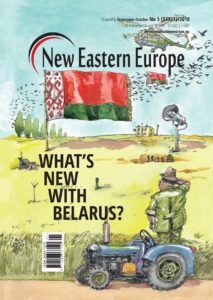
The lockdown has taken a great toll on the global economy. In many countries, governments were able to mitigate its effects by having support programmes for businesses and citizens, amounting to billions of US dollars. Russia also provided selective support. Extensive state support was not possible for the Kremlin’s closest ally, Belarus, though. Already before the pandemic, the regime in Minsk had been facing structural shortcomings of the planned economy where the entrepreneurial spirit and private initiatives were suppressed by the axiom of maintaining authoritarian power. No wonder that the forged presidential election in August 2020 triggered a major social reaction. The months-long protests led to the arrest of hundreds of people who later had to flee the country or face further consequences such as losing their jobs or being relegated from university. Some journalists were sentenced to prison – which set back the establishment of human rights in Belarus for at least a decade – and demonstrations in December 2020 were brutally repressed.
Even though Alyaksandr Lukashenka’s reaction came as no surprise (he was fighting for his political survival, after all), it is more instructive to look at what the protests evoked in the Kremlin. In the minds of the Russian political class, they were a clear example of a western plot to overthrow the current regime in Russia. The ruling elite became convinced that events in Belarus were a beacon of what could happen – if not now, then at least in a few years – in Moscow, St. Petersburg, Ekaterinburg or Kaliningrad. The Kremlin’s political technologists clearly indicated that if the current kleptocracy wants to stay in power, it cannot lose its grip.
The Russian opposition has long been disfigured by actions orchestrated or initiated by the Kremlin. There is a long record of fatal victims, from Anna Politkovskaya to Boris Nemtsov who were shot in 2006 and 2015, respectively. The lack of anti-Putin political representation in the Duma does not mean, however, that there is no growing discontent among ordinary Russians and that they are not ready to express it. Alexei Navalny is perhaps the most prominent example of this trend. He lays bare the ruthlessness of the regime and shows that it affects every aspect of everyday life.
Sadly, Putin has gained strength during the pandemic. The so-called constitutional referendum in June and July 2020 allowed Putin to stay in office until 2036. The expansion of the definition of foreign agent makes it almost impossible to involve any sort of direct co-operation with organisations from abroad without official consent from the very top. When the protests in Belarus broke out, the Kremlin realised that something similar could happen in Russia. It was of concern that they were not only limited to Minsk. The protests spawned across the country, reaching small provincial towns. Given the mindset of all authoritarian regimes, Moscow was more than willing to attempt to gag Navalny, once and for all. Hence the attempted poisoning. The Kremlin was ready to pay the price of relatively small-scale protests during the middle of a pandemic winter. If it had decided to wait, it would have to deal with a tornado of discontent. It is just a matter of time when the havoc wreaked by lockdowns and irresponsible economic policy becomes fully visible.
When the recession hit Russia in 2013, its economy still had not recuperated from the 2008-2009 crisis. The short-term remedy rested on appealing to the notion of Russia being a fortress besieged by foreign powers, hence the war in Ukraine and the annexation of Crimea. It might have made Putin’s popularity skyrocket, but it never solved any of the country’s main problems: corruption, clientelism and a lack of transparency. The Kremlin’s reaction to the protests against detaining Navalny was well summarised by the US State Secretary Antony Blinken who wrote: “The Russian government makes a big mistake if it believes that this is about us. It’s about them. It’s about the government. It’s about the frustration that the Russian people have with corruption, with autocracy, and I think they need to look inward, not outward.”
Calling all stations
Since the COVID-19 pandemic has slowed down the global economy, it has accelerated a yearning for change in post-Soviet societies. Today, Belarusian and Russian societies have witnessed a growing number of falsified death statistics and diminishing support for ordinary citizens. In fact, Moscow is reaping what it has sown. Its response to calls for democratisation of transparency in public space has been disinformation, violation of territorial integrity and open military actions. It resulted in a growing understanding of the threat Russia poses among the Transatlantic community which sought new ways of engagement. In the case of the European Union, they were conceptualised in March 2016 by five guiding principles. The first three centred around the Minsk Agreement, relations with the Eastern Partnership and other post-Soviet countries and strategic resilience. The last two called for selective engagement with Russia and the need to engage in people-to-people contacts and support for Russian civil society.
For the EU, this was a substantial change. Never before had Brussels openly acknowledged that democratisation in Russia requires direct engagement with its citizens. For the US, it was rather a way of coming back to the roots of its activities in Central Europe in the 1980s and 1990s. Back then, the anti-communist opposition received considerable support to dismantle the non-democratic regimes and cement the result brought about by the transition process.
Fast forward to 2021 and the context we have known for at least a decade has changed for the Kremlin and the West. On the one hand, resources at the disposal of the Moscow elite are dwindling. The Russian economy is increasingly unable to compete on global markets beyond the gas and oil industries. The enthusiasm surrounding Crimea has seemed to have vanished. Only to a limited extent can it be substituted with talks on the moral preponderance of the so-called Orthodox civilisation which sees little or no difference between the tsar and the Soviet period.
For the West, the pandemic makes it increasingly difficult to launch large-scale programmes that require physical co-operation across borders. For now, fora, roundtables and conferences are only possible in the digital space. Western societies are preoccupied with sorting out their own issues – the role out of vaccines and the easing of lockdown restrictions. Their attention to developments in Eastern Europe might be temporarily limited.
In times like these, there is a need for increased engagement in local and regional initiatives. Their main objective should be to show that civic activity and agency are crucial to improve one’s direct neighbourhood. Local communities, scattered over a vast area, often lack tools and knowledge but are full of enthusiasm and willingness. They are the real seeds of change which, once planted, will bear the fruits of advancing democracy, human rights and welfare, just like what happened in Central Europe some 30 years ago.
Action for political change is crucial because we need responsible leaders willing to face the real challenges of today: rebuilding economies and societies, preventing a climate catastrophe and rethinking the use of digital technologies. This cannot be achieved without both national and local leaders’ engagement. Such actions on the ground need to be complemented by small study visits. Direct experience with well-functioning mechanisms of local democracy can make a difference. They provide added value because they are authentic. Not only do they seek to achieve objectives foreseen in their respective agendas, they also show what lies beyond: a different world, with which one can freely interact.
I experienced the effects of this phenomenon myself. When I still was a high school student, I spent three weeks at Wake Forest University, North Carolina, where I learned about the American Constitution and travelled across the east coast. It was a remarkable adventure for an 18-year-old. Even though back then, in 2006, Poland was already a member of NATO and the EU, I felt that such initiatives were a formative experience and left a long-lasting mark on my choices in adult life. Nowadays, at a time when freedom of travel has been restricted, study visits like these are likely to become even more appealing.
In grassroots we trust
Over the last five to seven years, there has been a growing understanding in the West that engagement in the post-Soviet area needs to be differentiated. As much as we need to keep communication channels open in order to prevent the emergence of new Cold War blocs, we must not forget about our values and what stands behind them. Therein lies the potential to build, to improve and to unite. A positive agenda is all the more important given what the COVID-19 pandemic has revealed. Even in a time of grave global risks the struggle for power continues. Disinformation and propaganda affect such sensitive areas as the vaccination process, which can save millions of lives. It points to a sad but important fact: Russia’s greatest strength lies in its potential to do harm.
Sadly, Moscow thrives on pursuing a negative agenda. Nevertheless, in the long run its shenanigans constitute its greatest weakness. All interferences in Ukraine, Belarus and other places have been impairing the Kremlin’s credibility. Investigative journalists have pointed out numerous times that because of its own structural shortcomings the incumbent regime is mostly capable of destruction, from troll farms to shooting down civilian aircraft.
Such a policy seeks to undermine the stability offered by democratisation, as well as gradual strengthening of civil society and market economy institutions. In order to counter it, the West needs a readjustment in its engagement in the post-Soviet space. It should build on its approach towards Russia based on the instruments developed since 2014. We need more inclusive, action-based dialogue and tangible support for Russian and Belarusian civil societies. We need local leaders who are able to catalyse progress in their communities.
Streamlining policies and achieving added value is crucial in this regard. The decades-long US engagement in Central and Eastern Europe, the EU’s recently readjusted approach and the expertise provided by Central European countries seems an ideal recipe for gradual, yet long-lasting democratisation and grass-rooted change.
This article was prepared by the author in his personal capacity. The opinions expressed in this article are the author’s own and do not reflect the view of any institution that the author is affiliated with.
Miłosz J. Zieliński holds a PhD in cultural studies. He is a researcher and a career diplomat, having worked in Warsaw, Brussels, Valletta and Kaliningrad.