
Text resize: A A
Change contrast

The election that changed Belarus

The August 9th presidential election has become a critical event for both the Belarusian society and the ruling elite. The election saw the breakdown of traditional divides between the government and a decades-old political opposition. New players have presented themselves as an alternative to the existing system and have shown themselves to be capable of amassing an unprecedented level of public support.

On August 9th, a consequential presidential election took place in Belarus. A few months prior, there was no indication that this year’s campaign would be radically different from any previous one. Everyone had assumed that the regime would simply register a few opposition candidates with no chance. After a typically uneventful campaign, President Alyaksandr Lukashenka would then claim another “elegant victory”. Perhaps a few protests were expected, alongside expressions of “deep concern” from the European Union and the United States. Belarusian political life would soon return to “normal” following the announcement of the results.

September 7, 2020 - Maxim Rust - Hot TopicsIssue 5 2020Magazine

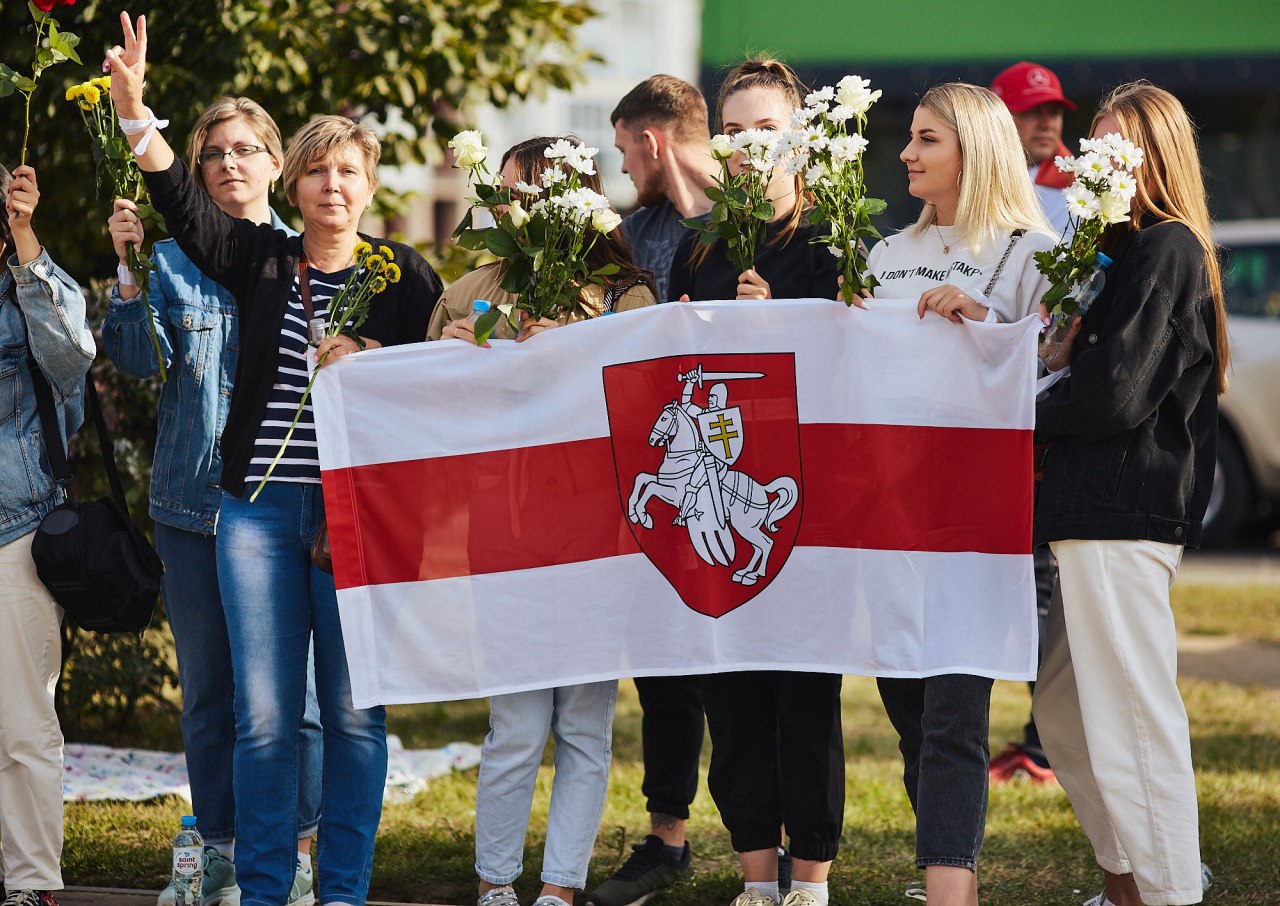
Following the announcement of the election results, mass protests broke out across the country, with the historical Belarusian flag becoming one of the symbols. Photo: Telegram channel of Photographers Against


However, events took a completely different course. Although the official results have ensured Lukashenka another “victory”, the political processes in Belarus appear to be undergoing an irreversible change.

COVID-19 stronger than the opposition

The problems caused by the the coronavirus epidemic in Belarus were a key catalyst for the country’s recent surge in political and civic activity. While all of its neighbours began to enact quarantine measures and close their borders, Minsk pretended that nothing was happening. Enterprises, offices and institutions continued to function as normal. Assemblies of large amounts of people, such as at football matches, were not cancelled and still took place. The restrictive measures introduced in other countries were described in state media as signs of mass panic and psychosis, whilst Belarus was presented as a virus-free country.

However, when the first cases and deaths appeared, the society slowly began to fall into a state of self-isolation. Social dissatisfaction and frustration grew in the country and Belarusians began to seriously doubt the state’s ability to provide security to its citizens. Ultimately, this feeling was the result of the state’s arrogant, irresponsible and inadequate reaction to the spread of the virus. The Belarusian leader outdid himself when he publicly blamed the first confirmed victims of COVID-19 for their own deaths. This “they are themselves to blame” rhetoric resulted in widespread protest, during which people started to write their own obituaries, as if they had been instructed to by the president. Neither the Ministry of Health nor state media passed the social responsibility test. Infection statistics were manipulated and discussion of the virus was marginalised and downplayed by major state broadcasters.

Subsequently, grassroots actions aimed at strengthening social solidarity began to spread across the country. The epidemic affected Belarus’s socio-political life, which was now especially filled with tension and uncertainty. This quickly resulted in a drop in confidence in the state and its institutions, especially the president. Public outrage surrounding the reaction (or rather the lack thereof) of the Belarusian authorities and societal dissatisfaction with Minsk’s policies became a recurring theme during the presidential campaign, which coincided with the worst period of the pandemic. Society subsequently began to mobilise and self-organise on an unprecedented scale.

Candidates of hope

The virus’s initial impact changed how politics was carried out during the presidential race. The traditional Belarusian opposition initially made yet another attempt at finding a unity candidate and decided to hold primary elections. Representatives of various opposition groups traveled around Belarusian cities and met local people. In March, as a result of the epidemic, many potential opposition candidates suspended their campaign and stopped meeting voters. Some of the favourites simply gave up the race and old rivalries returned. The quarrels among the Belarusian opposition were nothing new, but Belarus’s increasingly frustrated and mobilised society made it clear that it needed a stronger alternative to the regime. The pandemic quickly put an end to the decades-old idea that the population must tolerate a government that provides relative stability and security.

Several new candidates, who often differed in their image and identity, quickly appeared in the political arena. Contrary to well-known opposition “veterans” who have been complaining in the same vein about the regime for years, the new candidates were energetic and to the point. Several of them even had real experience in state administration. Overall, they do not want to be associated with the authorities or the opposition. They presented themselves as an alternative to the existing system and quickly enjoyed widespread public support. Even before the official start of the electoral campaign, three of these figures gained the support of thousands of citizens at an unimaginably fast pace. This is why they were described as “candidates of hope” in public debate.

The first of the candidates was Siarhei Tsikhanouski, a social activist and blogger who ran one of Belarus’s most popular YouTube channels. He often travelled around the country and talked with citizens about their everyday problems. Thus, he quickly won the support and trust of the “common people”. The potential threat posed by Tsikhanouski resulted in the Belarus Election Commission refusing to accept his registration documents. As a result, his wife Sviatlana became the official candidate of the campaign. She soon became a symbol of change in Belarus.

The second “candidate of hope” was Viktar Babaryka. Until recently he was an influential banker, the president of Belgazprombank (Gazprom’s subsidiary) and a well-known patron of Belarusian art. In just a few weeks, he became the most recognisable and “sought-after” presidential candidate in the media. Babaryka collected over 430,000 signatures supporting his campaign, a record number in modern Belarusian history. The third candidate was Valery Tsapkala, a former Belarusian ambassador to the United States and director of the High Technology Park, the country’s own “Silicon Valley”.

It is clear that both Babaryka and Tsapkala come from the establishment and circles close to Lukashenka. This was the first time that traditional members of the ruling elite have openly competed with their patron. This subsequently suggests that the country’s relatively monolithic elite is now suffering from infighting. There have long been rumours that senior officials have grown tired of the government’s policies and feel less comfortable within the state.

Social mobilisation versus repression

Deteriorating economic conditions, the pandemic, dissatisfaction with government policy and the emergence of an attractive alternative all influenced the increasing political mobilisation of Belarus’s citizens. The civic solidarity that emerged from the pandemic is by no means insignificant. Such broad and dynamic social mobilisation has not been seen in Belarus since the mid-1990s. It all started with a campaign to support those in need during the pandemic. In a short time, this collective action turned into genuine political protest.

This change was first made clear by the willingness of citizens to openly support these opposition candidates in Minsk and other Belarusian cities. People were lining up in order to give their signatures in support of the opposition candidates. They were guided by a simple logic: they were ready to stand for a few hours to sign the list of any candidate, except the incumbent president. Tsikhanouski’s “Stop The Cockroach!” campaign also quickly spread throughout the country. Its Belarusian translation – “Stop Tarakan!” – rhymes with the well-known anti-fascist slogan “No pasaran” used during the Spanish Civil War. The “cockroach” is meant to  allude to Lukashenka and his public image, with moustaches often connected with the animal in regional culture. Hundreds of people chanting this slogan with posters and slippers in their hands did not formally offend anyone, but everyone knew who was the target.

The “Sasha3%” and “MeWe97” campaigns became the next popular means of protest. They referred to the results of election polls on independent news portals. In none of them did support for the president exceed three per cent. Although actual support for Lukashenka is much higher (though, of course, not as high as a few months earlier), the Belarusian leader was clearly offended by these statistics. Similar opinion polls and data collected by internet portals have been officially banned by Minsk. Consequently, all campaigns and actions in support of alternative candidates moved onto the internet and social media, where the authorities would find them more difficult to control.

The actions of unrestricted protest could not last too long. The ruling elite reacted to the wave of social optimism in a way that is natural, yet recently avoided – with a wave of repression. At the end of May, Siarhei Tsikhanouski was arrested in Grodno. After his arrest, public support for opposition soon shifted to Babaryka. The Belarusian president was clearly nervous and irritated by the growing popularity of his opponents. He began to speak out against them in public. He often emphasised that “high-ranking figures in Moscow” were ultimately responsible for the alternative candidates.

Later, the government started a campaign of intimidation against Babaryka’s supporters and associates of his staff. The management of Belgazprombank and other related companies were charged with money laundering and tax evasion by the prosecutor’s office and tax inspection authorities. In mid-June, Babaryka and his son were arrested and charged with a range of corruption charges. Tsapkala, fearing arrest, fled the country and went to Russia.

Emergence of civil society

The campaign of intimidation and arrests did not dampen the enthusiasm of Belarusian society. It even had the opposite effect as parts of society began to mobilise even more. In this situation, it is necessary to talk about what constitutes “real” civil society. In recent years, demonstrations in the country have been attended mostly by supporters of opposition forces in larger cities. Now, however, ordinary residents are protesting and their slogans are not strictly political. Government repression continued as protests and support actions for alternative candidates were pacified. Activists, journalists and politicians were also imprisoned. The “political prisoner” is now becoming an increasingly well-known figure in the country. This poses serious problems for the authorities who have attempted to silence such figures as much as possible in recent years. Now, political prisoners will be one of the most important issues in Minsk’s relations with the West.

Other measures were also introduced in order to prevent the participation of these genuinely popular opposition candidates. The election commission often did not recognise some of the political challengers’ collected signatures. This resulted in authorities embarking on a search for potential tax irregularities and property declarations connected to these candidates just before official registration. The two most significant “candidates of hope” were ultimately not registered by the state. The official reasons given for the refusal of Babaryka were “irregularities in tax declaration and the financing of the campaign by a foreign state”. Tsapkala submitted nearly 160,000 signatures, while the election commission recognised less than 80,000. This automatically excluded him from the presidential race. Only Sviatlana Tsikhanouskaya was registered from among the “candidates of hope”.

Old/new style of election

Following the announcement of the registration results, mass protests broke out across the country. These were brutally suppressed by OMON (special police forces) and the state militia. The authorities’ belief that this lack of registration would undermine the mobilisation of Belarusian society were completely disproven and miscalculated. As a result of Tsapkala and Babaryka being unable to register in the election, the population supporting the “candidates of hope” simply united around Sviatlana Tsikhanouskaya. Tsikhanouskaya’s campaign was supported by Tsapkala’s wife, Veranika, and Babaryka’s campaign coordinator Maria Kalesnikava. This led to talks in the country that Belarus’s revolution would have a female face. A joint photo of these three courageous women quickly circulated in media around the world.

Tsikhanouskaya suddenly and unexpectedly became the leader of the majority of the Belarusian protest movement. Her campaign’s distinguishing feature was that she had no specific agenda or prior political experience. She has often claimed that her main goal is to simply “change the president” and that she does not want to be leader herself. Tsikhanouskaya’s main promise was to organise free and democratic presidential elections if she wins. This simple and clear message has produced tangible results – large crowds come to Tsikhanouskaya’s official pre-election meetings. About 10,000 people gathered at a rally in Gomel, whilst over 18,000 appeared in Brest. A record 63,000 participants gathered in Minsk for a rally. According to the calculations of independent observers, over 150,000 people have attended Tsikhanouskaya’s official meetings as a whole. For Belarus, this is a significant achievement. After these mass rallies, the authorities began to limit opportunities for Tsikhanouskaya’s staff to meet voters, especially in smaller towns.

Early voting began on August 4th. This method of voting is considered by international observers and analysts to be one of the classic tools used to manipulate election results. Early voting lasted until election day and the possibility of a reliable observation of this process is extremely limited. This year’s campaign saw the authorities urge citizens to participate. Officially, this appeal was a means of counteracting the coronavirus pandemic. In fact, it was ultimately related to the fear that few people would show up to support the authorities.

The Belarusian Ministry of Foreign Affairs was particularly eager to encourage early voting in foreign polling stations as support for the president was the lowest among Belarusians living abroad. According to official data, almost 42 per cent of voters took part in early voting. This is a record in recent Belarusian history. Independent observers do not agree with this figure and point to numerous violations of electoral law during this process, such as the inflation of turnout figures and the expulsion of observers from polling stations.

Active public support for Tsikhanouskaya clearly worried the Belarusian leader. During Lukashenka’s speech to the nation on August 4th, the Belarusian leader looked visibly nervous and tired. The president made it clear that the state is on full alert to prevent destabilisation and that it will not hesitate to use force if necessary. A strong public mood in favour of protest and a desperate, determined state quickly became an explosive mixture.

The voting day on August 9th was critical for Belarusian society and the ruling elite. Long lines of voters quickly appeared in front of polling stations. In front of the Belarusian embassies, crowds of several thousand people gathered, but only a fraction of these potential voters actually managed to vote. In Belarus, the goverrnment shut off the internet and blocked various social networks and messenging apps. The army was brought into Minsk and in the evening the capital and other cities were effectively controlled by the military.

The election commission announced an exit poll for the elections which claimed that Lukashenka had gained over 80 per cent of the vote. His main rival Tsikhanouskaya officially gained about ten per cent. Electoral procedures were only observed by a Commonwealth of Independent States mission which did not notice any irregularities. Interestingly, some polling stations broke with the government’s line and began to publish the election’s “true results”, in which Tsikhanouskaya won the election in the first round. This enraged many disgruntled citizens, who soon appeared on the streets of many Belarusian cities. Peaceful protests lasted all night and law enforcement, the militia and OMON, responded with brute force.

The change has already happened

This year’s presidential campaign broke several records. Although they could also be described as “anti-records”. First of all, it is clear that social mobilisation occurred at a level not seen in 20 years. This was evidenced by the protests and the long queues in front of polling stations. Turnout was also record-breaking, which, according to official statistics, was over 84 per cent. Peaceful protests spread across all of Belarus and over 5,000 people were detained in the early days. Many of these people face up to 15 years in prison. The militia and OMON often used military equipment, rubber ammunition and stun grenades against the demonstrators.

Hundreds of peaceful demonstrators mutilated during the pacification were taken to hospitals. Workers of some state-owned factories went on strike. There was also information about protesters killed and injured. After two days of brutal clashes between citizens and the militia, Tsikhanouskaya was forced to leave the country and went to Lithuania. In a statement which appeared recorded under pressure, she calls on her supporters to “not to stand against police”.

Given the conditions, the president’s official result of over 80 per cent also seemed to be record-breaking. Nobody doubts that this was not the true result and that the elections were neither fair nor democratic. It is puzzling, however, as to why such a high number was even reported by the authorities. If Lukashenka’s result would have been between 60 and 70 per cent, it is possible that the riots would not have happened. The day after the election, the president announced that foreign powers were responsible for both the demonstrations and the disruptions to the internet. According to him, these forces supposedly aimed to destabilise the situation in the country.

Hardly anyone believed that Lukashenka would not “win” these elections. Yet, it is also important to consider how people will react to these results in the long run, as well as the next steps of the Belarusian authorities. This year’s presidential campaign was unique. There are several factors that will influence the dynamics of Belarusian politics in the coming months.

First, the Belarusian ruling elite is clearly in a difficult situation. Desires to diversify foreign policy, which have been pursued for several years, has changed the image of Belarus on the international stage. The normalisation of relations with the West and attempts to become slightly more independent from Russian political influence have changed the nature of the country’s social and political relations. There is a risk that the behaviour of the authorities during the elections may negatively affect relations with both the West and Russia. This could subsequently lead to international isolation. Lukashenka’s official result of 80 per cent proves that the president has become increasingly detached from reality. The question is whether he is able to fully control the system he has created.

Second, Belarusian society has changed at a demographic level. There is now a generation of young people entering political life who have different expectations and ideas about the world compared to their parents. Most importantly, they do not remember the 1990s, which is why Lukashenka’s narrative is completely alien to them. Both the political elite and the opposition will have to try to appeal to this new generation.

Third, and most importantly, the coronavirus pandemic and the presidential campaign have revealed the Belarusian citizenry’s impressive capability to mobilise in support of societal co-operation, solidarity and resistance. This mobilisation and politicisation of society will not simply disappear after the elections. Ultimately, the election saw the breakdown of traditional divides between the government and a decades-old political opposition. Many new politicians emerged who did not want to be associated with either the authorities or the established opposition. This may further exacerbate issues regarding the political structures surrounding the authorities and traditional opposition. New players have presented themselves as an alternative to the existing system and have shown themselves to be capable of amassing an unprecedented level of public support.

The election figures are by no means the most important result of recent events in Belarus. The real question is what will happen now regarding the incredible level of social and political mobilisation that has developed in Belarus in recent months?

Maxim Rust is a political analyst and researcher of political elites in post-Soviet area. He has a PhD in political science from the University of Warsaw. He is also a contributing editor with New Eastern Europe.

, ,

Partners

Terms of Use | Cookie policy | Copyryight 2026 Kolegium Europy Wschodniej im. Jana Nowaka-Jeziorańskiego 31-153 Kraków
Agencja digital: hauerpower studio krakow.
We use cookies to personalise content and ads, to provide social media features and to analyse our traffic. We also share information about your use of our site with our social media, advertising and analytics partners. View more
Cookies settings
Accept
Decline
Privacy & Cookie policy
Privacy & Cookies policy
Cookie name Active
Poniższa Polityka Prywatności – klauzule informacyjne dotyczące przetwarzania danych osobowych w związku z korzystaniem z serwisu internetowego https://neweasterneurope.eu/ lub usług dostępnych za jego pośrednictwem Polityka Prywatności zawiera informacje wymagane przez przepisy Rozporządzenia Parlamentu Europejskiego i Rady 2016/679 w sprawie ochrony osób fizycznych w związku z przetwarzaniem danych osobowych i w sprawie swobodnego przepływu takich danych oraz uchylenia dyrektywy 95/46/WE (RODO). Całość do przeczytania pod tym linkiem
Save settings
Cookies settings