
Rewriting Russian history
The battle for the future shape of Russia’s education system is now in full swing. Not only is the Kremlin increasing its control over what it considers the correct version of the past, there are also signs of a gradual ideological return to promote the glorification of Joseph Stalin.
In 2015 the 70th anniversary of the Soviet victory over Nazi Germany was celebrated in grand style. During that time, a larger than usual number of Stalin monuments was erected in several cities especially in south-western parts of the country upon the proposal of the communist party. The communists’ call came after a 2014 law passed by the Duma introduced a criminal penalty for rehabilitating Nazism and criticising Soviet activities during the Second World War. The law stipulates up to five years in prison for “lying about history”. Similar steps have been taken with regards to teaching history in schools.
January 2, 2018 -
Dagmara Moskwa
-
History and MemoryHot TopicsIssue 1 2018Magazine
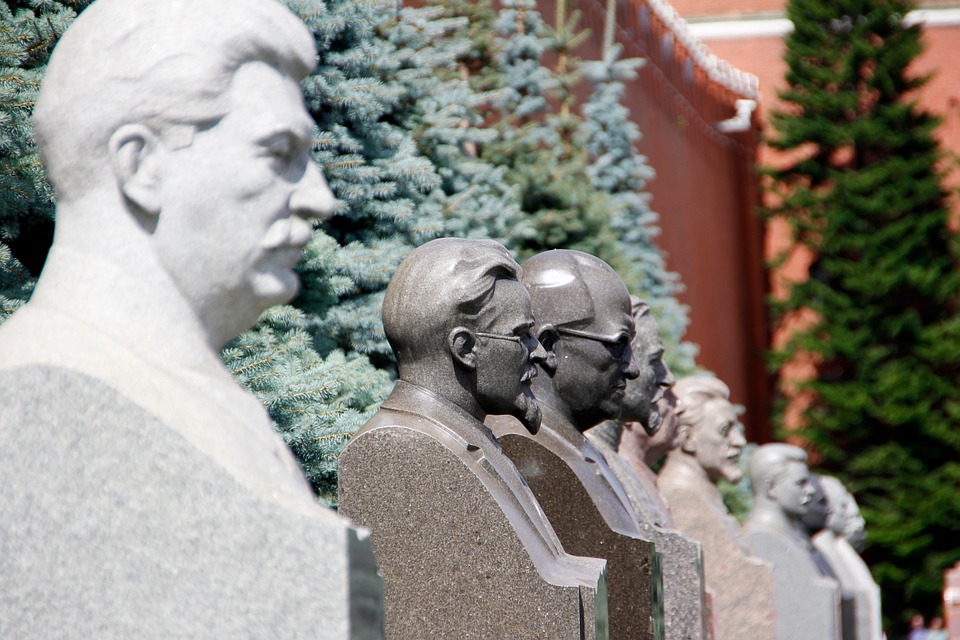
photo: 3dman_eu (CC) https://pixabay.com/p-1029494
Academic shuffle
In August 2017 Olga Vasilyeva, who is known for her close ties with the Kremlin and the Orthodox Church, was nominated as the new Russian minister of education and science. She replaced Dmitry Livanov who was considered to be a liberally-minded technocrat. This change came as no major surprise. The need to dismiss Livanov from his post had been discussed in the circles close to Putin for some time. The former minister had many enemies, especially after the fierce battle he had led against academic plagiarism in doctoral and postdoctoral dissertations at Russian universities. Livanov also worked on reforming the Russian Academy of Sciences (RAS) which, in theory, was meant to improve Russian academia and science. In practice, it has led to the government taking control of RAS’s assets and operations. As a result of the reform, the Federal Agency for Scientific Organisations (FANO) was established in 2013. It is a body that is subordinate to the government that manages fixed property and other assets of all educational institutions in Russia.
Even though the RAS reform turned out to be to the government’s advantage, Putin still decided to make changes in the ministry and appointed Livanov as his advisor on trade and economic relations with Ukraine. The decision was seen as the president’s concession to the conservative side of the ruling elite, who believed Livanov did not put enough effort into promoting patriotism, pride and the accomplishments of the Russian state.
In academic circles, Vasilyeva is a highly regarded historian, specialising in the Orthodox Church. Her research has mostly focused on the Soviet era and specifically on relations between the communist regime and the clergy. Less known, however, is the fact that Vasilyeva graduated in music, with a focus on conducting church choirs. She began her academic career as a teacher of history and singing. Without a doubt, the minister is a prolific scholar. She has published nearly 160 academic articles over the span of 30 years. Thus, the controversy around Vasilyeva’s nomination is not related to her academic accomplishments, but rather revolves around how she interprets the past.
Vasilyeva’s articles and lectures illustrate her open approval of the Stalin era and her appreciation for the impact, positive in her view, Stalin had on the development of the Orthodox Church as well as promoting patriotism and pride among Russians. Not surprisingly her nomination was received with sincere enthusiasm on behalf of the Orthodox clergy, Patriarch Kirill and Archimandrite Tikhon (Putin’s personal confessor). On the day of her nomination as the new education minister, Vasylieva gave an interview to Komsomolskaya Pravda where she admitted that her appointment was “a realisation of God’s will”. Less than a few days later, she walked back from those comments, explaining what she meant was “the realisation of the inevitable”. Since both expressions sound very similar (bozhestvovanye and dolzhenstvovanye, respectively) in Russian, the newly appointed minister could blame her interviewer of misinterpretation, accusing him of being unprofessional.
Admittedly, Vasylieva found a clever way to deal with the inconvenient situation. Her nomination caused quite a stir in the Russian media who started citing her earlier references to Stalin and the Soviet Union. Her speeches from 2013 were published on lenta.ru quoting her saying: “Despite his shortcomings, Stalin is a public good because on the eve of the outbreak of the war he committed himself to uniting the nation; he reactivated the heroes of the pre-revolutionary Russia and promoted the Russian language and culture which, in the long run, allowed Russia to win the war.”
Vasilyeva is not only active academically but also politically. Prior to her nomination, she had worked for the president’s administration being involved in the widely discussed preparation of a project called “The single textbook of Russian history”.
The single textbook
In 2013, when Putin criticised history teaching in schools – stating that various textbooks were presenting opposing points of view – a new era began for Russia’s education system. In response to the president’s criticism, a new “single textbook on Russian history” was suggested. This new book was to be written “in beautiful and correct Russian … and free of any internal contradictions and ambiguities”. To achieve this aim, the president summoned a group of loyal officials and academics (among them Livanov, Aleksandr Tschubaryan of RAS, Sergey Naryshkin, the Chairman of the State Duma, and Vladimir Medinsky, the minister of culture) who quickly took on the project. It was endorsed in October 2013 and the preparation for a standardised textbook of Russian history was underway.
The book was envisioned to promote patriotism, a sense of civic responsibility and tolerance towards other nationalities. It was meant to teach the Russian youth to be proud of their country, specifically the accomplishments of the heroes of the 1812 war and the Great Patriotic War (Second World War). Thus, it was supposed to emphasise the common military effort of a nation faced with danger. It was also expected to include information about two recent acquisitions of the Russian Federation: Crimea (“Crimea is ours” still keeps Putin’s high popularity in the nation) and Sevastopol.
During the preparations, however, it was decided that there would not be “a single textbook” but several books. “We will have a single standardised view of history and culture that should be followed when preparing all history textbooks. That does not mean, however, that there will be just one single textbook,” Livanov told Izvestya in August 2014. In the end, three different textbooks were approved to be introduced into schools in October 2015.
One of the outcomes of the reform was a considerably shorter list of textbooks in other subjects authorised by the ministry to be used in schools. The textbooks that had been quite popular among teachers (including several maths textbooks) before, and had been available at school libraries, disappeared from the list. They were recognised as unpatriotic and inefficient. The reform also called for approved textbooks to be prepared every five years, not like before when it was every year. Clearly, textbook publishers will now have a longer waiting period before they get another chance to bid for publishing new textbooks.
A single interpretation
Prosveshcheniye is the publishing house which now holds the largest segment of the teaching material market in Russia. As a result of the reform, in Moscow alone it has increased its share from a mere 1.23 per cent in 2013 to 93.2 per cent in 2015. This phenomenal market success is owed to Prosveshcheniye’s owner Arkady Rotenberg, who is a long standing friend of Putin, and his former judo sparring partner. Not surprisingly, companies owned by Rotenberg made huge profits during the preparation of the Olympic Games in Sochi after they had been generously awarded a large number of lucrative contracts.
Yet, Prosveshcheniye operations are riddled with many secrets. In May 2015, for instance, the Moscow department of education sent out a letter addressed to the directors of Moscow primary schools in which it was clearly suggested that they should purchase teaching materials and textbooks published by Prosveshschenye. When asked, employees denied any knowledge of the letter. Similarly in 2016, a letter signed by the publishing house’s director, Mikhail Kozhevnikov, was circulated. It stated that following the debates of the National Convention of History and Civic Education Teachers (in April of 2014) it was recommended that textbooks published by Prosveshchenye and edited by Anatoly Torkunov are the best option for history teachers. However, in the “resolution” that was prepared to summarise the decisions of the Convention, Prosveshchenye was not mentioned once.
The story of Vladimir Luzgin, a teacher from Perm, is an illustrative piece of evidence that the process of creating one interpretation of history is now under way in Russia. It is also a warning of what can happen to those who attempt to depart from what is now being seen as the correct narrative. Luzgin posted on VKonakte, a popular Russian social media site similar to Facebook, a statement that the 1939 Ribbentrop-Molotov pact enabled Hitler to start the Second World War and that the signatories of the Pact (the Soviet Union and Germany – editor’s note) together invaded the Polish territory in September 1939, thus unleashing the war. For sharing this information, he was fined 200,000 roubles (almost 3,000 euros) by a local court. The court justified its decision by recognising Luzgin’s activities as an act of “rehabilitation of Nazism”, which, it argued, could lead to a revision of the consequences of the war, thus standing in contradiction with the decisions of the Nuremberg Tribunal. The Supreme Court of the Russian Federation upheld the verdict, dismissing the argument that Luzgin’s post was in accordance with the interpretation of history as it was presented in the history textbooks from 1994-1995; that was the time when Luzgin was learning history in school.
Another example illustrating the process of creating a single version of history and assigning this responsibility to Putin’s loyalists is the controversy over the doctoral dissertation of the current minister of culture, Vladimir Medinsky. In 2011 he defended his PhD thesis, which analysed problems of objectivity in Russian history from the 15th to the 17th century. However five years later, in April 2016, the Russian ministry of science received a request to nullify his degree because of plagiarism and for citing non-existent sources. The dissertation was re-examined in June 2017 and it was concluded that Medinsky could hold onto his doctoral degree.
The case was again reopened in October after it had been recommended by the scientific council of the Higher Attesting Committee of the Ministry of Education that the minister’s academic degree should be nullified on the premise that his dissertation did not meet the necessary academic standards. However, the decisive body – the presidium of the Attesting Committee – refuted the accusation and the minister was allowed to hold onto his doctorate. This episode received strong opposition within the academic community (including RAS members) who argued that academia should be independent from the government. In their view the Attesting Committee should not be dependent on the ministry of education but rather subordinate to the Russian Academy of Sciences.
Stalin returns
The majority of Russians see Stalin as the builder of the Soviet Union, the victor of the Second World War, a genius commander and strategist who had extraordinary skills and amazing political intuition. Emphasising the dictator’s pragmatism makes it easier to justify his morally dubious decisions which led to mass repressions and murder. Instead, it is argued, it is thanks to Stalin that Russia became a global superpower, something that many Russians feel nostalgic about today. Thus, a demand for Stalin’s cult of is now growing.
New monuments to Stalin are just one of the ways to honour the dictator. In 2015, a few days before the commemorations of Victory Day, the communist party put forward a proposal to erect new statues of Stalin across the country. Such monuments are now to be found in Lipetsk, Stavropol and Penza. Also, in 2015, on the 70th anniversary of the Yalta Conference, a monument to the Big Three (Stalin, Churchill and Roosevelt) was unveiled in the city. The opening ceremony was attended by the chairman of the Duma and the president of the Russian Military-Historical Society (RMHS). In 2016, in the Pskov district, Stalin’s bust, funded by the RMHS was unveiled. Upon another initiative of the same organisation, the Leaders’ Alley was built in Moscow. There, next to the busts of different political figures from the Soviet and post-Soviet period, are those of Lenin and Stalin.
The myth of the Soviet Union’s victory in the Great Patriotic War is shared by many Russians who see it as the biggest accomplishment of the Soviet nation (and by the same token, the Russian nation) and is being used by the Kremlin as a foundation for an identity building process. However, while the interpretation of history that is being now propagated by the Kremlin tends to stress military victories and technological advancements, Stalin’s repressions are conveniently forgotten. This manipulation finds fertile ground within Russian society: some research, for example, finds that many in Russia still regard Stalin as the most prominent figure in Russian history. In one survey conducted by the Levada Centre, Stalin was ranked in first place, closely followed by Putin together with Aleksandr Pushkin and Lenin.
Overall, knowledge of Stalin’s repressions and terror are rather limited in Russia. In 2012 six per cent of respondents claimed to be unaware of his criminal acts, whereas in 2017 as many as 13 to 25 per cent admitted that repressions “were a politically justified necessity”, while 36 per cent said that the aims and accomplishments of Stalin’s period justify the number of victims. There are, however, places where local authorities have opposed initiatives of unveiling new monuments to Soviet leaders. In Surguta, for example, the statue of Stalin was disassembled by the municipal authorities at the request of the city’s inhabitants. The monument had been splashed with red paint several times before. Such actions, undertaken either by the authorities or NGOs show the need to commemorate the victims of terror and repressions is shared by a part of Russian society, even though they are still a minority. It is also somewhat encouraging that the history textbook prepared by one of the other publishing houses, Drofa, which was thoroughly evaluated by experts and allowed to be published and circulated in Russia in 2015, emphasises that while Stalin is the symbol of Soviet Union’s victory in the Second World War, he was also responsible for political repressions.
Historical oversensitivity
Just like any other society, Russians want to promote an idealised version of their past rather than face the inconvenient truths. It is a version that is driven by emotions and serves as guidance for social conduct and values. History textbooks are a useful tool in this regard as it is through them that the young generation shapes its understanding of history. In Russia so far nothing has worked better than the myth of the Great Patriotic War which, to a large extent, was constructed on the Soviet victory over the Nazis, thus allowing the narrative that the Red Army saved Europe from a complete disaster in 1945. This, in turn, has been interpreted as Russia having the moral right to decide on the fate of other nations in Eastern Europe.
The unbelievable power of suggestion by the Russian authorities, as well as the appeal of the myth of the Great Patriotic War, has resulted in a lot of oversensitivity, especially in regards to the statements that diminish the Soviet Union’s role in the victory over Nazism. This situation is one of the explanations for the changes that are taking place and which include the gradual revival of Stalin’s cult, punishment for those who are “lying about history” and the introduction of new textbooks which present an officially accepted version of history. Assumedly, such activities are undertaken with the long-term goal of forming a society that is loyal to the government, proud of its historical accomplishments and ready to defend it when needed. Before we judge, let us answer the question: is there any state in the world that does not want to have that?
Translated by Agnieszka Rubka
Dagmara Moskwa is a research assistant at the Institute of Political Studies with the Polish Academy of Sciences and she is completing her PhD at the Adam Mickiewicz University in Poznań. Her research interests include broadly understood memory studies, especially Russia’s contemporary historical policy.