
Text resize: A A
Change contrast

China and Russia: a strategic partnership with many limits

The threat of a China-Russia alliance poses significant geopolitical challenges to the United States and the European Union. However, the strength of their relationship may not be as powerful as they declare.

In his September visit to Stockholm, the Republican chairman of the US House Foreign Affairs Committee, Representative Michael McCaul, warned that the strengthening relationship between Russia and China was the most significant “threat to Europe and the Pacific … since World War II”. This viewpoint, as sensationalist as it appears, has some merit. Both China and Russia are nuclear-armed, both can paralyse the United Nations Security Council with their veto powers, both have in the last decade become more authoritarian at home, and both have engaged in a variety of malign activities that damage democracy abroad.

November 20, 2023 - Alexander Lanoszka - Hot TopicsIssue 6 2023Magazine

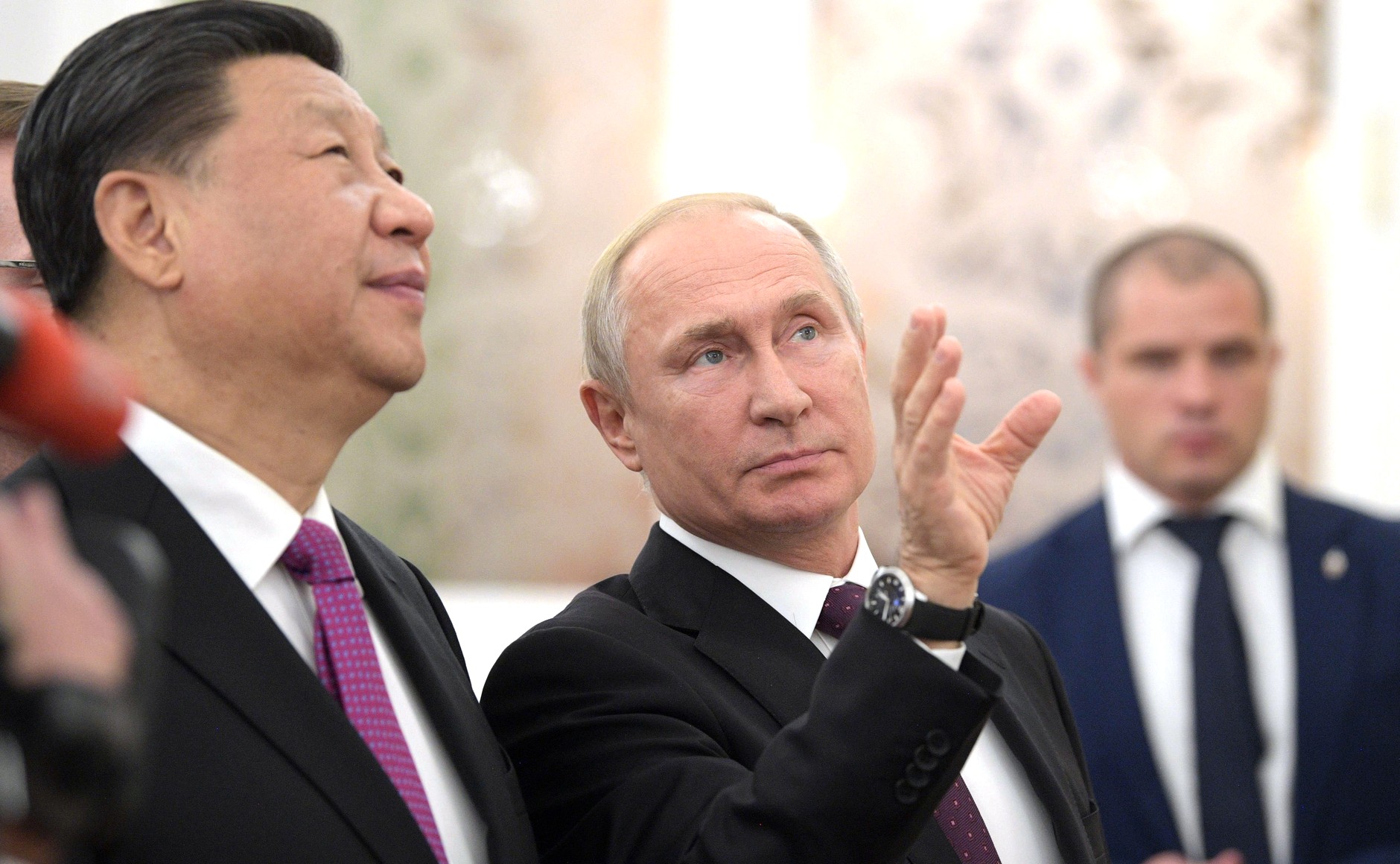
Photo: (CC) commons.wikimedia.org

Russia is clearly intent on revising the territorial order in Europe with its brutal war of aggression in Ukraine, while China is gathering the military and intelligence assets necessary to go about its stated ambition of finally bringing Taiwan to heel.

Superior relations

Reinforcing the notion that Moscow and Beijing pose a uniquely serious danger to the Euro-Atlantic and Indo-Pacific areas is their own self-declared strategic partnership. Mere weeks before Russia’s full-scale invasion of Ukraine in early February 2022, Russia and China announced publicly that their friendship has “no limits” and that “there are no “forbidden” areas of cooperation.” In an obvious dig at NATO, the two sides asserted that their relations are “superior to political and military alliances of the Cold War era”. Going beyond those words, China has provided diplomatic support to Russia following Moscow’s fateful decision to mount large-scale combat operations against Ukraine. Reports abound of China sending military gear to Russia. China has encouraged narratives that Russia is waging a defensive war against the West’s challenge to its supposedly legitimate security interests.

But is the strategic partnership really without limits, thereby posing the most significant threat to liberal democracies since 1945? The answer requires some nuance. On the one hand, China and Russia have indeed strengthened their alignment in a process that can be traced back to the 1980s. Their deepening security cooperation does present a challenge to the United States and its allies in Europe and the Indo-Pacific. On the other hand, China and Russia have revealingly stopped short of signing a defence pact. No military alliance is in the works. And so insinuations that their relationship outperforms NATO come across as almost apologetic, hiding the major geopolitical disagreements that lurk beneath the surface.

Moscow and Beijing used to have a treaty-based defensive alliance with one another. Shortly after the communist victory in the Chinese Civil War, Mao Zedong petitioned Soviet leader Joseph Stalin to formalise their countries’ political and military ties. Stalin saw no need for an alliance and was reluctant to establish one, but eventually agreed to do so. For several years, the Sino-Soviet relationship was strong. Soviet engineers and scientists even helped with China’s fledgling nuclear programme.

However, major tensions arose between the two sides by the late 1950s. Mao disliked Stalin’s eventual successor, Nikita Khrushchev, perceiving the new Soviet leader’s attacks on personality cults as ideological heresy. Geopolitical disagreements over how to take the communist struggle abroad, especially with regards to Taiwan, grew with time. The Soviet Union withdrew its scientific support from China and border disputes between the two intensified, leading to a serious flare-up that brought them close to war in 1969. Moscow and Beijing let their military alliance wither away. Its foundational treaty reached its expiry date in 1979 with neither side making a serious effort to renew it.

Relations between the erstwhile allies would eventually start to improve in the late 1980s. Soviet leaders were trying to figure out how to restructure their sclerotic, command-based economy without losing political control. China offered a model to this effect, albeit one that would prove impossible for the Soviet Union to replicate given its ethnic diversity and a military establishment too obstructionist to countenance meaningful reform. When the Soviet Union did collapse and left in its wake a much reduced and weakened Russian Federation, China chose not to use the occasion to litigate old territorial disputes. Instead, the two sides signed a treaty of friendship that saw agreement on their shared border. Shortly thereafter, they increased their military personnel exchanges, enhanced their consultative bodies and rekindled their military-technical cooperation. In the early 2000s, the two countries announced their intention to undertake joint military exercises, with their first large-scale exercise bearing the assuring name Peace Mission-2005.

Authoritarianism at home and abroad

Russia and China were thus becoming more aligned geopolitically in the years leading up to 2014. By the time it seized Crimea from Ukraine and destabilised Donbas in Ukraine’s east, Russia had already undertaken several military drills, engaged in several confidence-building measures and expanded security consultations with China. Of course, western sanctions imposed after Russia attacked Ukraine in 2014 diverted the country’s trade away from Europe and towards China, with some observers subsequently arguing that these sanctions have served only to push Russia into the arms of China.

Yet a wider historical perspective suggests that trends already appear to point to strengthening relations between the two countries. And indeed, when looking at the leaders themselves, one can see that, prior to 2014, both Russian President Vladimir Putin and Chinese General Secretary Xi Jinping were starting to consolidate authoritarian control over the societies that they ruled. Putin became president again in 2012 amid credible allegations of electoral fraud and stepped up repressive activities against ordinary citizens, most prominently against members of Russia’s LGBTQ+ community. In 2012 as well, Xi launched an anti-corruption campaign that would enable him to consolidate political power within the Chinese Communist Party even if there was genuine corruption that needed curbing.

The time since 2014 has seen greater efforts by China and Russia to increase authoritarianism at home and export it abroad. Freedom House reports that, as much as they were hardly ever democratic in any meaningful sense, the space for freedom of expression and assembly shrunk significantly in both countries in the last decade. China stepped up surveillance of its citizens, both within its territory and without. The quality of human rights deteriorated, with over one million members of the Uyghur population interned in detention centres. In its foreign relations, China has unsettled its neighbours by pressing territorial claims against them while going about a major military build-up that encompasses the biggest expansion of its nuclear weapons arsenal in recent memory. Taiwan is the most serious target for Chinese military aggression, with some forecasting a Chinese effort to annex it in the not-so-distant future.

For its part, Russia continues to occupy large swathes of Ukrainian territory that it seized in 2014 and 2022, while its leaders brandish nuclear threats against Ukraine’s international partners. Both China and Russia push anti-liberal narratives on social media that serve to widen political polarisation and erode trust in public institutions.

If China and Russia thus increase their collaboration, the geopolitical challenge to the US is significant. Many analysts claim that the United States is overstretched due to the large number of military personnel it has deployed in Europe, East Asia and the Middle East. In 2018, the Pentagon issued a strategic document that abandoned the two-war standard, whereby it could face off militarily against two regional adversaries, whether simultaneously or in tandem. Now the US military has embraced a one-war standard – that is, a strategy focused on winning a single war with another great power. Though this strategic change might reflect a more realistic appraisal of what the US can do these days, it opens up the possibility of opportunistic adversaries instigating crises in different parts of the world to leave the United States exposed anywhere it has commitments. A unified bloc comprising a revisionist China and a revanchist Russia has this potential.

More limits than advertised

This close alignment between Russia and China, however, has not so far led to a formal military alliance. The lack of a treaty-based alliance is revealing. States sign binding alliance treaties when they have enough in common with each other that they wish to certify their shared approaches to domestic and international audiences alike. Yet states rarely, if ever, have harmonious interests. Whether because of geography, ideology, history or whatever else that can produce differences between them, even the closet allies will have disagreements about how to confront shared threats. A prospective ally could, for example, be more hawkish and appear overly eager to start a fight that could entrap the wider alliance. To reduce such risks, states can negotiate into an alliance treaty conditions or more precise language on those clauses that could be triggered should hostilities break out.

The treaties that the US has with its military allies are indicative in this regard. Signed in 1949, NATO’s founding treaty restricts the military alliance to a specific geographic region so as to exclude the vast majority of the colonies that various Western European states could have plausibly waged war to keep at that time. Article Five – which states that an attack against one NATO member is an attack against all – does not automatically cause any specific action if invoked. Members retain their sovereign powers to determine their response. The alliance treaty between the US and South Korea has similar features. An understanding appended to it explicitly states that Washington will only come to Seoul’s aid in the event of an armed attack against territory already under Seoul’s administrative control. In either case, the United States used strategic language to avoid the possibility that it could be dragged into any conflagration that others might initiate.

The fact that China and Russia have not concluded a treaty-based defence pact suggests that the potential differences between them are too difficult to smooth over with treaty language. Why that is the case is not hard to see. Russia is already involved in a very hot war with Ukraine. Just as many analysts argue that the war is preventing risk-averse NATO members from extending a clear membership pathway to Ukraine, one can similarly argue that China is rather hesitant about formalising its ties with Russia via an alliance. With Ukraine launching drone strikes against Moscow, a defence clause would be implicated in any treaty commitment that China would sign up to, thus putting its credibility immediately to the test. This point is not abstract. Moscow has had great difficulty rallying its current treaty allies in the Collective Security Treaty Organisation to offer any support.

The risk is not entirely one-sided. If China were to move forcefully against Taiwan, then it might try to enlist Russian military assistance. Russia may be averse to becoming too involved – even by mere association – in China’s territorial and maritime disputes. Besides, Russia does not have significant bandwidth to provide much beyond diplomatic coverage and a coordinated disinformation campaign, actions that Russia can already take without a treaty.

Though Beijing and Moscow clearly share an antipathy for liberalism and democracy, the strength of their alignment is easy to exaggerate. Chinese-made equipment has shown up in Ukraine, but its volume is far less than what China can provide. Beijing has, to a certain extent, respected the sanctions imposed on Moscow by Washington and its allies and partners around the globe. Crucially, distrust between Russia and China remains. Their joint military exercises may look impressive but they are heavily scripted, with Russia inviting China to contribute to its quadrennial Vostok exercise partly to defuse possible concerns that the drills are directed at Beijing. China and Russia have overcome western expectations in how they have smoothed out their relations with the Central Asian countries wedged between them. Yet Russia’s eastern borderlands have seen enough economic underdevelopment and Chinese migration for social tensions to arise.

Fear not for now

If China and Russia were ever to agree on a bilateral defence pact, then such a geopolitical event would be significant. It would demonstrate that the two sides have grown comfortable enough with one another that what disagreements they might have will not rise to the level of discord. It would signal that they are confident enough about the pledges involved that they can foresee fighting alongside one another. It would also show that, notwithstanding the massive attrition suffered by the Russian armed forces in Ukraine, China believes that Russia can meaningfully support its military objectives in the long term. Both Moscow and Beijing could use the alliance treaty itself to address what worries they have with one another so that they can pursue their defence cooperation more effectively than before. Representative McCaul’s fears would receive validation.

Yet such a military alliance does not appear to be in the offing. For the time being, they differ enough in their priorities and concerns that a mutually satisfactory treaty appears too difficult to conclude, let alone negotiate. Of course, even if a treaty is achievable, their relationship may still be prone to experience trouble. After all, Beijing and Moscow did have an alliance early in the Cold War that ended up facing an existential struggle not long after one leader passed away and his successor consolidated power. A decade barely passed before their division widened enough to be a split.

Perhaps mindful of that history, Beijing and Moscow will be satisfied with limiting themselves to declarations of a strategic partnership and all the rhetorical flourishes that they deem necessary for projecting an image of strength and unity.

Alexander Lanoszka is associate professor in the Department of Political Science at the University of Waterloo and visiting professor at the College of Europe in Natolin. He is the author of Military Alliances in the Twenty-First Century (Polity, 2022).

Partners

Terms of Use | Cookie policy | Copyryight 2026 Kolegium Europy Wschodniej im. Jana Nowaka-Jeziorańskiego 31-153 Kraków
Agencja digital: hauerpower studio krakow.
We use cookies to personalise content and ads, to provide social media features and to analyse our traffic. We also share information about your use of our site with our social media, advertising and analytics partners. View more
Cookies settings
Accept
Decline
Privacy & Cookie policy
Privacy & Cookies policy
Cookie name Active
Poniższa Polityka Prywatności – klauzule informacyjne dotyczące przetwarzania danych osobowych w związku z korzystaniem z serwisu internetowego https://neweasterneurope.eu/ lub usług dostępnych za jego pośrednictwem Polityka Prywatności zawiera informacje wymagane przez przepisy Rozporządzenia Parlamentu Europejskiego i Rady 2016/679 w sprawie ochrony osób fizycznych w związku z przetwarzaniem danych osobowych i w sprawie swobodnego przepływu takich danych oraz uchylenia dyrektywy 95/46/WE (RODO). Całość do przeczytania pod tym linkiem
Save settings
Cookies settings