
Text resize: A A
Change contrast

Slovaks seek a sense of normalcy

In the autumn of 2023 Slovaks will elect a new parliament in an early election. Since March 2023, Smer, the party of former Prime Minister Robert Fico, has been leading opinion polls and is expected to win the election. What would Fico’s return mean for Slovakia, the region and the rest of Europe?

There was a time when you almost never heard talk of emigration in Slovakia. Just before the pandemic hit, discussion about the big return of Slovaks who had left in the 1990s was still the topic of the day. Not in the summer of 2023. Nowadays, people buying flight tickets for their foreign holidays would more often than not utter the running joke that perhaps they should only take the one-way fare.

September 11, 2023 - Michaela Terenzani - AnalysisIssue 5 2023Magazine

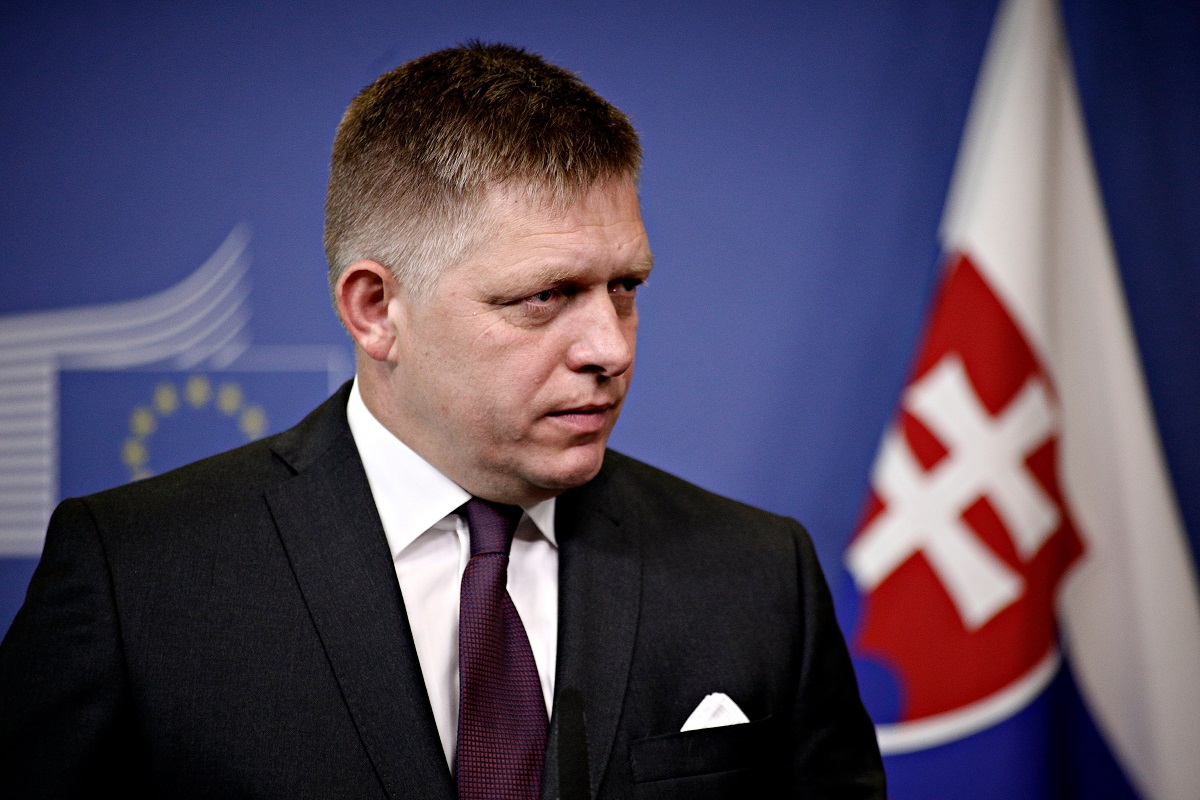
In the upcoming Slovak elections, Robert Fico pins his hope on a return to power. After his defeat in 2020, many predicted Fico’s political end. Those predictions turned out to be premature. Photo: Alexandros Michailidis / Shutterstock


The mood in the country as it prepares for the snap election scheduled for the last day of September reeks of resignation and something that one hesitates to call despair – only to not sound too desperate.

One of the words that resonates in the ongoing campaign is “normal”, which only shows what people really crave in the next election term. The previous governments have left the country feeling like it lives in prevailing chaos, and the promises of normalcy from parties from across the political spectrum reflect the mood among the electorate – to feel things are “normal” again.

The return of Robert Fico, who was ousted from power in 2020 following a series of revelations that came on the heels of the murder of journalist Ján Kuciak in 2018, is the main concern among  democratically-inclined voters and observers, but the concerns extend beyond the country’s borders. Fico, who once dreamed of Slovakia being at the core of the EU and whose governments saw the country join the Schengen and euro zones, now speaks against EU unity when it comes to vital issues like support for Ukraine.

How we got here

Slovaks will elect their new parliament this autumn in an early election, although for many observers the election is not as early as it should have been. The regular term of the current parliament ends in March 2024, so the MPs will only serve a shorter term by less than half a year. Yet, the country has been functioning without a properly installed government since before the start of 2023.

The government of Eduard Heger, then a prominent politician of the Ordinary People and Independent Personalities (OĽaNO) party, which ruled the country for one and a half years, lost a no-confidence vote in parliament in mid-December 2022. The ruling coalition crumbled even before then, when one of the original four partners, Freedom and Solidarity (SaS), left both the cabinet and the coalition. While the coalition partners spoke of unbearable and constant explosive conflicts among the leaders, particularly the OĽaNO leader Igor Matovič and SaS leader Richard Sulík, SaS insisted it was leaving because they were unable to work with Matovič.

Political analyst Grigorij Mesežnikov also pointed his finger at Matovič when the SME daily asked him about the dissolution of the coalition. “He brought problems that affected the cohesion of the ruling coalition. There were conflicts until the last moment,” he said. Matovič’s peculiarities and his “alternative” ways of dealing with problems were behind his forced resignation as prime minister in April 2021, following a coalition crisis that was triggered by the decision of Matovič and his then Health Minister Marek Krajčí (both OĽaNO) to procure the Russian-made Sputnik V vaccine. They even welcomed the first supplies of the Russian vaccine, which then Foreign Minister Ivan Korčok called a tool of hybrid war, in person at Košice Airport.

When Heger took over after Matovič, he was welcomed as a man of consensus. A preacher rather than a politician, Heger became known for some of the figures of speech he tended to repeat, the “culture of respect” being one of them. But in reality, he had not achieved much in terms of calming the conflicts among the ruling parties, which eventually led to him losing his parliamentary majority and subsequently losing the confidence of the parliament in December last year.

Disappointment after hope

Thus ends a term of the parliament that started off with high expectations. In the 2020 election, voters got rid of the Smer party that had ruled the country, with one short break, since 2006. But a government led by Smer became unsustainable following the murder of investigative reporter Ján Kuciak and his fiancée Martina Kušnírová in February 2018. Faced with massive street protests, Fico stepped down with a government reshuffle that saw his then crown prince, Peter Pellegrini, rise to the position of prime minister for the remainder of the term. The murder shed light on the murky entanglements between the government and the underworld. A large number of former high-ranking officials from the Smer governments, the judiciary and the police force, as well as businesspeople with alleged ties to Smer, have faced criminal charges of corruption and abuse of power. Some, most notably former Special Prosecutor Dušan Kováčik, have already received prison sentences.

Civil society played an important role in the process. The 2018 street protests that took place on a weekly basis throughout the spring of that year, were only matched in the country’s history by the street demonstrations that toppled the totalitarian government in 1989. Eventually, Smer was completely removed from the government in the 2020 election. The efforts to oust Fico and his people from power were led by several parties back then – most notably the Progressive Slovakia and Spolu parties, emboldened by the victory of their presidential candidate Zuzana Čaputová the year before. They were also joined by the Za Ľudí party of her presidential predecessor Andrej Kiska. In the end, to the surprise of many and to the dismay of some observers who had recognised the populism of Igor Matovič long before he had the chance to exercise it from a position of power, most voters picked OĽaNO. The party won more than one-fifth of the vote, with its promise to rid the country of Smer and its legacy or, as Matovič (still) puts it, “the mafia”.

Smer is back

Many observers of the Slovak political scene saw Smer’s defeat in 2020 as Robert Fico’s political end, especially after Peter Pellegrini and some of Fico’s other former allies deserted him to form the Hlas party soon after. Those predictions turned out to be premature and Fico once again proved he is the most skilled politician in the country. In the last three years, Smer politicians focused much of their political work on questioning the legitimacy of the criminal prosecutions against their former nominees, alleging that the charges are politically motivated. When Fico himself was charged, he repeatedly alleged to be the victim of a fabricated case orchestrated by his political opponents, and that he was on his way to becoming a political prisoner.

Since March 2023, Smer has been leading the opinion polls with about 20 per cent of the vote, and it is expected to emerge from the upcoming vote with the largest level of support. But the party and Fico, its leader, are different from what their European partners might remember of the party in its heyday a decade ago. Some of its prominent politicians, including Fico, have embraced conspiracy-driven rhetoric, similar to what Viktor Orbán has deployed in Hungary. For the first time, Fico uttered the name of George Soros during the governmental crisis after the murder of Kuciak in 2018. Since then, he has used it with increasing ease as a bogeyman for his voters.

During the pandemic, Smer was at the forefront of the anti-vaccine campaign. Shortly before the start of the war in Ukraine, Smer organised what it called protests for peace, against the Defence Cooperation Agreement with the US that the Slovak parliament was dealing with in January 2023. And after the Russian invasion of Ukraine, it has been one of the most reliable mouthpieces of Kremlin propaganda in Slovakia, calling for peace, which in its understanding means for Ukrainians to surrender.

In fact, there are hardly any differences between the rhetoric of Smer and that of Republika, which was established as a new party by former members of the neo-fascist ĽSNS party. This group now represents one of the strongest parties on the far right of the spectrum. Tomáš Nociar, a political scientist focusing on extremism, has labelled Smer a product of the normalisation of the far right on the Slovak political scene: “It is an example of a radicalised mainstream party.”

Smer feels compelled to attach adjectives to its “social democracy” definition, because its values do not really match those of the Western European social democratic family. Smer now calls itself a proponent of “Slovak social democracy”, which Robert Fico occasionally branded as a form of “rustic” social democracy. As such, it has already made it clear that it would not mind teaming up with Republika within a future ruling coalition, as well as with the Slovak National Party (SNS), a nativist force that seems likely to make it back into parliament in September.

Why the outcome of Slovakia’s election matters

Such a government would be considered a threat to liberal democracy in Slovakia and would be expected to seriously harm the foreign policy orientation of the country. When Fico was prime minister, he used to apply double-faced politics – with one type of messaging reserved for his peers in Brussels and a whole different message for the electorate back home. Smer is known among observers for its nearly religious respect for opinion polls, and their messages are designed to play into the moods of the electorate. Yet, some commentators believe that Fico is now living his authentic self, and might not feel the need to go back to the double-faced strategy. Milan Nič, a foreign policy expert of the German Council on Foreign Affairs, has said that there are fears that Slovakia could become a “little Hungary” after the election.

Fico does not bother to dispel these fears. On the contrary, he has stressed that he wants the kind of stability for Slovakia that Viktor Orbán brought to Hungary. In an interview with Hungarian public-service television in February, for example, he slammed sanctions against Russia, and accused the EU of promoting US interests in its foreign policy.

“I do not want to be Russia’s enemy and I do not want Russia to consider Slovakia an enemy due to the supplies of weapons to Ukraine,” he said as quoted by Denník N. Fico went on to assure the public that as prime minister, he would halt the supplies at once.

“They are pretty much on the same page with Russia in terms of maintaining a good relationship with the Kremlin and “advocating for peace”,” the Hungarian political analyst and sociologist Edit Zgut-Przybylska told the SME daily about Fico and Orbán. “It could at least partly reinvigorate the Visegrád Group, which is in a deep coma now.”

There have been attempts, notably by the former prime minister, Eduard Heger, to use the concerns over Slovakia’s foreign policy orientation to mobilise voters against Fico. But Heger, who broke away from Matovič and now heads his own party, the Democrats, polls far below the five per cent election threshold. The mobilising potential of support for Ukraine and a pro-western foreign policy also seems to be limited, given the geopolitical confusion that Slovakia seems to be in. For example, a poll by the AKO polling agency published in early August has shown that more than half of people in Slovakia are opposed to sending more military aid to Ukraine.

This is in line with the results of previous surveys, such as the latest Globsec Trends Survey, which has shown, among other things, that only 40 per cent of Slovaks blame Russia for the war and 54 per cent perceive Russia as a threat, an almost equal share to the 50 per cent that see a threat in the US, Slovakia’s major ally in NATO. Support for NATO and the EU is going down among the Slovak population too.

Local politicians who do not shy away from abusing people’s fears and misconceptions are one reason for these moods, but experts also stress the role of Kremlin propaganda. Slovakia has proved to be particularly vulnerable to its messages.

Who can be the alternative?

President Zuzana Čaputová, the first woman to ever have been elected to the top constitutional post in the country, has consistently stressed the need for Slovakia to stick with its western allies. She remains the most popular politician, but her position is weakened by her political opponents constantly targeting her with hate speech, including anti-American and even antisemitic claims. Čaputová has recently entered the last year of her term and announced that she would not run for re-election.

This does not have an immediate effect on the parliamentary election or the campaign but, despite the fact that the president does not have a strong executive position in Slovakia, another term with her would have provided some assurance that there is someone to secure the nation’s pro-western policy orientation. The part of the society that realises how much of a problem a government made up of Smer and some of its like-minded parties on the far right would be is now looking for a politician who can defeat Fico. Andrej Kiska and Igor Matovič both managed to do that in the past but both failed to convince the public that it would be better off without him. Kiska had limited possibilities to do that as president, which is an important but mostly ceremonial post in Slovakia, and Matovič proved unable to bring about substantial change.

Progressive Slovakia (PS), the party that brought Čaputová into politics, suffered a fiasco in the 2020 election and now, consistently second in polls, appears to be gearing up for the final election battle with Smer. However, Slovakia’s future government will likely not depend on whether Smer or PS wins the vote. One decisive factor will be the performance of Peter Pellegrini’s Hlas and its subsequent willingness to join a coalition with either Smer or PS. Hlas has so far tried to leave most options open, and did not directly exclude a coalition with Smer, though they did say they were not willing to cooperate with the far-right Republika. The latest surveys from mid-August show that a Smer-led coalition without Republika might be an option, one that Hlas would not mind participating in.

Another factor is the results of the small parties now polling around the five per cent parliamentary threshold, and how many and which of them make it into the parliament. Some observers do not rule out that the election may result in a stalemate, and may have to be repeated – which has not yet happened in Slovakia’s history. That would not exactly bring an end to the chaos and a return to normalcy – whatever that means – for the people in Slovakia. And though the campaign has so far been rather slow, things are expected to intensify towards the end of summer. Once again, not just political parties, but also civil society organisations are calling on the voters not to be indifferent. One campaign involving personalities from different walks of life, including social media influencers, runs under the motto “I want to stay here, therefore I vote.”

“The civil society in Slovakia has shown many times in the past that it is capable of mobilising people to achieve higher turnout, especially among the younger voters,” asserts Fedor Blaščák, head of the Open Society Foundation in Slovakia.

Michaela Terenzani is the leading editor of the foreign news desk of the SME daily. Between 2015 and 2023 she served as editor in chief of the Slovak Spectator. She comments on events happening in Slovakia in her weekly newsletter: “Last Week in Slovakia”.

, , ,

Partners

Terms of Use | Cookie policy | Copyryight 2026 Kolegium Europy Wschodniej im. Jana Nowaka-Jeziorańskiego 31-153 Kraków
Agencja digital: hauerpower studio krakow.
We use cookies to personalise content and ads, to provide social media features and to analyse our traffic. We also share information about your use of our site with our social media, advertising and analytics partners. View more
Cookies settings
Accept
Decline
Privacy & Cookie policy
Privacy & Cookies policy
Cookie name Active
Poniższa Polityka Prywatności – klauzule informacyjne dotyczące przetwarzania danych osobowych w związku z korzystaniem z serwisu internetowego https://neweasterneurope.eu/ lub usług dostępnych za jego pośrednictwem Polityka Prywatności zawiera informacje wymagane przez przepisy Rozporządzenia Parlamentu Europejskiego i Rady 2016/679 w sprawie ochrony osób fizycznych w związku z przetwarzaniem danych osobowych i w sprawie swobodnego przepływu takich danych oraz uchylenia dyrektywy 95/46/WE (RODO). Całość do przeczytania pod tym linkiem
Save settings
Cookies settings