
The EU economy may not be in the best shape, but Ukraine will not be abandoned
Russia’s brutal war against Ukraine has dramatically exacerbated Kyiv’s dependence on the West to keep the economy afloat. Ukraine’s finance ministry estimates that in 2022, 38.6 per cent of the country’s budget came from external donors in grants and credits while Ukraine’s GDP, according to the International Monetary Fund, contracted by a third.
As Russia continues to bomb Ukraine’s power grid and destroy its infrastructure, the country’s economic projections for 2023 are devoid of optimism. For the country to survive, it needs economic assistance from abroad – and this is where matters get complicated. While Brussels recently gave the green light to the long-awaited macro-aid package worth 18 billion euros, the latest economic forecasts also spell trouble for EU economies, with the eurozone’s GDP growth expected to slow to 0.3 per cent.
February 16, 2023 -
Lesia Dubenko
-
Hot TopicsIssue 1-2 2023Magazine
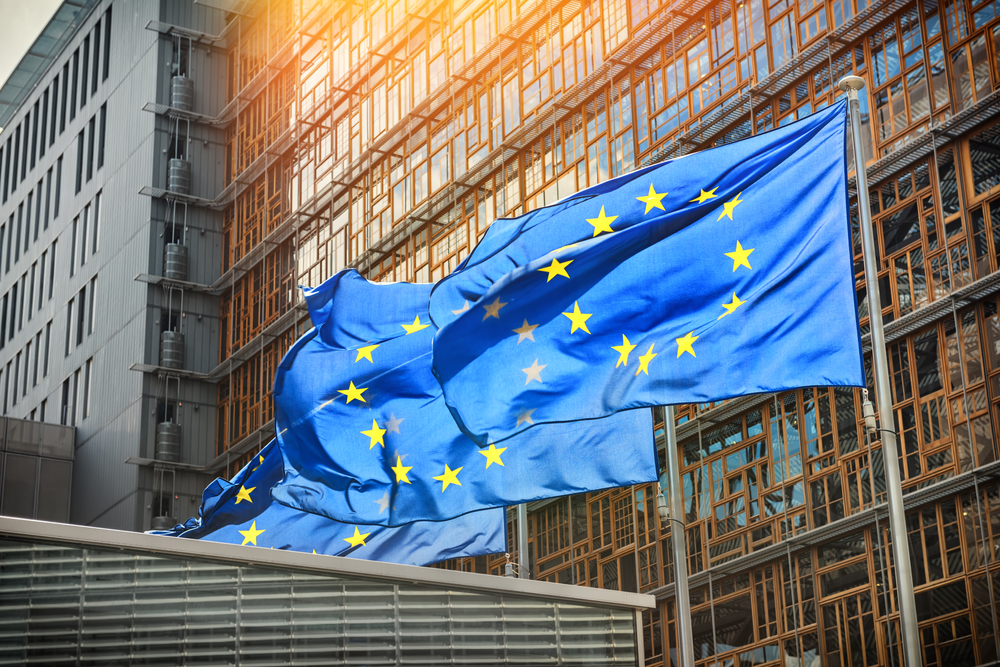
Photo: olfoxy / Shutterstock
Coupled with inflation that is poised to remain high and concerns over the rising cost of living, the economic situation in the EU may certainly affect its support for Ukraine, depending on a host of financial, political and social factors.
On the bright side
While inflation in the European Union is expected to remain high in 2023 at seven per cent (6.1 per cent in the euro area) according to the European Commission, the good news is that, in line with predictions, it will also decline. Furthermore, the Commission states that by 2024 the EU will have largely adjusted to the shock. Data likewise suggests that major EU economies, despite predictably feeling the ramifications of the sanctions imposed on Russia and the Russia-West energy war, will cope with the situation. While the commission expects Germany’s economy to contract by -0.6 per cent, the German-based Institute for the World Economy is more optimistic, noting that it will increase by 0.3 per cent in 2023, up from the institute’s autumn forecast of a 0.7 per cent drop.
Other EU net contributors like Italy, France and the Netherlands are also looking at growing GDPs though at a reduced pace. In addition to that, the EU economy is bolstered by the strongest labour market in decades, with unemployment rates at record lows and participation and employment rates at record highs.
These economic fluctuations – which are likely to continue to be adjusted as new data flows in – could be interpreted and manipulated, in many ways. Of course, this is where the political factor kicks in. However, the fact that major EU contributors like Germany, France, Italy, the Netherlands, Sweden and others completed their electoral cycles in 2021-22 significantly narrows the space for political, and possibly pro-Russian, manoeuvres from the opponents of sanctions and Ukrainian aid; especially those belonging to the extremes of the political spectrum, such as the German AfD or Die Linke or their equivalents in other countries.
The results of a recent survey by Eurobarometer, the EU’s statistical arm, further give grounds for optimism, showing that 74 per cent of EU respondents approve of providing aid to Ukraine, with figures remaining high in the EU’s net contributors and even overwhelming in the rich Scandinavian states.
Another factor that spells good news for Ukraine is its EU candidate status that was obtained in June 2022. Though contingent on seven criteria, the prospect of full-fledged membership will grant Ukraine access to additional funds. While membership is naturally ruled out until the war ends, recent moves towards integration are not just an act of diplomatic symbolism but a commitment, ultimately granting Ukraine access to the EU’s Instrument for Pre-accession Assistance (IPA). This is currently available to candidate countries like Albania, Bosnia and Herzegovina, Serbia and others.
The key social factor to note here involves the Ukrainians who have relocated to the EU after February 24th 2022. European countries are hosting an estimated 7.9 million people, while a total of 4.7 million have registered under the European Union’s temporary protection directive – to be extended until March 2024 – which enables them to work in the union. Some of these people are already contributing to the EU’s economy, working in various services such as the beauty and health sector. The Polish Economic Institute revealed that almost 14,000 businesses were created by Ukrainians in Poland in the first nine months of last year.
Their share is only slated to increase as Ukrainians adapt to their host countries – and so will their contribution to the economy, in both taxes and consumer spending, including from those Ukrainians who did not officially register.
We are looking at potentially hefty contributions. Previous estimates made in my 2021 report, “Ukrainian Labour Migration to the EU: State of Play, Challenges and Solutions”, between 2014 and 2019 Ukrainian workers in the EU, who have been the largest group of external workers in the bloc for several years, have contributed between 956 million and 1.06 billion US dollars (those with permits issued for three to five months), 2.65 billion and 5.4 billion (six to eleven months), and at least an additional 207 million (12 or more months).
For Ukraine, this is likewise important as during the period 2014-19, it received 67.914 billion US dollars in remittances and is expected to keep receiving tens of billions every year. The energy issue is likewise showing positive signs. Russia’s use of fossil fuels as its main blackmail tool has not had the desired effect. Some states have indeed given in to its “gas-for-roubles” demands, with data showing that the Russian economic coffers are still being filled at a steady rate. However, the gas prices have likewise slumped from over 200 euros per megawatt hour – ten times higher than in 2021 – to 65 euros per MWh. According to the Oxford Institute for Energy Studies, European countries ramped up their global supplies of LNG in mid to late 2022, increasing imports from 83 billion cubic metres (bcm) in 2021 to 141 bcm in 2022. Meanwhile, new LNG import infrastructure is being created in Europe, including in Germany.
And on the dimmer one…
On the flipside, several factors should be taken into account. Among them is the aforementioned inflation. Although the European Commission’s prediction is that it is expected to decline in 2023, the seven per cent and 6.1 per cent (in the euro zone) forecast is also a significant revision compared to what they had anticipated just several months ago, when they were expecting inflation of 4.6 per cent and four per cent respectively. Accordingly, there is a chance that at least in the short term these numbers might be readjusted again – and not necessarily in the positive direction. This is especially true since the authors underscore that their forecasts are based on working assumptions.
The economic situation in EU member states, though manageable, is still rocky. According to the Bundesbank, the German economy will shrink through the middle of next year as businesses and households struggle with high energy costs – before a nascent recovery takes hold. The forecast for other countries also looks mixed even if not entirely negative. Given that a recent survey by Eurobarometer also shows that the rising cost of living alongside poverty are the most pressing concern for 93 per cent and 82 per cent respectively of the EU public, room for immediate political manoeuvre is still available.
In the EU, an array of countries, spearheaded by a Hungarian administration that is in open confrontation with the Ukrainian government due to alleged mistreatment of the Hungarian minority in Transcarpathia, are discontent with the sanctions policy. Other countries like Austria have also voiced desires to soften restrictions. Greece, where the public does not view the EU’s help to Ukraine favourably, could also amplify its voice as it is gearing up for legislative elections in July. To add to Europe’s frustration, a report in Politico Europe from November suggested that the US is benefitting from the Russian war on Ukraine. This may lead to new obstacles when providing money to Kyiv.

To that end, it is worth keeping in mind that the EU’s track record of commitment to funds for Ukraine has been shaky. In spite of its pledge together with the US to send 1.5 billion euros to Ukraine monthly in 2022, it did not fulfil this promise. Out of the pledged nine billion, Kyiv received just six billion euros.

While EU candidate status does effectively grant Ukraine access to new financial assistance, it also appears that Brussels no longer views war as an excuse for sluggish reform implementation. The latest macro assistance of 18 billion euros is in line with the bloc’s typical carrot and stick policy – money in return for reforms – with the next 15 billion euros (4.5 billion every quarter) being contingent on Ukraine’s implementation of reforms, which, as history shows, is often slow.
The energy factor must also not be downplayed even if so far the EU has managed to partially shrug off Russia’s energy blackmail. Russia provided 60 billion cubic metres of gas to Europe in 2022, about half of what was promised in contracts. And it is not entirely clear whether in 2023 Europe will manage to preserve this path due to a tight global LNG market, and China’s potential demand as it reopens after COVID-19 lockdowns. While Russia failed to achieve its blackmail goals, the current gas prices are still significantly higher compared to the norm of the past decade, with the gas market facing the potential risk of crippling shortages, especially in the winter of 2023-24. Europe’s production is also down by almost 13 per cent year-on-year in November, according to ING. Meanwhile, the Bruegel think tank notes that governments are also likely to organise vast energy bill support payments for consumers and businesses – totalling 705 billion euros across Europe.
Although some Ukrainians in the EU, arriving after February 24th 2022, have managed to find jobs, it is also true that many did not. According to the Ukrainian think tank Europe without Barriers, most of the Ukrainian migrants turned to protection in countries like Poland, Germany, Czechia, Italy, Spain and Bulgaria, with the majority of these people lacking income and thus needing social benefits. This will likely take a toll on the EU’s economy, though it is unknown to what extent.
Effects of the crisis
Despite the negative economic tendencies that are likely set to continue for the foreseeable future, the situation at large suggests that the prospect of the EU or its members significantly downsizing support or abandoning Ukraine is unlikely. On the contrary, a recent research piece by the Ukrainian Centre for Economic Strategy estimates that Ukraine will receive a total of 100 billion US dollars in aid and not just via governmental channels. The final number may even exceed this projection should the West’s intentions, spearheaded by Estonia, to seize Russian assets and transfer them to Ukraine come into effect already this year. It is almost certain that neither the EU nor its member states are planning to lift the sanctions, not least because the bloc and its major economies have adapted to the new economic setup. In fact, the EU is already preparing the tenth sanctions package on Russia that will focus on closing existing loopholes. Moreover, EU member states have found alternative energy sources or are trying to do so, which has led Germany’s finance minister to declare that the country no longer depends on Russian imports for its energy supply.
Yet, economic factors, while playing a significant role, are not always the best indicator to rely on. Not only are they always changing due to different methods of calculation and lacking in immediate and precise data – with Goldman Sachs now saying that Europe will avoid plunging into a recession – they are almost always overshadowed by political needs. The political mood in the EU and its key ally the US has not changed. In fact, much suggests the contrary, with western countries ramping up military aid to Ukraine. They have agreed to deliver Patriot systems, main battle tanks and even possibly jet fighters, with talks indicating that we are inching towards such agreements.
The resolute stance that Ukrainian independence and sovereignty are essential to preserving the system of international law and order is similarly paramount. Russia’s information war and propaganda has spent decades and billions on promoting its “backyard” policy. The Kremlin likely relied on its real-world effects when it launched its war on Ukraine in the hope of conquering it and returning to business as usual. One year into the war it is safe to say that this campaign failed to convince the western public.
Russia’s raw material-based economy in turn is slowly yet steadily being crippled by the western sanctions as more loopholes are closed and new sources of energy found, albeit at a higher price. Moscow cannot afford to fully lose the European market – even if it claims so by saying that its oil and oil products will not be sold to anyone imposing the price cap between February and July 2023. Analysis from the Centre for Research on Energy and Clean Air estimated that the EU’s ban on Russian crude oil imports and the G7’s 60 US dollar per barrel price cap are together costing Russia 160 million euros a day.
Finally, Ukraine’s economic and social resilience matters as well. It is indeed true that Kyiv’s financial dependence on the West is immense, but businesses and infrastructure are functioning rather well even without western help. All that is truly needed now is to defeat Russia on the battlefield, and focus on building Ukraine back better.
Lesia Dubenko is a Ukrainian political scientist and analyst. She is a graduate of Lund University (MSc in European Affairs) and covers issues relating to international affairs, migration and disinformation.