
Text resize: A A
Change contrast

On Russia and resignation

In Russia, it remains unclear whether the current discontent will coalesce into a lasting challenge to the Kremlin. Both journalists and analysts tend to hastily predict Putin’s downfall when protests mount. But at the very least, the all-encompassing nature of the coronavirus has provided citizens with a moment of heightened consciousness about their relationship to power.

Liberal-leaning Russians like to remind us that the most common last surname in their country is Smirnov. It is also the name of a well-known vodka brand, Smirnov, etymologically rooted in smirenie, often translated as submission or resignation.

November 17, 2020 - Natasha Bluth - Hot TopicsIssue 6 2020Magazine

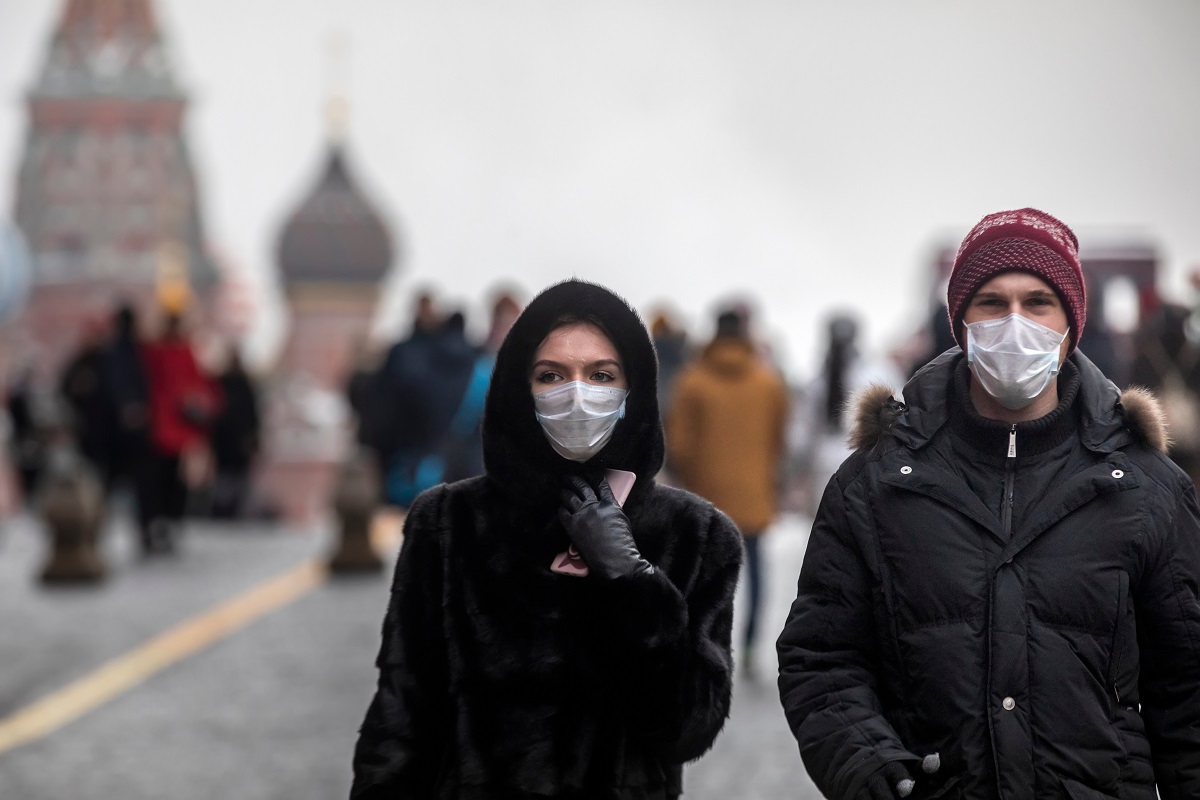
Photo: NickolayV / Shutterstock

Reasons behind the surname’s popularity vary. Some versions claim that peasants, relieved at the birth of a quiet son, would christen him “Smirna.” Others argue that the most pacified subjects of the Russian empire were more likely to procreate, so Smirnovs multiplied faster than Ivanovs or even Petrovs.

The Russian linguist Vladimir Nikonov believed that the surname originated among the “subdued” Merya people, who inhabited what is now the Kirov region. Church tithes in Vladimir mention Stepan the smirny son of Kuchuk – fast forward to the 20th century and you can watch famed actor Aleksey Smirnov in more than 50 Soviet films. Today, there are an estimated 70,000 Smirnovs residing in Moscow alone. The quip, then, is that with the abundance of Smirnovs in Russia, resignation must be a national character trait.

Stages of denial

From serfdom in Imperial Russia to forced collectivisation under Stalin, the lives sacrificed in the Chernobyl accident to the hundreds of unaccounted soldiers in the Chechen Wars, Russian and Soviet history features a series of human catastrophes traversing tsarist absolutism, communist dictatorship and post-socialist autocracy. In early March, watching the coronavirus pandemic unfold in the US, as I approached my seventh month of research in Yaroslavl, a city of 620,000 just northeast of Moscow, I wondered how the trope of the strong-arm state and the repressed masses would play out once the latest calamity hit Russia.

As new epicentres cropped up across the US and Europe, Yaroslavl – and Russia more broadly – remained cavalier. Aside from one expat friend, I was the only person in my social circle actually talking about the virus and began to interpret my own disquietude as distinctly American. At my homestay, news of my compatriots hoarding toilet paper tickled my 54-year-old Russian host. Americans did not understand what it was like to live through the shortages of the 1980s or the economic turbulence that followed, after the collapse of the Soviet Union. Despite her apartment’s three refrigerators bursting with frozen food, Russians “are not afraid of economic instability”, she insisted. “They just do not want Yaroslavl to be ruled by bandits again.”

While formative, these experiences would not stymie the course of a global health crisis. By the end of the month, although it had ballooned into a pandemic, official state reports continued to document exceptionally low penetration of the virus into Russia. Measured against signs of full-blown panic in the US, what explained the dispassionate attitude towards COVID-19 in my Russian community? Growing up in New England, the mere possibility of a blizzard would clear the grocery store of milk and sliced bread. Meanwhile, the advancing coronavirus left friends and colleagues in Yaroslavl unperturbed. A Moscow-based immunologist quelled fears after a televised appearance in which he recommended eating one clove of garlic each morning to stave off infection; others appealed to the virus’s foreignness (the mainstream press still called it “the Chinese plague”), reinforcing the idea that COVID-19 happened “elsewhere”.

State-run Russian media peddled a variety of theories that politicised the pandemic, substantiating official foreign policy talking points while rhetorically fencing the virus out of national borders. In one week, broadcasters labelled COVID-19 a conspiracy, then a form of biological warfare from China, and finally a form of biological warfare from the US targetingChina. Ultimately, these postulations heightened suspicions about my own presence in Yaroslavl, which culminated in a visit from three N95-masked representatives from the Federal Service for the Oversight of Consumer Protection and Welfare who pronounced me a “hooligan” for “breaking” a quarantine order no one had imposed. 

Once Russia’s COVID-19 count reached double digits and the federal government shuttered schools and universities, my host partially conceded the reality and arrived home brandishing six cans of tushonka, a braised meat and a favourite from the Second World War. While the toilet paper stockpiled in the US lingered on Russian shelves, grechka, a buckwheat kasha porridge, sold out of grocery stores. Yet, despite the accumulation of non-perishables, the Yaroslavl region’s first official COVID-19 case – a woman who had recently travelled to the Dominican Republic – failed to raise alarm precisely because she did not contract the disease within her hometown. After the state-run statistics agency Rosstat reported a 37 per cent increase in the number of pneumonia cases across Russia from January 2019 to 2020, few speculated about any connection with the proliferating respiratory illness.

By mid-April, the number of cases in Russia had already surpassed the number of Smirnovs residing in Moscow. Still, according to the Levada Center, an independent sociological research organisation, that same month public concern about the coronavirus was “growing, but not as quickly as might be expected” – a peak 40 per cent of Russians supported a lockdown in March, only to fall as time wore on. Conversations I had at the time indicated that, relative to the litany of upheavals survived by Russians in past decades, COVID-19 lost a good deal of shock value. Detachment could be a sign that the call from the head of Russia’s coronavirus task force “not to panic” had effectively quelled anxiety, or the outcome of years of institutional distrust. Perhaps this attitude was in fact a familiar method of self-preservation or resilience in the face of an unstoppable threat. Others chalked it up to the enduring religious undercurrent that had outlived state atheism: Live according to God’s will. As my Russian teacher in Yaroslavl asserted, “We are sitting patiently at home, which is quite reasonable given the circumstances, and also does not particularly contradict the Russian mentality.” I too was forced to surrender to my fate in late March, booking one of the last flights before Russia closed its borders once it became clear that the US State Department would no longer allow me to remain abroad. 

Introduced measures

With more Russians homebound during the month-long federal non-working holiday that ensued, officials passed a series of decrees aimed at maintaining law and order. In Moscow, Mayor Sergey Sobyanin, known for outfitting the city with facial recognition technology, debuted Russia’s first QR-code pass system in mid-April to curb unnecessary movement around the capital. To track COVID-19 patients in quarantine, the municipal government also launched an app that accessed geolocation, in addition to network information, storage, calls and other cell data. By May, when Russia had the second-highest rate of new infections in the world, the Moscow police had issued 30,000 fines to violators of the city’s lockdown – Muscovites were only allowed to leave home to receive emergency medical care, travel to work, shop for groceries, go to the pharmacy, or walk their dogs within 100 metres of their place of residence.

It was easy to call Sobyanin’s programmes repressive from the US, where infringements on privacy and significantly milder restrictions on movement provoked not only verbal backlash but also protests of several hundred in some cities. Globally, uneven public responses to lockdown orders and other COVID-related measures demonstrated varying levels of pushback against authority, but their effects also challenged the idea that following commands during a global health crisis would ensure protection. New Zealand, which received praise for enforcing a strict quarantine, did so without a culture of obedience to the state and ultimately declared itself virus-free in June, only to see a new surge in late summer. Likewise, the Swedish government was lauded for seeing positive results from its laissez-faire COVID-19 policy grounded in mutual trust and voluntary quarantine, which kept its economy running but failed to avert high fatality rates. Pegged as robust democracies, political freedoms and civil liberties could not barricade the virus out. In turn, Moscow’s digital monitoring apparatus, which Sobyanin initially suggested expanding to all Russian regions, raised the question: If authoritarian rule successfully suppressed a community’s exposure to COVID-19, did it matter so much how it got there?

Authoritarian tactics

Tracking similar patterns of COVID-19 responses in other authoritarian-type countries, journalists Bill Hayton and Tro Ly Ngheo point out that, “the structures that control epidemics are the same ones that control public expressions of dissent.” Now that a digital pass system and other surveillance technology is embedded in Moscow’s security infrastructure, there is no guarantee that it won’t be employed in the future to stifle freedom of movement or speech, long after the current crisis is over. Similarly, the pandemic provides a window of opportunity for Russian President Vladimir Putin, alongside Alyaksandr Lukashenka in Belarus, Viktor Orbán in Hungary, and other autocratic leaders to consolidate power.

In April, the emerging virus blocked a Russian plebiscite on a number of constitutional amendments that would, among other changes, elongate Putin’s possible tenure to 2036. Capitalising on the unique circumstances, Putin praised Russia for “forcing” the epidemic to recede and launched lavish anniversary celebrations in honour of the Soviet Army’s victory in the Second World War before holding a weeklong voting period in June. More than 77 per cent of voters expressed their support for the reform package. Crucially, the major protests planned in the run-up to the referendum against the proposed amendments and the lack of pandemic-related social protections were thwarted by a COVID-related decree prohibiting gatherings of more than 50 individuals.

Additionally, though the Kremlin largely outsourced Russia’s pandemic response to the country’s regional governors, a number have resigned since the spring because of inadequate performance – shakeups considered by some political analysts to be premeditated. In Russia’s Far East, the Investigative Committee and Federal Security Service also detained Sergei Furgal, the popularly elected governor of Khabarovsk, accusing him of murdering several businessmen. Perhaps most brazenly, the prominent anti-corruption activist Alexei Navalny lay in a medically induced coma for more than two weeks after being poisoned with the nerve agent Novichok this past summer, a claim that the Russian foreign ministry denied.

Beyond these high-profile incidents, Putin’s withdrawn role from crisis management, coupled with local government incompetence, is likely to present new challenges as long as the virus continues to pose a threat. Operating without a “trust cushion” like New Zealand’s, the Kremlin may need to rely on increasingly authoritarian tactics for social control in future political crises and coronavirus surges (at the time of writing in October, Moscow is seeing a second spike in cases, though Sobyanin has yet to impose a lockdown). In a city like Yaroslavl, which, unlike the majority of other regions, never enacted a lockdown for anyone but pensioners, a feeling of resignation could grow into something more forceful. In April, Putin’s approval rating fell to 59 per cent – its lowest since 2000. Though dissent against the referendum could not materialise in the form of in-person protests, they continued online. In fact, the very decision to hold a referendum in an ongoing pandemic suggests that the political elite has declining confidence in the administration’s durability and seeks to reinforce its legitimacy before a potentially narrow window of opportunity closes.

Paradoxically, by continuing to reassure the public that the virus is in retreat and lifting COVID-19 lockdown measures, the Kremlin has fuelled new ripples of dissent.After the head of the Doctors Alliance, an independent labour union with support from some of Russia’s opposition leaders, was detained for decrying the Kremlin’s pandemic response, greater attention has turned to gaps in the country’s health care infrastructure. Three doctors critical of poor working conditions also fell from hospital windows in May in apparent suicides, further exposing a state that tends to its priorities at the expense of the interests of its citizens. In the spring, mass protests also ruptured in the Far East city of Khabarovsk in response to the governor’s detainment, which continued well into late summer. More recently, two hastily approved Russian coronavirus vaccines – serving as a geopolitical PR stunt more than they signal a regard for preserving Russian lives and livelihoods – received flak from Russian doctors and educators concerned about safety.

Contradictions of the pandemic

Neither ineptitude on the part of the authorities nor increasingly visible discontent among affected communities isrestricted to Russian territory. Conflicts are intensifying in the US with the Black Lives Matter movement against racist police brutality, in Lebanon after the explosion in Beirut, and in Belarus, where protesters have gathered for months to condemn the widely unrecognised re-election of Alyaksandr Lukashenka, in power since 1994. Although issues tied to today’s civil unrest largely predate the coronavirus, their sustained growth since the spring and summer suggests that COVID-19 expedited many communities to their inevitable breaking point. As Belarusian comedian Ivan Usovich posited in an interview with the popular Russian video blogger Yuri Dud, heinous advice by Lukashenka to heal the virus with banyas (hot steam baths) and tractors ultimately roused citizens to demonstrate against their long-term autocratic leader.

Lukashenka’s comments reminded me of a chain message that a Russian friend forwarded after Yaroslavl’s perfunctory lockdown in late March:

1. Leaving your home is impossible, but if it’s necessary, allowed.

2. Masks do not help at all, but must be worn. 

3. It’s useless to go to a hospital if you have the virus, but you must go regardless.

4. This virus is deadly, but in principle, not terrible. 

5. The virus doesn’t affect children, but children are at risk.

6. There are many symptoms tied to this virus, but you can get over it without any symptoms.

7. It is best to get fresh air, but going outside is not allowed.

8. It is not permissible to visit the elderly, but you can bring them groceries and medicine.

9. Patients with coronavirus cannot leave their homes, but they can go to the pharmacy and grocery stores.

10. There is no house arrest, but no one is allowed to go out.

11. Personal data is protected by law, but you must hand it over at a moment’s notice to a surveillance programme that will not protect it in any way.

12. Only individuals of Asian descent get sick, but more Europeans have died than anyone else.

13. The virus lives on various surfaces for two hours – no, four. No, six. No, 17 days.

Living out the contradictions of a pandemic, how can we not all feel a degree of smirenie? In Russia, it’s not clear whether the currentdiscontent will coalesce into a lasting challenge to the Kremlin. Both journalists and analysts, particularly those based in the West, also tend to hastily predict Putin’s downfall when protests mount. But at the very least, the all-encompassing nature of the coronavirus provides citizens with a moment of heightened consciousness about their relationship to power. In Russia, frontline health workers have a choice: to fear the government or to fear COVID-19 – and fear of the latter is proving more immediate.

Back in Yaroslavl, one doctor criticised the government’s inefficient distribution of testing kits. Then, as if surprised at his own candour, he said: “What should I be afraid of? I’m telling the absolute truth. If they fire me, that will mean [the authorities] are afraid and that what I’m saying really is true.”

Natasha Bluth is a freelance journalist focussing on Russia and Eastern Europe. She was a 2019-2020 Fulbright researcher.

, , ,

Partners

Terms of Use | Cookie policy | Copyryight 2025 Kolegium Europy Wschodniej im. Jana Nowaka-Jeziorańskiego 31-153 Kraków
Agencja digital: hauerpower studio krakow.
We use cookies to personalise content and ads, to provide social media features and to analyse our traffic. We also share information about your use of our site with our social media, advertising and analytics partners. View more
Cookies settings
Accept
Decline
Privacy & Cookie policy
Privacy & Cookies policy
Cookie name Active
Poniższa Polityka Prywatności – klauzule informacyjne dotyczące przetwarzania danych osobowych w związku z korzystaniem z serwisu internetowego https://neweasterneurope.eu/ lub usług dostępnych za jego pośrednictwem Polityka Prywatności zawiera informacje wymagane przez przepisy Rozporządzenia Parlamentu Europejskiego i Rady 2016/679 w sprawie ochrony osób fizycznych w związku z przetwarzaniem danych osobowych i w sprawie swobodnego przepływu takich danych oraz uchylenia dyrektywy 95/46/WE (RODO). Całość do przeczytania pod tym linkiem
Save settings
Cookies settings