
Ukraine’s economy. A chance for success
In January of last year, Ukraine’s parliament passed a new law on the privatisation of state-owned and municipal property. The law, prepared with the assistance of the EU and the IMF, introduced clear rules for the process of privatisation of state property. But will the current reforms be enough to convince foreign investors to come to Ukraine?
Ukraine’s economy has improved significantly since the crisis it was caught in after Russia annexed Crimea in March 2014. As a result of the war that broke out in the eastern parts of the country, Ukraine lost important industrial territories, which in 2012 generated as much as 15.75 per cent of its GDP. It was also forced to quickly and radically increase military spending. Not surprisingly, in 2014 – the year of the most intense military activity in Donbas – the Ukrainian economy was in trouble.
March 4, 2019 -
Paweł Purski
-
Articles and CommentaryIssue 2 2019Magazine
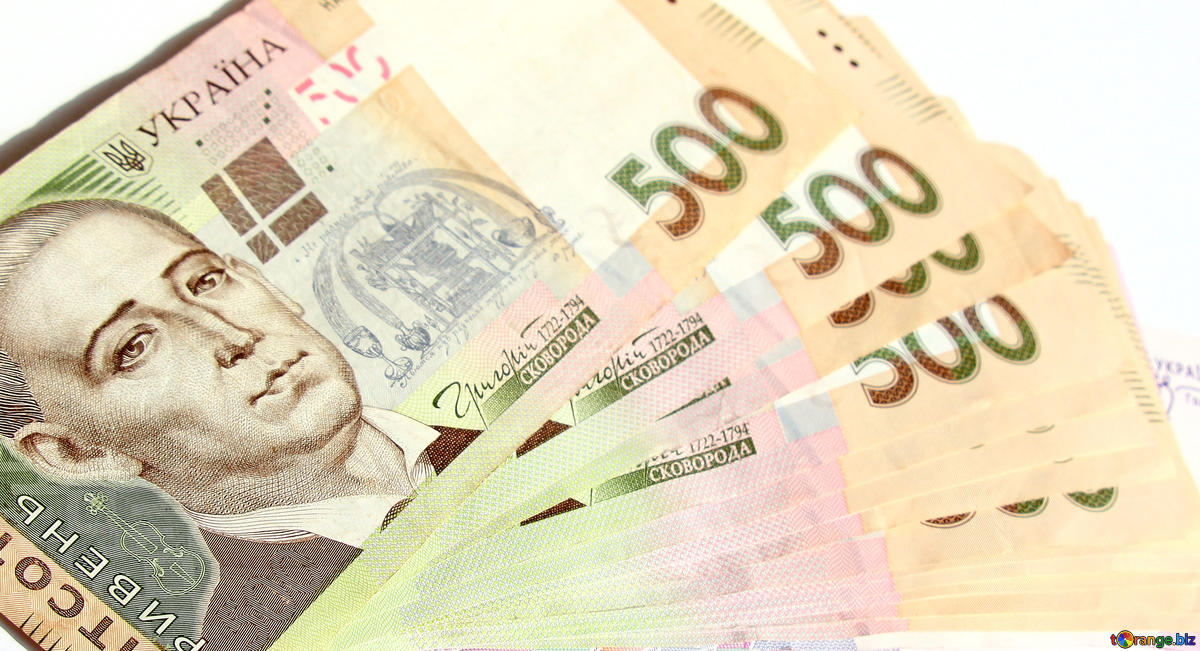
Photo (CC) Free photobank torange.biz
According to the International Monetary Fund (IMF) Ukraine’s GDP was down 6.6 per cent from the previous year. The drop was even greater in 2015 – a 9.8 per cent decrease (when compared to 2014). In 2016 things finally started to turn around: there was a growth of 2.3 per cent. Ukraine’s GDP continued growing (albeit at a slow pace), recording a two per cent increase in 2017. In 2018 and 2019 it is expected to grow by 3.2 and 3.5 per cent, respectively.
Burdened by high risk
Ukraine’s political and economic systems continue to show strong oligarchic features. The ownership of many industries remains in the hands of powerful business clans. Despite two revolutions (the 2004/2005 Orange Revolution and the 2013/2014 Revolution of Dignity), these groups have managed to maintain vast political influence. Nonetheless, the Donetsk clan – as the oligarchs who were closely tied with Viktor Yanukovych were popularly called – disappeared from Ukrainian politics after their patron fled to Moscow; some reshuffling among the oligarchs has taken place since.
At the moment, investors who are interested in doing business in Ukraine mostly fear a new eruption of military activities in Donbas or subsequent Russian attacks on Ukrainian forces stationed at the Azov Sea. Understandably, they are also dissuaded by massive corruption which, despite some progress and reforms, remains a permanent feature of Ukraine’s economic and political life. Quite discouraging is the malfunctioning of the judiciary and state institutions, as well as economic instability. According to Transparency International’s Corruption Perception Index, in 2017 Ukraine ranked near the bottom – 130th out of 180 countries – in terms of corruption. The World Bank Doing Business Index for the same year put Ukraine at 76th out of 80. The country’s credit rating is estimated at a Caa3 level, which means that state bonds are of low quality and burdened by high risk. The outlook somewhat improved in July 2018 when Moody’s rating agency changed Ukraine’s banking system from stable to positive. Reportedly, the agency expects the credibility of Ukrainian banks to improve further over the next 12-18 months, mainly because of reforms and IMF loan transfers.
Much needed assistance
The unprecedented support of international players, like the EU, the IMF and the United States, towards Ukraine’s reform efforts is probably what has decreased the risk of investment in Ukraine the most. More precisely, the conditionality of the IMF and EU financial assistance requires that Ukraine undertake serious macroeconomic reforms, including anti-corruption and privatisation laws, and opens up its gas and electricity markets in accordance with the EU’s Third Energy Package. Most importantly, the political and economic model that the international partners want to see introduced in Ukraine is based on the rule of law and a free market economy. Its goal is to eliminate non-transparent business regulations, which also means a removal of oligarchic monopolies. Thus, the reforms which are now being implemented by Ukrainian authorities should eventually lead to greater foreign direct investment.
The US is clearly interested in Ukraine’s stabilisation and wants to see Kyiv adopt western standards. American diplomacy also realises that Russia’s influence in Eastern Europe needs to diminish. With this goal in mind, the US provides Kyiv with political and military support which includes modern communication and reconnaissance systems. The US Congress also passed a law imposing sanctions against Russia which included a chapter stipulating US support of Ukraine’s energy independence and energy sector reforms. During a meeting with Ukrainian President Petro Poroshenko in September 2017, US President Donald Trump stated that many American firms operate in Ukraine and see the country as a large economic potential. When speaking in Kyiv in August 2018, US national security advisor John Bolton said that Ukraine should open its gas extraction market to American investments.
Yet, if Ukraine were to give up the undertaken reform path it would lose this assistance, which could bring the country again into a serious economic crisis. Departing from the reforms would also mean losing the macroeconomic aid that is provided by international institutions. Again, losing that would mean a massive economic crisis and a withdrawal of foreign capital. A scenario like this is possible, however unlikely; especially since on February 7th 2018 the IMF approved the Stand-By Arrangement programme which allocates 3.9 billion US dollars to Ukraine thereby replacing the earlier mechanism called Extended Fund Facility for Ukraine. In its communiqué introducing the new programme, the IMF stated that even though the Ukrainian authorities have managed to bring back macro-stability, efforts to create a more dynamic, open and competitive economy had not yet met expectations. It stressed that what Ukraine lacked the most were foreign investments.
New privatisation law
In January of last year the Verkhovna Rada, Ukraine’s parliament, passed a new law on the privatisation of state-owned and municipal property. The law, which was prepared with the assistance of the EU and IMF, introduced clear rules for privatising state property. Its primary goal is to encourage foreign investors to enter Ukraine.
The passing of the law was a condition for the 1.9 billion dollar loan that Ukraine received from the IMF. Specifically, the law stipulates that the law of England and Wales may now be applied to Ukraine with regards to the sales-purchase agreements of large privatisation entities. It also maintains that a dispute resolution may take place before international trade courts, presumably the Arbitration Institute of the Stockholm Chamber of Commerce. Overall, the new law introduces two kinds of privatisation: large and small. The small privatisation includes entities which are worth up to 250 million hryvnias (around nine million US dollars). It was started in March 2018 and included over 600 entities and enterprises. To increase transparency, the process is carried out through an electronic procurement platform called ProZorro.
The large privatisation includes enterprises whose worth exceeds 250 million hryvnias. The exit price at the tender of such entities is determined by an external advisor or a tender committee, based on a system approved by Ukraine’s government and with the support of international institutions. The privatisation of large entities also has to be decided within 60 days and the size of the collateral is equal to five per cent of the initial price. The law introduces additional guarantees for investors. For example, it stipulates that selected transactions (credit or land sales contracts and auctions) can be concluded only upon a transfer of title to the auction winner. However, if there is no sale on the first attempt, the price can be lowered by 25 per cent, and then by 50 per cent if that fails. If a transaction is not completed by the third attempt, the State Ownership Fund can enter to engage in consultations with potential buyers. Only Russian buyers are excluded from the process.
In practice
There is no doubt that since the end of the Soviet Union, privatisation in Ukraine has been a chaotic process. As a result, the more prosperous enterprises have been sold, often at a lower value, to Ukrainian oligarchs. Even though many years have already passed, the Ukrainian state remains an important shareholder in hundreds of enterprises. In practice though, massive privatisation could not have been successful mainly because of the lack of foreign investor interest in Ukraine. Foreign companies feared non-transparency and high investment risks related to corruption and the weakness of the judiciary system. The powerful position of the oligarchs has also discouraged many non-Ukrainians from making investments. Clearly, it was in the interest of the very wealthy not to have transparent rules as such regulations could only weaken the oligarchs’ position.
Since 2014 there has been no successful privatisation of any large enterprise. The only exception was the August 2017 sale of a majority stake in three oblast distribution network operators and two electricity production holdings, which were bought by the oligarch Rinat Akhmetov. This transaction was made before the new privatisation law was passed. Unfortunately, the privatisation of state property, which took place after the new law came in, does not call for much optimism. The initial plans of the Ukrainian authorities were that the first assets would change owners by the end of 2018. This date however proved to be unrealistic. The delay is the result of the institutional weakness of the Ukrainian state and the ongoing election campaign (Ukraine will hold presidential elections at the end of March and a parliamentary election in the autumn).
According to Vitalii Тrubarov, the Chairman of the State Property Fund of Ukraine, an institution which manages privatisation, the privatisation campaign was to start in October 2018. It was planned to bring 21.3 billion hryvnias (760 million US dollars) in the first round when 23 enterprises were offered for sale, including operators of distribution networks, electricity plants, electrical power and heating plants, a fertiliser factory, a titanium factory, a titanium dioxide processing enterprise as well as an insulin production factory. Ukraine’s council of ministers has also prepared a list of enterprises to be offered for private sale in mid-2019 and this year’s budget assumes 17 billion hryvnias (around 600 million dollars) in revenue from privatisation.
A real chance for success
This year will be very interesting for those observing changes in Ukraine. Two elections will attract the attention of many, including potential foreign investors who are looking for lucrative gains in markets with higher, yet acceptable, risks. Ukraine has been rebuilding its state massively and widely. To maintain this path, which takes it in the right direction, it needs continued political and economic support from the West. If the reforms succeed we will see an even greater interest of foreign investors in Ukraine’s privatisation plans. Together with the funds, Ukrainian enterprises could obtain higher corporate standards and greater transparency. In this case, Ukraine has a real chance to repeat the success of other transition economies, such as Poland.
Yet to achieve this, the Ukrainian authorities need to stand up to the job. Even though election campaigns do not necessarily favour responsibility, there is hope the international partners will not allow for any departures from the reform process. The role of the IMF is of key importance in this regard. No matter who wins the next elections, the conditionality of the IMF’s assistance should be binding to both current and future leaders of Ukraine.
Translated by Iwona Reichardt
Paweł Purski is a political consultant. He was one of the founders and the first editor in chief of Eastbook.eu.