
The Ukrainian colony that never existed
The history of Ukrainians in the Far East is slowly coming to an end. It is a story of colonisation in the Russian Far East, attempts to maintain identity in unfavourable conditions and a fantastic colonial idea with humble attempts to implement it.
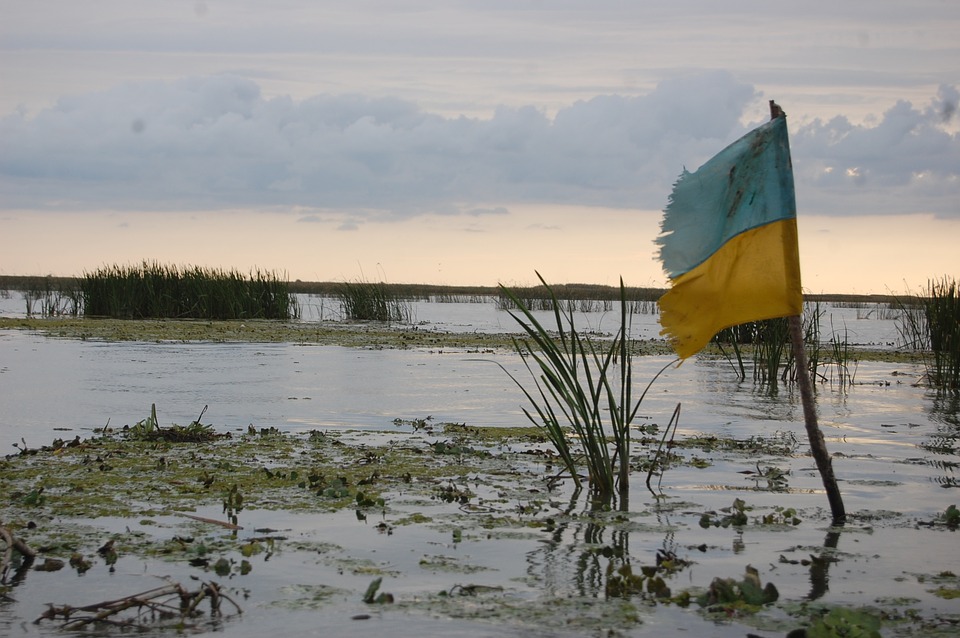
In Hej Sokoły (Hey, Falcons), the Polish-Ukrainian song from the mid-19th century written by Tomasz Pandura, the author yearns for “green Ukraine” – the Ukrainian steppe. The bilingual song is known to most Poles and almost as many Ukrainians. However, few people know that at a later stage the term “Green Ukraine” (written with capital letters) came to describe the territory in Russia’s Far East where, at the end of the 19th and at the beginning of the 20th century, a significant number of Ukrainians settled. The areas of Amur and Primorskaya oblasts, where many Ukrainians lived, were called Zeleny Klyn. The term “Green Ukraine”, however, contrary to Zeleny Klyn, conveyed not only the ethnographic meaning but also the national aspirations.
January 2, 2018 -
Marek Wojnar
-
History and MemoryIssue 1 2018Magazine
(CC) http://maxpixel.freegreatpicture.com/
Colonising the Far East
The authors of books and brochures on the Ukrainian presence in the Far East usually began their story in the 17th century. It was in 1672 when Demian Mnohohrishny, the Hetman of left bank Ukraine, was exiled to Transbaikal. Initially, he was imprisoned in Irkutsk but later ended up on the other bank of Baikal, in Selenginsk. Soon afterwards the ex-prisoner was in charge of the city defence when it was under siege by the army of a Mongolian khan allied with the Chinese. At a later stage, Mnohohrishny accompanied Feodor Alekseyevich Golovin during the signing of the Treaty of Nerchinsk with China in 1689. Over the next century the participants of Koliyivshchyna followed the steps of the first exiles from the Ukrainian territory. According to Viacheslav Chornomazov, a Ukrainian ethnographer from Vladivostok, they made it as far as Kamchatka where they later founded the Kamchatka Cossack Army.
The very colonisation of the Far East began in the 1860s. Initially, it was the Russians that dominated. However the situation changed two decades later as a result of the opening of a direct sea route between Odesa and Vladivostok in 1883. The main masse of Ukrainian travellers reached Amur and Primorskaya oblasts. In accordance with the first (and last) population census of the Russian Empire, there were just over 21,000 Ukrainians in Amur oblast and 33,000 in the neighbouring Primorskaya oblast. Apart from those two places, a small group of Ukrainians made it to Sakhalin. The official records show that fewer than 57,000 Ukrainians (18.3 per cent of the region’s population) lived in Zeleny Klyn. It is possible, however, that this number was slightly higher, as the inhabitants of the Russian Empire were not questioned about their nationality but their spoken language. Since the Ukrainian language had no separate status in Russia, it cannot be ruled out that some of the Ukrainian respondents said they spoke Russian. In subsequent years the number of Ukrainians in the Far East increased rapidly, which was related to the opening of new sections of the Trans-Siberian Railway and completion of the East China Railway.
The first Soviet census shows that there were already 315,000 Ukrainians situated in the Far Eastern Krai (16.7 per cent of the whole population), most of who lived in Zeleny Klyn. Some Ukrainian scholars had claimed that Ukrainians made up between 40 and 70 per cent of the population, but their estimates are likely to be exaggerated – although it is impossible to verify their accuracy.
Organised Ukrainian life
The migration of large numbers of Ukrainian people to the Far East undoubtedly resulted in the transfer of Ukrainian traditions, although it took a while before they took a more organised form. The first Ukrainian choir was set up in Vladivostok in 1893. However, it was only at the start of the 20th century when the activation of Ukrainian social life took place. It was due to guest performances of the first Ukrainian theatre troupes in Zeleny Klyn, which led to the establishment of local amateur theatre groups. Soon there were other attempts to set up Ukrainian organisations.
From a chronological point of view, the first such organisation was the Ukrainian Student Hromada, established in 1907 in Vladivostok. After two years, its activity was prohibited by the order of the ministry of education. Soon afterward it was replaced by the Ukrainian Circle, which semi-legally operated until the outbreak of the revolution. There was also a failed attempt to register the Ukrainian Social Charity Organisation in Vladivostok and Prosvita in Nokolsk-Ussurisjki. As a result, the only legally operating Ukrainian organisation in the Far East was the Ukrainian Club established in 1911 in Blagoveshchensk.
The real breakthrough for the development of Ukrainian society in the Far East came with the revolution and the civil war. The key change lay in the establishment of politically-oriented movements. The Ukrainian movement was organised on several levels: the Hromadas, the Ukrainian Regional Councils, the Ukrainian Far-Eastern National Council and the Interim Ukrainian Far-Eastern National Committee at the top executive level. At a later stage, the role of the executive was transferred to the Ukrainian Far-Eastern Secretariat, led by Yuri Hlushko-Mova. Moreover, there were also four Ukrainian Far-Eastern Conventions that discussed the main slogans of the national and territorial autonomy for Ukrainians in the Far East. As time passed, there were also demands to transform Green Ukraine into a colony of the Ukrainian People’s Republic and perhaps even into an independent state.
At the same time, the social activities of Far-Eastern Ukrainians became much more dynamic. Since 1916 Ukrainian schools started to appear, and by 1920 there were over 60 schools. In Vladivostok, Khabarovsk, Blagoveshchensk and Nikolsk-Ussuriysk, Ukrainian newspapers were published and there were also several publishing houses. Nevertheless, a majority of these initiatives turned out to be short-lived.
The development of the Ukrainian national movement in the Far East turned out to be a relatively brief phenomenon and its ending partially overlapped with the victory of the Bolsheviks in the civil war. During the short-lived puppet Far-Eastern Republic (1920-1922), the Ukrainian territorial gains from previous years were not only upheld, but even strengthened (some territories were granted national and cultural autonomy). Once the Bolshevik-dependent state was dismantled, the opportunities to cultivate Ukrainian identity faded. The symbolic end to these aspirations came with the trial of the Ukrainian national movement’s leaders which ended in 1924 in Chita. During the trial, the leaders were accused of collaborating with the White Guard circles in Transbaikal. Afterwards the centre of Ukrainian activity in the Far East moved to Manchuria.
The colonial idea
Due to the fact that the Ukrainian national movement formulated its territorial claims, based on a relatively freely interpreted ethnic rationale, during the interwar period, ideas emerged to transform Amur and Primorskaya territories into a Ukrainian colony. The idea of establishing a Ukrainian colony in the Far East was actively supported by activists from the Organisation of Ukrainian Nationalists (OUN). The Japanese expansion in Manchuria, which began in the early 1930s, led to the Ukrainian nationalists relying on the Japanese army not only for help to liberate Green Ukraine but also for reaching the banks of Baikal.
A high number of references, both of the journalistic and poetical nature, can be found in articles and lyrics published in the first half of the 1930s in Lviv’s Wistnyk, edited by Dmytro Dontsov, a well-known nationalist thinker. Activists of OUN had a more practical approach to the idea of establishing Green Ukraine. In April 1934 Volodymyr Kolosovsky, the director of the military centre of Ukrainian nationalists in the Netherlands, wrote to Yevhen Konovalec, the leader of the OUN, to say that colonisation of the Asian part of the Russian Empire was carried out by joint forces of Russian (in the letter referred to as Moscovites) and Ukraine, hence the latter should be given the inalienable right to a part of the territory.
Because the Ukrainians were dominate in the Far East, Kolosovsky thought it was natural that the Ukrainian state would be established there. The new state was supposed to be closely connected with Japan and in possession of a grand territory. As he argued: “Minimal borders of Green Ukraine cannot obviously satisfy us. We must lodge claims to the whole Soviet Far-Eastern Krai, i.e. the territory of the following oblasts: Sakhalin, Aldansky, Kolyma and Kamchatka”. The claim made by Kolosovsky was not dominating in the political programme and propaganda of the organisation, but neither was it totally marginal. Mykhailo Seleshko, Konovalc’s secretary, said that in their propaganda, OUN activists used the “concept of great space of the Ukrainian empire”, which was to cover the areas both located at the Dnieper River, the Don and the Amur, in order to keep Russia in check.
A similar notion was found among the younger generation of nationalists who, when in 1940 facing a split in the OUN, supported Stepan Bandera. Dmytro Myron and Ivan Gabrusevich were in favour of establishing Green Ukraine. In 1934 Yaroslav Stetsko, later Bandera’s closest associate, created a vision for a nationalist uprising that would lead to Sakhalin and Kamchatka remaining under Ukrainian control. OUN activists were probably the most radical group at this time, but they were not the only ones. The Ukrainian People’s Republic circles in exile, usually associated with the democratic tradition, also proclaimed maximalist concepts in the Asian Far East.
Around this time when OUN activists were deliberating the possibility of establishing a Ukrainian colony in the Far East, T. Olesiyuk, a doctor and an associate at the Ukrainian Scientific Institute in Warsaw, wrote about the idea in a Warsaw-based magazine Tabor. For Olesiyuk, the formation of Green Ukraine was merely one element in the comprehensive project of territorial changes in Asia. Taking advantage of the fact that the Ukrainian population created some ethnic islands in Eurasia, Olesiyuk considerably overestimated their number in order to create ethnical arguments for his geopolitical vision, which was based on a postulate to establish four Ukrainian states in Eurasia. Apart from Ukraine proper and its Far-Eastern colony (whose borders overlapped with the ones described by Kolosovsky), he also assumed the formation of Grey Ukraine (on the border of Siberia and Kazakhstan) as well as Cossackia, which was to encompass the catchment area of the middle and lower Don, lower Volga and Ural as well as the northern embankment of the Caspian Sea.
During the Second World War, Olesiyuk became closely associated with Yury Lypa, a doctor and geopolitician, and Lev Bykovsky, a librarian, both of whom set up underground National-Scientific Ukrainian Institutes. These institutions combined research on Ukrainian history, political science and economics as well as promoting the imperial destiny of Ukraine. Lypa led the Black Sea Institute, Bykovsky was in charge of the Oceanic Institute and Olesiyuk headed the Land Institute. Olesiyuk’s articles, which were originally published in Tabor, were reproduced in the form of separate brochures. Moreover, a piece titled Ukraine at the Atlantic (in Ukrainian Ukrajina bila Tychoho Okeanu) by the writer Ivan Bahriany was published in the Oceanic Institute publishing series. Since the author published a novel, titled Tiger Hunters (in Ukrainian Tyhrolovy), he might have made one of the greatest contributions to the popularisation of Ukrainian presence in the Russian and USSR Far East. The institute also published brochures promoting the activities of the Far Eastern diaspora which were nationalist in nature.
For Green Ukraine
The biographies of the OUN activists sent to the Far East would make good movie material. However, it is unlikely that such a film would ever be made. The adventures of Ukrainian nationalists in Manchuria are undoubtedly interesting, but in no way did they exhibit the image of heroes that would be close to the current line of the Ukrainian Institute of National Remembrance. They had some elements that would be make a decent adventure movie, but they were not free from being grotesque or even a farce.
The first nationalist to end up in the Far East was Mykola Mytluk. He reached Tokyo in accordance with the agreements between OUN activists and the Japanese, and later he was transported to the occupied Manchuria where he set up a nationalist organisation. In 1937 the Ukrainian Far-Eastern Sich was established with the aim to “create an autonomous state unit allied with Manchukuo and Japan”. When the Sich started operating, Mytluk was already dead. Since he wanted to organise his compatriots in the Far East, Mytluk made an attempt to cross the Amur but was killed by Soviet border guards. It cannot be ruled out that he may have been betrayed by his companion, Unytchenko, who not only survived but, strangely enough, managed to return to Harbin.
Nevertheless, Mytluk’s life work was continued by others. In 1937 a Katori Maru steamship landed on Japan’s shore. On board were three daredevils led by Grigorii Kupecky, whose biography deserves mention. After getting wounded in the famous, though poorly organised post office robbery in Gródek Jagielloński, he was summoned abroad by the OUN leadership. Soon afterwards he ended up in a training camp for the Croatian Ustasha in the Apennine Peninsula. After the Marsilian assassination, which resulted in the killing of the Yugoslav king Alexander I and the head of French diplomacy, Louis Barthou, the Ustaše camps responsible for this were closed and the Croatians, alongside nine members of OUN, were interned on the Aeolian Islands.
Three members of the group made use of their acquired skills on the other side of the world. This is when the difficulties began, since the OUN leadership sent people with no Russian language to conduct anti-Soviet activities in the Far East. The mere fact that the Japanese organised Russian language courses for the Ukrainians was not only absurd, it also caused delays in action, which in the end turned out to be far less spectacular than the original plans. Japanese dignitaries in Harbin soon lost their interest in co-operation with the OUN. They perceived the local white Russian exile group as a stronger and less divided ally. The latter was by all means a valid alternative since the conflict among the three OUN members soon emerged and contact between Kupecky and his companions loosened up. The fact that Kupecky worked as a taxi driver during the Second World War only illustrates how successful the nationalists were.
Not only had nationalists tried to activate the Ukrainian movement, first in Manchuria and then in Zeleny Klyn. Even before Konovalec approached the Japanese, Harbin was already the site of Promethean activity. A branch of the Warsaw-based Prometheus, led by Vladyslav Pelc, was operating in the largest city of Manchuria. It comprised of Polish, Ukrainian, Georgian and Idel-Ural exile groups. In 1932 Ivan Svit became the president of the Promethean club. From 1933 to 1937 he also edited Manchurskyi Wistnyk, a magazine that was the result of co-operation between Japan, Poland and the Ukraine People’s Republic exile group. The Promethean strategy to disintegrate Russia along national borders differed from the imperial aspirations of Japan reaching far into Siberia. Nevertheless, Tokyo believed that the Promethean activity might lead to the weakening of the Soviets; hence the paper edited by Svit was financed by the Japanese Military Mission in Manchuria.
In Europe, it was Volodymyr Mursky, an Istanbul-based representative of the Petliura followers, and Volodymyr Salsky, the Ukraine People’s Republic (UPR) minister of defence, who played an important role facilitating contacts between the Japanese and UPR circles supported by Poland. Through them the Japanese received precise plans on how to implement the concept of Green Ukraine, including the works of Tymish Olesiyuk. Despite this, the Japanese redirected their interests – first towards the nationalists and then the Russians. The Poles, in turn, were forced to greatly limit their financing of Promethean action. Once again, it all ended just with the idea.
(No) memory
Gaining independence helped to re-establish the memory of the Ukrainians in the Far East. In 1994, Bahrianny’s Tiger Hunters was made into a film by Ukrtelefilm. In 2002 the Ukrainian post office issued stamps depicting the life of Hetman Demian Mnohohrishny and his Siberian epic. There was a partial nostalgia for the old colonial dreams of the OUN and UPR activists. In February 2015, an “expert” dispute took place in the Kyiv-based Ukrinform press agency. It was a peculiar manifestation of an inferiority complex and it reflects how disconnected Ukrainian nationalists were from reality. In relation to Russian aggression and the occupation of parts of Ukraine, top politicians of the Svoboda party and their invited experts discussed the division of Russia, including the Far Eastern Ukrainian “colony”. According to one Svoboda sympathiser, Ukrainians in the Far East are perceived “not as urban Soviet migrants but an agricultural civilisation with great demographic resources and a strong identity”. In the aftermath of the Russian empire’s dissolution, the territory of Zeleny Klyn was proclaimed as part of the Ukrainian state. The Far-Eastern colony would maintain co-operation with the commonwealth of Ukrainian states in Eurasia, together with the Yellow and Grey Klyns located in the Volga region and the border region of Siberia and Kazakhstan.
The idea of establishing territorial autonomy for inhabitants who do not exceed three per cent of the total population is quite original indeed. Nevertheless, it is fair to say that such ideas are currently marginal. The memory of Far Eastern Ukraine and related colonial fantasies are fading away. Four years ago, Vyacheslav Chornomaz acknowledged on Svoboda radio that there are few diaspora organisations in the Far East and they are represented mainly by the elderly, while the future of Ukrainian identity in the area is up in the air. The only chance for change, Chornomaz argued, is for Ukraine to establish its name in international relations. So far, however, this has not happened.
Translated by Justyna Chada
Marek Wojnar is an assistant in the Institute of Political Studies at the Polish Academy of Sciences, a historian, an essayist, and a regular contributor to Nowa Konfederacja and Nowa Europa Wschodnia.