
Lina Kostenko and her world
Most Ukrainians today learn about Lina Kostenko during their Ukrainian literature classes at school. Her deep philosophical poetry is filled with love for her country, its people and humanity in general. As a result, it rarely leaves the reader indifferent. Kostenko belongs to the era of the “sixtiers”, a young rebellious generation that shook the world with its protests.
The generation of the 1960s has for a long time been and still is a great topic of debate for researchers. And there is nothing surprising here, as this was the generation born after the Second World War. They did not know all its horrors but they heard about them from those who survived the war. This was the period when the “hippie” movement was born in the United States. They were pacifists, loved rock and roll, took soft drugs and promoted the idea of free love.
July 4, 2023 -
Oleksii Lionchuk
-
Issue 3-4 2023MagazineStories and ideas
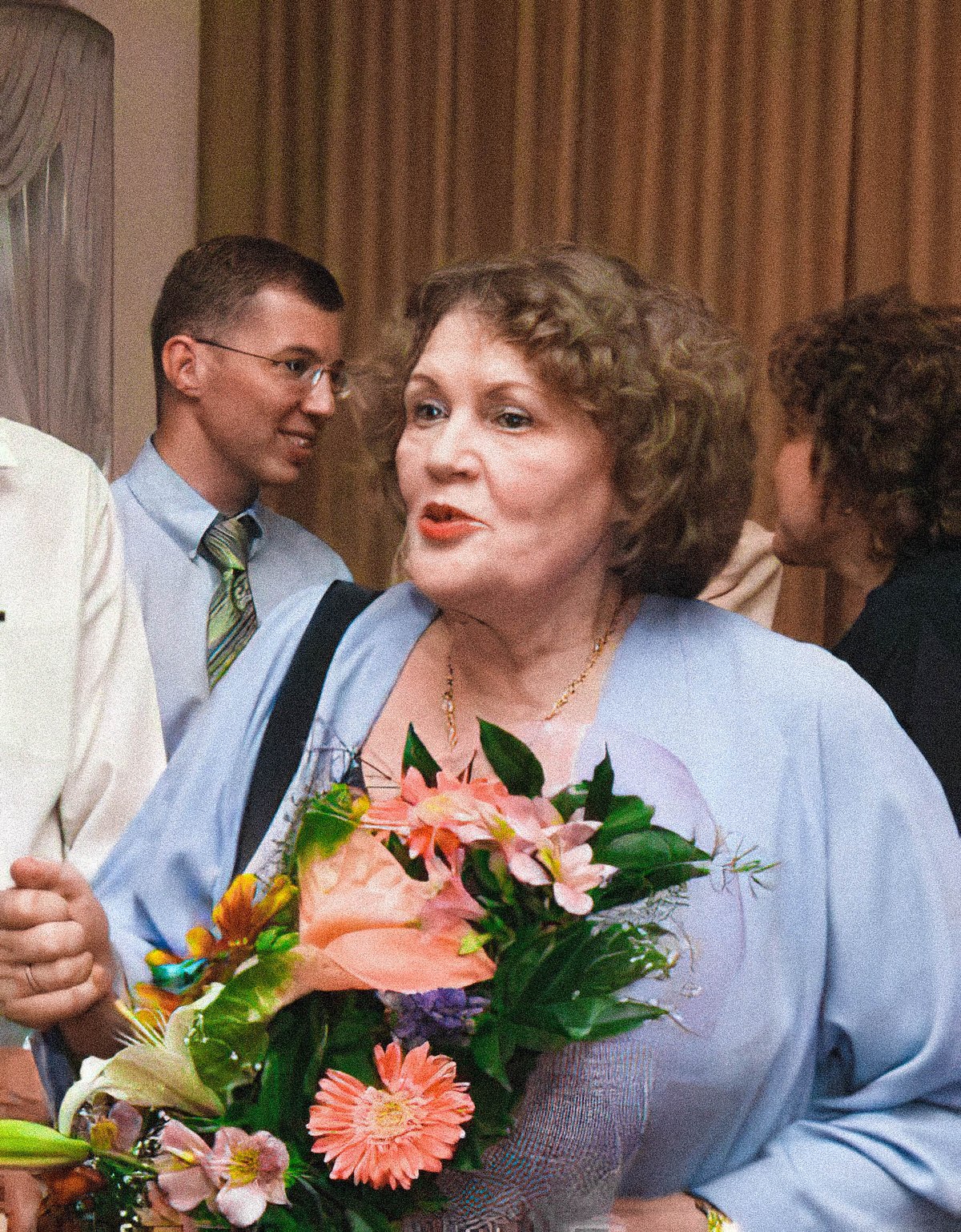
Lina Kostenko, Ukrainian poet. Photo: (CC) commons.wikimedia.org
In Europe, they were a generation of rebels and supporters of communism and socialism, until the moment Leonid Brezhnev stifled the Prague Spring. The invasion of Czechoslovakia cured many of these “red illusions” among western intellectuals and their young followers.
There was also a sixties generation in the socialist camp – people who initially shared socialist and communist views. Eventually they observed the system’s work from within, became disillusioned and turned from support for the “people’s democracies” to outright criticism. Some famous names among them were Jacek Kuroń, Leszek Kołakowski, Adam Michnik, Włodzimierz Mokry and Václav Havel. They were well aware that the communists would not give up power, and Moscow would not allow them to do so. Due to this, they demanded reforms and the introduction of “socialism with a human face”.
Defending cultural autonomy
There were shortwave radios in many homes on both sides of the Iron Curtain, which marked one of the key periods of the era’s information revolution. Those radios made it possible to listen to The Beatles and Scorpions for people like the Czechs, Poles, Ukrainians and Tatars. At that time, it was not just Radio Liberty or Voice of America that were blocked on the territory of Soviet Ukraine, but also Polish radio. This is despite the fact that Poland was meant to be a friendly socialist state. Even during Khrushchev’s thaw, the Ukrainian Soviet Socialist Republic was the most isolated republic when it came to access to information. However, this information vacuum could not hold. At night, young members of the Ukrainian intelligentsia, like many other citizens, tried to catch transmissions from western radio stations with their receivers. As a result, the generation of the 1960s was open-minded and creative, no matter where they lived. The only thing that distinguished young hippies from young people in Eastern Europe was their attitude to socialism: western students were enthusiastic about the ideology, while their peers from the socialist camp were fed up with it.
Khrushchev’s thaw revived in young Ukrainians cautious hopes that change in the Soviet Union was irreversible, and that it was finally possible to write not only about the party and its leaders but the eternal values of humanism. There were several cities known for their artistic activity but the two most important centres were traditionally Lviv and Kyiv. Historically, the Ukrainian elite in times of statelessness have always been represented by writers, artists and members of academia. The 1960s were no exception, and young writers, artists and even historians took up the cause of defending Ukraine’s cultural autonomy as much as possible at the time.
At that time, the Ukrainian Soviet Socialist Republic was led by the First Secretaries of the Central Committee of the Communist Party of Ukraine, Mykola Pidhornyi and his successor Petro Shelest. This second figure was himself actively interested in Ukraine’s past and its culture and was one of the first ethnic Ukrainians to hold such a high position. At the beginning of Khrushchev’s thaw, he actively supported the talented youth. At Pidhornyi’s suggestion, the Club of Creative Youth was created in Kyiv’s Zhovten Cinema Palace under the supervision of the city’s Komsomol committee. This initiative was aimed at overseeing artists and intelligentsia in the capital. Shelest also initially supported it. However, the club’s activities started to threaten the very foundations of the Soviet regime and so the first wave of repressions and arrests was launched against the group’s most active figures. It all began with applying relatively mild methods of influence: a conversation at the Writers’ Union, condemnation of one’s work (as such that it did not meet socialist standards), and so on. The next stage would be a dismissal from work and a ban on publications, which was especially painful for artists. When these methods of influence did not work, the artists were arrested, put on show trials and sentenced to real terms in prison for “anti-Soviet propaganda”.
The rebellion of the younger generation against the system was something natural and understandable, but resistance to the totalitarian machine, even if it was somewhat liberalised, was a difficult choice even for the strongest of minds. These people were later called the “prisoners of conscience”. The poet and writer Lina Kostenko can certainly be named among these unbroken personalities of that era.
The phenomenon of the era
Most Ukrainians today learn about Lina Kostenko during their Ukrainian literature classes at school. Her deep philosophical poetry is filled with love for her country, its people and humanity in general. As a result, it rarely leaves the reader indifferent. Kostenko belongs to the era of the “sixtiers”, a young rebellious generation that shook the world with its protests. Lina Kostenko’s protest, however, was quiet and uncompromising at the same time. The worst thing for an artist and writer is to be banned from talking to their supporters. This is how the Soviet system had punished the young poet. She was probably the only one who was not arrested and sent to the terrible Soviet prisons. However, Lina Kostenko’s works were not published for a long time.
Kostenko was born in 1930 into a family of teachers in the village of Rzhyshchiv in the Kyiv region. Her father spoke 12 languages and in 1936 was named by the Soviet authorities as an “enemy of the people” and sentenced on a completely trumped-up charge. Lina Kostenko and her family lived through the hardships of the Second World War and experienced all the “benefits” of the Nazi and Soviet occupation regimes. Later in life, she would write about this in her autobiographical poem “My first poem was written in a trench…”
Kostenko’s life was quite successful, especially given her father’s biography: the future writer graduated from high school in Kyiv, was a member of the literary studio run by the famous Dnipro magazine, continued her studies at the Kyiv Pedagogical Institute (now the Mykhailo Drahomanov National Pedagogical University), and later moved to Moscow, where she continued her studies at the Gorky Institute of Literature. The Moscow period was very productive in her literary and personal life. During that time, she met her first husband, the Polish writer Jerzy Jan Pachlowski. She got married and had a daughter, Oksana.
Kostenko’s early works were created at the very beginning of the Khrushchev thaw period. And also, paradoxically, Moscow offered more opportunities for career and artistic work than other Soviet republics, especially in science and literature. Kostenko’s first poetry volume, entitled Prominnia Zemli (The Earth Rays), however, was published in Kyiv in 1957. It was received favourably by readers and critics, and the first edition instantly sold out. Her next two volumes, Vitryla (The Sails) (1958) and Mandrivky Sertsia (The Heart Journeys) (1961) met with similar success. That period also marked a time when poets were involved with the Kyiv Club of Creative Youth. She blended into the capital’s artistic circles, held poetry readings together with her peers and like-minded people, and helped organise thematic events commemorating Ukrainian poets like Ivan Franko, Taras Shevchenko and Lesia Ukrainka. She was among the members of an expedition to Bykivnia, a place (in the outskirts of Kyiv) where the graves of Stalin’s 1930s repressions were discovered.
Repressions
The KGB and the ideological department of the Communist Party of Ukraine could not have ignored the activity of the young writer. The entire system started to pressure Kostenko. The transformation initiated by Khrushchev was half-hearted and the repressive apparatus was simply put on standby. Therefore, Khrushchev’s era ended up with renewed repressions against the intelligentsia, which spread in Ukraine on a huge scale when Leonid Brezhnev came to power.
Lina Kostenko’s persecution started on April 8th 1963, during a party meeting on ideology, when the secretary for ideology of the Central Committee of the Communist Party of Ukraine, Andriy Skaba, spoke unequivocally: “Formalist tricks with words inevitably obscure the ideological and artistic content of the work. And some works by young poets Vinranovsky, Drach and Kostenko prove that this is the case.”
Following that criticism, Kostenko’s new collection of poetry, Zoryanyi Intehral (The Stars Integral), was withdrawn from publication. The writer did not give up, however, and she continued her creative and social activities. Despite the ban on her works at home, they were published abroad, in Poland and Czechoslovakia, for example. A volume of translations titled Young Soviet Poetry, which included poems by Kostenko, Vasyl Stus, Vitalii Korotych, Ivan Drach, Vasyl Symonenko and others, was published in Czechoslovakia as the Prague Spring neared. Thus, the works of Ukrainian dissidents reached the countries of the free world via the nations of the socialist bloc.
In Soviet Ukraine, repressions of dissent did not stop for a moment. In 1966, when a closed trial of the Horyn brothers was held in Lviv, a group of like-minded people from Kyiv –Kostenko, Viacheslav Chornovil, Ivan Drach and others – came to show their support. As Chornovil later noted in his memoirs: “Lina Kostenko and Lyubov Zabashta decided … to create a record (of the verdict). The “public” literally took these recordings from them by force. Lina Kostenko also threw flowers to the convicts after the verdict. The flowers, of course, were immediately seized and Lina Kostenko herself was subjected to a “passionate” interrogation in the room next door, but the solemn ceremony at the end of the closed trial of “particularly dangerous state criminals” was completely spoiled.”
The Writers’ Union of Ukraine served as another instrument of influence on the rebellious writers. In 1966 a meeting was held and the persecution of writers began to grow in intensity. The poet expressed her solidarity and support for her colleagues who had fallen out of favour with the regime. This finally led to a full ban on her works in Soviet Ukraine. Kostenko became an unpublished author for 16 long years – from 1961 to 1977. She continued to write for herself, developing her skills and sophistication.
During her forced creative pause, Kostenko also tried working as a screenwriter. Together with Anatolii Dobrovolskyi, they wrote a screenplay for a documentary about Ukrainian poets who died on the fields of the Second World War. The film was originally titled Check Your Watch, and work on the film spanned about a year (1963-64). However, the censors and their subordinates altered the film and changed the title so much that Kostenko herself refused to be listed as an author, and the film was never released.
The proud and unbreakable author returned to her readers in 1977 with a new volume of poetry titled Nad Berehamy Vichnoi Riky (Over the Banks of the Eternal River), and in 1979 her outstanding historical poem “Marusya Churai” was published after six years of waiting. The first edition of only 8,000 copies sold out instantly, as did the second edition of 100,000 copies in 1982. She later received the Taras Shevchenko Prize in Literature for this poem and the volume Nepovtornist (Uniqueness) during Gorbachev’s perestroika.
The nation’s conscience
After Ukraine’s declaration of independence from the Soviet Union, Kostenko continued to work on new literary masterpieces. Her civic position remained unchanged and her relations with the authorities were not easy. In the Leonid Kuchma era the government tried to present her with the Order of Yaroslav the Wise of the V degree. However, she politely refused, saying, “I do not wear political jewellery.” She reacted similarly to Viktor Yushchenko’s attempt to bestow upon her the title of Hero of Ukraine. In 1999, she published her second historical poem, “Berestechko”. The poem was brought to life at the Rivne Music and Drama Theatre, and in 2008 the theatre was awarded the Taras Shevchenko Prize for this production.
Kostenko’s silence is much louder than the thousands of words of Ukrainian politicians and public figures. She speaks up at critical moments in Ukraine’s modern history, and it is up to the public to appreciate these words. After the illegal annexation of Crimea and the outbreak of war in Donbas, she wrote these famous lines, which sound especially poignant and relevant after February 24th 2022:
Horror, and blood, and death, and despair,
And the clamour of the predatory horde,
The little grey man has caused that black sorrow.
It is a beast of a hideous breed,
the Loch Ness of the cold Neva.
Where are you looking, people?
It is us today and tomorrow it’s you.
The author recently turned 93, one of the few survivors of that generation of sixtiers and dissidents. One can read her poems on Telegram pages. Today, Kostenko remains one of the moral authorities of the Ukrainian people, who continue to fight for their right to live in a free and sovereign Ukraine.
In 2011, in an interview for Ukrainska Pravda – a rare occasion – she gave an assessment of her work and the work of her fellow sixtiers: “we were young then and did not know that we were sixtiers. One cannot self-categorise or award titles to oneself. This was the case with the “Executed Renaissance” (a term used to describe the generation of Ukrainian language poets, writers and artists of the 1920s and early 1930s – editor’s note). These were the people who were the pillars for the high-voltage line of the spirit. The sixtiers were a cohort. They were united by common beliefs and honesty. They really loved each other and had a respect for each other. I don’t know another generation like that. Well, maybe the Kyiv school, maybe the “eightiers”. And after that there is no such thing.”
Oleksii Lionchuk graduated with a master’s degree in history from Rivne State University of Humanities. For seven years he worked as a teacher of history, philosophy and political science in primary and postgraduate schools in Ukraine. Since 2014, he has been a PhD student at the Institute of History at the Jagiellonian University (Poland).