
The human face of Ukraine’s reconstruction: veteran reintegration
With the full-scale invasion still underway and the number of defenders on the battlefields growing, the need for a revised comprehensive state policy on veteran reintegration is imminent. A holistic, coordinated and human-centred approach recognising the relevant combat-related experiences of this sizable population group will be the essence of any post-war recovery.
Recently, Russia’s full-scale invasion marked its one-year anniversary. While the end of the ongoing armed conflict is currently unclear, many international partners have already initiated discussions about post-war reconstruction. While the frontlines may still be shifting and the length of the war may be determined by western-supplied arms and the success of Ukraine’s counteroffensive, there are some principles of social cohesion that tend to be slightly overlooked in narratives concerning Ukraine’s recovery.
April 28, 2023 -
Iryna Dobrohorska
-
Hot TopicsIssue 2 2023Magazine
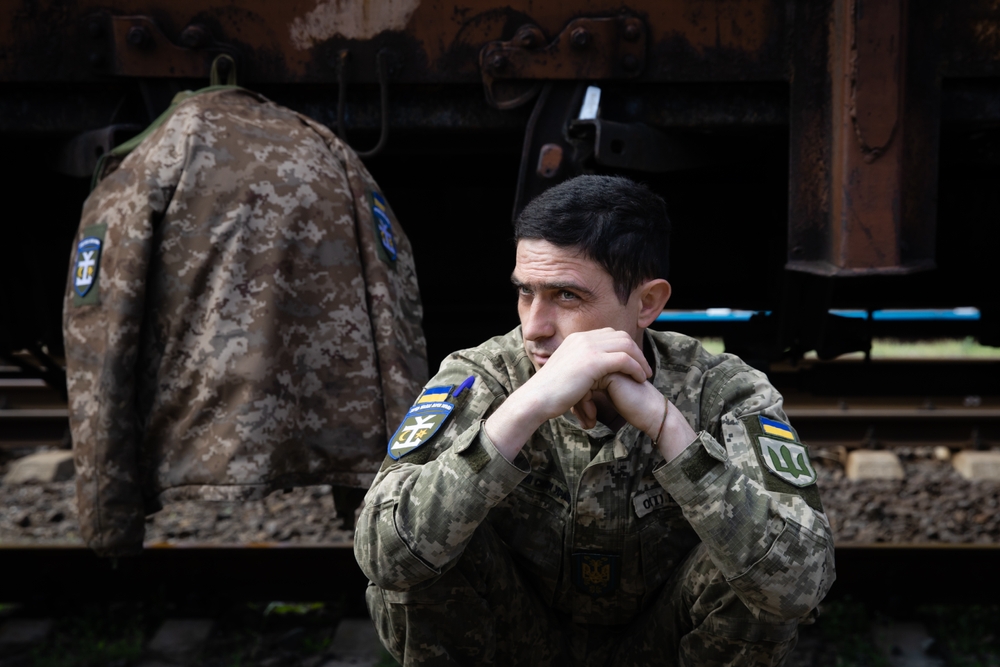
The railway station in Kramatorsk has already become a permanent meeting place for Ukrainian soldiers and their loved ones. Photo: Drop of Light / Shutterstock
The main reason is that Ukraine’s recovery and reconstruction efforts are often tackled from a purely economic perspective, with GDP loss projections taken as the central piece of the narrative. While these are the indicators considered by international partners in determining economic aid and assistance, a more holistic approach focused on Ukraine’s human capital should dominate the narrative.
The importance of human capital and social cohesion efforts should be integrated into the discourse on Ukraine’s reconstruction for many reasons. Martial law enforced in Ukraine following Russia’s full-scale invasion resulted in a series of unannounced waves of mobilisation in the Ukrainian military. Many men and women joined the Ukrainian army voluntarily, without having any prior combat experience. The Armed Forces of Ukraine comprised about 260,000 men and women before February 24th 2022. This figure naturally grew following Russia’s full-scale invasion. According to different projections by the economics ministry, as well as the ministry of veteran affairs, between one and two million veterans after demobilisation will return from service. Some may desire to continue capitalising on their experiences gained in combat, whereas others may prefer to return fully to their civilian lives.
The strategy for the integration of Ukrainian defenders into the employment market, and the vision for their role in the Ukrainian state, is one critical discussion point which state and non-state actors should pay attention to. The ability of the state to offer a sound approach to veteran reintegration is also likely to determine Ukrainian society’s level of appreciation for veterans, as well as its acknowledgement of combat-related issues and consequences which will require a cohesive and immediate response. A human-centred approach recognising the relevant combat-related experiences of this sizable population group will be the essence of any post-war recovery.
Who are the veterans and how to approach them?
Since 2014, with the start of the armed conflict in the Eastern Ukrainian regions of Donetsk and Luhansk, the role of Ukrainian defenders was elevated, given the importance of their contribution to maintaining the country’s territorial integrity. In response to the ongoing armed conflict, the Ukrainian authorities established the ministry of veteran affairs, an executive body responsible for shaping state policy on demobilised soldiers and veterans. Being one of the newest ministries, veteran affairs has led efforts in passing legislation and fine-tuning the term “veteran” in contemporary Ukraine. The ministry was equally responsible for creating the system of social benefits to which the newly created group of Ukrainian defenders would be entitled to from the Ukrainian state.
The combatants who gained active and non-active experiences in the anti-terrorist operation, later renamed as a joint forces operation, were considered veterans in line with the newly developed policy of Ukraine. Prior to the full-scale invasion, about 460,000 veterans were overseen by the state as part of their policy response. Healthcare support, housing, psycho-social support and employment were tackled since then by the state.
With the full-scale invasion still underway and the number of defenders on the battlefields growing, the need for a revised comprehensive state policy on veteran reintegration is imminent. As there are new defence structures involved in combat (e.g. territorial defence units) as part of Ukraine’s armed forces, there is a need to revise the legislative definition of “veterans”. In May 2022, the Verkhovna Rada (Ukraine’s parliament) voted on legislation expanding social guarantees for veterans to members of territorial defence units.
While there have been initial efforts by the Ukrainian state to expand the term and consider new groups with combat-related experiences, the current legislative framework requires further attention. With the full-scale invasion, the frontlines around Ukraine stretched across multiple additional regions, from north to south beyond the eastern Donetsk and Luhansk areas. Respectfully, additional units in these areas play critical defence functions, from border guards to the national police and territorial defence.
The structures and capacities of the Ukrainian military equally expanded as a result of the western response regarding military supplies and training. While this is the general context, developments that are likely to continue evolving, it is critical for the Ukrainian authorities to lay the groundwork for acknowledging the efforts of the Ukrainian military ahead of demobilisation, as well as determine whether the other groups involved in border protection will be entitled to veteran status and will receive necessary state support.
Veteran reintegration ahead of reconstruction
Pre-emptive measures led by the Ukrainian government are vital at this stage when national and international partners are launching multiple discussions about Ukraine’s reconstruction. The Ukrainian government shall optimise the national legal framework and be considerate of ongoing contextual developments on the frontline where Ukrainian defenders serve. Revisiting the approach as who can be considered a Ukrainian veteran and laying the groundwork ahead of demobilisation would be an essential expectation of the Ukrainian state. Securing social guarantees for the defenders who protect Ukraine’s borders ahead of their return to civilian life will equally serve as a sign of the vitality of the service in the wake of the full-scale invasion. In 2023, the Ukrainian veteran affairs ministry launched a digital tool for the online registration of veterans, allowing the government to quantify the number of Ukrainian defenders, project the amount of wounded and sick, and align state policy initiatives accordingly. The digitalisation of veteran reintegration is only one of the tools which the Ukrainian state uses in responding to veteran reintegration.
Communication of the importance of the service carried out by the Ukrainian defenders shall be accompanied by actionable evidence-based awareness of issues that will require addressing. While the general employment market in Ukraine is likely to shift in the aftermath of the full-scale invasion, with millions of citizens relocating to peaceful countries, the discussion on Ukraine’s reconstruction led by the state shall not impose the expectation on Ukrainian veterans to immediately participate in the economic reconstruction. Without a proper psycho-social support system, professional and educational training and an illustrative recognition of the efforts of Ukrainian defenders, a narrative suggesting the immediate engagement of veterans in the economy is unlikely to meet its goal.
Social cohesion comes first
Ukrainian and international partners shall prepare the fundamental groundwork in the realm of social cohesion first. This will entail a comprehensive demobilisation process upon the return of veterans from the frontlines, in which Ukrainian defenders will not face bureaucratic challenges but enjoy comprehensive state support. Engaging competent groups of psychologists, psychotherapists and physical health professionals, as well as career guidance and social support systems, may be one way in which a human-centred approach to veteran reintegration in Ukraine is promoted. While in response to the armed conflict in Ukraine, the responsibility for overseeing the policy on veteran reintegration was assigned to the ministry of veteran reintegration, the modern-day contextual changes require much greater attention on the part of Ukraine’s national and international partners. The president, EU and the US, as well as other ministries and legislators, shall demonstrate their commitment in recognising the priority of veteran reintegration.
A holistic and coordinated response across governmental bodies shall prioritise the importance of veterans for many reasons. Ongoing military service for many Ukrainian defenders is only growing in duration, with rotations lasting only a few days. Seeing family members for a limited period of time and facing health challenges as a result of combat experiences are likely to result in possible subsequent changes in mental and physical health. Addressing these issues will require not only new rehabilitation centres but will necessitate a systemic approach to welcoming these defenders back into civilian life, studying their combat-related experiences and subsequent expectations for their civilian lives.
This is why strategic thinking involving not only the national parties but also the international community in post-war recovery experiences will be essential in developing a responsive system for veteran reintegration. War imposes many challenges and priorities for the state, which range from the prosecution of war crimes to the restoration of destroyed housing. Yet, the social cohesion dimension in the overall reconstruction framework will allow for the integration of the needs of this critical social group in modern-day Ukraine.
Whether the Ukrainian state will succeed in reassessing the needs of the veterans using their available tools and stressing the importance of veteran reintegration will equally determine the response from Ukrainian society. Upon a return from military service, a prevailing heroisation of the efforts made to defend Ukraine’s territorial integrity may be overshadowed by a number of issues which are likely to float to the surface, ranging from traumatic episodes and an inability to adjust to the new reality among veterans. In even more aggravating scenarios, a possible rise in criminal activity and militarisation may equally be the case. Therefore, it is critical to start with reconstruction through the understanding of the needs of Ukrainian defenders, creating a responsive support system and promoting the smooth psycho-social and employment integration of these veterans.
Iryna Dobrohorska is the Veteran Reintegration programme manager at IREX.