
Text resize: A A
Change contrast

How far right politics derailed Estonian higher education success

Estonia’s success story in education recently made a U-turn. In less than two years, a grand coalition of populist parties have affected Estonia’s international reputation and diplomatic relations, exerted pressure on civil society and the media, contributed to social polarisation, and undermined human rights. The coalition collapsed in January, but not before some serious damage was caused.

In recent years Estonia, an innovative e-state with a population of only 1.3 million, attracted much attention of world leaders, academics and venture capitalists thanks to its high-tech digital society and high performance in education. Fundamental reforms of the Soviet educational system took off in the early years of Estonian independence.

April 11, 2021 - Anastasia Starchenko - Hot TopicsIssue 3 2021Magazine

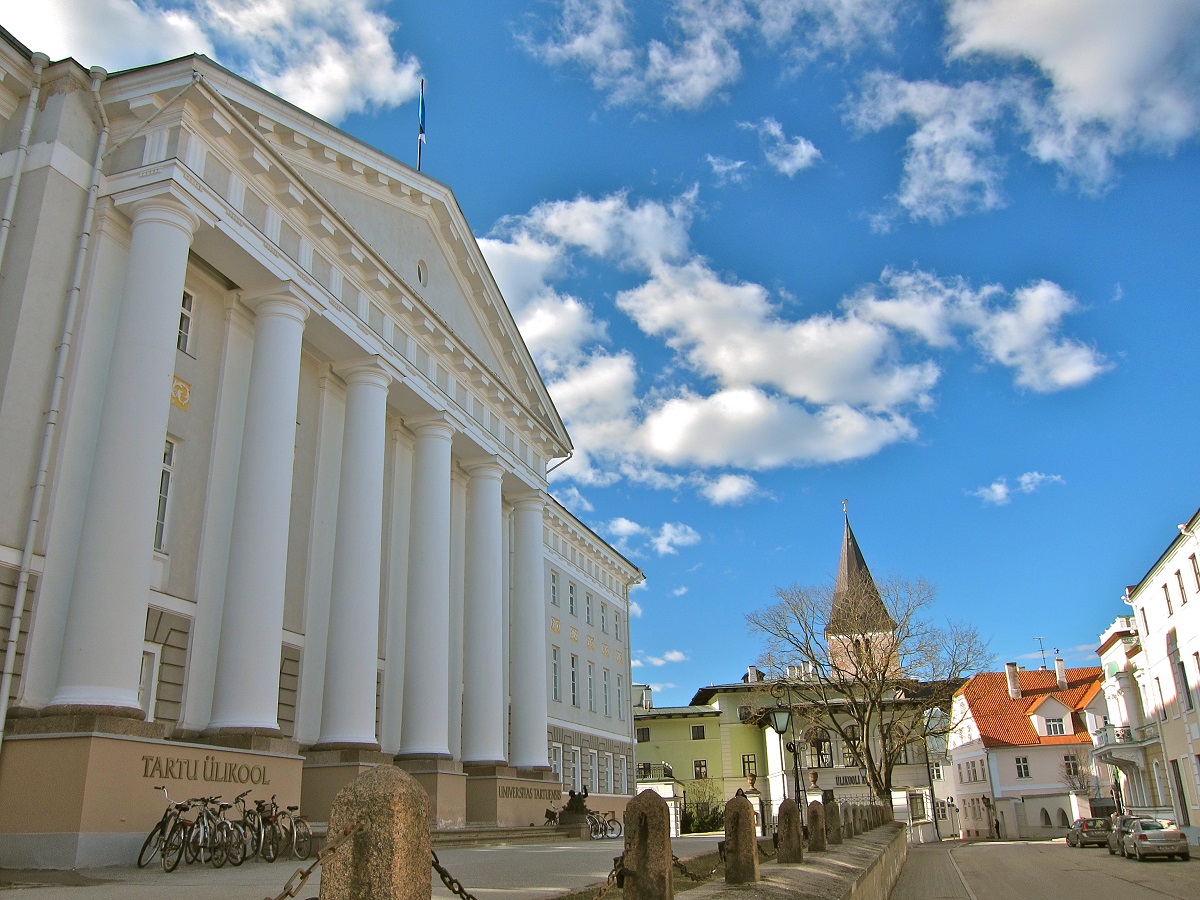
The main building of the University of Tartu in Estonia. Photo: BigFlyingSaucer (CC) Commons.wikimedia.org


According to the latest OECD’s Programme for International Student Assessment (PISA) survey, Estonian basic education is ranked at the top, and has become the best in Europe in reading, mathematics and science. Even prior to the COVID-19 pandemic, 99 per cent of Estonian schools had been using some type of e-solutions for education, such as online databases, digital textbooks, e-learning materials, digital class diaries, and online assessments – thanks to the country’s long-term investment in digital learning. Alongside equal access to pre-primary and basic education, Estonia demonstrated a high level of modernised vocational training, higher education, and adult education. Digital solutions and education – the latter being considered a crucial prerequisite of individual achievement and one of the main drivers of the country’s development – lie at the heart of the Estonian success.

Education nation

Every year, with over one hundred degree programmes in English, Estonian universities receive an increasing number of international students. In one of the smallest EU member states, tech-savvy Estonia took on the ambitious goal of competing with larger states and prestigious higher education institutions. While being at a relative disadvantage in terms of population and market size, Estonian soft power and foreign policy focused on digital solutions to governmental problems, international co-operation in cybersecurity and the internationalisation of higher education. Like Finland and Ireland, Estonia has recognised the significance of higher education and innovative systems for boosting national competitiveness on a global level.

Since 2007, when Estonia registered about 800 international degree students, the numbers have increased by over six-fold – up to 5,528 international students attended Estonian universities between 2019 and 2020. International students account for 12.2 per cent of all university students. With the exception of Finland, the largest sending country, most students come from outside the EU – Russia, Nigeria, Ukraine, India, Bangladesh, Turkey, Azerbaijan, Pakistan and Iran make up the top ten. The majority of international students complete their master’s degree in information and communication technologies, as well as within social sciences, arts and humanities. According to the 2019 International Student Barometer – a study that tracks and compares international students’ experiences from application to graduation – 91 per cent of students are happy with their life at Estonian universities and 97 per cent feel safe in the country.

Unfortunately, Estonia’s success story has recently made a U-turn. The Estonian populist government – a coalition of the left-leaning Centre Party, the far-right Conservative People’s Party of Estonia (EKRE), and the mainstream national-conservative Isamaa party – fell on January 13th this year over allegations of corruption that implicated a Centre Party official. In less than two years that “grand coalition” has affected Estonia’s international reputation and diplomatic relations, exerted pressure on civil society and the media, contributed to social polarisation and undermined human rights in an otherwise liberal country. By the time of the highly divisive parliamentary elections in early 2019, EKRE politicians already earned a reputation as being stridently anti-immigration, racist, xenophobic, misogynistic, homophobic and Nazi-sympathising. During the inauguration ceremony later that year, father and son Mart and Martin Helme – then the newly appointed interior minister and the EKRE leader, respectively – made what appeared to be white supremacy gestures. Many Estonians witnessed their worst fears come true.

Xenophobia

The two Helmes are notorious for stoking fears of a non-existent refugee crisis and an alleged crime upsurge in Estonia, and for spreading hatred and lies against Estonia-based migrants, notably people of colour. “This does not make any difference whether they are from Ukraine or from Nigeria. … They are not Estonians”, the younger Helme stated in a 2019 interview in an attempt to dampen EKRE’s openly racist image. Yet, the reality showed a significant gap in the far-right perception of students arriving in Estonia from the former Soviet space versus those coming from states which, according to the government, present high risks of immigration: Bangladesh, India, Iran, Nigeria and Pakistan.  “If you are black, go back” and “I want Estonia to be a white country” were some of Martin Helme’s earlier comments made in defence of stricter immigration policies. It is no wonder that EKRE’s leaders soon began pressuring Estonia-based non-EU students over alleged exploitation of temporary residence permits.

Already in early 2019 the three governing parties reached an agreement on tougher approaches to migration, including closer control of students arriving from outside the EU; according to Mart Helme, the then minister of interior, students are coming with the intention of gaining permanent residency in the EU, choosing work over their full-time studies. Official statements from the ministry motivated such concerns by the emergence of closed third-country communities which the ministry deemed to be posing high security risks to the country – a euphemism for EKRE’s xenophobic agenda. While it is true that some non-EU/EEA students may opt to relocate their extended families to Estonia throughout the course of their studies, the government’s unsubstantiated claims that third country graduates struggle to integrate into Estonian society and find high-skilled employment has presumptuously drawn a fine line between international students and terrorists.

When the coalition government began designing stricter conditions for non-EU nationals studying in Estonia, the COVID-19 pandemic opened the door to hasty, under-the-table changes to a previously flexible migration policy. Prepared in a rush without any real discussion or factual basis, a number of draft legislation proposals aimed to give credit to the conservative electorate while further damaging Estonia’s liberal reputation internationally.

Attracting talent

The proposals sponsored by the interior ministry envisioned tougher regulations on non-EU/EEA nationals coming to Estonia for study or work. They included a ban on spouses of third country nationals studying on a temporary residence permit from residing in Estonia for the first two years of study; a ban on third country nationals receiving tuition fee waivers in universities; and the prohibiting of students from outside the EU/EEA to work more than 16 hours per week. Upon concluding the bill, the ministry stated that the amendments would help encourage foreigners, who provide added social value, to settle in Estonia, and to prevent the abuse of national visas and residence permits. Such policy direction did not present any factual or statistical evidence to substantiate the increasing risks of illegal immigration nor would it benefit Estonia’s international student mobility, the labour market and economic growth.

In 2019, over 5,500 international students attended higher education institutions across Estonia, 62 per cent came from outside the EU/EEA, and about half work besides studying. According to Statistics Estonia, between 2019 and 2020, international students paid 10 million euro in income and social tax in Estonia, while international graduates of the previous academic year contributed an additional 3.6 million euro. As stated by the Education and Youth Board – a government agency of the Estonian ministry of education – the economic benefits of bringing in international students, regardless of their origins, outweighs state investments in their studies; while the tuition fees brought in by non-EU students partly finance the Estonian curricula for local students. In addition to the tax revenue derived from the international students’ participation in the domestic labour market, their studies also bring results in their living costs and visits by families – the International Student Barometer showed that the expenditure of international students between 2019 and 2020 alone totalled around 33 million euro.

The internalisation and diversification of universities boost the competitive strength of Estonian higher education on a global level, compensates national labour shortages, and raises the international standing of the economy. Small countries need to produce young graduates with the skills to support key industries and compensate labour shortages. English-taught programmes are competitive, which ensures that Estonia receives hundreds of international students with strong academic performances; dropout rates are significantly lower compared to domestic students. International students with tuition fee waivers demonstrate even higher academic achievements which means that Estonia attracts talented students who start their career straight after graduation. Talent attraction benefits the country’s labour market needs – Estonian skills and labour forecasting system (OSKA) estimates an annual shortage of over 2,000 highly-skilled graduates, particularly in the ICT, engineering and manufacturing industries. According to Statistics Estonia, those most likely to work alongside studying are international students who often stay working in Estonia after graduating.

Estonia not only for Estonians

Needless to say, the amendments introduced without much regard to best practices reflected prejudices rather than evidence based policy. They have been vehemently opposed by the Estonian Student Union, the Education and Youth Board, the Estonian Employers’ Confederation, and faced substantial scepticism from the ministry of education and research. If Estonia, an internationally-acclaimed start-up paradise, cannot bring in international talent its attractiveness in the long run will decrease, jobs will go elsewhere, and the state will lose the flow of investment along with the taxed incomes. In the end, EKRE officials proved to be short-sighted, populist and senseless – the party did not get much onto the policy agenda and instead resorted to divisive rhetoric.

At the end of January, Estonia’s two largest political parties – the centre-right Reform Party and the ruling Centre Party – formed a new government led by the Reform party’s leader, Kaja Kallas, as prime minister. It appears that the political class, civil society, many ordinary Estonians, as well as international students are now breathing a sigh of relief – following nearly two years of fatigue and embarrassment. It is time for Estonia’s education and start-up culture to get back and reclaim its position as the poster child of the world – with some lessons learnt from the country’s recent embrace of the far-right.

Anastasiia Starchenko is an editorial researcher at New Eastern Europe and an MA graduate of European Interdisciplinary Studies at the College of Europe in Natolin. She focuses on socio-political and cultural developments in Eastern Europe and Russia.

, , ,

Partners

Terms of Use | Cookie policy | Copyryight 2026 Kolegium Europy Wschodniej im. Jana Nowaka-Jeziorańskiego 31-153 Kraków
Agencja digital: hauerpower studio krakow.
We use cookies to personalise content and ads, to provide social media features and to analyse our traffic. We also share information about your use of our site with our social media, advertising and analytics partners. View more
Cookies settings
Accept
Decline
Privacy & Cookie policy
Privacy & Cookies policy
Cookie name Active
Poniższa Polityka Prywatności – klauzule informacyjne dotyczące przetwarzania danych osobowych w związku z korzystaniem z serwisu internetowego https://neweasterneurope.eu/ lub usług dostępnych za jego pośrednictwem Polityka Prywatności zawiera informacje wymagane przez przepisy Rozporządzenia Parlamentu Europejskiego i Rady 2016/679 w sprawie ochrony osób fizycznych w związku z przetwarzaniem danych osobowych i w sprawie swobodnego przepływu takich danych oraz uchylenia dyrektywy 95/46/WE (RODO). Całość do przeczytania pod tym linkiem
Save settings
Cookies settings