How an absurd legal case turned into a fight for the future of Russian theatre
On June 26th Moscow’s Meshchansky District Court announced that theatre director Kirill Serebrennikov and his colleagues would face a suspended sentence along with a series of fines. The case of the alleged fraud of the theatre company Sedmaya Studia reverberated throughout the entire cultural community in Russia and abroad.
On June 26th the international theatre community awaited the decision of the Moscow Court regarding the fate of Kirill Serebrennikov. Serebrennikov, a leading director in Russia, was accused of committing large-scale fraud. If found guilty, he could be sentenced to over five years in prison. His case was covered by major European newspapers, from The Guardian to Der Spiegel and Le Monde, and was commented on by various celebrities, both in Russia and abroad. Even those unfamiliar with the case became suspicious when a director with numerous awards, whose work have been shown at festivals in Avignon, Venice and Cannes, was accused of stealing government money, particularly in a country ranked 149th out of 180 in the Press Freedom Index.
September 4, 2020 -
Alina Aleshchenko
-
Issue 5 2020MagazineStories and ideas
Photo: Gennady Avramenko (CC) commons.wikipedia.org
A war between the living and dead
In Russia, the case of Serebrennikov was considered so pivotal for those involved in contemporary theatre that it was called “The Theatre Case”. Lev Dodin, one of the country’s most renowned directors and head of Saint Petersburg’s Maly Drama Theatre, compared the trial to the denunciations of Joseph Brodsky and Vsevolod Meyerhold, which significantly shaped Russian culture in the 20th century. As he put it bluntly in a letter to the Russian drama magazine, Teatr, the judge’s decision shall be a “verdict of Russian theatre, and therefore all artistic life in Russia”.
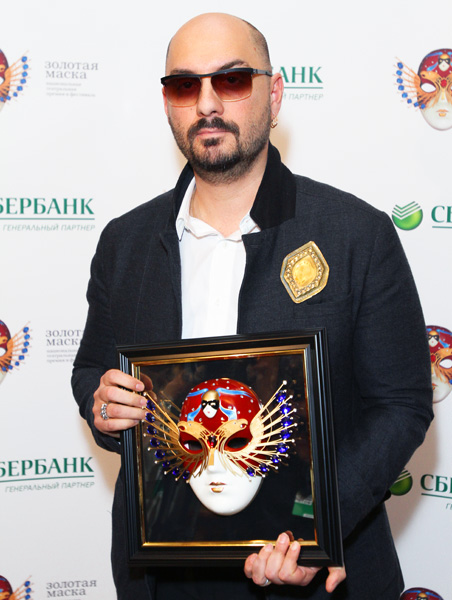
The comparison to Brodsky’s trial, which ended in the poet being sentenced to forced labour and eventually expatriated, can be made not only due to the relevance of “The Theatre Case” but the absurdity of the court proceedings. For instance, the judge asked Brodsky’s witness if she herself had ever seen Brodsky “working on his poems”, assuming that the poems alone did not provide enough evidence. Similarly, during Serebrennikov’s first trial, the prosecutor questioned the very existence of a production of A Midsummer Night’s Dream. This premiered in 2012 and subsequently received the Golden Mask National Theatre Award; in fact, it was still running at the time of the trial. Brodsky’s case occurred in 1964; the Theatre Case started in 2017.
It began on May 23rd when Serebrennikov’s apartment and theatre, the Gogol Centre, were raided by federal investigators. Serebrennikov and his team were subject to interrogation. They were accused of stealing 200 million roubles (about 2.5 million euros) from the state budget. This money had been specifically allocated to Serebrennikov’s non-profit organisation, Sedmaya Studia, and its plan to set up a new art project called Platforma. This case resulted in public uproar, especially within the arts and theatre world. Lyudmila Ulitskaya, a Russian novelist and winner of many prestigious awards, including the Austrian State Prize for European Literature, commented: “Nowadays all our country has left is a bunch of talented people who are subject to demonisation and attempts to make them leave the country. It is a war between the living and dead. And the dead are winning… It is what George Orwell has warned us about. From 1984 we went straight into 2017”.
The case, which has lasted more than two years and has greatly impacted the cultural community, appears especially absurd given the success of the Platforma project. It was received well by general audiences and even state press. The money that was allocated by the Ministry of Culture – a subsidy of around 216 million roubles over four years – which might seem like a large sum, but not if the scale of project is considered. This is especially true given the fact that Sedmaya Studiaoriginally had no owned venue, so the space had to be rented and fully equipped. Moreover, the programme of Platforma included more than 300 events and involved more than 650 participants. This inevitably involved fees related to production teams and cast, as well as material costs for stage elements and costumes. As often happens in Russian practice – not only when it comes to theatre – small purchases and fees are not completed via bank transfer, but are often paid in cash. What the Russian Federal Investigative Committee argued was that the Platforma team had not spent the funds properly but had instead “formed a criminal organisation” to appropriate the money.
The case
Alexander Kalyagin, head of the Russian Union of Theatre Workers and the Et Cetera Theatre in Moscow, reacted critically to these charges: “We are put in severe conditions. We have to obey these laws. A law is a law. Is it bad? It is bad, and we speak about it… Anyone who is already a head of the institution and is acting according to this law is automatically guilty”. His words reflected what was on everyone’s lips: today they came for him, tomorrow they will come for us.
Even the producer who had worked on the Platforma project for less than a year, as well as a Ministry of Culture worker, who had not even been actively involved in the project, were caught up in the case.
Here is a brief overview of all defendants:
Kirill Serebrennikov – Russian theatre and film director. He has staged numerous productions in leading theatres, both in Russia and abroad. Serebrennikov also served as head of the acting-directing degree course at the Moscow Art Theatre School, whose graduates formed a non-profit theatre company called Sedmaya Studia. In 2011, the director proposed the Platforma project to then-President, Dmitry Medvedev, and following presidential approval, began the project in co-operation with Sedmaya Studia. Since 2012, he has been the Artistic Director of the Gogol Centre in Moscow. He has openly criticised both the foreign and domestic actions of the Russian authorities, such as the Russo-Georgian War and the annexation of Crimea, whilst simultaneously participating in demonstrations. Serebrennikov is also an active defender of LGBT+ rights. The director was detained in August 2017 whilst he was producing the film Leto, which was later selected to compete for the Palme d’Or at the 2018 Cannes Film Festival. Following this, he was sentenced to house arrest and then released in April 2019 with travel restrictions.
Yuri Itin – former General Manager of the non-profit company Sedmaya Studia. From 2011 to 2017, he was General Manager of the Russian State Academic Drama Theatre in Yaroslavl. Yuri was sentenced to house arrest in May 2017 and also released in April 2019 with travel restrictions.
Alexey Malobrodsky – former Head Producer of the Platforma project during the first 11 months of its existence. He was arrested in June 2017 and was kept in a detention centre until May 2018, when he was released (with travel restrictions) after suffering a heart attack.
Ekaterina Voronova – first Executive and then Head Producer of the Platforma project, following Malobrodsky. She left Russia before the beginning of the case. As a result, Voronova was tried in absentia and was subject to an international arrest warrant. In November 2017, she issued a letter stating that all the defendants were innocent. At the same time, it confirmed that there were numerous mistakes made in the bookkeeping of the Platforma project by Chief Bookkeeper Masliaeva. The letter also confessed that a decision was made to destroy all internal documentation of the Platforma project after its completion in 2014.
Nina Masliaeva – former Chief Bookkeeper of the Platforma project. She was detained in May 2017 and later sentenced to house arrest. Masliaeva is the case’s only defendant who has not only plead guilty but has also given testimony against the other defendants. This testimony constituted the bulk of the prosecutor’s evidence.
Sofia Apfelbaum – General Manager of the Russian Academic Youth Theatre in Moscow. Between 2012 and 2014, she worked at the State Department of Support for the Arts and was, among other things, supervising the Platforma project from within the Ministry of Culture. She was sentenced to house arrest in October 2017, and like the other defendants was released in April 2019 with travel restrictions.
Battle is not over
In April 2019, after almost two years of trials, protocols, petitions and calls for justice from international cultural makers, all the defendants were released and all measures (except travel restrictions) were lifted. In September, the case was returned from the court back to the office of the prosecutor. This decision was made after it was discovered by independent investigators that the market value of the project was in fact 260 million roubles. Since the ministry of culture had “only” allocated 216 million roubles to the project, it was now clear that the Sedmaya Studiateam not only did not steal the money, but even managed to save around 44 million roubles. This evidence resulted in the whole Russian cultural community breathing a sigh of relief.
However, the case was not over. The prosecutor’s office appealed the decision and in November last year the case was returned to the Meshchansky District Court. A third investigation was conducted, which concluded that the project costed only 88 million roubles. This meant that around 129 million roubles (around 1.5 million euros) went missing. Naturally, this conclusion was questioned by the defence, as well as theatre professionals, who argued that it was impossible that more than 300 Platforma events could have been produced with only 88 million roubles. Despite this, these views were not taken into account. The prosecutor asked the court to send Serebrennikov to prison for six years. Simultaneously, Malobrodsky would be sentenced to five years, and Apfelbaum and Itin would each face four years.
The shock and despair felt within the arts community in response to these renewed charges were probably best expressed by Serebrennikov during his last speech in court on June 22nd: “The difference of ‘contemporary art’ from a state order or propaganda is that it reacts to contemporary life in a keen, critical and paradoxical way, it reacts by the means of contemporary media, honest and unambiguous conversation, by the means of free reflection, by the means of art. However, we receive prosecutions, trials and arrests as a reaction to our work. In this sense both the Platforma project and the three years of judicial proceedings against the people who made it illustrate in a very precise manner what is happening to all of us, and in this sense the project, of course, is still alive, it keeps track of current times and establishes how things really are.”
On June 26th Moscow’s Meshchansky District Court announced its decision. Serebrennikov, Malobrodsky and Itin were sentenced to probation, along with fines that amounted to 130 million roubles. Malobrodsky and Itin were banned from occupying positions within state institutions. Apfelbaum was found guilty of negligence and her fine was cancelled due to the statute of limitations. Whilst his fellow defendants filed an appeal, Serebrennikov decided not to join them. He stated that he now feels too tired and depressed to deal with more court proceedings.
Naturally, probation is better than a prison sentence. Of course, everything could have turned out worse. Many of the defendants’ supporters who came to Moscow’s Meshchansky District Court that June day even cheered following the court decision. Yet the fact remains: four talented and creative theatre workers were found guilty of false charges. As the cinema critic Lubov Arkus puts it, “think of what all of us have been put through to be able to feel joy about such a decision”. Whilst it is possible to feel relief for the moment, a battle far bigger than the case itself continues.
Alina Aleshchenko is an artistic producer and theatre manager. Most recently she was curated the transcultural festival POSTWEST \\ guess where in the Volksbühne Berlin. She is currently working as an artistic production manager at Dortmund Drama Theatre.