
How to respond to Putin’s undeclared war
The readiness to view the conflict in Ukraine as a kind of civil war because Russia never openly declared war goes beyond what strategists in Russia had hoped for. In the western part of Europe, a lack of knowledge about our continent’s history of the last century clearly plays into the hands of the Kremlin. Six years on, it still needs to be made clear that Putin is waging war against Ukraine.
In late February 2014 the Russian incursion into Ukraine began on the Crimean Peninsula. By February 23rd, then Ukrainian President Viktor Yanukovych had disappeared from Kyiv. With his flight, Vladimir Putin’s man in Ukraine evaded accountability for the lethal use of force against the pro-European protesters on the Maidan during the Revolution of Dignity. The Kremlin’s propaganda machine portrayed Yanukovych’s escape to Russia and the subsequent instalment of an interim president by the Ukrainian parliament as a fascist coup d’état.
April 7, 2020 -
Rebecca Harms
-
Hot TopicsIssue 3 2020Magazine
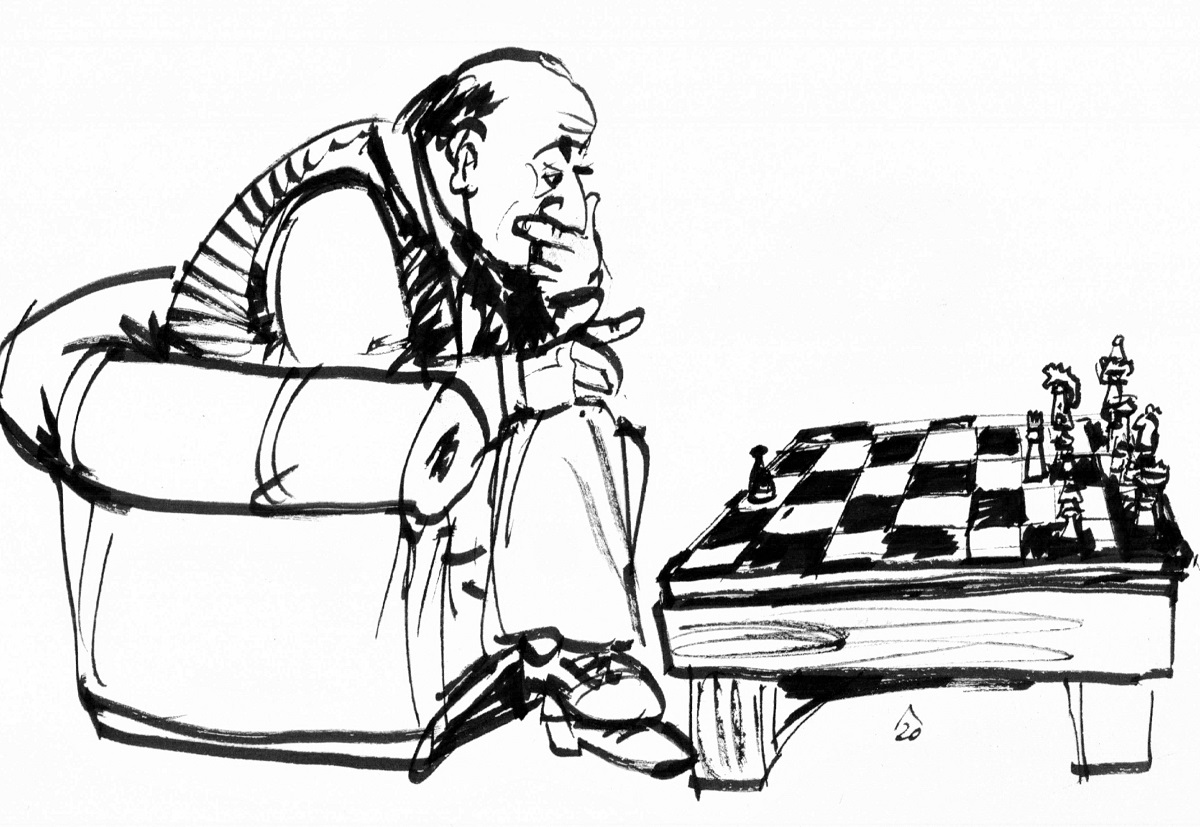
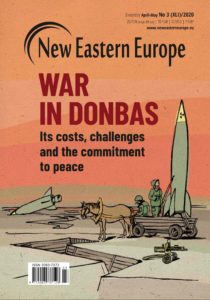
Illustration by Andrzej Zaręba
As early as the day after his departure, Putin declared that measures would have to be taken to bring the Ukrainian Crimean Peninsula back into the Russian fold. When more and more Russian soldiers began appearing in Crimea during the last days of February, international reports spoke of “little green men”.
The absence of national emblems on the soldiers’ uniforms initially served the purpose of bolstering the lie that the annexation of the peninsula that ensued soon after the invasion was not an act of coercion, but a democratically determined one. International news coverage spoke of the “little green men” and an anonymous army. Internationally, reporting often used subjunctives regarding the invasion. This unintentional co-operation in the Russian masquerade had more than a short-term effect. Even today, six years after the start of the conflict, the impact of the confusion sown by Moscow is still alarmingly palpable in the western public’s view.
Devastation
Putin never officially declared the war. His propaganda tale of a fascist coup in Kyiv, of the resulting threat to Russian-speaking Ukrainian citizens who had to defend themselves against the new fascists, still resonates today. This lie is just one pillar of the Kremlin’s disinformation campaigns. Systematic misinformation is part of Russia’s war strategy and is intended to mislead both Ukrainians and their partners in the European Union, or to at least make them doubt themselves. The reach that Russian television and the new propaganda channels have abroad continues to show how significantly opinion formation is influenced by the lies and half-truths.
The readiness to view the conflict as a kind of civil war because Russia never openly declared war goes beyond what the strategists in Russia had hoped for. In the western part Europe, a lack of knowledge about sizable parts of our continent’s history over the last century clearly plays into the hands of the Kremlin. Six years into the war, it still needs to be made clear that Putin is waging war against Ukraine. Objecting to and pointing out Russian propaganda is still necessary and part of our defence. Those who leave the Kremlin’s disinformation campaigns and the lies of Russia Today or Sputnik unchecked will not be able to maintain the consent required for providing robust support to Ukraine, or just keeping the existing sanctions against Russia in place.
Six years after the invasion, which did not take place spontaneously but in a well-prepared manner, the devastation against Ukraine is known. The OSCE, who has been coordinating the observer mission along the front lines in the Donbas region, publishes daily figures on the clashes and the number of dead and wounded among the Ukrainian military personnel and civilian population. Almost 13,000 people have lost their lives on the Ukrainian side since the beginning of the conflict. Casualty figures on the Russian side remain classified. Moreover, a Malaysian aircraft, flight MH17, with 298 people on board, was shot down with a Russian surface-to-air missile, and we know that millions of Ukrainians have fled from Donbas and Crimea. Life for those who have stayed in Donbas is unbearable, particularly during the winter months. The elderly and children are the ones who suffer the most. Images from the crossing points on the front line show elderly people from Donbas who undertake arduous journeys on foot to collect their modest pensions and then they have to give a portion of it to corrupt guards. Psychologists working with women and children in the “grey zone” along the front line describe the effects of the experience of violence.
Part of the infrastructure has been completely destroyed. A creeping environmental disaster is also unfolding. In many places, water is no longer drinkable. Nonetheless people often drink the water as there is no alternative. Even hospitals in the grey zone do not have clean running water. The unplanned shutting down of coal mines and insufficient pumping has resulted in contaminated groundwater and sinkholes. In addition, large areas in the war zone have been littered with land mines. In Crimea, the Russian government has resorted to terrorising, torturing, persecuting and detaining Crimean Tatars, as well as those who continue to insist that the Crimean Peninsula is part of Ukraine. The exchange of large groups of prisoners between Russia and Ukraine, which was a huge relief to Ukrainians, has not led to an end of the terror against the Tatars.
Victims of an endless war
Putin’s desire to make Russia great again and to derail the Ukrainians’ effort to become part of the West and the EU is the cause of this undeclared war with all its victims. Under pressure from Russian aggression since 2014, the Ukrainians have accomplished an enormous feat. At the time of the attack, the Ukrainian army was run-down, weakened by corruption and mismanagement and in no state to defend the country. The nuclear warheads once stationed on Ukrainian territory had been relinquished voluntarily after the collapse of the Soviet Union, as laid down in the Budapest Memorandum signed in 1994. The Ukrainians relied on the United States, the United Kingdom and Russia, who had offered security guarantees to uphold the country’s sovereignty.
The weakness of the Ukrainian army, which was well known in Russia, was one assumption of Putin’s game plan back in 2014. What the activists on the Maidan had been calling for the winter before the war was a whole host of reforms. Rebuilding the Ukrainian army was not one of the central demands. Six years of war lie between the volunteers, who rushed to their country’s defence in February 2014 wearing sneakers and carrying gear fit for camping, and the experienced soldiers in the well-led army of today.
My visits on the front line between early summer of 2014 and 2018 have also allowed me to witness the establishment of an army that Putin did not expect and which is a direct result of his undeclared war. I met many young people at the front – men and women, soldiers and volunteers – who had planned something else in their life than to serve in the army. This makes me wish that they would be able to pursue and attain these other goals as well. Their bravery was for the good of their country. When I talk to veterans today, the mission and objectives are called into question even by those who returned to the front line again and again. Because I am one of those who still do not believe Moscow has any intention of making a peace deal, I am convinced something must be done to address these doubts.
The doubts stem from various sources. The sense that it will remain an endless war where soldiers and ordinary Ukrainians, especially in the eastern part of the country, are the losers is a key factor. I, too, was gripped by this feeling on multiple occasions, particularly when I visited the Mechnikov military hospital in Dnipro. Many of those who are praying, crying and holding out in the waiting room day and night are despairing mothers, some of whom are already quite old. They have only one wish – that their son or daughter will survive. This waiting room between life and death is where they pick up their children if they make it. Some of those who survive are unable to walk or see, and sometimes even both. Many are physically unharmed but emerge without any idea how they can go on living after the psychological trauma of the trenches. In the course of the war, the doctors at Mechnikov hospital have learned how to perform miracles on the operating table and have been able to save more and more lives. But as we know from other wars and other armies, adequate care for the returnees is lacking in Ukraine. Fighting back the attacker is the sole focus.
Price of peace
The lack of care for the veterans or the bereaved families, however, weighs heavily on the spirit of the fighting men and women. Ukraine cannot afford this. It can be changed and must be changed, given that in spite of troop withdrawals and disengagement, and despite the reconstruction of the Siverskyi Donets bridge, the most severe escalation and attacks in a long time occurred not long after the Normandy meeting last December. Ukraine must keep on relying on its army and should not assume the desire for peace is shared by Putin.
The desire for peace, the longing for a life without the horrors of war, is strong in Ukraine. This will hardly surprise anyone who is familiar with this war. Volodymyr Zelenskyy’s success in the Ukrainian presidential elections is a reflection of this longing, apart from many other harboured wishes. However, this should not be misinterpreted. The majority of Ukrainians do not want peace if the price to be paid is submission to Putin’s conditions. In Ukraine’s western partner states, many politicians and citizens seem incapable of understanding this. One reason for this is the successful lie – and its endless repetition – about a civil war and about Ukraine as a divided nation.
Six years after the Russian invasion, Ukraine’s friends and partners need a new accord as to what their role should be. The desire for peace cannot lead to much if there only is a Normandy summit every few years and only when there is a new president in Kyiv. Zelenskyy alone cannot fulfil the promise. If the Minsk Agreements are to remain the common basis, then the focus should be on the measures that will improve the situation for people in the war zone and on steps that may be a viable means to end the fighting. A commitment to achieving a lasting armistice must be the priority.
The withdrawal of Russian weapons, soldiers and combatants, and the clearing of the minefields are essential if there is to be any normalisation, let alone elections in those territories held and terrorised by Russia and its army and militias. Disengagement along the line of contact, the withdrawal of weapons and soldiers, as well as the disarming of Ukrainian citizens in Donbas require the most stringent international oversight and long-term monitoring. The existing OSCE mission cannot deliver this. At the same time, Ukraine and the West should do more for the welfare of the people in the war zones. It would also be important for Zelenskyy to make the more easily achievable improvements of life in Donbas his concern. The bridge near Sievierodonetsk is a symbol for the fact that defence against Russia does not only mean territory and national sovereignty, but is also about the people. The great collective outpouring of joy over the homecoming of the released prisoners of war shows how important this is.
Long and difficult path
The gnawing doubts about the West that are plaguing not only Ukrainian soldiers, but also civilians in Mariupol, Kramatorsk, Lviv or Uzhhorod, are related to what people perceive as European horse-trading. The periodic flare-ups in the debate over sanctions against Russia reinforce these doubts. The public dispute over whether or not the sanctions are working weakens these sanctions as an effective non-military instrument against Putin, and in equal measure, as a signal of solidarity and support for the Ukrainians. Instead, the escalation in the Azov Sea, the issuing of Russian passports in Donbas or the heavy shelling after the latest Normandy meeting should be met with new sanctions. If a military solution is not an option, the other path must be pursued in a consistent manner. And if the objective is to move Putin to agree to an armistice, then he must not be given signals that the defence of the European peace order is less important than business interests such as Nord Stream 2 or other economic deals. Providing Putin with funding for his rearmament precisely by way of these deals is incompatible with European security interests.
Along with many others, I have often said over the last few years that the fight against the Putin system in Kyiv will be decided by means of successful democratic reforms and the establishment of the rule of law. The correct path has been chosen, but it is a long one and it will not be smooth and easy. It is hampered by the fact that the reform-oriented Association Agreement with the EU has so far been interpreted as an alternative to membership.
After six years of war, I have gained a clearer view of the burden that has been placed on Ukrainian society, and the lead weight of Putin’s never-declared war. If Ukraine’s European friends want the ideas of the Maidan to come to fruition, they must not lose any more precious time and start working tenaciously for an end to the fighting. It is easy and popular to rely on Zelenskyy and his promises of peace, and to encourage him to have faith in the Normandy summits. However, it will not help if instead of receiving robust support in the form of new sanctions, the “Steinmeier formula” (a sequence of steps that involved withdrawing military forces from the line of contact on both sides, holding local elections in the Donbas region under Ukrainian law and OSCE supervision, restoring the Ukrainian government’s control over the state border and granting special self-governing status to the Donetsk and Luhansk regions – editor’s note) and Nord Stream 2 are foisted upon him.
There has always been an engrossing desire for peace in the EU that has ruled out a military solution in response to Putin’s invasion. Six years on, we are faced with the ever-recurring question of what we are prepared to do and willing to invest on diplomatic and economic levels to defend the European peace order and Ukraine’s sovereignty.
Rebecca Harms was a member of the European Parliament for Alliance ’90/The Greens from 2004 to 2019. She is former co-president of the Greens/EFA in the European Parliament.