
Germany in the post-Merkel era
An interview with Stephen Szabo, a senior fellow at the American Institute for Contemporary German Studies in Washington, DC. Interviewer: Kate Langdon
KATE LANGDON: Transatlantic relations have been a cornerstone of German foreign policy for decades. As US President Donald Trump questions the political legitimacy of the European Union (EU) through acts such as downgrading the EU’s economic and diplomatic priorities, will Germany seek to strengthen transatlantic ties? Has President Trump inflicted any irreparable damage already?
STEPHEN SZABO: Yes, Germany certainly will seek to strengthen transatlantic ties. Germany has too many interests at stake to allow these ties to be dissolved simply due to the actions of one administration, or more precisely the actions of the White House. The US market is the largest single-export market for Germany and the American security relationship remains indispensable to German security. Chancellor Angela Merkel learnt from the split over the Iraq war that Germany could not afford another break of the type that occurred with former Chancellor of Germany Gerhard Schroeder’s split with the Bush Administration.
March 5, 2019 -
Kate Langdon
Stephen Szabo
-
Hot TopicsIssue 2 2019Magazine
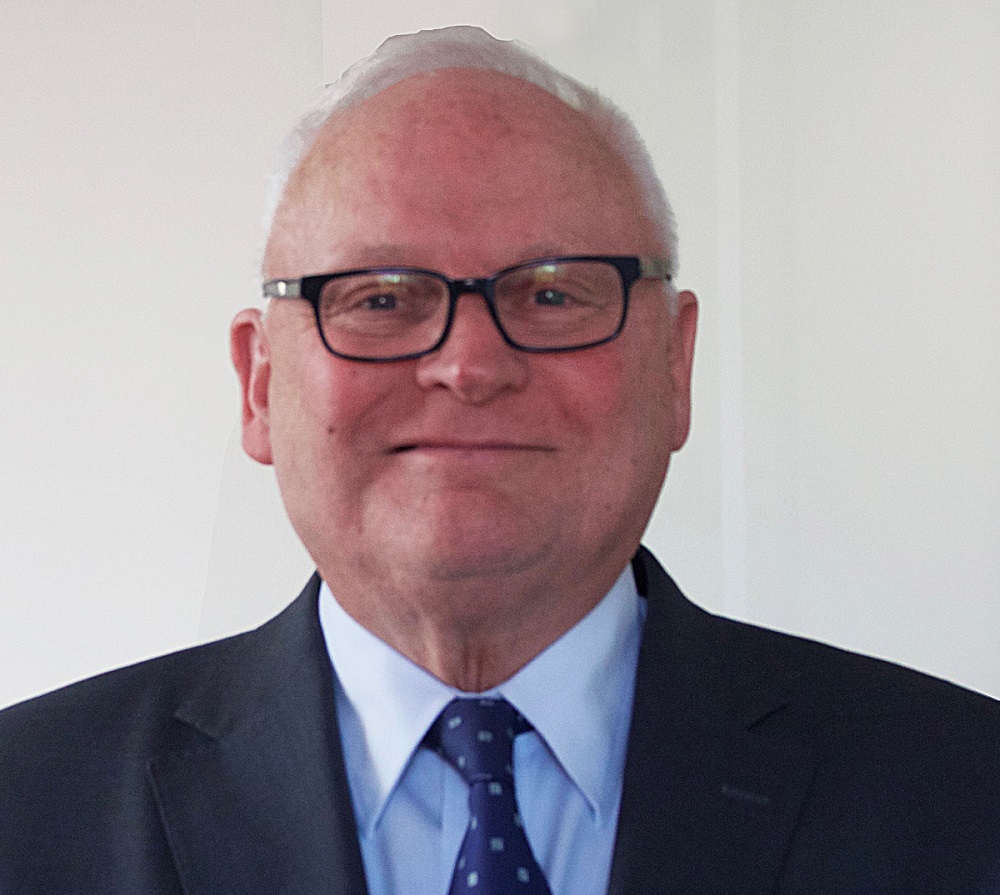
Photo courtesy of Stephen Szabo
The situation today is even bleaker than it was in 2003 given Brexit, the rise of nationalist populism and the re-emergence of Russia as a major threat to the European order. Merkel will continue to buy time with a policy of cautious engagement with the belief that the damage being done by the Trump team will not continue after the next presidential election. In the meantime, Germany will continue to emphasise that it is increasing its spending on defence and will work with the many elements in American politics and society who want to repair the damage. There really does not seem to be a viable Plan B for Germany at this time.
2018 was a rather transformative year for German politics. With Chancellor Angela Merkel’s decision to step down as leader of the centre-right Christian Democratic Union (CDU), the noticeable dip in centre-left Social Democratic Party (SDP) votes, and the rise in support for the far-right nationalist party Alternative for Germany (AfD), it would seem that German politics are experiencing a domestic upheaval. How might this affect Germany’s involvement and support for EU reforms and the maintenance of international law?
The past year was the beginning of a major transformation in German politics. The Merkel era is clearly ending, as is the party system which has characterised German politics since unification in 1990. Germany will enter a period of rather divided government, most likely with a “Jamaica coalition” of Christian Democrats, Free Democrats and Greens led by a chancellor affiliated with the CDU. It is possible that the new chancellor will bring new energy but divisions in the country, especially pertaining to eastern Germany, will remain. As such, Germany is unlikely to play a strong role in Europe given its domestic concerns.
What do you think contributes most to this shift in German politics?
The immediate catalyst was the refugee crisis of 2015 and Merkel’s “we can manage this” complacency and the inability of the German administrative system to manage the inflow well. This came in the context of too many years of consensus-oriented Grand Coalition governments, devoid of any real opposition and headed by one leader, which opened the door to an outside party – like AfD – willing to challenge the consensus and to take the space on the right vacated by a centre-left chancellor.
Merkel has been synonymous with German political culture for far longer than a typical western democratic leader. But unexpected upheavals can erupt in times of transitions, as demonstrated by the shocks of Brexit in 2015 and Donald Trump’s election in 2016. Upon Merkel’s departure, might Germany choose to turn away from multilateralism and a preference for law and human rights towards a self-interested willingness to work with China, Russia, Hungary, Iran, and other authoritarian regimes?
Although there are tendencies in this direction, I find this to be highly unlikely. Germany continues to have a strong economy, and its political institutions and the rule of law remain stable. While the party system has become much more volatile, but unlike the Weimar period, there is no threat that anti-democratic parties will take control. Most importantly, German interests are served by multilateralism. It is a country heavily dependent on exports and foreign investment which requires a viable and open international economic and legal order. It understands that the EU provides the best framework to pursue German interests and to mitigate a return of the German problem, which is one of an openly nationalist Germany.
But what about the idea of solidarity with other European states? The EU is crucial for more than just German interests, so what can we say of the lengths to which Germany is willing to go in serving EU interests if, say, domestic economics are on the line? I am thinking of the Greek debt crisis when Germany chose to lead a small group of wealthy, northern countries pushing for austerity measures that only worsened the crisis faced by the Greek people, rather than to bail them out and stimulate growth. If there is such a limit to solidarity with other EU countries and western values, will it shrink further with Merkel’s departure? Or perhaps there is a deeper factor at work here?
This is a valid concern. What we saw with the Greek crisis was Germany pursuing its own national interests at the cost of European solidarity. There is a growing tendency towards hubris with a feeling that if we Germans can have successful and painful reforms, then why can’t the Greeks do what we did. This reflects an economic culture, one that has long been present in German history, and the idea that the rest of the world should just try to be like the Germans. Harold James highlights the existence of this sentiment in his book, A German Identity 1790-1990, especially with the inclusion of the following quote, made by the German political leader and writer Friedrich Naumann in 1915: “Germany’s role would be to teach everyone in the vast area of the future Mitteleuropa a psychological lesson in abstention, collective organisation and the old Protestant work ethic. We must speed up those who are lingering in the old habits of work so that they approximate to the labour rhythm of the progressive.” The German idea of Europe is one which looks a lot like Germany. Wolfgang Schaueble, the then-finance minister during the Greek crisis, remains the most popular political figure in Germany, so I would not expect much future change in German solidarity.
Germany has historically acted as a mediator between the EU and Russia. Which groups in Germany are leaning away from sanctions on, and responses to, Russia? Could this opinion become a stronger political force in Germany over the coming years, and what might the implications be?
The main forces pushing for a move away from sanctions include those German companies which have interests in the Russian economy, especially ones dealing with energy-related concerns and building the Nord Stream 2 gas pipeline and represented by the Ost-Auschuss (the German Eastern Business Association, a group of approximately 350 companies and associations in Germany that seek to dismantle barriers to trade and encourage foreign investment between partner countries – editor’s note). In addition, there are Russia-leaning elements within the SPD, the AfD, and Die Linke as well as many in the CSU and the FDP. Only the CDU and the Greens remain firm in holding to the sanctions. These forces are likely to gain strength with the departure of Chancellor Merkel who has been a key figure in this policy. The damage being done by the Trump administration to American credibility in Germany will also contribute to what are called the Putinverstehers (literally meaning “those who understand Putin”, who often express empathy, if not support, for him and Russian interests – editor’s note) as will the impact of pro-Putin forces within the EU.
Aside from business and energy interests, why might some political parties and German individuals continue to empathise with Putin, even after the invasion of Ukraine and the illegal annexation of Crimea – events to which a post-war Germany should be especially sensitive?
There are some who will argue that Ukraine is a corrupt country and therefore does not deserve western support; there are others who just buy the Putin line that Russia represents conservative values – like national identity, opposition to immigration, and Islam – and a version of the Christian right concerned about traditional family values and prone to admiration for a strong leader who is not politically correct and stands up where democracies are too weak and tolerant. The German political leadership is rightly concerned about the implications for the European security order should Russia violate national borders by force on the principle of defending the rights of a Russian minority. This is why Germany has maintained the sanctions to date. But there may be some on the German right who still chafe over German borders being forcibly changed at the end of the Second World War and have hidden sympathy for Russia’s actions.
Having gained control over the Greek port of Piraeus and now promoting the One Belt, One Road Initiative, China seems to be playing a long but effective game in terms of international expansion, particularly in Europe. Are German politics concerned about China’s growing influence, or are they satisfied with the commercial co-operation?
There has been a major shift in opinion, both in Germany and the United States, regarding China. The assumption that a globalised China would be an open China is now gone. German business has become concerned about intellectual property rights issues and the German political leadership is moving to prevent further takeovers of key German companies by Chinese ones. Germany is clearly caught by the cross-pressures of dependence on the Chinese market for export growth and of fear that China poses the greatest threat to German competitiveness in the long run. Life would be easier for European and German policymakers if the United States would understand that its best ally to contain this new China is Europe.
What might such containment entail, both in terms of EU policy and a more coordinated US-EU alliance?
We are beginning to see the shape of what a containment policy will look like in the co-ordination on dealing with the Huawei challenge and recent concerns of the German business community about the China challenge. The United States, Canada and the EU will need a comprehensive policy on dealing with intellectual property rights, Chinese dumping practices, forced joint partnerships and acquisition of key industrial sectors. This will require a transatlantic agreement on trade to end the simmering dispute and allow a consolidated western front.
How do Germans feel when it comes to China and its expansion into Europe? Are they conflicted between the ideas of doing easier, less costly business and upholding German and European values (e.g. respect for human dignity and human rights, the rule of law, freedom, democracy, etc.)?
As a major geo-economic power, Germany is always caught in this conflict between economic interest and its values. Given that most of the growth in German exports has come from China, especially in automobiles, which is a key sector in the domestic economy, Germany is reluctant to raise concerns about the lack of democracy in China. However, it now faces an aggressive push by China into its home territory (i.e. Europe) and fears that Chinese influence will weaken or even undermine its leading role. In short, geo-economic Germany is now forced to think in larger strategic terms about its relationship to China. This will require a new balance between economic and political interests.
How does Germany balance the pursuit of its own national interests and values with the pursuit of European values and interests? Are they truly the same? If not, what are the differences?
This is difficult to say at a moment when Europe seems to be in a Kulturkamp (culture war) with itself over which values should be a priority and how interests should be defined. The balance in Germany still favours openness over exclusion, while the balance in much of Europe and in the United States has shifted in the direction of a version of exclusionary identity politics. Germany currently remains the best hope for an open Europe.
Stephen Szabo is a senior fellow at the American Institute for Contemporary German Studies (AICGS), where he focuses on German foreign and security policies, as well as transatlantic relations. He also lectures at the Johns Hopkins University School of Advanced International Studies. Previously, he served as the executive director of the Transatlantic Academy, a project associated with the German Marshall Fund.

Kate Langdon is finishing her studies as an Erasmus Mundus scholar in the European Politics and Society: Václav Havel Joint Master Programme at Jagiellonian University in Kraków, Poland. She is also an editorial intern at New Eastern Europe.