
Text resize: A A
Change contrast

The state of decentralisation in Ukraine

Decentralization seems to be the least controversial of all the post-Maidan reforms in Ukraine. Yet it is one that has directly affected a large number of citizens.

The Lyubar unified territorial community in Zhytomyr oblast was established in October 2017 during the decentralisation reforms in Ukraine. The community is made up of the majority of the Lyubar administrative district within the Zhytomyr oblast. It includes 37 villages and the town of Lyubar itself.

January 2, 2019 - Kateryna Pryshchepa - Hot TopicsIssue 1 2019Magazine

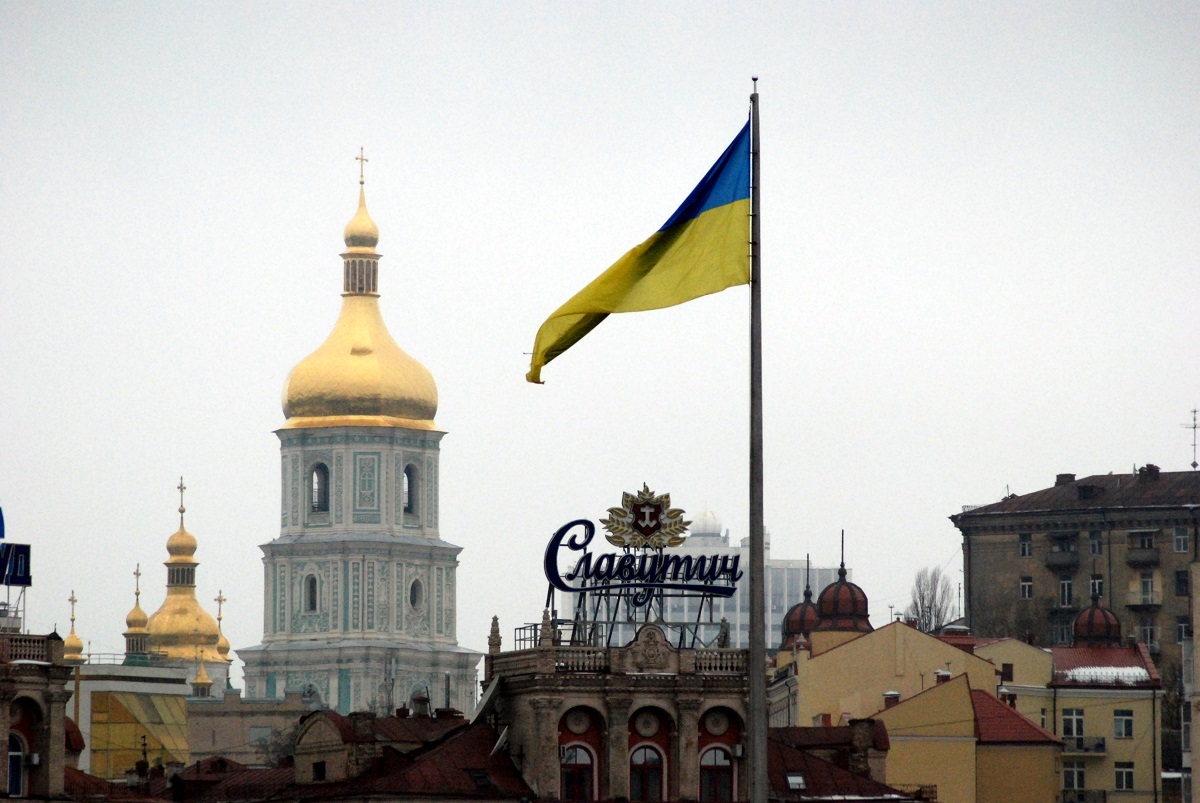
Photo: Halibutt (CC) commons.wikimedia.org

Altogether, the total size of the Zhytomyr oblast’s population is over 21,000. On July 24th 2018 the Lyubar council held an extraordinary session. However there were no urgent issues on the agenda – just some ongoing matters that needed the local council to be sorted out. As they were piling up, the council leadership decided to hold the session. As expected, the council did not have much experience in local governance and its members are still learning the ins and outs of administration. This also explains why the extraordinary session was not that extraordinary at all.

Learning curve

One of the challenges the Lyubar community council faced since its establishment was the lack of suitable places to physically hold meetings. Thus, the first one was convened in the building of the state administration of the Lyubar district. Its proceedings started with the singing of the national anthem and were followed by a minute of silence in honour of the fallen soldiers who fought in Donbas. After that, the council moved on to more down-to-earth items listed on the agenda. The majority of the over 60 issues discussed on July 24th were related to decisions on transferring land plots to residents. However there were other matters that needed consideration as well. Amendments were made to the 2018 community budget – its revenue turned out to be about two million hryvnas (around 63,000 euros) larger than expected.

Other topics on the agenda included a vote on the interim report of the newly established communal enterprise and a reorganisation plan for preschools and nurseries in the villages that now belong to the community’s jurisdiction. Accordingly, all preschools and nurseries were to become branches of one institution which in the future would allow savings on resources. However, the decision was opposed by representatives of the villages who saw the move as a threat to local jobs. It was thus postponed for further discussion. Another issue was the rate of the local real estate tax for 2019. The session started at ten o’clock in the morning and lasted until three o’clock in the afternoon, when the anthem was played once again.

The session was presided over by Volodymyr Herasymchuk, the head of the council. Herasymchuk, a Donbas war veteran who was wounded during the Debaltseve battle, was awarded a medal for bravery.  Not even 30 years of age, he unexpectedly won the local elections and became the head of the Lyubar community in October 2017. Herasymshuk’s campaign was limited to meetings with residents and the distribution of self-made leaflets with his ideas for community development. Like many of his generation, Herasymshuk was never involved in public life before the Maidan or his war service.

Olena Humeniuk, the first deputy in Herasymchuk’s team, is even younger. Aged 25, she studied tax law at the State Tax Academy and worked as an assistant in one of the international technical assistance projects. With this experience, she decided to run for a seat in her local council. Like other officials of the Lyubar council, Herasymchuk and Humeniuk explain their decision by a desire to improve their local community and fulfil the hopes of the Maidan. Vasyl Yanko, the community’s secretary, quit his job as the deputy principal of a local school and started working for the community as well. He admits that the new role is more demanding than he expected and often stays in the office until late at night.

To improve their knowledge and skills, Lyubar officials participate in study tours of other local communities in Ukraine or – whenever possible – abroad. Herasymchuk, for instance, took part in one tour that was organised in Poland where he visited the Lublin Voivodeship. Trips like this are organised with the belief that Ukraine’s decentralisation reform is inspired, to a large extent, by Poland’s transformation experience. With this view in mind, the Polish government and some Polish NGOs have organised study tour programmes for Ukrainian officials.

Herasymchuk and Yanko are well aware that, for the moment, their community does not have too many accomplishments under its belt. The first results are expected by this coming autumn (two years after the official establishment of the community). Yet with its crumbling infrastructure and low standard of living, the residents are less patient. They want to see results much quicker. The most pressing needs include improvements in communal services and investment in roads. To meet these wants local officials are putting hope into the numerous reform programmes which state institutions and foreign donors are widely implementing across Ukraine. From those sources they have already received grants to buy new equipment for an elementary school. In about a year, they hope that a new administrative services centre will also be built.

New authorities

In many ways, the changes under way in the Lyubar community are illustrative for the whole of Ukraine. It took residents two years since the reforms started to unite the local villages into a unified territorial community. Contrary to expectations, not all villages in the oblast wanted to become part of the wider community. Some have remained outside while others joined at a later time. Quite importantly, the Zhytomyr oblast, where the Lyubar community belongs, is among the leaders of unified communities in Ukraine. According to its officials, this success is partly due to the activities of the regional authorities who are interested in promoting the decentralisation process. However, just like other unified communities in Ukraine, Lyubar still faces uncertainty.

In broad terms, the decentralisation reform assumes a significant transfer of government power and public funds from the central level to the local.  By bringing the resources closer to the people, this could improve the lives of local communities in very concrete ways. The reform, as it is defined by Ukrainian law (both primary and secondary), consists of two major steps: first, territorial unification of local communities into larger entities (voluntarily or semi-voluntarily); second, the transfer of power, property and financial resources from the state budget to the new unified communities. The transferred powers include administrative services (such as issuing official certificates and documents) and the management of local education and social services as well as local hospitals and communal infrastructure. Moreover, the transfer of power is accompanied by an increase in resources.

The Budget Code of Ukraine stipulates that up to 90 per cent of income tax collected in the old communities would be transferred to the state budget. However under the unified territorial communities, 75 per cent of income tax revenue is allowed to stay local. The unified territorial communities can also receive grant funding from the state fund for regional development. In addition, local communities will receive more rights to decide how to manage land within their administrative boundaries. By the end of 2018, about 700 unified territorial communities will have the right to manage land within their own area.

The basic legal framework for decentralisation was stipulated by the law on the voluntary association of territorial communities. In addition, a number of amendments were introduced into the law on local self-government in Ukraine, the law on local elections, and the budget code. However the legal process for decentralisation reforms is ongoing. The third step of the reform, which would consist of the reorganisation of the local and regional state administrations, has been postponed. Finally, constitutional amendments are still awaiting a final vote in the parliament.

Slow progress

Unfortunately, the progress of decentralisation reform is slower than initially expected. The first unified territorial communities were created in mid-2015. Since the beginning, there has been suspicion towards reform. Residents of small communities were afraid to lose the small decisive powers they had in their villages to the newly created authorities. A survey conducted by the Kyiv International Institute of Sociology in 2015 showed that more than half of those surveyed would agree to territorial unification as long as the administrative centre would be in their village or town. If not, almost 60 per cent would oppose the territorial unification. According to another survey, which was conducted by the Democratic Initiatives Foundation in 2017, almost 30 per cent were afraid that decentralisation would give almost feudal powers to the officials in their community and diminish their accountability. On the other hand, only two per cent had no doubts about the ability of local officials to exercise the newly transferred powers. Almost 20 per cent were sure local officials would completely lack skills for such a task.

The Lyubar community experienced similar problems as the rest of the country. It took more than two years to complete the process of unifying the community.  It began in 2015 and saw resistance. One official summarised the fear by saying the unified territorial community would “destroy the local elite in small villages”. Viktor Razvadovskyi, a member of the Verkhovna Rada elected in the majoritarian district which includes the Lyubar community, expressed his support to the residents who opposed the creation of the unified community. Eventually the Lyubar community overcame its reservations and became one of more than 200 communities created in the fifth wave of territorial unification, and held elections in October 2017. In other areas, however, the process is still lagging. Currently, there are 705 unified communities operating in Ukraine and 126 more declared to become one. The final date of the complete territorial unification was postponed twice and now the government expects it to be finalised by the end of 2020.

Legal questions

Another obstacle to success is legal concerns. The law says that those communities which decide to join the new local unification should do so voluntarily. At the same time they ought to be created in accordance with the plan of territorial development. Those documents are developed by the oblast authorities, adopted by oblast councils and, in the end, approved by the cabinet of ministers. In practice, these two parallel processes have resulted in different outcomes each time the communities are not unified in accordance with the perspective plans. Only a certain number of villages within the projected unified communities agreed to join the new entity and the rest remained outside.

At the first stage of decentralisation the authorities – in order to promote the process – allowed for the creation of communities which were smaller than what was suggested. As a result, the average number of residents in a unified locality is around 8,000 (according to the ministry of regional development), where the projected number was 20,000. Moreover, there are dozens of localities where the total number of residents is less than 5,000 and where it remains financially unsustainable.

As a result, the local authorities were encouraged to steer the process. A number of local communities, which decided to unify in 2017, were denied the right to do so – according to the law, the decision of the local authorities has to be confirmed by the decision of the oblast council. They were encouraged to join one of the existing unified localities. In the case of the Lyubar community, these policies have led to an increase in the number of villages belonging to the locality (from 20 to 37). The remaining unattached villages were denied the possibility of creating a unified community of their own which they proposed to be centred on the village of Nova Chartoryia.

The nationwide process was unexpectedly halted in August 2018 by the central election commission due to developments in the referendum law. In the spring of 2018 the constitutional court declared that the law on referendum, adopted in 2012, was unconstitutional. As a result, the election commission concluded the decision could have an impact on the decentralisation process. The present law on the voluntary association of local communities allows for the decision on unification to be adopted by local councils without a referendum and after public consultation.  The confusion was solved unexpectedly with the election of a new central election commission in September 2018 (the seven year term of the majority of commissioners ended in 2014, but an election of new members was postponed until now). The new commission took a view that the decisions regarding the law of referendums were not critical, as unified communities were legally created under one of several possible procedures.

In November 2018 Artem Vitko, a member of the parliament, filed a lawsuit at the Kyiv District court demanding to cancel the decisions on the creation of 34 unified communities in 13 oblasts and cancel the elections in those communities planned for December 23rd 2018. He claimed that he received complaints from local residents of those communities regarding the process of unification. According to Hennadiy Zubko, deputy prime minister and minister of regional development, the lawsuit’s aim was to stop the decentralisation process. The court supported Vitko’s demands, however the central election commission did not cancel the elections explaining that it does not have the power to stop the electoral process which has already been initiated.

By December 2018, 77 per cent of Ukraine’s territory belonged to unified communities which already elected new local authorities or were preparing for elections. The central authorities declared the new actions to enhance decentralisation. On December 7th 2018 President Petro Poroshenko signed a decree on additional measures to ensure decentralisation reforms which demands to ensure that by 2020 all of Ukraine’s territory belongs to unified communities and in the meantime support the rural unified communities with additional resources to support the implementation of the educational reforms. A few days prior Prime Minister Volodymyr Hroysman announced plans for reorganising the state administration in line with the decentralisation process. According to him, by 2020 there will be 100 unified districts in Ukraine instead of 490 at present. However it is difficult to evaluate the likelihood of this reorganisation considering the upcoming presidential and parliamentary elections in Ukraine.

Still optimistic

Decentralisation seems to be the least controversial of the post-Maidan reforms in Ukraine. However it repeatedly faces administrative or political constraints on different levels of power. Yet it is one that has directly affected the largest number of citizens in the country. And according to expert opinion, among the post-Maidan policies already implemented (or in the process of being implemented), decentralisation is the reform that is the least likely to be reversed. The money (and, more importantly, property) once transferred to the local level will be very hard to take back. The reform is also an important basis for other projected changes in the country. The leadership of both the ministries of education and health depend on the success of the decentralisation reform in order to implement their own reform agendas. The ability of local communities to renew and maintain critical social and transportation infrastructure will be key.

The reform also gives local politics an opportunity to develop. This means a new group of activists, with some luck, may start to rise – if not to the national level, then possibly to the regional one. This could be one of the least expected but nevertheless positive results of the decentralisation process.

Kateryna Pryshchepa is a PhD candidate at the Institute of Political Studies (Polish Academy of Sciences) and project officer at the College of Europe Natolin Campus.

,

Partners

Terms of Use | Cookie policy | Copyryight 2026 Kolegium Europy Wschodniej im. Jana Nowaka-Jeziorańskiego 31-153 Kraków
Agencja digital: hauerpower studio krakow.
We use cookies to personalise content and ads, to provide social media features and to analyse our traffic. We also share information about your use of our site with our social media, advertising and analytics partners. View more
Cookies settings
Accept
Decline
Privacy & Cookie policy
Privacy & Cookies policy
Cookie name Active
Poniższa Polityka Prywatności – klauzule informacyjne dotyczące przetwarzania danych osobowych w związku z korzystaniem z serwisu internetowego https://neweasterneurope.eu/ lub usług dostępnych za jego pośrednictwem Polityka Prywatności zawiera informacje wymagane przez przepisy Rozporządzenia Parlamentu Europejskiego i Rady 2016/679 w sprawie ochrony osób fizycznych w związku z przetwarzaniem danych osobowych i w sprawie swobodnego przepływu takich danych oraz uchylenia dyrektywy 95/46/WE (RODO). Całość do przeczytania pod tym linkiem
Save settings
Cookies settings