
Islam and Russian power politics
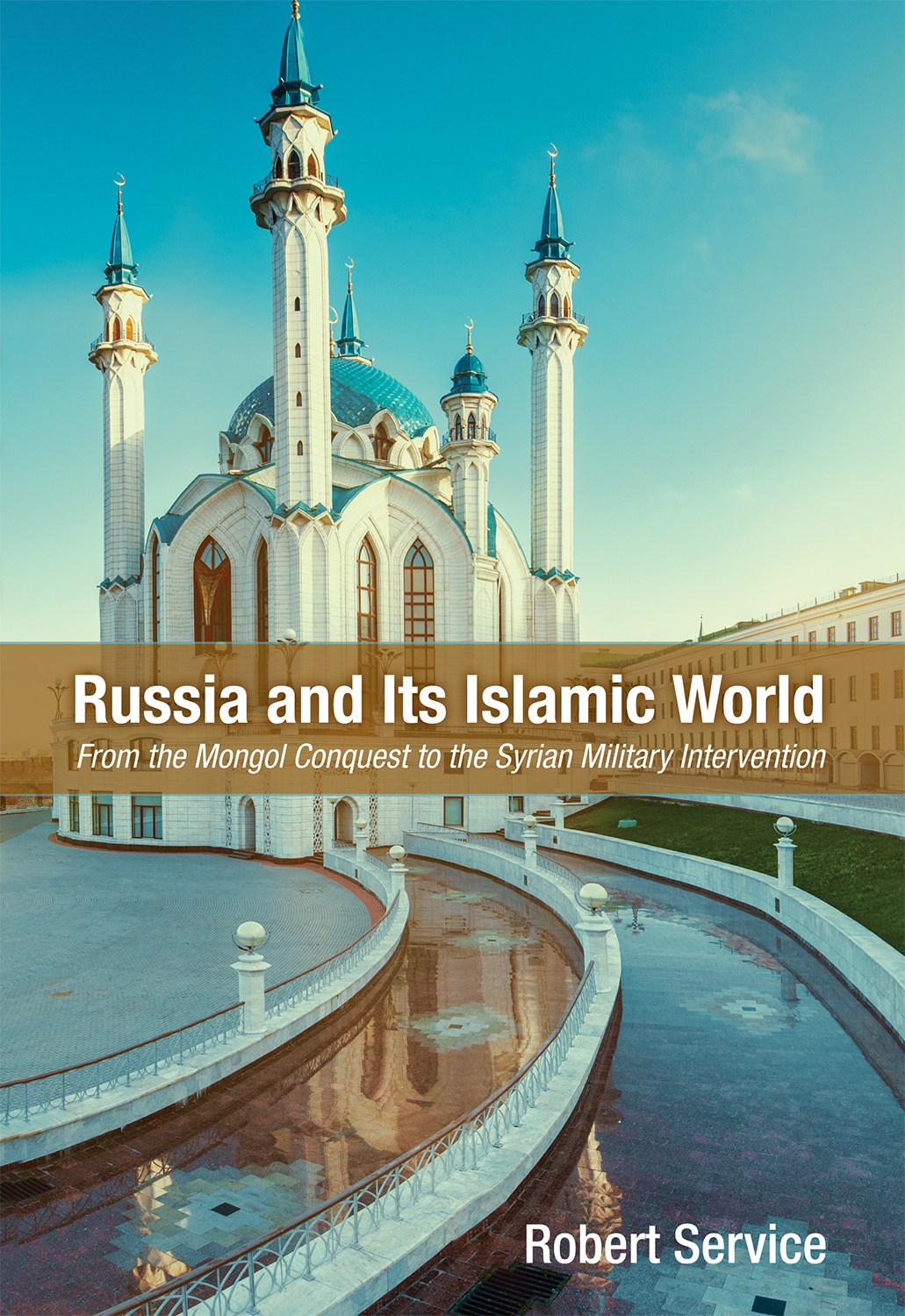
A review of Russia and Its Islamic World – From the Mongol Conquest to the Syrian Military Intervention. By: Robert Service. Publisher: Hoover Institution Press, 2017.
At the opening of the Moscow Cathedral Mosque in September 2015, President Vladimir Putin called Islam an integral part of Russia’s spiritual life. In the 21st century Islam in Russia is one of the most challenging research topics, since the Russian Federation hosts the largest Muslim minority in Europe and shares an ambivalent history with various Muslim groups. In addition, in 2015 Russia intervened militarily in the Syrian civil war. These facts lead us to question if it is possible to link Russia’s role in domestic politics with its foreign policy in the Muslim world?
January 2, 2018 -
Tibor Wilhelm Benedek
-
Issue 1 2018MagazineStories and ideas
Robert Service, a well-known American historian and political commentator, explains some of these ties in his recent book, Russia and Its Islamic World – From the Mongol Conquest to the Syrian Military Intervention. The biggest strength of Service’s work is its analytical framework through which he links Russian Muslim history with the Kremlin’s policy towards the former Soviet republics and the Middle East. The book does well in unveiling the many societal and geopolitical correlations, despite the fact it is nearly impossible to tackle all the aspects of such a complex subject.
Detailed coverage
The starting point of Russia and Its Islamic World is a detailed description of the history of Islam in Russia. The Mongol and Tatar hegemony of Russian territory, beginning in the 13th century and the liberation by Ivan the Terrible in the 16th century as well as Russia’s territorial expansion in subsequent years receive recognition. The book also provides the context for understanding the later conflicts with Muslim tribes in Crimea, the Caucasus and another great power, the Ottoman Empire. Service shifts the balance to reference points in earlier Muslim history in the Russian territory by depicting geopolitical connections and military missions in the Caucasus and Central Asia. He comes up with a very useful way to explain Russian society’s perception of its Muslim minorities. Through detailed coverage of Muslim related texts in classical Russian literature, the author shows that the image of Russian Islam was frequently reduced to a romantically transfigured, wild and exotic description of the Caucasus.

In the subsequent chapters, geopolitical assessments and societal explanations form an overall coherent picture. In the context of socialism, the book shows the manifold efforts of the politburo to control Muslim life in the Soviet Union. Ethnic cleansing under Stalin and efforts to strengthen the communist party under Leonid Brezhnev are key points in the discussion. Service also traces back different communist policies like the ones in Central Asia where they did not always lead to the weakening of the impact of Islam on society. Moreover, the book shows how the Soviet Union was starting to build relations with Muslim countries beyond the Soviet Union. The instances mentioned in the text range from the initial financial aid given to Egypt in the 1950s to aid programmes in Iraq, Syria and Libya. Service also highlights how Soviet leadership was pragmatic with Muslim countries, following secular and modernising policies, and was challenging with American interests and expansion in the respective region.
Geopolitics and its economic context
Service’s statements are not entirely political or societal but they include economic connections, such as the impact of oil prices on the Russian budget for financial aid to new Muslim allies. This economic role within the Soviet Union’s experiences with glasnost and perestroika is particularly interesting. The book pinpoints how democratisation, economic and political changes under Gorbachev weakened the Soviet Union’s position in international affairs, especially its strong role in the development of the historical Soviet Muslim republics. In addition, the complex power constellations of the Soviet-Afghan War, the First Gulf War and relations with important players in the Muslim world (like Iran) are examined in detail.
The ambivalent relations with the United States play a special role in Service’s account; they became, in the context of Russian Islam, particularly topical in the beginning of Vladimir Putin’s presidency, when Russia showed solidarity with the United States following the terror attacks on the World Trade Center in New York City and the Pentagon Building in Washington DC on September 11th 2001. The book provides a large number of geopolitical facts, including the allowance of landing and refuelling facilities for the US Air Force in Uzbekistan during the war in Afghanistan. Interestingly, every geopolitical event is illuminated from a different perspective and strategic changes are accurately highlighted.
One of these strategic changes in Russian foreign policy is linked to its domestic policy, as the US government and other NATO countries criticised Russia’s approach during the Second Chechen War. As a consequence of western criticism, Service deduces a change in Russian foreign policy, where it began to oppose western interests. In this sense, Russia declared itself a defender of the Islamic World (at least against the West) and started to build stronger ties with Syria and Iran. The book brings these issues to the current debate and it even contextualises the role of the former US President Barack Obama and his successor Donald Trump. However, some of Service’s analyses resemble political assessments (and his personal opinions) on Russian domestic and foreign policy.
The unconfirmed reports of supposed Russian intelligence service activities in the Caucasus enabling a corridor for terrorists to join the war in Syria puts to question Russia’s intentions in the international war on terror. As the Chechen Wars and terrorism stand in the spirit of the book, the role of Caucasian Muslim communities and the spread of Arab financed Wahhabism is elaborated in detail. In a similar manner, the reader is informed about societal, and sometimes bloody, transitions in the former Soviet republics from socialism to nationalism and the rehabilitation of Islam in the majority of them.
The book provides good information regarding the first steps of building Muslim institutions during the time of the Russian monarchy and the continuation of this institutionalised form during the Soviet times. However, apart from the illustrative events and narrations, the role of official Muslim institutions for Russian Islam is not further explained. A possible continuation of this inquiry could tackle the full particulars of Russia’s Muslim establishment and its strong ties to the Tatar ruling elite and Russian politics, without which it is difficult to assess the development steps of Russian Islam entirely.
Nonetheless, Service’s book is a vivid piece of work. Certain assessments like the Russian post-imperial syndrome, Putin’s hypocrisy, or stern and intolerant Wahhabi doctrines give interesting insights into the author’s worldview. Even though the book is vivid and accessible to read, the multitude of topics and events make it difficult for the general reader to classify all the information. Nevertheless, Russia and Its Islamic World is a good read for anyone interested in Russian Islam or Russian geopolitics.
Tibor Wilhelm Benedek is a sociologist of religion and an expert on European Islam. He is the author of the book Pioneers of liberal Islam: Impressions from Moscow and St Petersburg.