
A historical optimist
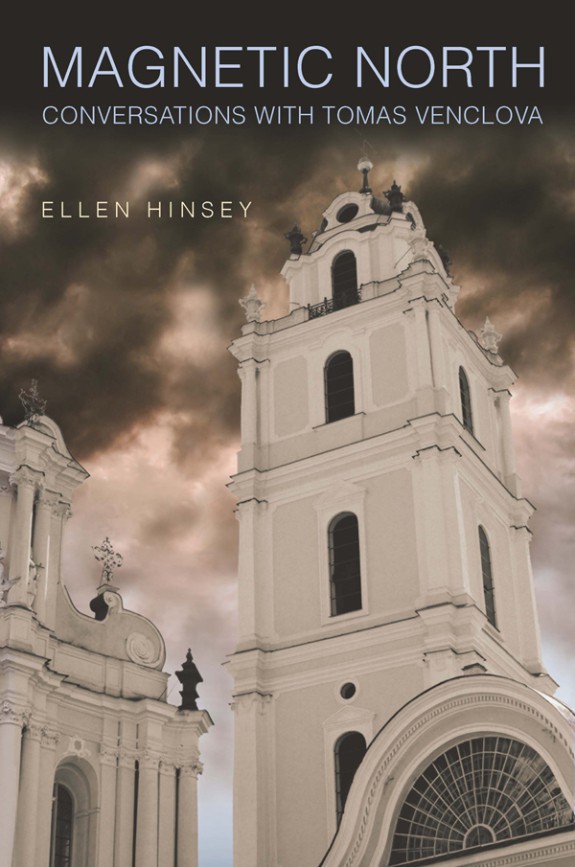
A review of Magnetic North: Conversations with Tomas Venclova. By: Tomas Venclova and Ellen Hinsey. Publisher: University of Rochester Press, Rochester New York, 2017.
Today our world is plagued with massive flows of information, chaos, propaganda, post-truth and fake news. If we play on John Austin’s conception of doing things with words, one might have a feeling that our world is simply cramped. There is a tendency to equate being prolific with being great, as literary criticism and economics prefer easily quantifiable works. Aware that culture has origins in the Latin cultivare, we should expect it to bear fruit once a year. The Lithuanian poet and Yale professor Tomas Venclova, however, approaches it with much more patience.
January 2, 2018 -
Laurynas Vaičiūnas
-
Issue 1 2018MagazineStories and ideas
The greatest living Lithuanian poet has written no more than 220 poems over his career spanning 60 years, with his first published volume in 1972 titled Sign of Speech – whose title pays homage to linguistic precision. Nevertheless, his essays and polemics, written in moderation, have been a major contribution to Lithuanian culture.

In 2010, for example, Venclova published an essay titled “I am suffocating” which caused an immediate uproar. Venclova’s essay was a staunch critique of the foul intellectual climate in Lithuania. The title comes from Socrates’ final line in Aristophaneses’ play The Clouds, in which an old-fashioned farmer is frustrated by the teachings of Socrates which encourage futile contemplation and corrupt young minds. In the end the farmer sets the philosopher’s Thinkery on fire. Venclova’s text was aimed at the conservative cultural elite in Lithuania which was at the forefront of the struggle for civil rights under communism, but has now turned to promoting bucolic nationalism, isolation and traditional Lithuanian values.
Testament
In 2017 Tomas Venclova celebrated his 80th birthday. Little could be done to ennoble the poet who already enjoys the reputation of a sage. Nonetheless, the published conversations with the American poet and translator Ellen Hinsey in the new book Magnetic North serves as a testament to the first 50 years of Venclova’s life, covering the period of the Second World War, the Soviet Union and his emigration. The chronological parts of the book trace the poet’s life since his birth in Klaipėda in 1937, until the collapse of the Soviet Union. As an unswerving liberal, Venclova treats 1990 as a watershed moment. Eastern Europe, unshackled from the totalitarian system, could embark on building a liberal democracy.
The city where Venclova was born became Lithuanian only in 1923 after an armed skirmish. His father Antanas Venclova, a leftist poet, held a teaching position in the only Lithuanian school in Klaipėda. When Hitler annexed the town, the family chose to move to Kaunas, where Venclova’s grandparents on his mother’s side were living at the time. His grandfather was a reputable Latin professor at the University of Lithuania. Because of his political orientation, Antanas Venclova was appointed minister of education in the Soviet puppet government of 1940-1941. This meant that when Nazi Germany invaded, he had to flee to Moscow, leaving his family back in Kaunas. The young Venclova, however, admits to having a fairly comfortable, albeit fatherless, childhood during the German occupation.
In the aftermath of the war the reunited family moved to Vilnius. As a member of the Supreme Soviet of the USSR and author of the Soviet Lithuanian anthem, Antanas Venclova had a firm position within the Soviet cultural and political elite. In Magnetic North Tomas Venclova is unashamedly critical of his father’s conformist stance, but chooses compassion in judging his father over ethical absolutism – “my own life took a different direction, but I cannot state with any confidence how I would have conducted myself if I were in my father’s place”. In his youth Venclova, as if by default, held a naïve belief in communism which is reminiscent of many European intellectuals of that generation.
The quashing of the Hungarian Revolution in November 1956 was a turning point in Venclova’s life. The Khrushchev Secret Speech at the XX Party Congress earlier that year gave young communists a sense of direction and a feeling that justices could be corrected, but the hypocrisy of the Soviet invasion shattered any hopes in these beliefs. The same disillusionment rang in the heads of many of the left wing intellectuals. At that time Venclova was already a student of literature at Vilnius University. A small group of students, to which the young Venclova belonged, began stirring up dissent in the university community. The final showdown occurred in 1958 when an edition of the student’s almanac Kūryba was banned and some students and lecturers expelled. Venclova’s privileged position provided him security while he upheld his integrity with a resolute public defence of his friends.
The Venclova family’s privileged position within the Soviet hierarchy often led to criticism in Lithuania. Many of the most gifted Lithuanians looked for ways of cohabitation with the Soviet system or “inter-structural dissent”. Nadezhda Mendelstam and Anna Akhmatova had discussed the question of courage in such a situation – dividing it into courage, daring and fortitude, which are not synonymous. Fortitude was the ultimate evidence of moral fibre. Many dissidents were courageous and quite a number of them daring, but not many would struggle at critical moments. Venclova’s family background meant that his acts, however courageous, did not come at the same price as they did for others.
A new chapter
Venclova’s youthful disobedience in Lithuania was temporarily suppressed by the party apparatus, but the metropolitan Moscow gave hope that one could evade permanent KGB surveillance. His move to Soviet Russia in early 1961 opened a new chapter in his life. Anna Akhmatova was a towering figure in Russian and East European literature. Her poetic mastery and the sheer force of her biography drew thousands of admirers, including Venclova. In Magnetic North, Venclova tells the story of gramophone recordings that Akhmatova would use to repel some of the overly ardent young people wanting to acquaint her with their scribblings. When she said “Your rhymes are astonishing” or “You are a master of metaphor”, it meant that the poems are far from good. Venclova’s and Judita Vaičiūnaitė’s translation of Akhmatova’s poetry in 1964 was met with such a “gramophone” reaction by the poet. However, after the translator Vyacheslav Ivanov complemented the translation, which by circumstance he found lying on Akhmatova’s desk, Venclova was given a new chance. He was invited to visit the poetess on a regular basis and discuss everything from poetry to politics.
At that time Akhmatova’s favourite young poet Joseph Brodsky was living in in internal exile in the Arkhangelsk region. Upon his release he was encouraged to visit Vilnius, which became an important part of his life before being deported from the Soviet Union in 1972. In Vilnius Venclova and Brodsky developed a friendship that would last until the latter’s death. Both “rebellious classicists” came from entirely different backgrounds but met on the same collision path with the Soviet Union. Both poets shared an interest in Poland that was flaring up in 1968 and 1970 and it was Venclova who introduced Brodsky to Czesław Miłosz’s poetry, who in turn would learn about the Lithuanian poet from Brodsky and issue the invitation letter that helped Venclova leave the USSR. Ten years later they would all meet in the United States, forming what is sometimes jokingly called the BMV of East European poetry. Venclova describes the group as “conservative anti-totalitarianists”, who were aware that totalitarianism threatened the temporal dimension of humanity and the future consisted of a senseless repetition of rituals forced upon the people.
Emigration
In the book, Venclova admits that his close friendship with Russian intellectuals meant that he would often see Russia in much better light than it deserved. In the 1970s the main enemy was still the Soviet Union in all its ideological and geographical breadth. In his dissidence to the Soviet regime Venclova had always been fairly cautious in action but unrelenting when it came to ethical decisions. Ever since the readings groups and unconventional writings in the 1950s, he was under constant surveillance.
Antanas Venclova’s death in 1971 and Brodsky’s emigration in 1972 were two factors that pushed him to make a decision about leaving the country. On the one hand after his father’s passing the publishing houses and universities seemed less eager to employ him or commission translations. On the other, Brodsky had managed to adapt to life in the West which proved that emigration did not mean the death of a poet. Venclova wrote a letter to the authorities asking for permission to leave which made its way to the underground press and out to the West, causing quite a stir. Miłosz learnt of it from French press while Brodsky issued a call for Venclova’s safety in the New York Review of Books. The international recognition provided some protection and eventually led to an invitation by physicist Eitan Finkelstein to form the Lithuanian Helsinki Group. Venclova admits in failing to acknowledge the importance of the Helsinki Declaration but his response was enthusiastic. The Lithuanian Helsinki Group announced its formation in December 1976, outraging the Kremlin, which immediately granted Venclova permission to leave.
The penultimate chapter of Magnetic North bears the subtitle “Exile as Good Luck”. In spite of initial fears that he would struggle in the West, Venclova fairly quickly managed to establish himself. Connections with leading East European poets helped him land a university job. The academic work mixed with the dissident’s obligations. Exile came with the responsibility to continue reminding the world of the precarious situation of the Soviet human rights defenders and intellectuals. In 1988 Venclova arrived in Moscow unnoticed. He was happy to see his friends and family, but could not escape the troubling fact that he was given a fairly comfortable life in the West, while Viktoras Petkus from the Lithuanian Helsinki Group “was languishing in Siberian exile”. Slightly more than a year later the world would change beyond recognition.
Venclova has more than once described himself as a historical optimist – everything will be fine but he won’t live to see it. One of Venclova’s main inspirations has been Voltaire. Candide’s ending line “but let us cultivate the garden” has been a motto for Venclova. The stories presented in Magnetic North prove that action does not have to be spectacular to be effective.
Laurynas Vaičiūnas is the deputy director of the Jan Nowak-Jeziorański College of Eastern Europe and the head of its publishing department.
SPECIAL OFFER FOR NEW EASTERN EUROPE READERS:
You can buy Magnetic North for just £22.50/$29.99 by ordering online at www.boydellandbrewer.com and using the offer code BB407 when prompted at the checkout.