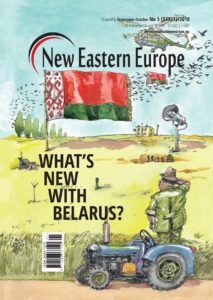

Germany is wrong in bolstering the status quo in Belarus
The current way of thinking in Germany and the West, in shaping a policy towards Belarus, is to accept the political status quo, normalise relations with Minsk and help the Belarusian state preserve its independence. This view, however, is seriously flawed.
Europe has fundamentally changed its policy towards Belarus in recent years, and Germany is no exception. Previously, Berlin and other EU capitals addressed Minsk with clear demands to improve its dismal record on human rights, elections, civil society and democracy, and they responded with sanctions to the worst violations of these norms. Now, by contrast, the central driver behind German and European policy seems to be Belarusian independence, whose fragility has been thrown into sharp relief by the aggressive Russian return to geopolitics in the region. This effective shift to realpolitik is, however, fraught with problems and its success is far from certain.
November 5, 2018 -
Joerg Forbrig
-
Articles and CommentaryIssue 6 2018Magazine
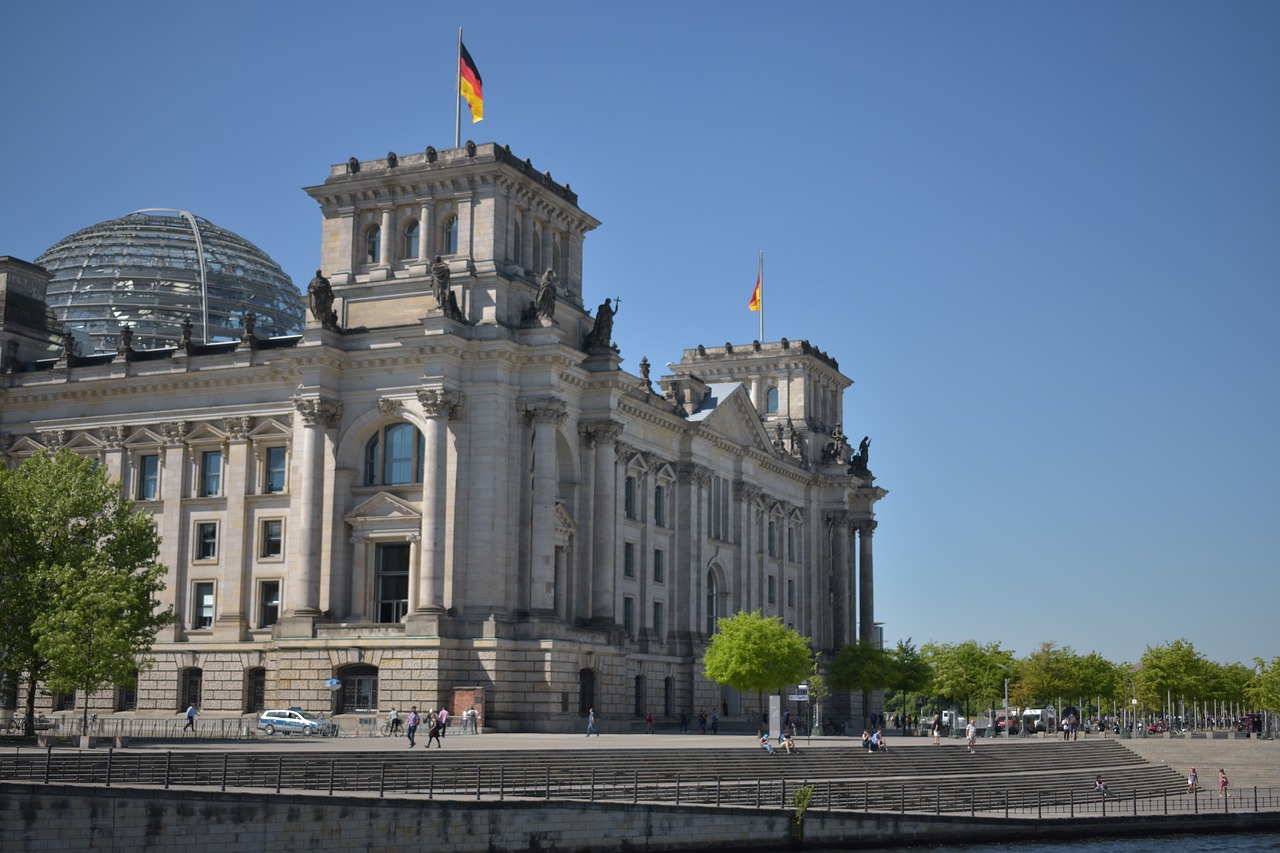
Photo: Rbro (CC) www.pixabay.com
At first glance, little seems to indicate a principal change in German-Belarusian relations. Most notable is certainly the increased frequency of shuttle diplomacy, culminating in two high-level German visits to Belarus over the past year. In November 2017 Sigmar Gabriel was the first German foreign minister to visit Belarus in seven years, followed, in June this year, by Frank-Walter Steinmeier, the first German president ever to visit the country. Both visits ostensibly marked historical occasions, with the first celebrating 25 years of diplomatic relations, and the second devoted to the opening of the Maly Trostenets memorial site. Neither visit, at least in the public remarks, dwelled much on the changed geopolitical situation in Eastern Europe or the unchanged misery of dictatorship in Belarus.
Stability and the status quo
Back in Berlin, however, officials have become much more outspoken. For them the overriding goal of German policy towards Belarus must be to safeguard and strengthen Belarusian sovereignty. As their reasoning goes, European efforts to push Belarus towards political liberalisation have not borne fruit. The Belarusian democratic movement is too weak, Alyaksandr Lukashenka and his regime are too strong and the public are not ready for change. Even worse, any move away from the only domestic and international course acceptable to Russia – autocracy at home and Eurasian integration abroad – will prompt the Kremlin to interfere – for fear of losing its last true ally in the region. The only conclusion, in this view, is to accept the political status quo, to normalise relations with the powers-that-be in Minsk, and so to assist the Belarusian state to preserve its independence.
Though convincing to many, this view is seriously flawed. First and foremost, it uncritically adopts positions that have been tirelessly peddled by the Belarusian government over the years. One of these is that the Lukashenka regime offers domestic stability that is rare among post-Soviet countries. Yet this alleged stability has long been held up only at the price of successive waves of repression against dissenters, ceaseless pressure on journalists and human rights advocates, and intimidation of civic activists. This has evidently kept in check political challengers to the government. However it is now the socio-economic situation that fuels discontent. As ordinary Belarusians increasingly feel the failures of the unreformed economic and social system – through wage cuts, job losses, price hikes and more – they have become more politicised, as a series of protests over the last years have shown. This bread-and-butter mobilisation is harder to reign in than earlier demands for democratic change. This source of instability will not go away, given that the government rejects any serious economic and social reforms that will eventually prompt demands for political change.
Just as chimerical is Lukashenka’s often-repeated claim to act as an independent broker of regional stability and bridge between the East and West. Belarus has been playing host to the negotiations on the conflict in eastern Ukraine. Though these Minsk talks have remained without any result to date, the Belarusian capital has since tried to fashion itself as the new Helsinki: from new discussion formats such as the Minsk Dialogue – a high level forum which aims to bring together experts on the region, most recently held in May 2018 – to calls by the Belarusian foreign minister for a pan-European process towards a new final act.
This admittedly smart seizure of geopolitical momentum by the Lukashenka regime is hollow, however. Belarus is no neutral Finland: it is clearly aligned with Russia, one of the parties, and is indeed the instigator of the new confrontation between the East and West. Politically, Belarus finds itself in a Union State with Russia and it is integrated with Russian-led military and economic blocs, while materially its survival hinges upon substantial Russian subsidies in the form of oil, gas and loans. In all these respects, then, Belarusian independence is effectively one of the Kremlin’s grace. The country is a showroom of the sphere of influence the Kremlin works to re-establish.
Instability and security
This existing degree of dependence on Russia basically renders the new German approach to Belarus an illusion. If the country’s independence is indeed the central tenet, then a range and scale of engagement will be needed that goes far beyond what Germany and other western partners are able and willing to muster. Effectively, the asymmetrical ties that link Belarusian society, culture, media, economy, politics, defence and not least its state budget, to those of Russia would have to be complemented with a strong European vector. Only when some degree of symmetry was reached across these layers and sectors, Belarus would have an independence to speak of. But the engagement and investment this would require is one that Germany and the European Union barely approximate with other and more democratic Eastern neighbours. It is hardly realistic, then, that they will ever mobilise sufficient resources to wean Belarus off its deep dependence on Russia. This acknowledgment of their own political and material constraints should precede any noble announcements by German or other European officials to act in defence of Belarusian independence.
Strategically, too, current German thinking on Belarus falls short. The last century has seen examples aplenty when democratic nations of the West conceded to dictatorial states in the name of security and stability. Germany itself has been at both the receiving and giving ends of such appeasement. It should know particularly well, therefore, that rapprochements with autocratic regimes rarely produce more than a short-term reprieve. In the long run, however, instability and insecurity return with a vengeance.
Along the way, unfortunately, democracies lose their credibility. They subordinate their principles, from human rights to the rule of law to democracy, to an elusive hope for a constructive relationship with their authoritarian neighbours. Those, in turn, become ever bolder by imposing their own conditions and demands, typically evolving around material benefits needed for political survival under threat of ending the rapprochement. State officials are the predominant conduit for bilateral relationships, while broader people-to-people contacts remain very limited, and with it the grasp among western partners for what is really going in places like Belarus. The end result of this dynamic is cynicism rather than confidence.
Starting afresh
Germany, along with others in democratic Europe, can still avoid some of these traps. While the changed geopolitical reality in the continent’s East cannot be ignored, some of the practical and policy conclusions bear rethinking. First, the Belarusian regime is much more brittle than it lets on. For its political stability and survival, it depends on Russian sponsorship no less than on recognition and support from the West. Such assistance to the Belarusian state may well be expanded beyond the hitherto meagre levels but only if, secondly, the regime removes obstacles to support Belarusian civil society and citizens-at-large.
While more ambitious democratic reforms are clearly a long shot, the more immediate and possible task is one of nation-building. Gradually over the last years Belarusian identity and culture, community-organising, citizen engagement, and social responsibility have been gathering momentum – all of which lay the foundations for a positive development of the country. Yet to realise this potential, thirdly, Germany and Europe need to substantially increase their outreach to understanding and support Belarusian society. This, more than the rapprochement with the Lukashenka regime, will really help to fortify Belarusian independence in the long run.
Joerg Forbrig directs the Fund for Belarus Democracy at the German Marshall Fund of the United States.