
The shame of Dagestan
Women’s rights is probably the most controversial topic in Dagestan, Russian’s North Caucasus republic. Svetlana Anokhina, a women’s rights activist and journalist, who had fled the republic after receiving a death threat, now carries on with her work from far away.
In July 2020 Svetlana Anokhnina a women’s rights activist and journalist based in Dagestan, received a telephone death threat as part of a wider “sorting out the feminists” campaign taking place in the republic. This was not the first threat issued to Svetlana but, unlike before, this time the caller tried to reach her by phone several times, making sure she received his message. And he took no effort to hide his own identification. Svetlana tracked the cell phone number and established the name of its owner. She passed this information to the police. After the investigation had been completed, Svetlana hoped that justice would be fast. Yet, soon after the detective set a meeting with the caller, the local police abruptly stopped providing updates on her case.
February 3, 2021 -
Anna Efimova
-  Issue 1-2 2021MagazineStories and ideas
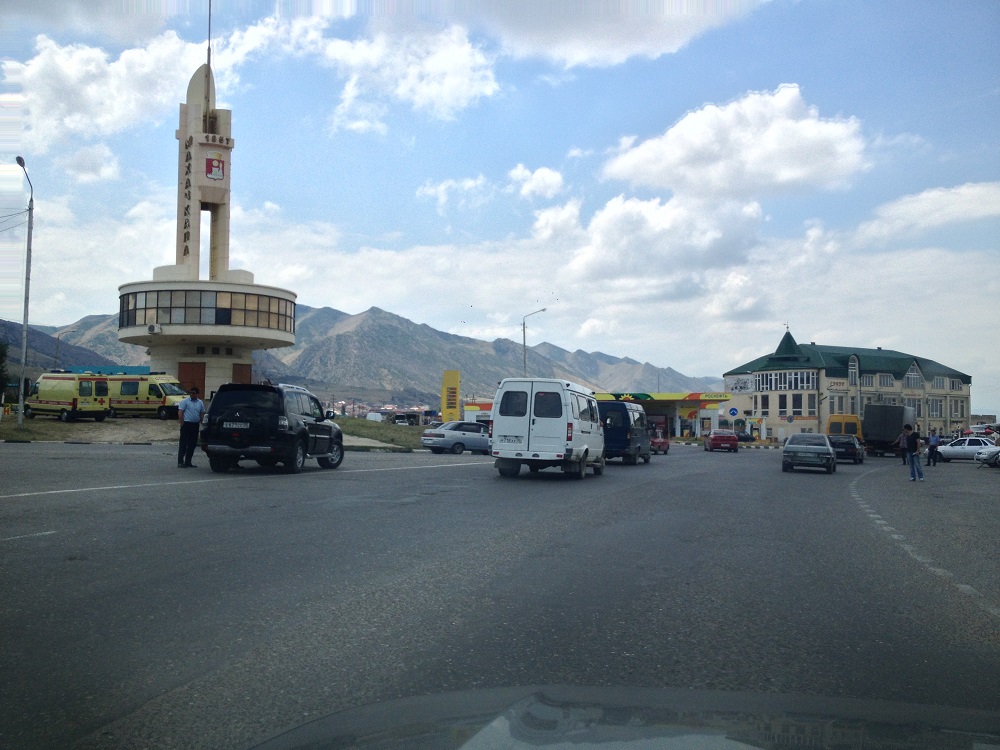
Makhachkala is the capital of Dagestan. Photo: Dalibor Z. Chvatal (CC) commons.wikimedia.org
Svetlana spent a month in suspense. However, once the situation started to get tenser, without any help from the authorities, she decided to flee Russia, at least for some time. She later learnt that the police refused to initiate any proceedings against the perpetrator, as they did not see any grounds for it. No official statement explaining the refusal was ever sent to her. Indicatively her perpetrator bragged about his family connections with the head of the local police. Svetlana believes it could have been the reason for her case not being investigated.
Having spent six months abroad, she is still upset that her large personal and professional connections proved useless in pushing this investigation further. “Do not get me started on the thousands of women who suffer from domestic violence and abuse and cannot count on the police for help,” she said to me.
Feminists
Anokhnina was born in Dagestan and spent most of her life in Makhachkala, its capital city. She is the editor in chief of Daptar, the only online media outlet in the North Caucasus that focuses on women and women’s rights. In 2020, along with other female activists, she founded Marem, a group which offers legal and psychological assistance to women in difficult life situations.
It is no surprise that her offender wanted to “sort out the situation with the feminists”. In the interpretation of traditional and conservative representatives of the local community, the word “feminism” does not resemble its western meaning: “In Dagestan, feminists are seen as ugly and unappealing women. They are said to be either lesbians or neglected by men. This makes them incredibly jealous of others. Consequently, they want to mess up the good life of men and deprive them of their natural rights,” she explains.
Women’s rights is one of the most controversial topics in Dagestan, which makes every activist and journalist working on it prone to threats and even violence. Her opponents are unhappy about two things. First, they believe that women do not want their rights to be protected claiming that in Dagestan they are perfectly respected by their families and traditions. Second, even in cases of family conflict and disputes, mediation by external organisations is regarded as unacceptable. It is said to be meddling in people’s private lives and is presented as a norm that is not accepted in Dagestan. These arguments are also used in more extreme situations such as domestic violence, abuse, and even killing.
Together with other activists Anokhnina fights for women to have control of their own bodies, and to receive adequate social assistance if necessary. “Is it still somebody else’s family if the whole street can hear a wife screaming and her child crying as the husband beats them up? In my opinion, that is a crime taking place there”, she exclaims. For such views, which Anokhnina expresses openly, her opponents labelled her “the shame of Dagestan”.
Silent despair
According to the OSCE data, Russia in 2019 was in the lowest position on the women’s rights protection index recorded for the G20 countries. There are no official state statistics on cases of domestic violence and domestic sex-based abuse. However, Human Rights Watch activists estimate that around 65 per cent of victims in household conflicts, recorded in 2016 and 2017, were women; while in 2012, one in five woman in Russia experienced domestic abuse from a partner or spouse.
In 2017 President Vladimir Putin signed a law decriminalising domestic violence that made many women lose hope. Based on this new law, only the second case, or subsequent cases, of family domestic violence are considered a crime. In most of the cases, punishment for battery is just a fine – and even this is a best-case scenario as the Russian police reluctantly pursue cases of domestic violence. In December 2020, the Russian parliament approved a law introducing up to a five-year jail term for making slanderous comments on the media or internet. They include accusations of rape and domestic abuse. The makes the discussion or reporting of such cases to be more difficult for victims, journalists and activists. Another issue, common throughout the country, is the tendency to cover up domestic abuse by patriarchal and traditional values. However, unlike the rest of Russia, where women can normally rely on the support of relatives and friends, the situation in the Muslim republics is more complex.
“In Dagestan, you cannot run out of the house because this will dishonour your family and cause even more abuse and threats. Discussing domestic abuse in public or even within one’s family is not the way here. Most parents will not accept their daughter who escaped from her abusive husband. They will send her back, promising that her partner will change. But once she is home, everything repeats itself or causes even stronger persecution,” Anokhnina explains.
She shares stories about those who managed to escape and those who faced further violence. All of them are shockingly similar because of the amount of violence that goes unpunished and the helplessness of women who has had no recourse. The only people who are there for them are women’s rights activists, who treat the women in a supportive way.
Marem
After she came home, one day Marem saw a group of men gathering in her yard. She informed her sister about it. But by the time her sister got over to her, the only things she could find were a hair dryer, some pieces of bloodstained hair, and a rope. There was no sign of Marem. She was never found.
In 2019 the European Court for Human Rights, for the first time in its history, examined a case of domestic abuse that led to a murder of a victim, which originated in Russia. It was the case of Marem Alieva from Ingushetia, a republic in Russian North Caucasus. She disappeared in 2015 under life threatening circumstances. She suffered from physical and psychological abuse from her husband when local human rights activists helped her leave him. However, after she had been told that her husband swore on the Quran that he would not touch her, she returned to him.
The women rights group which Anokhnina created in the summer of 2020 bears Marem’s name. The organisation aims to help women from Dagestan and other North Caucasus republics who face the threat of domestic violence or death. Marem helps them organise an evacuation, find temporary accommodation or to pay for taxis.
Marem volunteers receive dozens of daily calls. Women reach out when they are in a difficult situation and are searching for help with legal and psychological matters. Many women do not ask for help, but look for a person who would listen to them in a supportive way. Anokhnina stresses that Marem volunteers never convince anybody to leave or stay home – the final decision is up to the women themselves: “We only provide assistance but the choice is theirs. Metaphorically speaking, if they jump, we will help them not fall,” the activist says.
Even women who ask Marem activists to organise an escape for them almost always hesitate and are confused by their decision. One of the girls who reached out to Anokhnina was punched in her face by her father. The reason for the abuse was her complaint that her husband had been beating her. Her mother forbade her to divorce, claiming it would dishonour the family. One of her aunts had her teeth knocked out by her husband, but did not separate from him. “Many girls have changed their decision to leave home because of such examples in their families,” Anokhnina explains.
Marem’s work resembles the activities of an NGO, but it is a fully volunteer-based initiative. There are around a dozen activists involved – including those answering phone calls, lawyers, and psychologists. The group has no office, while communication with women in need is managed in the simplest possible way – through direct messages on the group’s Instagram page or on WhatsApp.
The activists stopped counting the number of women they have helped once they reached several hundreds. There was only one day when the group did not receive any phone calls for help. It was July 6th 2020. “What a happy day it was – no one was beaten or persecuted; no one had to escape from their home in a rush or fear being killed,” Anokhnina says.
When financial assistance is needed, the organisation counts on money transfers made by its supporters, donations and, in most cases, their own personal savings. One of the group’s founders, a Dagestani Instagram blogger named Mariam Alieva, used to direct the earnings she made on advertising through her blog to Marem. In December 2020 this source of income was jeopardised, however. Alieva’s blog was blocked after she posted about a man who was supposedly sexually abusing underaged girls for years. Anokhnina believes the real reason of her blocking could be Alieva’s human rights activities. There are many people frustrated over the fact that this kind of activism is conducted by a Muslim and from the Caucasus.
Underestimated ban
The most horrid example of oppression and control present in Dagestan is female genital mutilation. Also known as female cutting, this practice was banned by the United Nations which recognised it as health-damaging and violating women’s rights. However, this practice is still carried out on young Muslim girls living in the highlands and resettlement areas of Dagestan.
According to the 2018 survey of the Russian NGO, Legal Initiative, more than 1,000 girls in the republic undergo this procedure each year. There is evidence that the minorities who resettled from Dagestan to Georgia also practice it. In the view of its proponents, this procedure is good for a woman’s moral health. As a result of cutting, a woman’s sexual desires decrease which is a “guarantee” she will be a faithful, obedient wife.
Overall, the decision to perform the procedure is made by women. It is usually performed on girls between the age of 5 and 12. While for many this practice is inevitable due to its religious meaning and ritualistic character, there are some Muslims who regard it as voluntary. Human rights activists distinguish five types of mutilation, starting with the puncturing of the clitoris to a complete disposal of its tip. In August 2020 the muftiat of Dagestan made the unprecedented decision to ban the practice of completely removing the clitoris.
This decision was preceded by a four-year public outcry by journalists and human rights activists. In August 2016, Anokhina published the first ever article in Russia on the issue of female cutting in Dagestan. She was assisted by two colleagues, one of whom managed to collect real-life stories of women who underwent the practice but preferred to stay anonymous. Two weeks later, Legal Initiative coincidently issued the first report of the problem in Russia. For many in Dagestan it looked like an attack on their religious and cultural values, and the publication immediately drew public attention.
Unfortunately, the 2020 decision of the muftiat went largely unnoticed. “People in Russia thought this regulation does not make sense if it does not completely ban female cutting. But there is such a huge difference. It is like a difference between being decapitated or just getting an incision on your neck,” explains Anokhina. While temporarily in exile, she runs Marem from her new remote location. From here she also works as editor-in-chief for Daptar, which is the only online media reporting on the situation of women in the North Caucasus. This publication has certainly troubled Anokhina’s enemies. This is not surprising as it covers topics like female genital cutting, selective abortions, early marriages, honour murders, and an education ban for women.
Daptar also educates its readers by publishing pieces on Islamic feminism, empowering stories about Caucasus women, and folk culture. However, these articles often go unnoticed, mainly because of the criticism that women rights issues receive in the region. Daptar does not receive any funding and its writers and contributors submit materials for free.
Anokhina believes that if she returns home, the threats against her will continue. “These are the circumstances in which we live. My friends in Moscow attend picket lines knowing that the police can pick them up and put them in jail or at least impose a large fine on them. They carry on because they know that the work needs to be done.”
Anna Efimova is a Russian journalist and an editorial intern with New Eastern Europe. She is currently finishing her master degree in Central and Eastern European, Russian and Eurasian Studies from the University of Glasgow.