


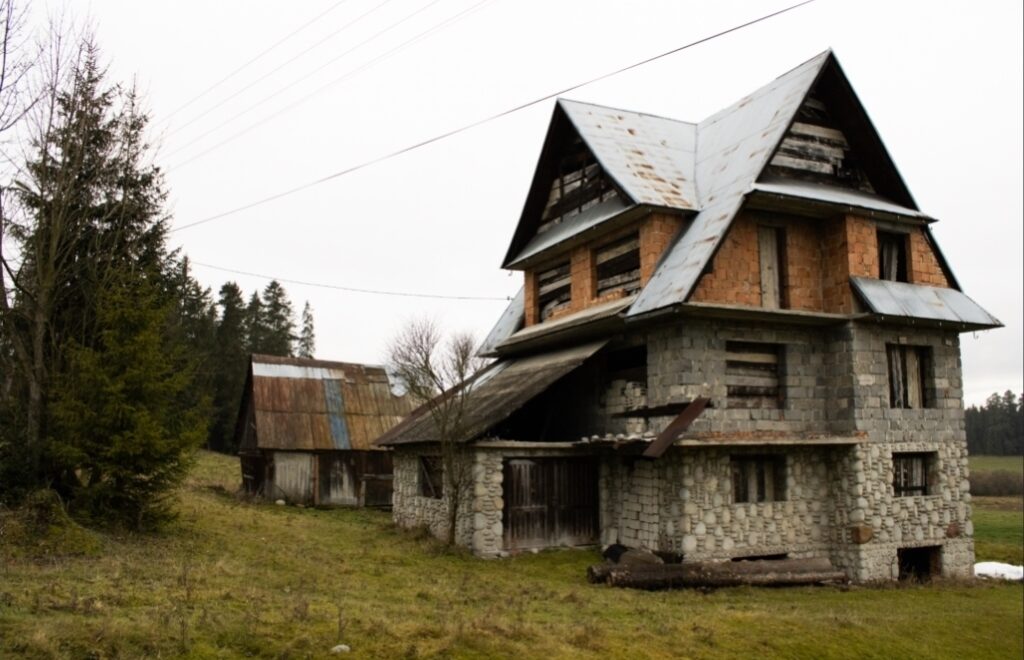
The abandoned homes of Poland’s most tourist-heavy region
Decades ago, Poles from the Podhale region flocked to the US in droves. But even those who never planned to return still refuse to give up their homes.
May 9, 2023 - Katarzyna Skiba
May 9, 2023 - Katarzyna Skiba

January 2, 2018 - Stephen McGrath






The consequences of Russia’s invasion are visible not only in Ukraine. The Kremlin has set off or exploited a series of crises that face most European countries.
Subscribe to NEE
New thinking is needed in policies towards Russia, in whatever form it will take after the war.
Subscribe to NEE
Ukraine’s suffering goes well beyond the front line.
Subscribe to NEE
With Russia’s invasion of Ukraine we now see our western values under siege, whether we consciously recognise it or not.
Subscribe to NEE
The invasion by Russian forces of Ukraine from the north, south and east – with the initial aim to take the capital Kyiv – has changed our region, and indeed our world, forever.
Subscribe to NEE
The situation with Russian threats towards Ukraine once again illustrates the high level of instability in our region.
Subscribe to NEE
Only a year ago we witnessed the second Nagorno-Karabakh war between Armenia and Azerbaijan. It took at least 5,000 lives and significantly shifted the geopolitics in the South Caucuses.
Subscribe to NEE
This special issue aims to honour the plight of Belarusians whose democratic choice made in August 2020 was shamelessly snubbed by Alyaksandr Lukashenka.
Subscribe to NEE
From the social, economic and political points of view, a lot of work still remains for this country. And this is why Ukraine’s story is incomplete.
Subscribe to NEE


Our societies are more polarised than ever before, which makes them more susceptible to disinformation, untruth and conspiracy theories.
Subscribe to NEE
The COVID-19 pandemic has exposed limitations and weaknesses in nearly all countries around the world.
Subscribe to NEE


Uncertainty, volatility and the relationship between Russia and the West.
Subscribe to NEE

The Black Sea region is quickly becoming a geopolitical battleground which is gaining the interest of major powers, regional players and smaller countries – and the stakes are only getting higher.
Subscribe to NEE
This issue is dedicated to the 10 year anniversary of the European Union’s Eastern Partnership as well as the 30 years since the 1989 revolutions in Central Europe.
Subscribe to NEE
The consequences of the emerging multipolar world.
Subscribe to NEE
This issue takes a special look at the role and responsibility of the public intellectual in Central and Eastern Europe today.
Subscribe to NEE
In the eastern parts of the European continent, 1918 is remembered not only as the end of the First World War, but also saw the emergence of newly-independent states and the rise of geopolitical struggles which are felt until this day.
Subscribe to NEE
It often seems, at least from the outside, that Belarus remains isolated from the West and very static in its transformation. Yet, despite its relative isolation, Belarus is indeed changing.
Subscribe to NEE
The Summer 2018 issue of New Eastern Europe tackles the complexity of para-states in the post-Soviet space.
Subscribe to NEE



