Text resize: A A
Change contrast

Tag: European Union

Russian fuel for Salvini’s EU election campaign?

Interview with Stefano Vergine, an Italian investigative journalist and co-author of the recent book The black book of Lega. Interviewer: Mario Giagnorio.

April 5, 2019 - Mario Giagnorio Stefano Vergine

China takes it all in the Black Sea region

China is becoming a major player in the Black Sea, to the advantage of the countries of the post-Soviet space and under the sometimes concerned eyes of Russia and the European Union member states.

February 19, 2019 - Michael Eric Lambert

The disintegration train has left Brussels

A review of After Europe. By: Ivan Krastev. Publisher: University of Pennsylvania, Philadelphia, 2017.

Let me start this review with a disclaimer: the positive assessment of Ivan Krastev’s recent book is in no way related to the fact that the author is also a member of New Eastern Europe’s editorial board. It solely reflects the value of the publication and its relevance as it has been interpreted by the undersigned reviewer. That said, readers who are familiar with Krastev’s writings will not be surprised that his recent book, tellingly titled After Europe, focuses on disintegration rather than integration. They may even remember that on the pages of this magazine Krastev had written: “I know how things collapse; this is what I have been studying all my life. I was working on the Balkans and I know how they collapsed, and before that I studied how the Soviet Union had collapsed”.

October 31, 2017 - Iwona Reichardt

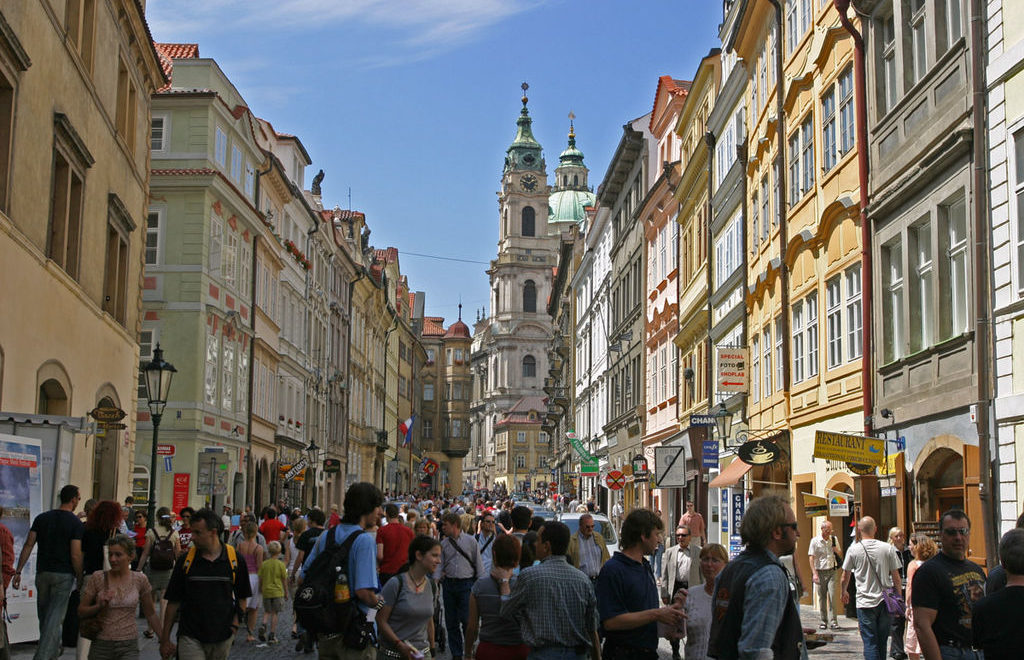
The Czech paradox

Czechs are by definition more western and European (although not necessarily pro-European), more democratic, more liberal, wealthier and more emancipated than other Central Europeans. This megalomania, to a great extent, contributed to the success of the Czech transformation.

What did the Czechs give Europe? It would be much easier to answer this question if we knew what Europe is. If we think of it as the European Union, then the Czechs might be seen, for instance in Timothy Snyder’s view, as simply one of “ancient Habsburg peoples who abandoned great national projects of the 19th century in order to embrace the European idea of the 21st century”. Similar to other countries in the region, the Czech Republic, is a country too small to be able to conceive the notion of a sovereign existence; too poor in resources and educated elite to be able to survive in the times of globalisation; they aim for unification [since today] the indication of national success is not an independent state but EU membership, Snyder wrote in 2008.

October 31, 2017 - Aleksander Kaczorowski

Partners

Terms of Use | Cookie policy | Copyryight 2026 Kolegium Europy Wschodniej im. Jana Nowaka-Jeziorańskiego 31-153 Kraków
Agencja digital: hauerpower studio krakow.
We use cookies to personalise content and ads, to provide social media features and to analyse our traffic. We also share information about your use of our site with our social media, advertising and analytics partners. View more
Cookies settings
Accept
Decline
Privacy & Cookie policy
Privacy & Cookies policy
Cookie name Active
Poniższa Polityka Prywatności – klauzule informacyjne dotyczące przetwarzania danych osobowych w związku z korzystaniem z serwisu internetowego https://neweasterneurope.eu/ lub usług dostępnych za jego pośrednictwem Polityka Prywatności zawiera informacje wymagane przez przepisy Rozporządzenia Parlamentu Europejskiego i Rady 2016/679 w sprawie ochrony osób fizycznych w związku z przetwarzaniem danych osobowych i w sprawie swobodnego przepływu takich danych oraz uchylenia dyrektywy 95/46/WE (RODO). Całość do przeczytania pod tym linkiem
Save settings
Cookies settings