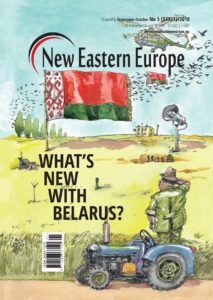


The EU should take Belarus more seriously
An interview with Balázs Jarábik, a nonresident scholar at the Carnegie Endowment for International Peace. Interviewers: Iwona Reichardt and Daniel Gleichgewicht of New Eastern Europe
NEW EASTERN EUROPE: You recently attended the high-level Minsk Dialogue Forum. Among the speakers was Belarusian President Alyaksandr Lukashenka. How do you interpret his participation in this event that gathers international experts and representatives of the third sector? What kind of message did he intend to send to the wider world?
BALÁZS JARÁBIK: The most important thing was the fact that he attended a civil society conference. As far as I am aware, this was his first such occurrence. It certainly illustrated how the attitude of the regime is slowly changing vis-à-vis civil society in Belarus. Currently there are several interesting areas internally where co-operation is moving and where the government is beginning to understand the value of civil society.
NEW EASTERN EUROPE: You recently attended the high-level Minsk Dialogue Forum. Among the speakers was Belarusian President Alyaksandr Lukashenka. How do you interpret his participation in this event that gathers international experts and representatives of the third sector? What kind of message did he intend to send to the wider world?
BALÁZS JARÁBIK: The most important thing was the fact that he attended a civil society conference. As far as I am aware, this was his first such occurrence. It certainly illustrated how the attitude of the regime is slowly changing vis-à-vis civil society in Belarus. Currently there are several interesting areas internally where co-operation is moving and where the government is beginning to understand the value of civil society.
September 2, 2018 - Balazs Jarabik Daniel Gleichgewicht Iwona Reichardt