
Text resize: A A
Change contrast

Category: Magazine

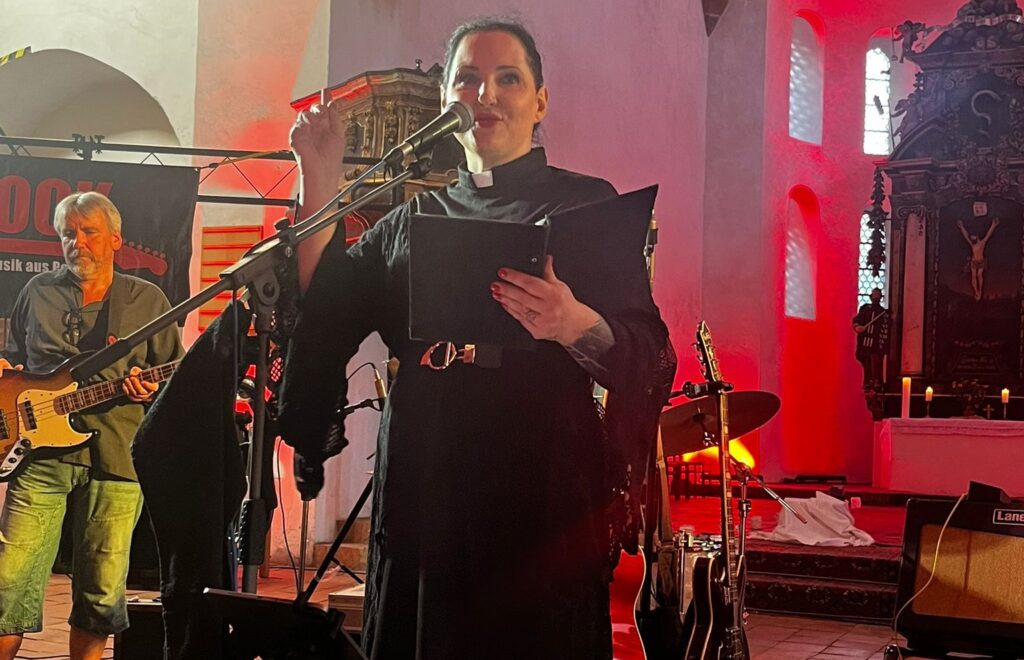
Women of the quiet frontline: Four pastors in atheist Brandenburg

Thirty-five years after Germany's reunification, Brandenburg – the rural state surrounding Berlin – shows both promise and peril. Economic modernization has not prevented social fragmentation. Political freedoms coexist with mistrust. In this vacuum, populism thrives. Yet in the quiet, unhurried work of four women pastors, another possibility flickers: that civic trust can be rebuilt from the bottom up, sometimes with beer and a Bible.

February 22, 2026 - Ulrike Butmaloiu

The challenge for Ukrainian veterans returning to civilian life

Going to the front line is a challenge. Leaving it is another. For Ukrainian veterans, returning to civilian life is a painful process. After the war, Ukraine will have to reintegrate more than two million former soldiers.

February 22, 2026 - Téo Manisier

On African university students in Poland. A response

Africans are increasingly becoming a part of the student body present in Poland. While many are attracted by comparatively low tuition fees, there are other aspects making them interested in the country. Such an attraction may ultimately lead to a more permanent link between Poland and the continent.

February 22, 2026 - Christopher Garbowski

Relabelling paintings, reclaiming history

Throughout much of history, Ukrainian artists or those with some connection to the country have frequently been labelled as “Russian”, when in reality their identities were far more complex. Spurred on by Russia’s invasion, Ukrainian art historians and cultural NGOs are attempting to change these narratives. But setting the record straight is not as simple as it seems.

February 22, 2026 - Cristina Coellen

Double exclusion. How is it to be a queer migrant from Eastern Europe in Poland today?

LGBTQ+ rights in Belarus and Ukraine have remained static for years. The fear of coming out persists, both in one's home country and now within the diaspora abroad. Many queer migrants hide their sexuality, citing political or economic reasons for moving. Although Poland still has a long way to go, its relative openness, access to EU anti-discrimination frameworks and integration into European institutional life create better conditions for social progress and visibility.

February 22, 2026 - Sviataslaŭ Kruk

Prussia’s forgotten heritage

After the final partition of Poland in 1795, Prussia emerged not only as a territorial winner but also a multi-lingual state: Polish speakers constituted nearly half of its population and more than half of the kingdom’s territory consisted of newly annexed Polish lands. Yet this was also a missed political opportunity.

February 22, 2026 - Piotr Leszczyński

Is the past for sale?

In Poland, cultural heritage has increasingly become a site where memory, market logic and political power intersect. From urban regeneration projects and nostalgia tourism to digitally-branded cultural platforms and AI-generated public figures, the past is often packaged, optimized and sold.

February 22, 2026 - Giorgia Maurovich

Issue 6 2025: Remembering yesterday, today

Re-examining the unsettled memory of communism.

December 8, 2025 - New Eastern Europe

Goodbye communism

The pace of dealing with the communist past has been uneven across Central and Eastern Europe. While Poland intensely debated de-communization in the 1990s, in Ukraine the mass removals of Lenin monuments – the so-called Leninopad – began only during the Revolution of Dignity in 2014. In the Baltic states, the memory of communism remains strongly negative.

December 8, 2025 - Kinga Gajda Michał Kuryłowicz

From revolution to souvenirs

The selling of communism across Central and Eastern Europe reveals more than the region’s ingenuity in repurposing its past – it exposes how memory itself has become a currency in the post-socialist era. This marketplace of memory is not merely a tourist trend – it is a mirror of broader cultural transformations.

December 8, 2025 - Jovana Janinovic

Sensory memory and creating a community of memory

The feeling of coarse toilet paper bought after hours in a queue, the scent of sweat on a train to a Bulgarian summer camp, the fizz of Soviet shampanskoye igristoye on New Year’s Eve – these are not just fragments of nostalgia. They are traces of a collective past, an embodied memory of life under communism that continues to shape how a generation remembers itself.

December 8, 2025 - Magdalena Banaszkiewicz

The memory of forgetting

After the end of communist rule, many societies sought recognition of their own wartime suffering as part of Europe’s shared memory. Although the Allies are often portrayed as a united front against Nazism, the newer member states of the European Union have pressed for acknowledgement of the oppression they experienced under both Nazism and Stalinism, arguing that these histories should be remembered on equal terms.

December 8, 2025 - Dymitr Romanowski

Partners

Terms of Use | Cookie policy | Copyryight 2026 Kolegium Europy Wschodniej im. Jana Nowaka-Jeziorańskiego 31-153 Kraków
Agencja digital: hauerpower studio krakow.
We use cookies to personalise content and ads, to provide social media features and to analyse our traffic. We also share information about your use of our site with our social media, advertising and analytics partners. View more
Cookies settings
Accept
Decline
Privacy & Cookie policy
Privacy & Cookies policy
Cookie name Active
Poniższa Polityka Prywatności – klauzule informacyjne dotyczące przetwarzania danych osobowych w związku z korzystaniem z serwisu internetowego https://neweasterneurope.eu/ lub usług dostępnych za jego pośrednictwem Polityka Prywatności zawiera informacje wymagane przez przepisy Rozporządzenia Parlamentu Europejskiego i Rady 2016/679 w sprawie ochrony osób fizycznych w związku z przetwarzaniem danych osobowych i w sprawie swobodnego przepływu takich danych oraz uchylenia dyrektywy 95/46/WE (RODO). Całość do przeczytania pod tym linkiem
Save settings
Cookies settings