
Text resize: A A
Change contrast

Category: Magazine

In the long shadow of Silicon Valley

Once dismissed as an eccentric Silicon Valley subculture, neoreactionary thought has begun to surface at the highest levels of western political debate. Rejecting democracy in favour of authoritarian rule, the “Dark Enlightenment” now influences figures in the American tech sector and government while attracting keen interest from Russian ideologues. The transnational creep of neoreactionary thought reveals a growing alignment between anti-liberal currents on both sides of the Atlantic.

February 23, 2026 - Justin Tomczyk
Ukraine’s post-war labour dilemma: Who will fill the jobs?

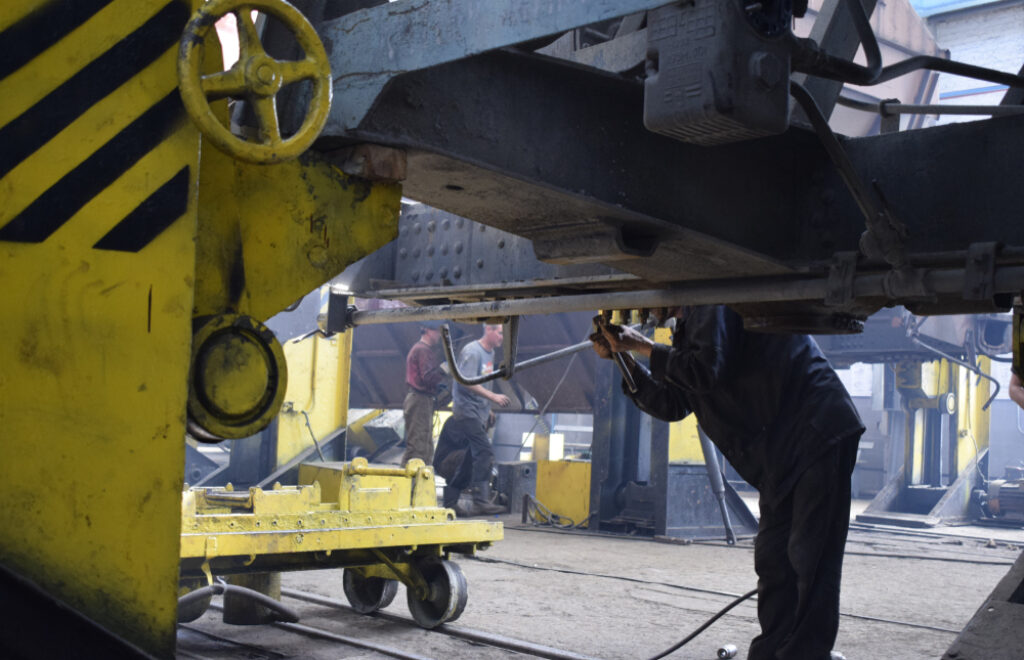
Discussions are beginning to grow with regards to the shape of Ukraine following the end of Russia’s current invasion. This is particularly true regarding the economy, as well as the labour force that will power reconstruction. While experts all agree on a need for new thinking, the future in this sphere remains uncertain.

February 23, 2026 - Stanislav Storozhenko

The return of Siarhei Tsikhanouski and what it means for the Belarusian democratic forces

The re-entry of Siarhei Tsikhanouski into the Belarusian political scene has revealed fault lines within the opposition movement. His symbolic role, carefully maintained by his wife Sviatlana and the broader opposition, has now collided with the structured, diplomatically-oriented political architecture built in his absence.

February 23, 2026 - Hanna Vasilevich

Punished for being abused: Belarusian controversy

Gradually but decisively, the European Union is folding Belarus into the same category as Russia. The toughest measures are coming from states that share a border with Belarus. How did a society once seen as a victim of Europe’s most brutal dictatorship come to be regarded as complicit in its crimes?

February 23, 2026 - Nasta Zakharevich

Macedonians seek justice to heal Kočani’s wounds

Every Saturday in Kočani, North Macedonia, looks the same since last year’s tragedy. Parents gather for a weekly march across the small town. It usually starts at the city park, continues to the police headquarters and ends in front of the local court – a reminder for the institutions to do their job. The marches continue, driven not by the promise of answers, but by the fear that those answers may never arrive.

February 23, 2026 - Jovan Gjorgovski

When comfort outweighs democracy

Viktor Orbán’s dominance rests not only on power politics, but also on memory. By mobilizing fear, promising protection, and offering small but symbolically charged material rewards, Fidesz has revived a political logic familiar from the Kádár era – one in which security matters more than participation and comfort outweighs democracy. As Hungary approaches another electoral cycle, the question is no longer whether nostalgia still works, but whether it is finally losing its grip.

February 23, 2026 - Andrea Schmidt

Can a minority become a democratic test?

The Polish community in Lithuania is often portrayed as an artificial construct, lacking historical or cultural legitimacy, while “real” Polishness is implicitly associated with centres such as Warsaw or Kraków. These attitudes have contributed to a broader erosion of prestige and self-confidence within the minority. They have also encouraged a condescending – and at times openly mocking – view of Polish culture in Lithuania.

February 23, 2026 - Karolina Benedyk

Reimagining labour in the Eastern Partnership

The application of AI remains a fledgling aspect of working life in the countries of the Eastern Partnership. While there have been numerous promising developments, the region still lags behind its western partners. Overcoming this gap could provide the area with new labour opportunities in a sphere possessing almost limitless horizons.

February 23, 2026 - Ana Diakonidze Mariami Paposhvili

The post-war recovery of Ukraine needs to be green, just and European

An interview with Valeriia Bondarieva, co-founder of Rozviy, a Ukrainian feminist climate organization. Interviewer: Emma Novotná

February 23, 2026 - Emma Novotná Valeriia Bondarieva

The future of war

A conversation with Peter Warren Singer, strategist and senior fellow at New America. Interviewer: Robert Finch

February 22, 2026 - Peter Warren Singer Robert Finch

Armenia needs to reclaim its bargaining power

A conversation with Dr Eduard Abrahamyan, senior research fellow at the Institute for Security Analysis (Yerevan) and an international relations scholar at University College London. Interviewer: Tatevik Hovhannisyan

February 22, 2026 - Eduard Abrahamyan Tatevik Hovhannisyan

Hollowed out: the slow collapse of Georgia’s city of black gold

The Georgian city of Chiatura was once one of the world’s most important centres of manganese production. Today, many miners are unemployed and struggling to survive, after a sudden shutdown that has plunged the western Georgian city into economic and social freefall. Set against a background of national political turmoil, their struggle exposes how a town built around a single resource, and a single company, is slowly being emptied out.

February 22, 2026 - Poppy Askham

Partners

Terms of Use | Cookie policy | Copyryight 2026 Kolegium Europy Wschodniej im. Jana Nowaka-Jeziorańskiego 31-153 Kraków
Agencja digital: hauerpower studio krakow.
We use cookies to personalise content and ads, to provide social media features and to analyse our traffic. We also share information about your use of our site with our social media, advertising and analytics partners. View more
Cookies settings
Accept
Decline
Privacy & Cookie policy
Privacy & Cookies policy
Cookie name Active
Poniższa Polityka Prywatności – klauzule informacyjne dotyczące przetwarzania danych osobowych w związku z korzystaniem z serwisu internetowego https://neweasterneurope.eu/ lub usług dostępnych za jego pośrednictwem Polityka Prywatności zawiera informacje wymagane przez przepisy Rozporządzenia Parlamentu Europejskiego i Rady 2016/679 w sprawie ochrony osób fizycznych w związku z przetwarzaniem danych osobowych i w sprawie swobodnego przepływu takich danych oraz uchylenia dyrektywy 95/46/WE (RODO). Całość do przeczytania pod tym linkiem
Save settings
Cookies settings