
Text resize: A A
Change contrast

Is Europe divided again?

The East–West divide should not be overstated. Estonia, Romania and Lithuania have generally remained strongly pro-European despite placing considerable emphasis on national independence. Conversely, sovereigntist politicians in Western Europe have achieved considerable political success. Nevertheless, it is primarily in parts of Central and Eastern Europe that states increasingly resemble isolated islands, jealously guarding their borders and defending “go-it-alone” policies in an ever more interconnected and interdependent European environment.

September 11, 2026 - Jan Zielonka - Hot TopicsIssue 5 2026Magazine
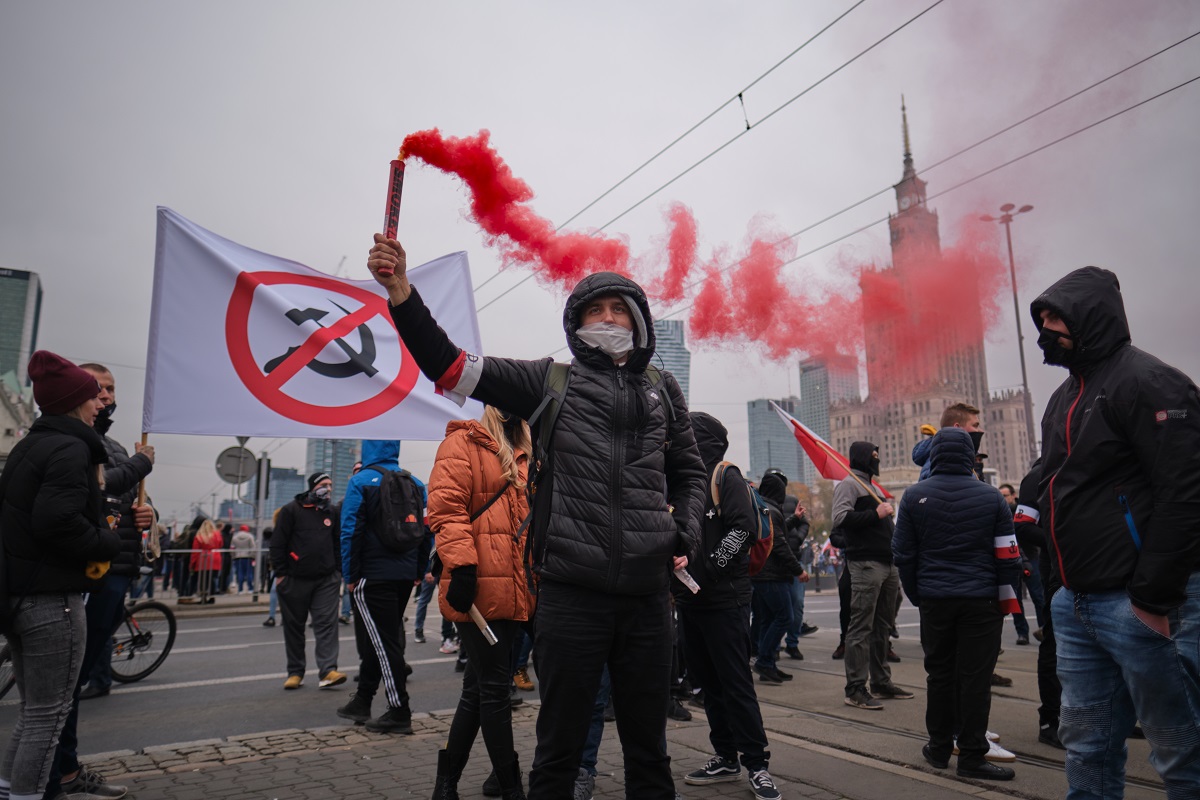
Nationalism has long been recognized as a dangerous ideology, whereas sovereigntism has acquired negative connotations only in recent years with the rise of anti-EU sentiment. Sovereigntism may be defined as a political doctrine that seeks to maximize the autonomy of the nation-state and resists the transfer of political authority to supranational institutions. Photo: Piotr Minkiewicz / Shutterstock

With the fall of the Berlin Wall and the enlargement of the European Union, the East-West divide in Europe appeared to lose much of its significance. Although the Eastern Bloc was highly diverse in terms of size, culture and historical experience, the Soviet grip over its satellite states constituted a powerful unifying factor. The disintegration of the Soviet Union enabled the countries of Central and Eastern Europe to reunite with the western part of the continent, a process that culminated in their accession to the European Union two decades ago.

Admittedly, one can argue that the enlargement process merely created a new division in Europe, leaving parts of the Balkans and Eastern Europe outside the Union. Yet this new dividing line did not appear to be permanent. The European Union repeatedly expressed its intention to enlarge further eastwards and southwards while simultaneously extending its influence beyond its borders through the export of European capital, goods, laws and, more recently, military assistance. As Bill Clinton confidently declared at the Brandenburg Gate:

Read this article for free!

Join the New Eastern Europe community to unlock this article. 

SIGN UP FOR NEW EASTERN EUROPE!

Want even more content?  Subscribe to get full access to premium content, digital archive, newsletter insights, and podcast.


Already a member? Sign in to read the full article.

,

Partners

Terms of Use | Cookie policy | Copyryight 2026 Kolegium Europy Wschodniej im. Jana Nowaka-Jeziorańskiego 31-153 Kraków
Agencja digital: hauerpower studio krakow.
We use cookies to personalise content and ads, to provide social media features and to analyse our traffic. We also share information about your use of our site with our social media, advertising and analytics partners. View more
Cookies settings
Accept
Decline
Privacy & Cookie policy
Privacy & Cookies policy
Cookie name Active
Poniższa Polityka Prywatności – klauzule informacyjne dotyczące przetwarzania danych osobowych w związku z korzystaniem z serwisu internetowego https://neweasterneurope.eu/ lub usług dostępnych za jego pośrednictwem Polityka Prywatności zawiera informacje wymagane przez przepisy Rozporządzenia Parlamentu Europejskiego i Rady 2016/679 w sprawie ochrony osób fizycznych w związku z przetwarzaniem danych osobowych i w sprawie swobodnego przepływu takich danych oraz uchylenia dyrektywy 95/46/WE (RODO). Całość do przeczytania pod tym linkiem
Save settings
Cookies settings