
The West’s rude awakening: lessons after the first year of war
The crucial factor in Russia’s war against Ukraine is how to help Kyiv defend itself and win? There should be a straightforward answer: as Europeans, we should do everything in our power to assist the Ukrainians in stopping the Russian war of conquest and that Ukraine should decide the conditions of victory and the subsequent peace. Yet, unfortunately, there still is no consensus among the western partners of Ukraine on the war’s endgame.
It has been more than one year since Russia launched its full-scale invasion and over nine years since Moscow started its war in Ukraine. After the 2014 illegal annexation of Crimea, the Euro-Atlantic community made several attempts to recalibrate its security and defence policies. However, it was only after the shock of February 24th 2022 and its aftermath that most western states and societies experienced a rude awakening.
April 29, 2023 -
Wojciech Michnik
-
Hot TopicsIssue 2 2023Magazine
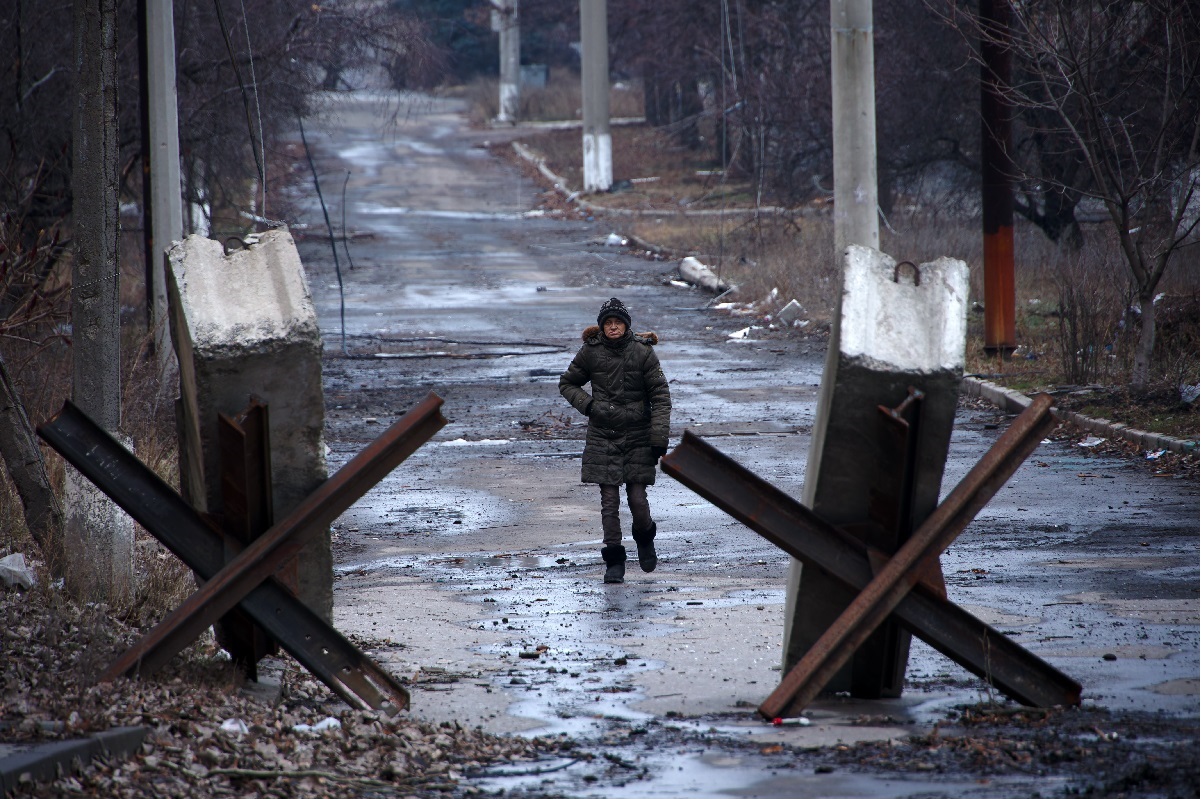
If we do not see Russia’s war against Ukraine, for what it is and has been – a war of conquest and ethnic annihilation – it will be next to impossible to build a long-lasting European response to the war. Photo: Dmytro Larin / Shutterstock
It was only then when the transatlantic partners realised that not only Ukraine but also a majority of the European continent was being put in danger by Russia’s war of conquest.
The united response from European states, the US and Canada must have shocked Vladimir Putin, who most likely counted on Ukraine being left to fend for itself as the West would push for another wave of appeasement. This miscalculation, one of many Russian political predictions made with regard to this war, cost Russia dearly, as the Euro-Atlantic allies responded to the full-scale invasion by providing economic and humanitarian assistance and military support to Ukraine. And even though its record of support for Ukraine could be evaluated as mixed, the collective change in western perceptions of Ukraine and Russia are impossible to ignore. Yet, as the war is still raging on, instead of congratulating ourselves for a job well done, perhaps it is useful to take a closer look at the lessons we have learnt and what these mean for Ukraine and the rest of the Euro-Atlantic community.
Shocked, not awed
In the face of Russia’s full-scale invasion of Ukraine, Europe’s security architecture changed drastically. As the 2022 NATO Strategic Concept – the single most important document defining NATO’s vision for the next decade – stated: “the Russian Federation poses the most significant and direct threat to Allies’ security.” For many Europeans, particularly those who live far away from the battlefield and bombed cities, this assertion had to come as shocking. The opening sentences of the concept especially did not leave much room for optimism: “The Euro-Atlantic area is not at peace. Euro-Atlantic security is undermined by strategic competition and pervasive instability.”
This assessment differs enormously with previous threat perceptions among a majority of European nations. In 2003 the European Union released its European Security Strategy titled “A Secure Europe in a Better World”. Whether this was a statement about reality back then or wishful thinking is a different story. What is relevant is that the groupthink belief that Europe was peaceful and free once and for all gained momentum on the continent, and even Russia’s war in Georgia or annexation of Crimea did not seem to shake this dominant assertion. Even the way Russia’s war in Ukraine was often referred to in the West, as a “Ukrainian crisis” or “conflict”, might have suggested that either we did not see or chose not to notice the real danger of Russian policies for Ukraine and the rest of Europe.
As the first weeks of the full-scale intervention passed, the collective shock subsided as ordinary people, societies and nations from all corners of the transatlantic realm made an impressive effort to host Ukrainian refugees and assist those who stayed in Ukraine. Meanwhile, contradicting many sceptics and analysts, Ukraine and its society have shown impressive resilience and a continuous ability to defend their homeland against Russian occupants. And against some expectations, the immediate and mostly unified response of the transatlantic community has helped Ukrainians to wage their defensive war. As a result, member states of NATO and the EU have been trying to agree on the common agenda that would guide them in their efforts to support Ukraine and ensure that peace will eventually come back to Europe.

Three goals have been often mentioned as essential ingredients of this agenda. First, there must be a sovereign and independent Ukraine and the western states should support Ukrainians in winning back their territory. Second, helping Ukrainians to win cannot put NATO or any NATO member state in direct military conflict with Russia. Third, Russia should not only pay an economic and political price for instigating the war and destroying Ukraine, but it should emerge from the war as weak as possible, so it will not be able to attack its neighbours and destabilise European security in the foreseeable future. Since these three goals – though articulated many times – can entail some disagreements and competing interpretations among western allies, we should treat them more like a wish list rather than a consensus among the allies in this decisive year of war.
Whose war is it?
Just days before Russia’s full-scale invasion in 2022, Volodymyr Zelenskyy, Ukraine’s president, tried to convince an audience at the Munich Security Conference that the Russian attack was more than imminent and that Ukraine would need all necessary assistance and help to survive the assault. His warning fell partly on deaf ears. The debate among conference participants was mostly divided between those who thought the risk of war was significant and those who dismissed the likelihood of its outbreak. Since February 24th 2022 there has been no question about who was right back then. Yet, even after Russia launched its brutal full-scale war, the division between the two groups endured. Those who claimed before February 24th that Russia was seriously planning a war, immediately turned into strong supporters of Ukraine’s fight for survival, understanding that the Kremlin’s victory was not guaranteed. Those who earlier thought that the chances of Russia’s full-scale invasion were minimal then believed that western military support would not help Ukraine.
This difference in interpreting the situation could not be seen more clearly than in the following diplomatic responses of some European leaders. For example, in April 2022 the presidents of Estonia, Lithuania, Latvia and Poland travelled to Ukraine to meet Zelenskyy in a demonstration of support for the Ukrainian president and his country. Meanwhile, France’s president and Germany’s chancellor held joint telephone conversations with Putin about possibilities for a ceasefire. This showed not only a symbolic difference in western (European) approaches to Russia’s war against Ukraine but also a potential rift in interpreting what is at stake in this war and what kind of costs we are willing to bear.
Nevertheless, there are also instances that indicate that diverging perspectives on Ukraine, Russia’s war and the role of Europe in the war are changing. “We are defending ourselves against the most anti-European force in the modern world,” Zelenskyy said during an address to the European Parliament earlier this February. This is not only the Ukrainian perspective but increasingly a pan-European one. Russia’s war against Ukraine constitutes an existential threat both to Ukrainians and other Europeans. After all, this war is not only about Ukraine or Russia but about our way of life. Unfortunately, this transformation is taking a lot of time and definitely is not irreversible as there is still no consensus among western political leaders and societies about the urgent need for a steadfast response to Russia’s full-scale invasion of Ukraine.
Peace, if you survive it
One of the issues Euro-Atlantic partners have been struggling with for at least a year is the question of the war’s endgame and the results they wish to achieve with their military and non-military support of Ukraine. This question is intimately connected with the previous one regarding whose war it is. The West does not always agree about whose war it is – some argue that it is mostly a Ukrainian war and some claim that the war is basically already “owned” by the entire transatlantic community. At the same time, the West differs on the perception of the very nature of this war. Some see this war as an event that started on February 24th 2022, while others see it as a very long process which dates back to Russia’s annexation of Crimea in 2014, the Russian war with Georgia, or even to Ukrainian independence in 1991.
The difference in perception of the war is crucial for understanding reactions to the conflict in the West and also the war’s expected outcomes. Those within NATO or the EU who assume that the war only started a year ago subsequently argue that in order for the war to end, Ukraine just needs to strike a “peace agreement” with Russia so everyone can “get back to business as usual”. Yet, those leaders and societies who think about this war in terms of a long process tend to understand that this war can possibly be frozen (and unfrozen) but will not end without either a Ukrainian or Russian victory.
From this perspective, a prospective peace settlement to end the war would be impossible unless one of the sides loses, preferably Russia. This understanding of the war and its expected outcomes is commonly shared among Central and Eastern European allies but not necessarily by all Western European states such as France or Germany. Interestingly, most of the European frontline states (from Finland in the north to Romania in the south) which have experience with Russian or Soviet-inflicted traumas, have been on the same page since the first day of Russia’s invasion. In addition, one expected outcome of this war is a weakened Russia to the extent that Moscow will be too preoccupied with its own weakness to wreak havoc beyond its borders. As Yulia Kazdobina correctly observed: “Europe whole and free will remain impossible until Russia is either changed domestically or stripped of its capacity for further aggression. Before that, Europe needs to have a realistic defence plan.” Unsurprisingly this is the scenario that Russia and Putin strongly oppose. More notably, many politicians in the West also remain sceptical about this scenario as they fear that a “cornered Russia” may decide to escalate the conflict by directly confronting NATO and its member states.
Different readings of history
Two other observations that can serve as another lesson that the West has been trying to learn for the past year, should be made here. First, Ukraine is and has been an independent state in the heart of Europe. Therefore, Ukraine should not be treated as a part of Russia’s imperial ambitions but as an objectively independent entity with its own agency and equal right to coexist among other European nations. These are self-evident truths among the societies of Central and Eastern Europe, yet constant debates about what Russians would do (instead of what Ukrainians would do) are still present in Western European intellectual circles.
These different perspectives might stem from a different reading of European history and the role of Eastern Europe, including Ukraine and Russia; or even from the Cold War divisions between the West and the East. They might also be a by-product of the cosy way of life that most Western European societies have been enjoying for years and the accompanying idea that peace in Europe is now here once and for all and does not require military preparedness.
More importantly, these differences also stem from a misperception of Russia in the West, that Moscow is a former great power in transition that needs to be accommodated and brought into the European political and economic orbit at all costs. This thinking has been heavily emphasised for years by Russia’s disinformation campaigns that targeted Euro-Atlantic societies, “explaining” to them that Russia wants nothing but peace but is encircled and provoked by NATO’s eastward enlargement (in Russia’s rhetoric labelled in more aggressive language as “expansion”).
Second, there is no question about the fact that Russia is and has been a colonial power. It was a colonial power during tsarist and Soviet times when it stripped nations of independence, committed genocide (i.e. Holodomor, a man-made famine engineered by the Soviet regime in 1932-33, recognised as a genocide by the European Parliament in 2022) and ethnically cleansed nations by relocating them across the vast Russian empire. Finally, it has once again become a colonial and imperial power during its latest iteration as the Russian Federation under Putin and his clique.
In this context another lesson emerges. As long as we collectively in the transatlantic realm fail to acknowledge the agency of Ukrainians who have been invaded and attacked by an imperial power, we will not be able to agree on a viable and long-term answer to Russia’s war. If we do not see Russia’s war against Ukraine, for what it is and has been – a war of conquest and ethnic annihilation – it will be next to impossible to build a long-lasting European response to the war. After all, one of the lessons the West ought to have learnt from the war is that Russia’s revisionism goes beyond Ukraine and threatens NATO allies. As the 20th century history of Europe has shown, annexing states’ territory and denying nations the right to exist independently present a slippery slope that leads to human suffering on a massive scale and leaves European regions in pieces. In the absence of any peace prospects, the alternative is to enhance European security by establishing even stronger connections with Kyiv and bolstering defence capabilities across Europe instead of engaging in negotiations with Moscow over post-war regulations. There are no rules or “post-war” settlements that the Kremlin would not be ready to break or ignore.
Beyond tanks and jetfighters?
The crucial question here – and at times a point of disagreement among the Euro-Atlantic allies – is how to assist Ukraine to win the defensive war against Russia? There should be a straightforward answer: as Europeans, members of the EU and NATO, we should do everything in our power to assist the Ukrainians in stopping the Russian war of conquest. It also ought to be fairly simple to understand that it is up to Ukraine and its people to decide what are the conditions of victory and the subsequent peace.
Yet, as the never-ending debates about sending military assistance and equipment to Ukraine have shown, there is no consensus among the western partners of Ukraine on the war’s endgame. For almost a year there have been talks about what kind of military equipment the West should send to Ukraine and what would constitute the so-called “red lines” (deemed as potentially too escalatory). Even half a year ago, Patriot surface-to-air missiles (one of the world’s most advanced air defence systems) were not cleared to be sent to a non-NATO ally such as Ukraine. Now they are labelled as adequate. The same can be said about tanks, as the debate around German-made Leopard 2 tanks also seemed at one point to represent another uncrossable “red line”. Some governments (including Berlin) fiercely opposed the possibility of providing them to Ukraine, only to change their minds and green light them in January 2023 as a weapon Ukrainians should receive to fend off the Russian occupants. Discussions are now related to fighter jets and as the previous “red lines” have indicated, Ukraine will probably receive them too. The bottom line is, that it would have served Ukraine and its western partners well if these decisions about delivering all these defensive weapons to Ukraine were made half a year ago or earlier.
Yet the above-mentioned dilemmas about sending weapons constitute only a part of the larger issue that we face in the West. Do we want Ukraine to win or do we just not want Ukraine to lose the war? There is a significant yet subtle difference between these two. Victory for Ukraine – defined by Ukrainians on their own terms – would most likely entail Kyiv regaining control over all Ukrainian territory in line with the pre-2014 borders. A Ukraine that does not win is probably one that loses a part of its territory and is forced to strike a premature peace deal with Russia that significantly hinders its sovereignty and almost certainly heralds an “unfreezing” of the war in the future. If the Euro-Atlantic partners of Ukraine wish for this second option – as it appeared from the behaviour of some Western European leaders in the early months after the full-scale invasion – then the delayed weapon deliveries and “salami tactics” of providing Ukraine only the weapons necessary to survive (but not win) is a desired course of action. After all, indecisions and delayed weapons supplies are slowing down or even preventing a potential Ukrainian victory.
If, however, the West could agree on the more positive first approach, then the whole debate about weapon supplies to Ukraine is nothing but redundant. Instead, the West should be supplying Ukraine with all necessary weapon systems and military equipment to ensure Kyiv’s victory in the defensive war against Russia. Unfortunately, another problem right now is that some NATO states are facing shortages of munitions, while others are calculating how to send enough weapons to Ukraine without weakening their own defences.
Paradoxically, the argument of sending maximum military assistance to Ukraine should also be embraced by the self-proclaimed peace party that is quite influential in Western Europe. Why? Because by not sending weapons to Ukraine on time or by sending them in unorderly batches, we are prolonging the war, as it allows the Russians to adjust and prohibit the Ukrainians from undertaking a decisive counteroffensive. The alternative, often advocated in frontline states (from the Baltic states to Poland), is to stop Russia, not appease it, by assisting Ukraine in its efforts to win the war on its own terms. Assisting Ukraine by sending all necessary economic and military help would allow the Ukrainians to push Russia out of Ukrainian territories. This point was masterfully summarised by President Zelenskyy’s advisor Mykhailo Podolyak, when in January 2023 he wrote on Twitter: “Realize: there is no other way to end the war than the defeat of the Russian Federation. But today’s indecision is killing even more of our people. Every day of delay means the death of Ukrainians. Think faster.”
Standing up to the bully
Transatlantic political leaders – including US President Joe Biden – have repeated that NATO is not looking to go to war with Russia; and that supplying Ukraine with arms is not an offensive but purely defensive move. Interpreting it as “provoking Russia” is basically turning the argument on its head. It is similar to a real-life situation in which we help our neighbours fight off an intruder during a home invasion, only to be accused by this very perpetrator of encouraging him to break into our homes too. Therefore, the West should not only carry on its support but also intensify its efforts to help Ukraine win the war. It is Ukrainians that bear the direct cost and burden of the struggle that is measured in the loss of human lives and the enormous destruction of the Ukrainian homeland.
As cynical as it may sound, the majority in the West have been willing to fight the war to “the last Ukrainian soldier” even though the stakes of the war go beyond the future of Ukraine itself. This is echoed by the US Senate Minority Leader Mitch McConnell’s remark that “continuing our support for Ukraine is morally right, but it is not only that. It is also a direct investment in cold, hard, American interests.” We in Europe should also understand that ensuring a Ukrainian victory is directly connected to our security interests and the future of our common European project.
During this year’s Munich Security Conference, US Vice President Kamala Harris singled out Russia as responsible for a “widespread and systematic attack” against Ukraine’s civilian population, citing evidence of execution-style killings, rape, torture and forceful deportations. She stated that Russia has not only committed war crimes but also – as the United States has formally determined – crimes against humanity. Unfortunately, this should not surprise any student of Russia’s way of war, as Soviet and Russian soldiers in the Second World War, Afghanistan, Chechnya and Syria have not been known for their humane approach to the civilian population or captured soldiers.
Tragically, Ukrainian cities from Bucha to Mariupol have become shocking examples that such mass atrocities are still being committed in 21st century Europe. In this context it would be fair to acknowledge that we in Europe (and collectively in the West) have failed to recognise contemporary Russia and its aggressive behaviour for what it really is: a ruthless bully. Yet, now we know, as the mask is gone and we can no longer pretend that we do not see it. Although we are late in our response to assist Ukraine; it is not too late to help save it as the fate of Ukraine is intertwined with that of Europe and its well-being. Hence, the best strategy to face any bully, including one in international affairs, is to stay united and not to back down.
Clearly for years Moscow has been bullying not only Ukraine but other states that it deems part of its sphere of influence or “near abroad”. From this perspective, it may appear that Russia is strong. Yet its strength comes mostly from the weakness of European responses and the naivety of political elites towards Russia. It is worth stressing that a potential lack of European solidarity could make Russia stronger, not Moscow’s inept conventional army or old nuclear arsenal. Therefore, the sooner we enable Ukraine to win the war, the sooner we will be able to return to a more stable security situation in Europe. It is an illusion to expect in the long run, that we could enjoy living in a peaceful Europe without a victorious and independent Ukraine.
If there is any final lesson that the Euro-Atlantic community should learn, it is that it should not trust Russia under the current leadership. Despite being accused otherwise the West has actually devised a strategy after a year of war. This strategy is centred on holding Putin accountable for the failure of the war until the political climate in Moscow becomes too intense for him and his supporters to bear, thereby compelling them to alter their course of action. But to expect that the change will come swiftly or that it will bring a much better outcome for European security, would be a folly that the West should avoid at all costs. As long as the West fails to understand that this war is a part of a long process that started way before February 24th 2022, it will not be able to prepare its societies for the long-haul resilience and necessary (economic) sacrifices that are certainly to come.
The publication of this text has been supported by a grant from the Faculty of International and Political Studies under the Strategic Programme Excellence Initiative at the Jagiellonian University in Kraków.
Wojciech Michnik is currently an assistant professor of International Relations and Security Studies at Jagiellonian University, the Transatlantic Project Coordinator of the Central and South-East Europe Programme at LSE IDEAS, and contributing editor with New Eastern Europe.