
Text resize: A A
Change contrast

From domestic abuse to Wagner’s sledgehammer: war as a product of systemic violence in Russia

Russian war crimes in Ukraine and the terror against people in occupied territories will go down in the history books. In a sense, the Russo-Ukrainian War is a clash of civilisations. Wartime politics has exposed the long-known yet startling truth about the low price of human life in Russia – a product of a deeply entrenched culture of violence. There is a direct link between the war in Ukraine and the political disempowerment of Russian society.

Both Ukrainians and EU citizens have been shocked by Russian war crimes, but equally shocking may be how Russia’s politicians and military leadership treat their soldiers. They are nothing more than cannon fodder, utilised in the name of Putin’s neo-imperial ambitions. Even more perplexing is the fatalism and the lack of resistance from conscripts sent to be slaughtered on the frontline, as well as from their families.

April 29, 2023 - Maria Domańska - AnalysisIssue 2 2023Magazine

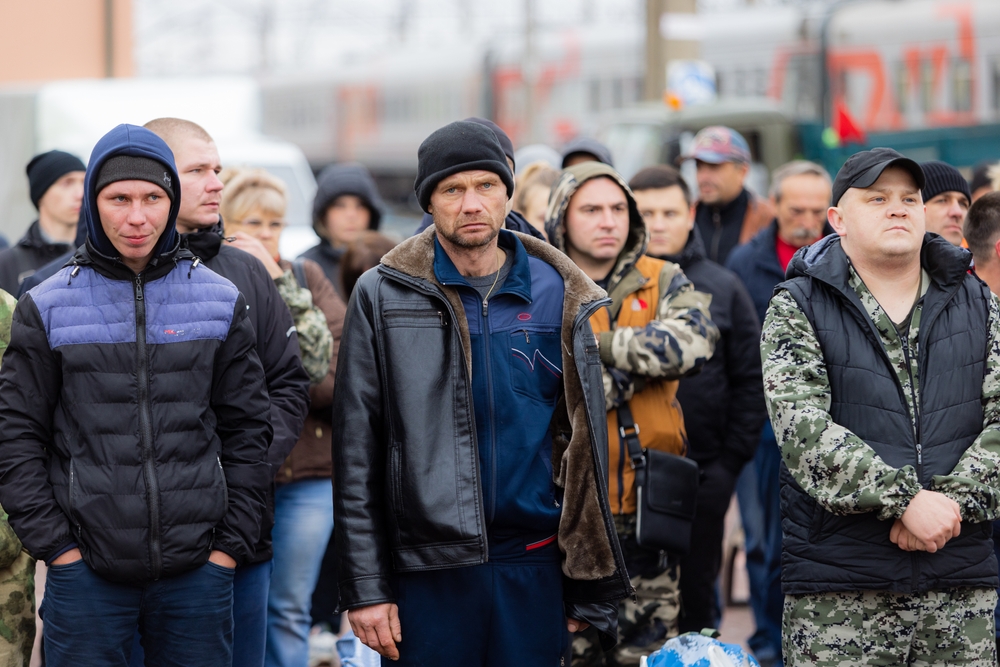
Russian conscripted men at a soldiers recruiting office during Russia's military mobilization. Photo: Dmitriy Kandinskiy / Shutterstock


However, the images of Russia’s war that circulate around the world are only a piece of a bigger puzzle. They are the most brutal manifestation of the patriarchal culture of violence, deeply rooted in the Russian political system and social relations.

Violence warping the Russian political system

Violence is inherent in the “traditional” system of values which the state apparatus and the Orthodox Church actively promote. The culture of violence is based on the cult of toxic (“hegemonic”) masculinity, which refers to hierarchy, control and legitimisation through force – the principles supposed to organise the social order. These all appear at different legislative, political and economic levels. Aggressiveness, rivalry and domination are appreciated and usually combined with xenophobia, chauvinism, misogyny and homophobia. An overwhelming amount of state propaganda employs hate speech as one of its essential tools. For years, propagandists and top state officials, including Putin, have extolled the destructive power of Russian weaponry, including the state’s nuclear arsenal. As philosopher and culturologist Oksana Timofeyeva has noted in January in her article for Novaya Gazeta Europe, the authorities offer the nation a rich “menu” where everyone will choose something for themselves. “If you don’t want to hate Ukrainians, you can hate Asians or gays. The main thing is to feel hatred towards the enemy.”

The patriarchy is accompanied by paternalism: those in power infantilise citizens and expect them to surrender their rights and freedoms and put their lives in the hands of the political leadership. The model of state governance also reveals the colonial-imperial mentality of the rulers. Russia is formally a federation, but in fact, it is an overcentralised unitary state where Russianness (российскость) is often equated with belonging to the Russian ethnos (русскость). The government’s ostentatious emphasis on Russia’s ethnonational diversity only masks discrimination against non-Russian ethnic groups. This can be seen in both everyday interpersonal relations and state policies. The languages of ethnic and national minorities in education are downgraded while their cultural heritage is ignored. Ultimately, Moscow replaces these groups’ historical memories with a unified narrative of a “good Russian empire”.

Anti-colonial discourse is increasingly popular among non-Russian intelligentsia and activists. It is not rare to hear the opinion that eradicating minority identities has much in common with the officially declared goal to “de-Ukrainise” Ukraine. This allegation is stoked by the disproportionately high percentage of non-Russian conscripts forced to join the army (Buryats, Kalmyks, Bashkirs, Dagestanis and others). Even more alarming is the forced military mobilisation that targets small indigenous groups threatened with extinction, which calls into question their survival over the next few decades. This has affected, among others, the Vepsians living in the north of Russia (their numbers have fallen below 5,000) and the Udege (living in the Far East and numbering below 1,500).

The way the ruling elite does politics largely matches up with the model of leadership that prevails in the criminal world. It is based on intimidation, the demonstration of strength, contempt for the weak, and the readiness to take revenge for real or perceived insults. This model has also entered the canon of Russian diplomacy and the broader political culture, thus making it fundamentally different from the western political culture founded on dialogue and compromise. The illegal military recruitment of prisoners by the mercenary Wagner Group is a quintessential illustration of the political and criminal spheres becoming tightly intertwined. It also demonstrates the ultimate unravelling of the judiciary and the link between crime and punishment.

Also, the state monopoly on violence has been, in fact, “outsourced” into the hands of criminal groups. Information on the mercenaries executing recruits who refused to follow orders or continue in military service was widely publicised in 2022. One of the executed, a former prisoner Yevgeny Nuzhin, was bludgeoned to death with a sledgehammer in November 2022. The video-recorded execution was a punishment for his voluntary surrender to the Ukrainian army. The sledgehammer has now become a peculiar symbol of Russia’s fight against “traitors”. The authorities also introduced the cult of fallen criminals as national heroes, who have “redeemed their guilt” by shedding blood in the fight against so-called Ukrainian Nazism. This “banalisation” of crime is intended to make the whole population complicit in the war and sow moral chaos to prevent anti-government protests. The cult of crime, violence and hate speech is supposed to “zombify” the audiences, making them obedient and susceptible to propaganda manipulation.

Slaves to traditional social roles

The patriarchal family, school, army and interactions with the oppressive state have perpetuated the cult of hegemonic masculinity for generations. Interestingly, both men and women are equally responsible for bringing up young people in the culture of violence. As one of Russia’s leading sociologists, Alexei Levinson, pointed out in an interview in February 2023, while women tend to support the war less often than men, there is no simple male-female divide with regard to the attitude towards “genuine maleness”.

A domino effect of oppression emerges where violence reproduces itself at various levels of socio-political organisation. As psychologist Stanislav Khotskiy wrote for the independent portal “Verstka” in May 2022, the socialisation of boys and men in Russia (especially in the provinces) involves affirming strength and aggression; men should never show weakness or let anyone “humiliate” them. In contrast, relatively little attention is paid to critical thinking and intellectual reflection, leading to emotional infantilisation and fatalism.

In this way, a form of Social Darwinism is promoted: if one does not want to be attacked or humiliated, one should attack or humiliate others first. To feel safe, one joins those who seem stronger, and the rules of ethics or morality boil down to quasi-tribal thinking: they apply only to one’s group. The “outsider” does not need to be taken into account. This approach excludes dialogue as a principal instrument for building social relations. At the same time, it justifies “pre-emptive” aggression that must be accompanied by a deep belief in one’s moral superiority and rightness. These principles are also reflected at the level of state propaganda. According to the official narrative, Russia was allegedly forced to invade Ukraine for the purpose of pre-emptively defending the Donbas population and Russia’s security.

A Russian male can therefore only function in two roles. Either he dominates (and is then a “real” man), or he submits (which leads to a sense of humiliation and frustration). It is no coincidence that the motivation of many men going to the front, despite their full-fledged lack of support for the invasion, is the fear of violating the patriarchal canon of masculinity. In recent years, the belief that “a real man should do military service” has noticeably solidified in Russian society. According to a survey by the independent Levada Centre, between 2015 and 2019, the percentage of supporters of this opinion rose from 42 to 60 per cent. Moreover, under wartime conditions, service in the army is presented as the only effective and praiseworthy path to social advancement. It is to be assumed that a new social stratum, made up of those who have participated in the “special military operation” and their families, will underpin the further militarisation of public discourse.

In many cases, even the fear of death turns out to be weaker and more abstract than the embarrassment of violating a social norm, or the fear of state authorities in the case of refusal. People generally do not believe they can break out of the paradigm of social roles imposed by the system, especially in the provinces. Although traditional notions of masculinity are increasingly contested, particularly by young people in the big cities, the state propaganda machine and law enforcement agencies discredit this contestation as “hostile to the Russian civilisation”.

A key figure in the Russian patriarchal system is Vladimir Putin, who is surrounded by a growing personality cult. He exudes a loutish, criminal vocabulary and presents himself as an “alpha male” in contrast to weak western leaders (Western democratic culture is sometimes explicitly referred to as “gay”) and “vulnerable” women. While Ukraine, including its armed forces, increasingly possesses the face of an empowered woman, Russian women appear in propaganda discourse in three ideal types, and they are always portrayed as subjugated. Firstly, the women’s job is to give birth to cannon fodder (according to a saying attributed to Marshal Zhukov that there is no need to worry about losses among soldiers because “women will give birth to new ones.” Secondly, women send their loved ones to the front: their sadness and fear must be dutifully accompanied by obedience to authority and pride in heroes. Thirdly, female clerks and propagandists are supposed to glorify the leader’s wisdom on TV screens and propagate hate speech against his enemies.

A powerful tool of the cult of violence instilled from above is the education system – from kindergartens to universities. It is not uncommon in Russian schools to see psychological and sometimes physical violence used against pupils by teachers (educators, in turn, are subject to political and psychological pressure from officials). Still, symbolic violence plays the most significant role in this context. It boils down to the authorities’ imposition of selected ideas and values to perpetuate their political domination. They are presented as the only legitimate ones with no alternative. Patriotic education classes are often reduced to promoting hatred against the “enemies of the fatherland” and the affirmation of war as a way to resolve disputes in foreign policy. The curriculum promotes the idea of the state’s primacy vis-à-vis the individual, as well as the cult of armies, territorial conquests, and strong, authoritarian power. Political repression – a particular manifestation of the state’s monopoly on institutionalised violence – is de facto presented not as a violation of the social contract but as an act of restoring order. Honesty requires mentioning that some teachers still attempt to boycott the government’s guidelines. However, the repressive apparatus and the administrative machine monitor the loyalty of teachers and students. Minors and their parents are harassed or persecuted by law enforcement bodies for expressing anti-war views. Among recent cases, in February 2023, school authorities in Yefremov (Tula region) called in the police and FSB because of an anti-war drawing by a sixth-grader, Maria Moskalova. The case was considered serious: her single father is facing prison for discrediting the Russian army, and the girl may be sent to an orphanage.

From the cradle to the grave: violence entrenched in Russians’ lives

It is not an exaggeration to say that violence accompanies Russians throughout their lives. Moreover, Russian history has not witnessed any other model of state organisation than the rulers’ oppression of the ruled, reproduced in various dimensions at the lower levels of the social ladder.

Citizens experience humiliation, threats and direct physical violence in their contact with the state machinery, represented by officials or officers of the security services. According to research by the independent Levada Centre, in 2019, around ten per cent of Russians were subject to “torture” (serious physical or psychological violence) by state security bodies. Also, around a quarter of the population came into conflict with law enforcement agencies in one way or another and became victims of broadly defined harassment. Stunning as they may seem, these figures – according to sociologists – may be underestimated, as much of the violence is not perceived as a norm violation.

As the former director of the Levada Centre for Sociological Research, Lev Gudkov, put it, “violence has become part of the everyday norm.” Violence committed by the authorities, a part of Putin’s revived totalitarian legacy, is generally not met with opposition. Citizens passively adapt to rules set by the oppressive state; as they see no possibility of effective resistance, they accept the existing model of relations as natural and lacking any alternative. According to Gudkov, this attitude has become so entrenched that attempts by third parties to break this paradigm often provoke a feeling of discomfort and resentment. People who suffer from a nagging sense of injustice and lawlessness and, more importantly, realise that the injustice cannot be redressed, often vent their frustration on the vulnerable: women, children, subordinates, customers at state offices, and others. 

Feminist organisations regularly complain about frequent violations of patients’ rights in maternity wards. They are often objectified and suffer from physical and psychological violence during delivery, and medical staff ignore WHO recommendations. Patients in other wards are also objectified; the situation is particularly alarming in psychiatric hospitals. It is worth noting that so-called repressive psychiatry (political abuse of psychiatry) has once again been promoted in Russia under Putin’s rule and it has become one of the tools for persecuting the regime’s opponents. According to the “Human Rights in Mental Health – FGIP” organisation, between 2014 and 2021, more than 30 people were victims of repressive psychiatry, among them the best-known case is the Yakut shaman, Alexander Gabyshev.

In a 2019 Levada Centre survey, a quarter of respondents announced that they had encountered domestic abuse in their immediate environment. Often, the official data on its scale are severely underestimated as many cases are never officially registered. According to calculations by women’s organisations, between 2020 and 2021, more than 70 per cent (2,680) of all women killed during this period died as a result of domestic violence. In many cases, the tragedy could have been avoided if law enforcement agencies had responded to victims’ pleas for help.

There are formidable systemic barriers to domestic violence prevention, among them a lack of adequate training and elementary sensitivity regarding the police and officials. A relevant law has never been adopted. Instead of properly targeting this issue, the Russian parliament did the opposite. In 2017 it partially de-penalised domestic violence (now the first beating is punishable only by an administrative penalty, most often a small fine), and the situation in this area has significantly deteriorated. The statistical data on female convictions also speaks volumes about the scale of the problem: in most cases, women convicted of homicide committed it in self-defence against domestic violence. Meanwhile, the repressive apparatus frequently persecutes organisations that help victims.

In 2021, prisoners’ rights activists from the Gulag.net initiative publicised proof of systemic torture in Russian penal colonies (the acts of torture were perpetrated or organised by the Federal Penitentiary Service and FSB employees). Moreover, the prison experience is relatively familiar to a significant proportion of Russians. Historically, it has been one of the factors forming the Russian cultural code. During the Soviet period, around eighteen million people went through the Gulag system. Prison culture is not only popular (among some social groups, time in prison is still a typical part of male biographies), but also often romanticised. Prisoners are sometimes perceived as noble rebels, pursuing popular notions of justice. Moreover, the rules governing the criminal world (понятия) and prison jargon have permeated state politics and business. Vladimir Putin has been using them as elements in his leadership image for years.

In Putin’s Russia, the number of prisoners per 100,000 of the population is one of the highest in Europe and the conditions in prisons are often deplorable. Also, prisoner rehabilitation remains at a very low level. According to a Council of Europe report from early 2020, the percentage of prisoners per 100,000 of the population in Russia was three times the average for member states (356 versus 103.2). The average mortality rate was around 70 per cent higher than the average, and the expenditure on prisoner maintenance was the lowest among the organisation’s members. This results, among other things, in the dire state of medical care in prisons. At the same time, the average length of imprisonment was four times higher than in Europe, where it was around eight months. Moreover, there is widespread awareness that an innocent person can end up in prison at any time and that those responsible (corrupt officers, prosecutors and judges) will probably never be punished. According to Russian Supreme Court statistics, the percentage of acquittals in courts has for years remained below 0.3 per cent.

Society and war

For decades, historical propaganda, great-power rhetoric, and geopolitical revanchism have served as compensation for Russians’ lack of political agency, deepening economic difficulties and lack of vision for the future. The acceptance of violence and war, however, is mainly passive and fatalistic. A large part of the public is used to being subordinate to the state and does not believe that individuals can influence the course of events. In other words, people often perceive the government’s decisions as an unavoidable natural disaster.

Russians have been severely poisoned by the culture of violence, which they widely perceive as a norm. One aspect of this intoxication is their indifference towards the Kremlin-sponsored propaganda that spreads genocidal, anti-Ukrainian hate speech. Many question the basic facts related to the war and the very existence of objective truth. The hysterical hyperbole that officials and propagandists employ in their rhetoric has ultimately led to a severe erosion of language as a tool to describe reality. It is also worrying that, under wartime conditions, Russia’s traditional contempt for human life has evolved into an open cult of death propagated by the state apparatus. Death for the fatherland is presented as a desirable alternative to a poor and meaningless life. Vladimir Putin and his leading propagandists have made such suggestions, and this message is also contained in social advertisements encouraging people to go to the front. 

The “banality of evil” will remain a serious social problem in the long term. The massive influx of weapons and traumatised war veterans from Ukraine will only exacerbate it. There is a severe risk that Russia will witness increased violence unseen since the 1990s, both in the public and private spheres. Regardless of how and when the war ends, its long-term social consequences will likely prove disastrous for the Russian population. The legacy of the war will remain for decades to come. Russians will not be able to confront this legacy unless they regain their political agency. Only political liberalisation can become a cure and a vaccine against the culture of violence that has prepared the ground for today’s aggressive war.

Maria Domańska is a senior fellow at the Warsaw-based Centre for Eastern Studies (OSW). She specialises in Russian domestic politics.

, ,

Partners

Terms of Use | Cookie policy | Copyryight 2025 Kolegium Europy Wschodniej im. Jana Nowaka-Jeziorańskiego 31-153 Kraków
Agencja digital: hauerpower studio krakow.
We use cookies to personalise content and ads, to provide social media features and to analyse our traffic. We also share information about your use of our site with our social media, advertising and analytics partners. View more
Cookies settings
Accept
Decline
Privacy & Cookie policy
Privacy & Cookies policy
Cookie name Active
Poniższa Polityka Prywatności – klauzule informacyjne dotyczące przetwarzania danych osobowych w związku z korzystaniem z serwisu internetowego https://neweasterneurope.eu/ lub usług dostępnych za jego pośrednictwem Polityka Prywatności zawiera informacje wymagane przez przepisy Rozporządzenia Parlamentu Europejskiego i Rady 2016/679 w sprawie ochrony osób fizycznych w związku z przetwarzaniem danych osobowych i w sprawie swobodnego przepływu takich danych oraz uchylenia dyrektywy 95/46/WE (RODO). Całość do przeczytania pod tym linkiem
Save settings
Cookies settings