
Text resize: A A
Change contrast

Disinformation can be tackled through everyday habits

A conversation with Agnieszka Legucka, an analyst with the Polish Institute of International Affairs. Interviewer: Maciej Makulski


MACIEJ MAKULSKI: Do you see a qualitative difference in Russia’s information war strategy in recent times, especially since the beginning of the full-scale invasion of Ukraine? Or is it rather more of the same?

AGNIESZKA LEGUCKA: We are definitely in an information war. On the one hand Russia has been challenged by several blockades, especially in the European Union, of its so called media like RT, Sputnik, or 60 минут (60 minutes, a TV show broadcasted on the state-owned Channel One Russia – editor’s note). On the other hand, Russia has adapted to this new situation by moving to the “underground”, as seen through closed Facebook groups. Russian trolls have started to be much more active in several different countries. There is evidence that the trolls are very active in countries such as Hungary and Germany, which might be seen as weak spots.

April 29, 2023 - Agnieszka Legucka Maciej Makulski - InterviewsIssue 2 2023Magazine

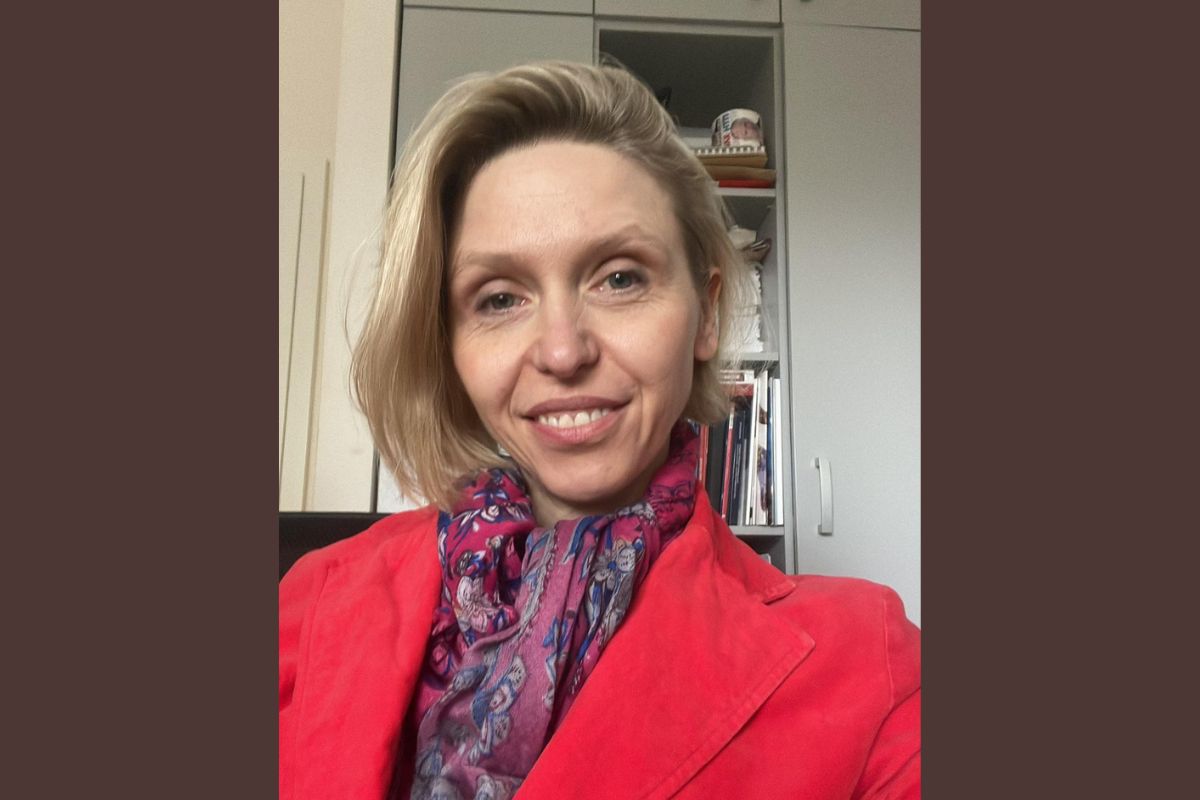
Photo courtesy of Agnieszka Legucka

How can we see the impact of the Russian trolls on those societies?

Opinion polls show that people tend to believe in conspiracy theories, such as that Ukrainians are the US’s puppets. Information that sanctions on Russia allegedly do not have an impact on Russia is also spread widely in those countries and it finds fertile ground among people there. Another aspect showing Russia’s adaptation to the new reality is the role of China. After the invasion of Ukraine, China has helped Russia to spread misleading messages and narratives. Interestingly, during the pandemic it was the other way round – it was Russia that helped China to amplify messages about US-owned labs in Ukraine that spread the virus. The two countries changed their roles now. But this type of spreading of false information is not limited to the activity of trolls on social media, but it has been also present in international debate, even during UN Security Council meetings.

In this second case, who is the target audience?

It is a diverse audience. This official state level does not appeal to the hearts and minds of Europeans or Americans, but mainly the countries of the Global South.

Speaking about the West, one of the main issues for years has been different perceptions of Russia as a threat. Do you see the chance to overcome this now, or is it still a prevailing issue when it comes to the western reaction to Russia and its hostile activity online?

There are still different approaches to Russia because there are different understandings of Russian threats. The divisions are clear between, on the one hand, Poland and the Baltic states and, on the other hand, Hungary or even Slovakia who, historically speaking, possess a different experience regarding relations with Russia. Therefore, opinion polls show much warmer attitudes towards Russia. Even regarding the war in Ukraine the perceptions are different. And of course, these perceptions differ also in countries like Germany or France. But even if we see these differences, the war in Ukraine has shown that these perceptions were so far beyond logic and rationality that the conflict was a huge shock for the whole western world. From my perspective, there is no way to return to business as usual with Russia and what we had observed before the invasion. Russian actions are essentially decoupling the country from the West, not only in terms of economic or energy relations but also in terms of the digital information bubble. But I would also point out that from our perspective it is important to think about how we can influence Russian society, because it is becoming much more difficult than it was ever before.

Do you see any way to influence Russian society?

The only available channel we have – and it is also becoming very limited – is YouTube. Since the invasion started, Russians have been forced to use VPNs to somehow circumvent restrictions that the Russian authorities imposed (for example, they blocked Twitter and Instagram). YouTube seems to be the only bond left between the West and Russia in the infosphere. Therefore, it is starting to look like we, as societies, live on two different planets. And it is important to bear in mind that at some point we will not understand each other.

You described Russia’s adaptation to this changing reality. Is the West adapting too?

I see evolution regarding the approach of the European Union, which can be traced back at least to 2015, after Russia attacked Ukraine for the first time and when the EU established the East Stratcom Task Force focused exclusively on fighting Russian disinformation (FIMI, Foreign Information Manipulation & Interference). After Brexit, when Russia started to influence internal state affairs like the US elections or protests in Catalonia, the EU understood that Russia is a long-term threat to internal processes inside the EU. In 2018, the EU initiated an Action Plan against Disinformation and the team East Stratcom Task Force has grown as well. After the pandemic the EU understood that European External Action Service researchers need to also malign activity of other actors, including China. The activity of this project does not end with research but it also encompasses recommendations and training for people on how to strengthen the resilience of societies against disinformation inside the EU, as well as in the Eastern Partnership countries. This last aspect is very important because the EU is trying to share good practice with countries outside the bloc, and at the same time learn from those countries, especially Ukraine, which possess a lot of experience concerning these battlefield realities. Of course, Ukraine has been very successful in fighting Russian disinformation and Russia’s information war.

Indeed, Ukraine has gone through many steps much earlier than other countries…

Ukraine has been on the front lines of the cyber-battlefield and was the first in blocking Vkontakte (Russian social media) and other Russian platforms and channels used for propaganda purposes. I still remember discussions in which people asked why Ukrainians are imposing these blockades, arguing it is not a democratic measure. But now everyone understands that there are no other options – Russian channels and platforms are not media by any means, but instruments in the information warfare.

Let’s talk about the countermeasures to the information war. What is the best way to strengthen social resilience?

There is no silver bullet that will resolve all the problems related to resilience. Resilience itself is a nice buzzword but everything it embraces like education, codes of conduct, good practices, cyber hygiene and fact-checking needs to be adopted by countries and spread throughout societies. This is the most difficult part.

Why is it so difficult?

Positive messages are difficult to spread. Disinformation spreads quickly because it is built on negative emotions. Messages based on emotions appeal to us more effectively than, for instance, fact-based information without any emotional component.

A fact-checked message never reaches the same audience as a misleading message does…

Exactly, this negative information is much more clickable and the truth is perceived as boring.

That does not sound so encouraging…

I always argue that no one wants to be manipulated. We can put it in the context of an election in any country. I want to be sure that a man or a woman who represents me was chosen by me and that my choice was not manipulated by someone else. That is the kind of motivation that I have to fight propagandistic messages. I also compare fighting disinformation with a diet.

In what way?

We can look at what we see and watch on social media in the same way as different products we consume. If we consume rubbish food, it does not make us healthier or thinner. So disinformation is like rubbish food. We need to think that consuming it is not good for us. So, to stay healthy we need to be careful regarding what we consume and what we share on social media.

What other practices are effective?

I think the most effective resilience occurs in those societies in which critical thinking exists. It means – and research confirms that – the higher your readership the higher level of critical thinking among citizens you have. So, it is not only about how much training you conduct to inoculate people against disinformation. It is also about how many books you read. So it is about basic habits and general education.

Agnieszka Legucka is a senior research fellow at the Polish Institute of International Affairs and a professor in security studies at Vistula University.
Maciej Makulski is a contributing editor with New Eastern Europe.

, ,

Partners

Terms of Use | Cookie policy | Copyryight 2025 Kolegium Europy Wschodniej im. Jana Nowaka-Jeziorańskiego 31-153 Kraków
Agencja digital: hauerpower studio krakow.
We use cookies to personalise content and ads, to provide social media features and to analyse our traffic. We also share information about your use of our site with our social media, advertising and analytics partners. View more
Cookies settings
Accept
Decline
Privacy & Cookie policy
Privacy & Cookies policy
Cookie name Active
Poniższa Polityka Prywatności – klauzule informacyjne dotyczące przetwarzania danych osobowych w związku z korzystaniem z serwisu internetowego https://neweasterneurope.eu/ lub usług dostępnych za jego pośrednictwem Polityka Prywatności zawiera informacje wymagane przez przepisy Rozporządzenia Parlamentu Europejskiego i Rady 2016/679 w sprawie ochrony osób fizycznych w związku z przetwarzaniem danych osobowych i w sprawie swobodnego przepływu takich danych oraz uchylenia dyrektywy 95/46/WE (RODO). Całość do przeczytania pod tym linkiem
Save settings
Cookies settings