
Text resize: A A
Change contrast

North Macedonia in the crosshairs of Russian propaganda

North Macedonia may not be the first country that comes to mind when discussing Russian propaganda. Despite this, the small Balkan state continues to grapple with consistent efforts by the Kremlin to influence domestic politics. Such campaigns are ultimately designed to challenge the nation’s continued desire to further integrate with the West through EU membership.

Supporting democracy does not come cheap, but then again freedom is also costly. In Kherson, Bakhmut and Zaporizhzhia the cost is in human lives. In Europe it is in the ever-rising electricity and utility bills. For North Macedonia, a small country in the middle of the Western Balkans, prices are not the only problem. The youngest member so far of NATO, for the past several months especially, has faced textbook hybrid attacks intended to create fear, panic and distrust in state institutions.

February 15, 2023 - Jovan Gjorgovski - AnalysisIssue 1-2 2023Magazine

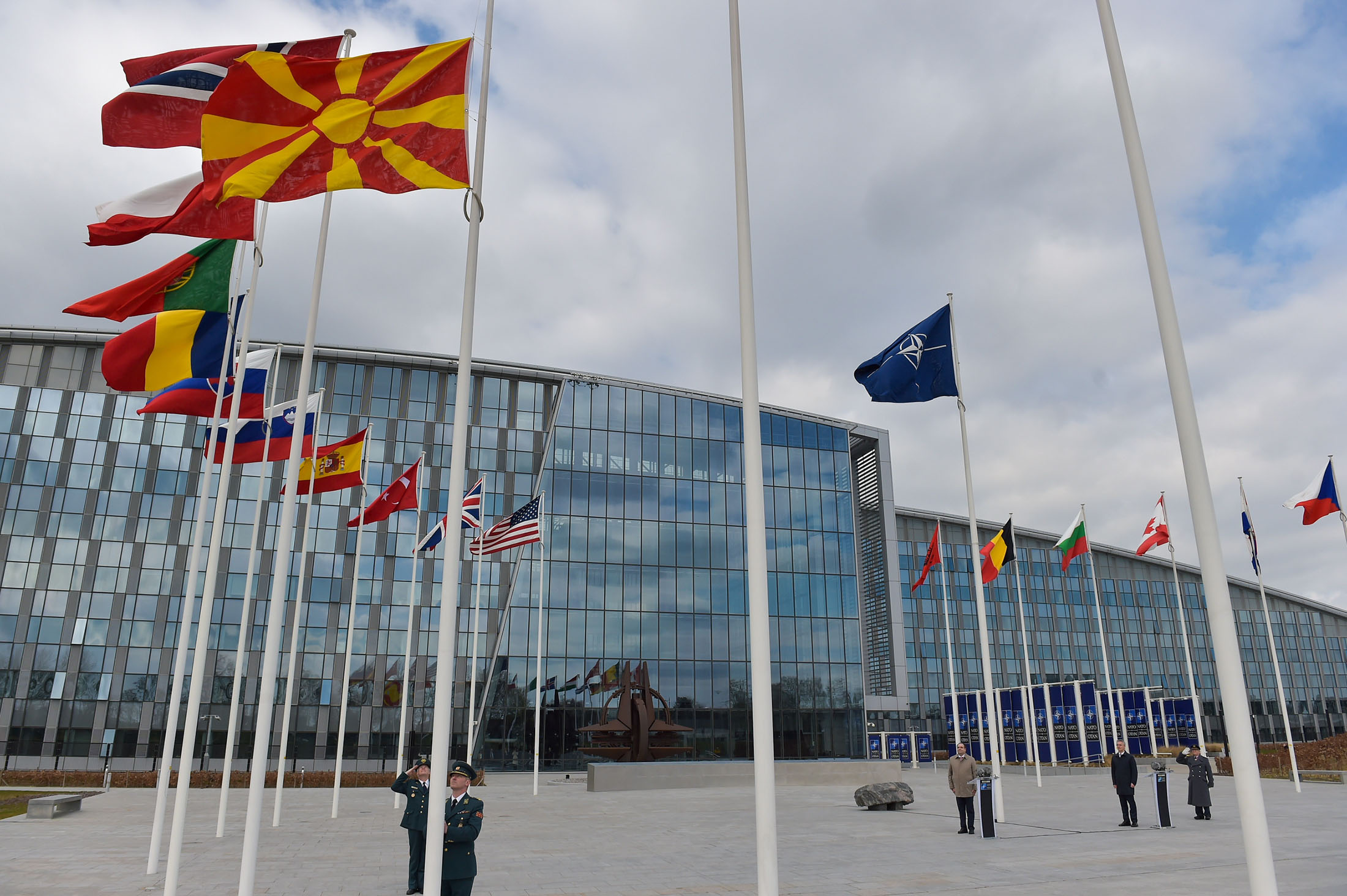
Flag raising ceremony to mark the accession of North Macedonia to NATO in 2020. The country is one of the main contributors per capita in terms of military hardware and assistance to Ukraine since the start of the war. Photo courtesy of NATO.

Ever since the start of the war in Ukraine and the declared support of the Macedonian leadership for Kyiv, the country found itself on the Kremlin’s “naughty” list, deemed by the Russian leadership as unfriendly. This act was unfortunately not considered too serious by the government or the Macedonian population.

200 bomb threats in three months

It all started with a bomb threat in one high school, something that does not regularly happen in this country. Two days later there were seven bomb threats in several high schools. Emails were sent via Proton Mail (an anonymous email service) and no one claimed responsibility. At the same time, the threats were not taken seriously. Almost everyone, myself included, believed that it was probably the work of a teenager who wanted to get out of some kind of test and was trying to avoid going to school.

Day by day, however, the threats continued. Schools were evacuated, parents were angry, the capital Skopje was blocked by police and bomb squads, finding each and every time that the threats were false. Journalists raised the issue of whether it was some kind of a hybrid attack, but even then the politicians did not admit publicly that it was actually Russia that was behind these events. Of course, in the current political situation in North Macedonia, every moment of this saga is used for political gain in one way or another. The most fortunate development is that all of the reported bomb threats have been hoaxes. There were even several arrests by the police. Some of those arrested were pursuing nothing more than publicity stunts, while some were just poor copycats of the real perpetrators.

The situation became more serious when, apart from high schools, bomb threats were made in primary schools and shopping centres. The peak came when in one day there were almost 50 reported bomb threats in schools, shopping centres, a TV station, the foreign ministry and most notably the Skopje international airport, causing the entire capital to grind to a halt. On the same day, a bomb threat was even reported in one of the biggest hotels in Skopje ahead of a public event that was supposed to be attended by the prime minister, Dimitar Kovachevski, and several members of his government. In one of the emails the sender reportedly claimed that there were bombs in 23 locations and that they will continue with the threats every day. The ending of the message was very clear: “We can continue to do this or you can lift the sanctions.” This was when some of the politicians and experts went public in recognising the hybrid attack and pointed the finger at Moscow.

The problem for North Macedonia in this regard is that even though the culprit is clear, there is little the country can do to prevent these hybrid attacks. This is largely due to the fact that the state IT and security infrastructure is underdeveloped and the attacks come from a foreign country which is bent on creating chaos, especially in the Western Balkans, which is fertile ground for disruption.

Russian propaganda in North Macedonia

Why would Russia target North Macedonia, a country of no more than two million people with a small army? The country is a member of NATO, but also one of the main contributors per capita in terms of military hardware and assistance to Ukraine since the start of the war. Almost all of North Macedonia’s tanks and some combat vehicles were sent to Ukraine. Reports also indicated that the government sent five planes – which were coincidentally bought from Ukraine in 2001 – back to Kyiv. The assistance was even publically recognised by Mikhail Podolyak, advisor to President Volodymyr Zelenskyy, who publically thanked North Macedonia for the help in Macedonian.

While this was going on, Russian Telegram channels almost regularly reported videos of destroyed Macedonian tanks and equipment, without any proof that they were in fact Macedonian. Yet, since the main task of Russian propaganda is to sow discord, it set to work. One video in particular apparently showed Macedonian military equipment sent to Ukraine via a train. The video went viral even though it was later disproven and geo-located in Belarus. Yet, videos like this were widespread on social media, encouraging many to ask: why is North Macedonia sending tanks to be destroyed in Ukraine, and getting nothing in return?

This was a difficult question for some to answer, especially considering the amount of fake news being spread since the start of the war. Some politicians in the ruling coalition tried to explain that North Macedonia is a member of NATO and that Ukraine in many ways is similar to us, even though it is not a NATO member, and that their fight is ours as well. And in all honesty we do have a lot of similarities. Both Macedonians and Ukrainians had and still have other nations denying our national identities. Both countries have been part of the communist bloc in the past and now want a clear European perspective. There are historical, linguistic and even religious issues with our neighbours. Ukraine’s fight therefore is our fight because the Ukrainian people suffer the same discrimination and denial as we do. And even though this might be a sufficient reason for most Macedonians to condemn Russia and support Ukraine, it somehow was not enough.

The problem here is not just Russian propaganda, but also the incapability of institutions to deal with it. Most importantly, the fault here lies with the political parties. The ruling coalition publicly supports Ukraine, but they have larger issues at hand at the moment: rising energy bills and food prices and above all the desire to stay in power. For some political parties, especially the ones in opposition, the narrative that is most commonly used in private is that North Macedonia is a small country with a lot of problems and Ukraine should not be at the very top of the list of priorities. This is harmful in the sense that it deepens the divide in a country that has rarely been united. To explain this, we need to go back a few years.

Russian manipulation of the dispute with Bulgaria

North Macedonia is a NATO, but not an EU, member, and NATO membership for us came at a price. The country known to all of us as Macedonia got the prefix – North – after the agreement with Greece a few years ago. All public monuments were re-christened, names of public institutions changed and even birth certificates are different now. We as Macedonians even got a new derogatory term – North Macedonians. While all of this was happening, the Russian embassy in North Macedonia kept using the old name and used social media to refer to its “brotherly people” as Macedonians. The entry to NATO was noted by the Kremlin, but not taken too seriously. In the country, Russia was not seen as a potential threat, even though on the eve of the constitutional amendments for the changing of the name there were protests in Skopje by two pro-Russian political parties, the leader of one carrying a Russian flag on top of an armoured vehicle. Unfortunately, this was not interpreted as foreign influence or hybrid warfare by the public.

North Macedonia is not yet a member of the European Union and this is where the malign influence has had its peak. It started with a veto from Bulgaria in the Council of the EU to block the start of membership negotiations. The dispute with Bulgaria is deep and goes back to the end of the Second World War, but the veto proved to be the perfect opportunity for Moscow to employ misinformation, disinformation and fake news to sow doubt in the EU and NATO. One funny example involves holidays and national heroes. For instance, the Russian embassy in Skopje would congratulate a Macedonian public holiday, calling it Macedonian on social media, while at the same time the embassy in Sofia would do the same thing, calling it Bulgarian. A cheap trick, easily discoverable, but not for the average person who is fed information primarily from social media and who just wants to believe the lies he or she is being served.

In a recent poll conducted by the International Republican Institute in North Macedonia, support for EU membership has fallen by 11 per cent compared to last year. Serbia is now regarded as the most favourable partner and the EU is second, a drastic change from just two years ago when Brussels was seen as the primary partner. What struck me the most personally was that Nikola Gruevski – the former prime minister who was convicted in North Macedonia for money laundering and escaped to Hungary thanks to Viktor Orbán – is viewed as the most popular politician. This is a person who is on the US blacklist and is still wanted for serious crimes in North Macedonia. The findings from the poll are not only the result of interference from Moscow, but unfortunately also due to the failure of Brussels to help resolve the issue with Bulgaria and fast track the accession negotiations.

Dangerous rhetoric

The dispute with Bulgaria worsened when the Bulgarian president, Rumen Radev, summoned his national security council for consultations regarding the protection of Bulgarians living in North Macedonia. Sound familiar? The divisive discourse between Skopje and Sofia was fuelled by Bulgarian politicians like Radev but also Kostadin Kostadinov, the leader of the far right “Revival” political party and a pro-Russian politician who openly denies the existence of the Macedonian nation and the Macedonian language. His political party won ten per cent of the national vote in the last elections thanks mostly to its pro-Russian, anti-EU and anti-American rhetoric. He and other Bulgarian politicians claim that Macedonians are a communist invention created by Lenin and Tito, a claim that is not only offensive, but dangerous in the long run.

On the other hand, in Macedonia there is the political party “Left” led by Dimitar Apasiev, who even publically met with the Russian ambassador in North Macedonia several times, but never with their Ukrainian counterpart. Apasiev openly advocates for the country to withdraw from NATO and join the Chinese “Belt and Road” initiative.

This kind of rhetoric from both sides of the border is being used and amplified by bots on social media to fuel resentment towards the EU and NATO. The narrative they most commonly use in North Macedonia is that Brussels will always protect Bulgaria because it is a member state and that basically everybody around us is against us. All in all, the war in Ukraine is raging in the Balkans as well, only not with Kalashnikovs, but with disinformation on social media, hacker attacks and fake news. Russia’s hybrid war against the West has found fertile ground in this region and amongst states which despite having a clear Euro-Atlantic orientation are vulnerable, mostly because they are not in the EU or NATO.

For North Macedonia, the path was clear since independence, the future is in NATO and the EU. The first goal was reached several years ago, the second is still a work in progress, and I believe that after all the sacrifice not even malign influence can prevent that from happening.  

Jovan Gjorgovski is a journalist based in North Macedonia and an editor with the Kanal 5 television station.

, , ,

Partners

Terms of Use | Cookie policy | Copyryight 2025 Kolegium Europy Wschodniej im. Jana Nowaka-Jeziorańskiego 31-153 Kraków
Agencja digital: hauerpower studio krakow.
We use cookies to personalise content and ads, to provide social media features and to analyse our traffic. We also share information about your use of our site with our social media, advertising and analytics partners. View more
Cookies settings
Accept
Decline
Privacy & Cookie policy
Privacy & Cookies policy
Cookie name Active
Poniższa Polityka Prywatności – klauzule informacyjne dotyczące przetwarzania danych osobowych w związku z korzystaniem z serwisu internetowego https://neweasterneurope.eu/ lub usług dostępnych za jego pośrednictwem Polityka Prywatności zawiera informacje wymagane przez przepisy Rozporządzenia Parlamentu Europejskiego i Rady 2016/679 w sprawie ochrony osób fizycznych w związku z przetwarzaniem danych osobowych i w sprawie swobodnego przepływu takich danych oraz uchylenia dyrektywy 95/46/WE (RODO). Całość do przeczytania pod tym linkiem
Save settings
Cookies settings