
How well-brought up girls became unbeatable warriors. The path from battle glory to modern feminism
The role of women in conflict is often viewed as being on the home front, far away from the front lines of battle. Despite this, the story of Poland’s struggle for independence in the First World War would not be complete without acknowledging the selfless activities undertaken by female volunteers.
One hundred and ten years ago war again came to the vicinity of the city of Kraków. What is now perceived in the West as an unparalleled tragedy, the near collapse of a civilisation and a catastrophe of lost youth was perceived then as a different story, on the verge of three empires: German, Austro-Hungarian and Russian. The outbreak of war marked the end of an unbelievable stability which had lasted more or less since the compromising political treaty conference in Vienna in 1815, with only a short interval for the so-called “Hundred Days” campaign with the Battle of Waterloo in June of the same year – a battle which marked the end of the epic connected to the revolutionary export of Napoleonic civilisation.
February 15, 2023 -
Andrzej Zaręba
-
History and MemoryIssue 1-2 2023Magazine
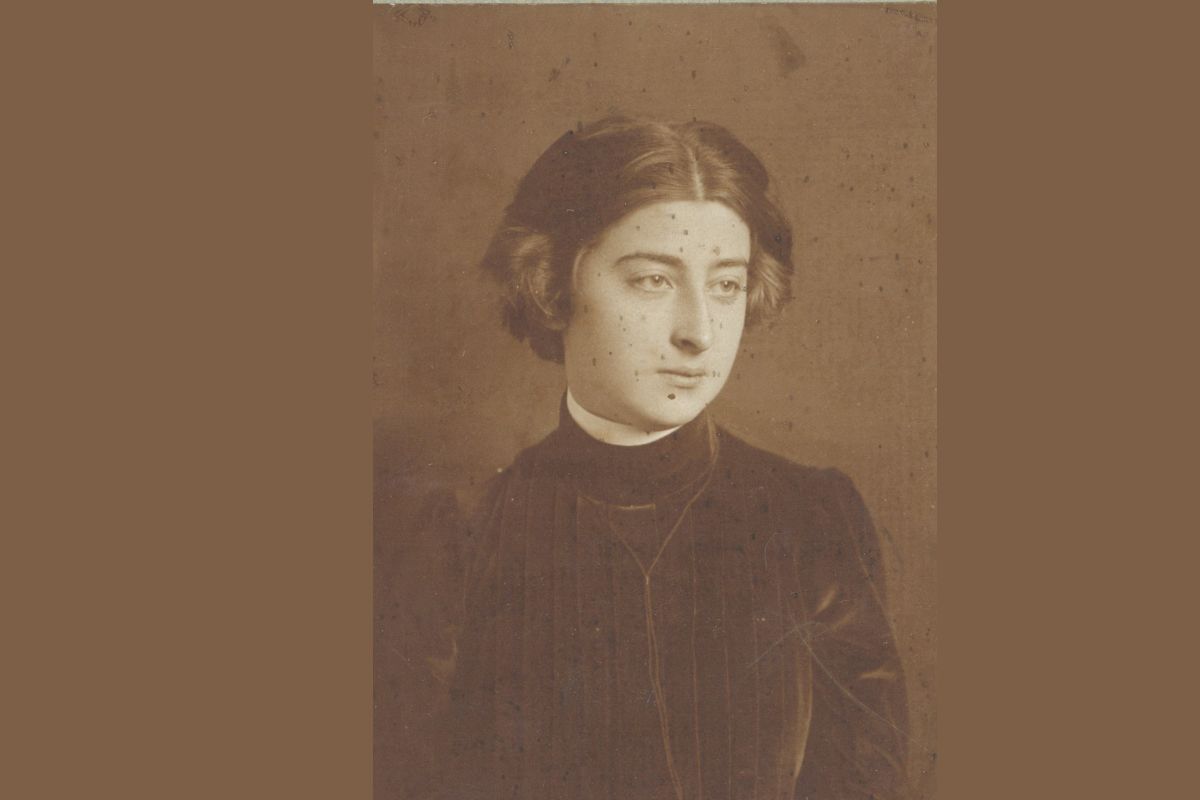
Zofia Zawisza was one of the main figures in the auxiliary women’s services of the Volunteer Rifle Group. Photo: Polona Biblioteka Narodowa / public domain
On the plains of Eastern Europe there was another element of repression – the Polish-Lithuanian Commonwealth was divided by three neighbouring monarchies and began its life as a spiritual phantom, killed just when it was coming to life as a constitutional monarchy, which could (in theory) have brought modern national identity and cooperation to the many peoples comprising the state – Ukrainians, Belarusians, Lithuanians, Jews and Germans, not to mention the Polish majority with its very complicated social strata.
Revolution in the air
A series of tragic uprisings and riots in towns which were acclaimed political centres were, one by one, drowned in blood, which only caused more political oppression around the years 1830, 1846, 1849 and 1862. The final year, which corresponds with the American Civil War, represented the start of the last gasp of the Polish-Lithuanian Commonwealth’s legacy. This date is also important as it marked the end of the agrarian serf system in the Russian Empire. Reforms were enforced directly as a means of pacifying a potential insurgency in the country among the peasant farmers. The main question for Poland in this era was how to gain much-needed victory. Knowing that “God likes to side with bigger battalions”, victory would depend on the mobilisation of the masses. The first sign of opportunity for the nation emerged with the outbreak of the Russo-Japanese War in 1904.


In the wider perspective, the Polish independence movement was divided along the line separating romanticism and realism. Russia dominated the region and the new century brought it economic prosperity – a vast territory with an absolutist regime backing hardcore capitalism. Russia acted as a great magnet, attracting business from around the world – it had everything that California or Alaska offered, minus various western-style “scruples”. There was no free press, but there was freedom in the maltreatment of the lower class.
The Polish economic elites under Russian rule came to accept their reality. Moreover, they saw a chance to integrate their territories under the rule of the Romanovs. They profited from the possibilities provided by the statist regime. The only condition was that they could not be openly interested in politics.
The socialist movement, however, was split and frustrated. One part of it, under the charismatic leadership of Józef Piłsudski, stayed loyal to the heritage of the last major movement against the Russian Empire – the January Uprising in 1863. Piłsudski became obsessed with repeating this history, but learning how to proceed proved difficult. A combat section of the Polish Socialist Party took part in an unsuccessful revolution in 1904-05. Piłsudski later travelled even to Tokyo in the hope of convincing Japanese intelligence that a vast Polish uprising was inevitable. But this was all in vain.
The last safe haven was found then in the border fortress of Kraków. Piłsudski found refuge in a flat at Number 10 Szlak Street (the present-day address is Szlak 33, right across the street from the editorial offices of New Eastern Europe – editor’s note). A whole bunch of revolutionaries joined him. The Austro-Hungarian Empire was very different from the Russian one. Although one of the three partitioning powers, since 1867 it was strictly a constitutional monarchy. The rule of law prevailed. Standards were so high (especially when compared to Russia) that a radical terrorist revolutionary named Ludwik Waryński was put on trial for political activities in Kraków, only to be found innocent on almost all charges except for the illegal use of a false identity card.
Kraków was unique with its loose atmosphere of the late art nouveau, activity in the fields of visual arts, theatre and politics, and a relatively free populace. There was no open suffrage movement like that in Great Britain, but women did play an active role in socialist activities which were – thanks to Piłsudski – now closely connected with another plan for an uprising. Right-wing action was also based on local activities, but possessed a lot more reservations towards the role of women. Both parts created their own military branches. Women were inevitably necessary to keep the newly (subtle and vulnerable) created machine going. The state of the empire let the citizens bear and keep arms, even providing them access to military facilities, but the rest was the citizens’ own burden. As small steps are the best guarantee of change, including women as a solid part of society was important, even though this was unwelcome by the majority of conservatives.
Women were constantly alert as liaisons, couriers and food providers. They repaired uniforms. They shared the same fate as revolutionaries of all kinds – terrorist actions would not be possible without their assistance – while covert actions were important where bomb plots or assassinations are concerned. Women were also more than half the population. There was only one clear exception – women were generally excluded from combat duties. Overall, there were no plans to organise and train female combat units.
A fortress and a refuge
When the First World War became inevitable, between June 28th and July 28th 1914, tensions grew in the city and the nearby countryside. Kraków lies just on the region’s political tectonic plates. Controlled by the Austrian administration, it had been fortified since 1848, when Vienna decided to end the unusual independence of the Kraków Republic. Just two years earlier, Russian expeditionary forces had marched and paraded in Błonie Park (a large field in the city which is there today as it was 200 years ago), celebrating their helpful hand which crushed the Hungarian uprising and thus saved the Habsburg possessions.
Yet, Vienna had no illusions – the Russian “ally” was too strong and there were intractable obstacles in political philosophy. Investment in defences quickened after the Crimean War, when Vienna openly betrayed the statist regime. The Russians never forgot this. Kraków became more and more fortified around the city centre, creating a complete enclosure which not only served to defend against an unexpected attack, but also as an intelligence centre and troop base. In the 1910s the city became also a refuge for the expelled revolutionaries and radicals who managed to flee from the Russian Empire. Among them were Vladimir Lenin and his wife as well as the head of the Soviet security organisation Felix Dzerzhinsky and Ioseb Dzhugashvili (later known as Stalin).
The Polish insurgent machinery started slowly to move in this period. Zofia Zawisza was one of the main figures in the auxiliary women’s services of the Volunteer Rifle Group. She resided in her family manor in Goszyce outside the city, near the border with the Russian Empire. At the beginning of the war, the Russians had left the border area and even though the everyday junction between the city and its nearby Russian neighbourhood had been busy, now every obstacle disappeared as if the long-lived dream of a united republic of Poland had come true.
The riflewomen were employed as scouts. Their capabilities were unique. Though not numerous, their unit never exceeded 30 members, most were quite well educated. Their family backgrounds gave them understanding of several languages. The Polish patriotic movement was based on two groups – the hard-working proletariat and the working intelligentsia, which consisted of former small gentry forced to labour after political repressions deprived them of their land rights. But still some could prevail in these circumstances and were deeply rooted among the chain of small manors in the country. This would prove a very important factor during the first months of the unprecedented war. The other was simply natural – eloquent, nice-looking, charming girls who could work the guards much easier than aggressive looking young males. As aforementioned, women also had the ability to understand and speak foreign languages. Zawisza was fluent in German, Russian and French (as well as her native Polish).
Although the revolutionary movement had been constantly preparing for action, a sudden change in politics took the activists by surprise. The Austro-Hungarian Empire declared war on Serbia exactly one month after the Sarajevo assassination. The leaders of the Polish movement were taken by surprise and forced to undertake some serious improvisation. Yet, the goal became clear – a popular national uprising. Spreading such information was not so easy in the early 20th century and plans had to be made in secret, and according to whatever information and even gossip was available.
The network reaches further
In this moment of history there were five to six female members within the structure. They were in charge of medical support and paramedic services. They organised local tailor workshops, producing uniforms (they had a different cut than ordinary Austrian army outfits), repairing trousers and collecting gifts. What may have seemed like trivial aspects which do not often get enough attention from military historians proved essential as no army could operate without such basic logistics. The main problem of the volunteer army was a lack of services. Every man wanted to be a hero. Thus, the burden of maintenance was put on the shoulders of the women.
One reconnaissance force was made up of seven troops, the so-called Belina’s Seven, who were proven riders high in patriotic spirits, but lacking horses. They hired standard horse-drawn carts (dorożka), packed up their arms and armour and moved across the border one August evening. Goszyce was their meeting point where plans were made, corrected and riding horses acquired. In Goszyce carts were then paid in order to return to Kraków. The women in the manor kept the cavalry in high spirits – troops were provided with operation information, food and sleep. Their main goal was preparing information before the uprising spread in the vicinity. The leaders had hoped that the march of the riflemen would spark the fire.
The women were the only means of communication in much less than real time. Reports were brought through the border back to Kraków and again to the cavalry patrol. All of them were familiar with horsemanship. They knew the country and the locals. In that way, their cart did not arouse suspicions, even the Russian local police did not take notice.
At the same time, everything hung on their accuracy and precise observations. They would visit the commander at a flat belonging to a socialist delegate to the Viennese parliament, Ignacy Daszyński which was converted into the improvised headquarters of the uprising. Piłsudski fascinated women with his charm – a male force combined with sensitivity. The women would report on the situation on the newly-opened front. After the meeting the women packed leaflets announcing the uprising, bought as much first aid gear as they could carry and galloped to the farm in Goszyce, then on to Jędrzejów. In the meantime, the Russians disappeared and only the Kraków Fortress checkpoints blocked the road. The brave girls were quickly allowed through as Polish conscripts were manning the checkpoints. On the other side, they met only one man still in Russian police uniform, apparently lost. He tried not to take notice.
In Jędrzejów the conscript commission fled before the volunteer cavalry detachment could execute the order to blow up the facility and burn the conscript list. No man’s land reached now far north almost to Kielce – the main city in the southern part of Russian territory. Around this time, the first combat victim, a Russian policeman, was shot and killed on the spot when the troops met police on the country roads. For now, the city of Słomniki was liberated by the revolutionary troops and their indispensable women volunteers. Zofia Zawisza organised new orders. The troops were hungry; they carried no rations of their own.
The main marching column of the uprising’s riflemen slowly moved towards their main goal – the city of Kielce. They were supported by a chain of manor houses. It was quite a paradox – a popular uprising organised by a socialist party was supported by the remnants of the upper class with their subtle chain of family and societal ties. All of the struggle was concentrated along the main roads which lead not only to Kielce, but further north, to Warsaw – the centre of the Russian military machine in the Polish Kingdom. After decades of political and national oppression, there were countless islands of independent society, still remaining against all odds. Yet the spark of insurgency had not ignited the flame among a majority of the masses. Key elements of the modern society remained loyal to the Russian regime – the Catholic upper clergy and political right.
On August 12th 1914 the first elements of the combat group of left radicals entered Kielce. Their female reconnaissance teams were there prior, thanks to their family connections, easily finding comfortable lodgings. They were the eyes and ears of the insurgent army. But now all was clear. The masses stayed calm, willing to act. The volunteers prepared for a long, bitter and costly war. The women organised a truly professional intelligence network. Their intelligence and message delivery system would soon reach deep inside the Russian heartland. Thus, the empire lost ground due to a most innovative, creative and educated population suddenly organising spontaneously and rejecting the Russian administration. These well-educated women fought passionately for their cause. Even though the Russian army was the most numerous in Europe, its archenemies included not just the German-speaking empires, but also the feminists doing their part in the struggle for national freedom.
Andrzej Zaręba is the illustrator for New Eastern Europe.