
For our freedom and yours
Ever since 2014 the war in Ukraine has often been thought of as a local conflict, wholly separate from wider issues. If Putin’s full-scale invasion has proven anything, however, it is that Kyiv now finds itself on the frontline of a battle to defend liberal democratic values against authoritarianism.
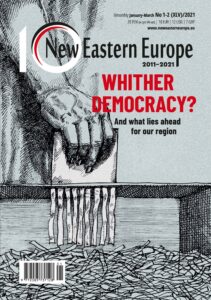
For at least a few years, if not more, we have heard many intellectuals grimly point to a growing crisis of democracy and an increase in populistic, authoritarian and even dictatorial tendencies in an increasing number of states. This trend has also been evidenced by Freedom House studies. The data these investigations have collected in recent years demonstrate that the number of democratic countries in the world has been on the decline since 2005. In addition, there have been numerous reports on the worsening quality of democracy in countries that may have not formally abandoned the democratic system of governance, but have become illiberal nonetheless.
July 15, 2022 -
Mykola Riabchuk
-
DiscussionIssue 4 2022Magazine
To illustrate the seriousness of the situation it is useful to glance at some titles of books and articles that examine the topic. Starting with the more subtle ones we can find: “Is Democracy in Decline?” (published in 2015) and “Is Transition Reversible?” (2016); or “Is Liberal Democracy in Retreat?” (2018). The more direct in tone include: “Kriza dovery, kriza demokracie” (Crisis of confidence, crisis of democracy, 2015); “Democratic Deterioration in Central Europe” (2017); “The Authoritarian Temptation” (2017); “The Return of the Authoritarian Spectre” (2018) and “The rise of illiberal politics in Southeast Europe” (2020). Finally, there are also some radically revisionist works such as ‘Rethinking “democratic backsliding’ in Central and Eastern Europe” (2018), “Post–Cold War Democratic Declines: The Third Wave of Autocratization” (2019), “From revolution to ‘counter-revolution’: democracy in Central and Eastern Europe 30 years on” (2020), “Goodbye, Postsocialism!” (2019) and The Light that Failed: A Reckoning (2019).

The end of the end of history
Francis Fukuyama’s theory presented in his infamous early 1990s book The End of History triumphantly announced the coming of a brave new world – one that would be free from visible ideological alternatives and the victory of liberalism. Starting from a decade later, the book became more and more ridiculed and criticised. As a result, we have seen many titles of texts that have twisted Fukuyama’s words, such as The End of the End of History. This was the title of a 2019 text authored by Maximillian Alvarez and published by the influential Boston Review. In 2021, the same title was chosen for the book authored by Alex Hochuli, George Hoare and Philip Cunliffe, as well as an interview with Fukuyama himself. This discussion was called “We could be facing the end of ‘the end of history’” and was published by The New Statesman.
Regardless of the circumstances, Fukuyama has never fully changed his position. He still believes that in the end liberalism will win. However, his conviction in this regard is now clearly less certain and includes the possibility of failure. This is what Fukuyama refers to as the “ultimate nightmare”. He believes it would take the form of a coalition between totalitarian China and Russia. This would be coupled with a simultaneous destruction of Ukraine and Taiwan and an inability of the West to face up to such realities. Such a situation, as Fukuyama argues, will lead to a world that is dominated by two non-democratic powers. Here, we will face – as Fukuyama states himself – the real end of the end of history.
Vladimir Putin and his advisors did not necessarily read all of these aforementioned texts. It was enough for them to observe the processes taking place in the leading states of the collective West and nudge them to Russia’s advantage. They have done this by supporting right wing and populist political parties and movements, intervening in elections, and bribing western politicians, businessmen, experts and journalists. They also widely spread their propaganda poison, which is euphemistically called “post-truth”. They recognised the susceptibility of the German elite and others who were not capable of refusing the Kremlin’s business offers. Moscow also took advantage of the helplessness of international institutions, including Euro-Atlantic bodies, in making important decisions. They also saw the reluctance among western politicians and intellectuals to see reality as it was and call a spade a spade. Many in the West continued to adhere to wishful thinking and dreams of a “democratising” Russia.
The Kremlin elite, who have successfully manoeuvred through the world of international affairs in recent years, now have reason to believe that they can succeed in a world of egocentrics, who have long been spoiled by living in peace and prosperity and who nonetheless can still be bribed. If they cannot be bribed, then they can be intimidated. If not intimidated, then cheated and openly disdained. This is what explains the promotion of labels such as Gayropa.
Standing ovations for a KGB agent
The Kremlin elite first started to gain this confidence in 1999 when the western elite did not react to the blowing up of residential buildings in Moscow and a few other cities. It is believed that these acts were carried out by Putin’s secret services. Their aim was to spread anti-Chechen hysteria in the country and help Putin, at that time a little-known KGB agent, gain power. The western response to these provocations took the form of an invitation that was issued to Putin by the Bundestag. A year later in the German parliament, he delivered a fully hypocritical speech, one for which he received a standing ovation.
Similar reactions were also seen at the time of the genocide that took place in Chechnya. Putin again received high-level invitations and ovations from politicians in the West. In France, he even received the National Order of the Legion of Honour, which was granted to him by President Jacques Chirac. A similar trend was observed after Russia’s invasion of Georgia and the annexation of 20 per cent of its territory. There were no sanctions introduced. Instead, the West launched a “reset” and an ambitious “partnership for modernisation” project.
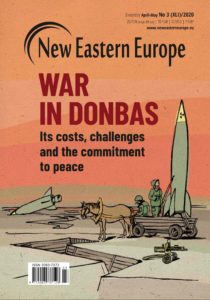
Even the annexation of Crimea and the war in Donbas in 2014 did not bring a collective awakening in the West. The minor, and rather just formal, sanctions that were passed back then hardly resembled an adequate reaction. Expectedly, they caused no real effects. Instead, they disgraced the idea of sanctions as an instrument of punishment. This is especially true when contrasted with the enthusiasm that accompanied the construction of the Nord Stream 2 pipeline.
All in all, western reactions (or lack thereof) to Russia’s atrocities over the years have encouraged, rather than discouraged, the Kremlin to exploit the same techniques time and time again. This is why the war launched by Russia in 2014 against Ukraine was never officially called a war. The effectiveness of this technique can be seen even now, eight years later. We can still hear western politicians and journalists use the term “Ukrainian crisis” in reference to the military conflict that has been taking place in Eastern Ukraine since 2014. Knowingly or not, they voice Russia’s interpretation of these events. This outlook portrays the war as an internal Ukrainian matter, a kind of “domestic war” that Russia is not involved in. To bring an end to the aggression taking place in Donbas, western politicians tried to force the Kremlin to make some concessions within the framework of the Minsk agreements. Yet, from the very beginning this was doomed to fail, mainly because Russia – the main initiator of the aggression – has continuously and widely denied being a part of it.
A “crisis” no more…
Russia’s interest in hiding its role in the war is understandable. Yet, what is more difficult to comprehend is the readiness of western politicians and intellectuals to adhere to an Orwellian newspeak that does not allow them to call the current war a war; the aggression, an aggression; or the criminal state, a criminal state. Even in scholarly discourse there are texts that follow Moscow’s rhetoric in this regard. The term “crisis”, which in fact is a purely abstract concept, has subsequently obtained features of agency. In other words, it assumes that there is an independent actor with some kind of magical and spontaneous power, which apparently operates independently from anybody’s mind or will. The term “crisis” appears as a kind of deus ex machina that brings on processes and actions, but at the same time hides the real role of the Russian Federation and its politicians, ideologues, secret services and mercenaries.
The term Ukrainian crisis was yet at one point adequate and relevant and used to describe events that took place in a certain time frame. Specifically, it referred to the events that started on November 21st 2013, when Viktor Yanukovych – Ukraine’s then president – decided (under Russia’s influence) not to sign the Association Agreement with the European Union, thereby causing mass protests in Kyiv. This crisis ended on February 22nd 2014 when the very same president fled to Russia terrified by the consequences he may face as a result of the protests. The following day, during an extraordinary session of the Ukrainian parliament (at that time the only legitimate agency of power in Ukraine) impeached Yanukovych, formed a new temporary government, established the date for new presidential elections, and gave the parliament’s new Chairman Oleksander Turchynov the temporary role of president. In this way, the political process moved from Kyiv’s Maidan square to the halls of the parliament, and from an extraordinary time to a procedural routine.
In other words, the “Ukrainian crisis” in the strict meaning of the term ended in early 2014. What started after was neither a “crisis” nor “Ukrainian”. It was an unprovoked Russian aggression and ultimately a Russian-Ukrainian war. It took the form of a hybrid, local and undeclared conflict. It was also a low intensity engagement. In fact, it aimed to gradually destroy the then limited Ukrainian state, which was being forced to accept the Minsk agreements as they were understood by Russia. In this way, Kyiv was forced to give up its real sovereignty in a similar way that Central European states were forced to after the Second World War.
It seems that one year ago, in February 2021, the Kremlin lost hope to conquer Ukraine via its hybrid war – one that would turn Ukraine into some kind of Belarus or dysfunctional Bosnia, manipulated by Moscow. Such a strategy would not require an open and large-scale invasion, meaning that it would not put Russia at risk of large military losses or even at a greater risk of international sanctions. As long as the negotiations over the Minsk agreements were in place and Kyiv allowed pro-Russian agents to legally operate in Ukraine, Moscow had hoped to simply foster pro-Russia sentiment in the country.
A double shock
Petro Poroshenko’s defeat in the 2019 presidential election, along with the failure of his party (portrayed by pro-Russian media as ultra-nationalist) in the parliamentary elections, were viewed by Moscow as a chance for a political coup in Kyiv. Instead, it turned out to be a fatal blow to the Kremlin’s strategy. In fact, the elections demonstrated that there were no influential pro-Russian political forces in Ukraine and that no natural change of power in Kyiv would lead to a significant geopolitical reorientation.
Volodymyr Zelenskyy, who came across as a pacifist and was promising a peaceful end to the conflict, turned out to be uncompromising in negotiations. He expressed not only the voice of Ukrainian society but also Ukraine’s national interest and his own rational and responsible attitude towards the issue. For Russian propagandists it was a double shock – the label of an ultra-nationalist poorly matched a man who came from a Russian-speaking Jewish family from southern Ukraine. He had also always kept his distance from any kind of “nationalism” and even attacked it, in many different ways, during his popular TV shows. That is why Russian propagandists chose a different approach. They presented Zelenskyy as a puppet of the United States, a politician who cannot be independent.
In addition, February 2021 saw Zelenskyy accuse Viktor Medvedchuk, Russia’s main political agent in Ukraine and Putin’s friend, of treason and placed him under house arrest. In addition, Zelenskyy decided that the main TV channels that were spreading Russian propaganda in Ukraine should be shut down. This probably pushed Putin to further pressure Ukraine and prepare his large-scale invasion. At the very least, he hoped to threaten the country by demonstrating that such preparations were taking place.
Foreign policy experts are of the opinion that Russia’s decision to launch an invasion of Ukraine was also facilitated by the completion of the Nord Stream 2 pipeline. The launching of this project meant a removal of gas transportation infrastructure (important for Russia) from Ukraine’s territory. As a result, a whole new area for potential battle appeared overnight. There were also experts who claimed that the failure of the West in Afghanistan and the chaotic withdrawal of US troops from Kabul ultimately convinced Putin that it would be easy to tackle this “paper tiger”.
As Russia built up its troops on Ukraine’s borders, it started to carry out military drills and demanded that Kyiv recognise the so-called people’s republics of Donetsk and Luhansk. Naturally this would mean Ukraine’s capitulation. Towards the end of last year, Putin formulated his demands directly to the West in the form of an ultimatum, demanding a direct reaction from both Brussels and Washington. Yet the West did not blink and neither did Kyiv. As a result, Putin felt that he had no choice but to either capitulate or continue to push further.
People power
Neither the foreign policy experts, nor western politicians gave Ukraine much of a chance of survival in a total war with Russia. In one interview, the Ukrainian ambassador to Germany Andriy Melnyk admitted that right after the Russian aggression he jumped on German officials and begged them to initiate immediate sanctions against Russia. One of his interlocutors, Germany’s Minister of Finance Christian Lindner, welcomed him with a friendly smile. However, the conversation’s tone was as if Ukraine’s failure had already been foreseen. He reportedly said to Melnyk that “You have only a few hours”. He was probably convinced that there would be a return to business as usual with Russia once a puppet government was installed in Kyiv and a peace agreement signed with Moscow.
Lindner’s “few hours” however turned out to be at least a few months. Even now there is no indication that Ukraine will capitulate to Russia. Furthermore, the genocide rhetoric that was used by the Russian authorities to question the existence of the Ukrainian nation and call anyone who thinks otherwise or questions the Russian military’s actions a fascist has left Ukrainians with no other choice. They have to fight or die – at least as a nation, because individuals have a chance to survive if they agree to be called Russians and engage in collaboration.
A united, consolidated Ukrainian nation probably caught external observers off guard the most. It probably surprised them more than the poor condition of the Russian army, which was said to be the second-best military force in the world. The military’s performance was even more surprising vis-à-vis the well-prepared Ukrainian army. This is especially true when we remember its condition in 2014 after years of Yanukovych’s rule.
This surprise reflects a lack of knowledge about Ukrainian identity and local patriotism that have always been present on these territories. These allowed for the preservation of the Ukrainian people even in times of the greatest repressions and imperial conquests. The pages of Ukrainian history are full of events such as the 1918 Ukrainian People’s Republic or the anti-Soviet guerrilla fighters who operated after the Second World War. Ukraine also had the largest dissident movement in the Soviet Union, which was of crucial importance in the 1970s. Not to mention the 90 per cent pro-independence vote cast in 1991, the Orange Revolution in 2004, or the 2013-14 Euromaidan and Revolution of Dignity. While these events may not have generated changes that would have met the expectations of society, they for sure saved the country from neo-Soviet authoritarianism by revealing the power and agency of civil society.
It is precisely this political culture that significantly distinguishes Ukrainians from Russians, against Putin’s will and wishes. It is the culture of free individuals who are not attached to their country like slaves are to their master, but who respect it as long as it is capable of protecting and respecting freedom and dignity, just as much as they do. This is a culture that makes Ukrainians one nation – in a political understanding of the term – not with the Russians, but with Poles and Lithuanians. This is a culture that is rooted in the Polish-Lithuanian Commonwealth, its freedom traditions, as well as the experiences of mutual responsibility and accountability. These differentiated the Commonwealth from the Russian Empire just as much as today’s Ukraine is different from Putin’s empire. We have to remember about this tradition, cherish it and look to the future.
Overcoming evil
At the time of writing the Russo-Ukrainian War is still ongoing and its final outcome remains unknown. Ukraine may lose in this war because it is fighting a large and heavily militarised state; a state that is cruel, full of lies and capable of terrible atrocities. It is a state that is in possession of nuclear arms and could use them because its leader is completely paranoid. Yet Ukraine can also win this war. This is its mission and its utmost need.
Ukraine understands that this is a war for its independence, a process that has not been completed yet. Even though it started in 1991, Ukraine is today fighting a different regime, a regime that is fascist. That is why Ukraine fights not only for its independence but also its survival and existence. It can win if it receives the necessary support from allies: rockets, planes and heavy weapons. It will win if western societies push their pacifistic and interest-driven governments to support Ukraine and finally come to the realisation that this war is a unique chance to destroy the evil empire, a criminal state that has been rotting for years now and infecting everything around it. On the other hand, a successful destruction of Ukraine would give Russia an impetus to destroy its other neighbours. This is why it is better for everyone to win against this evil now, with Ukraine’s courageous effort, than to fight it later, when – as it may indeed happen – there is no Ukraine left.
“The Ukrainians”, Anne Applebaum poignantly wrote in one of her most recent essays, “have made their cause a global one by arguing that they fight for a set of universal ideas – for democracy, yes, but also for a form of civic nationalism, based on patriotism and respect for the rule of law; for a peaceful Europe, where disputes are resolved by institutions and not warfare; for resistance to dictatorship”. The language they use to talk to the world is effective “because it evokes the principles that bind together the majority of Europeans, Americans, and many other people around the world, reminding them of how much worse the world was in the bloodier past, and how much worse it could be in the future if those principles no longer matter”.
This is precisely what this war is all about. It is not only about the future of Ukraine, or that of our whole region, but it is also about the future of the whole world. “A victory for Ukraine will really be a victory for all who believe in democracy and the rule of law,” Applebaum concludes. Yet, its failure would be exactly what Fukuyama correctly described as the “ultimate nightmare” – a real end to the “end of history”.
Translated by Iwona Reichardt
Mykola Riabchuk is a Ukrainian writer and scholar. He is the honorary president of the Ukrainian PEN Centre. He is also a member of the editorial board of New Eastern Europe.