
New habits of wartime: A view from the rear
It has been scientifically proven that 21 days are needed to form and strengthen a new habit. Unfortunately, Russia’s war against Ukraine has been going on long enough to force Ukrainians to adopt new habits. What are these habits and how do Ukrainians live in the relatively safe regions in the rear of the fighting?
Are Ukrainians used to the fact that there is a war in their state? How can one get used to war? Is it like going through all the stages of the Kübler-Ross model of grief, from denial through to anger, bargaining, depression and finally to acceptance? Actually, no. Every day, it is difficult to immediately know what the date or day of the week is without thinking. But we do know what day of the war it is exactly. Early in the morning of February 24th, a completely new calendar and way to tell time began for Ukrainians.
April 25, 2022 -
Maria Protsiuk
-
Hot TopicsIssue 3 2022Magazine
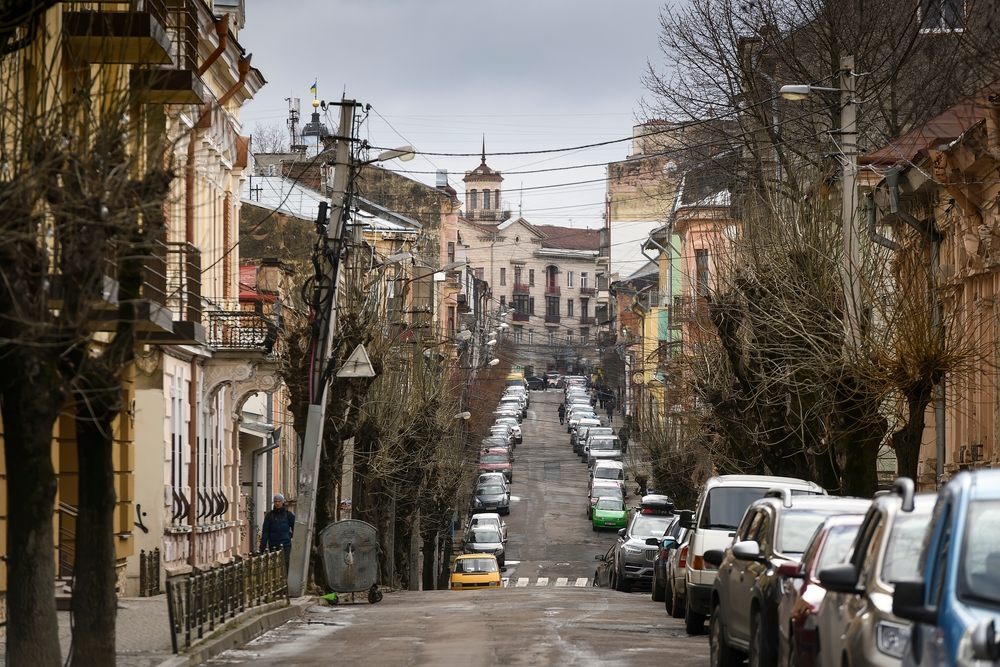
Photo: paparazzza / Shutterstock
In Ukraine, it is said that every day is just another day in the eight-year war with Russia, which has actually been going on for centuries. When we talk about centuries, we really mean a long historical period. This began with the Pereiaslav Council in 1654, when Hetman Bohdan Khmelnytsky and the Ukrainian Cossacks swore allegiance to the tsar in Moscow. As history later showed, nothing good came of this.
Every year in early March, Ukraine celebrates the Shevchenko Days, which are associated with the birth and death (1814-61) of Taras Shevchenko, the great Ukrainian poet. In terms of the scale of this figure’s significance for Ukrainians, he can be compared to Adam Mickiewicz in Poland, William Shakespeare in England, Johann Goethe in Germany, or Matsuo Basho in Japan. This year, as never before, there was a strong feeling that Taras Shevchenko is still alive through his poems. Even though he wrote about the insidious Muscovites and the struggle of the Ukrainians against the Russian Empire 200 years ago, it feels like he is describing the last few weeks of the war. His works are so relevant today that Shevchenko appears as a real prophet for Ukrainians.
A matter of time
In the 20th century there were many incredibly tragic stories in Ukraine’s history and the authors were often Russian. Undoubtedly one of the most brutal events that occurred was the Battle of Kruty, when the Bolsheviks defeated a military unit of the Ukrainian People’s Republic near the Kruty railway station in 1918. This battle resulted in a large number of casualties. Furthermore, it is difficult to forget the three great famines, known as Holodomor (1921-23, 1932-33, 1946-47). These amounted to deliberate genocides of the Ukrainian people. We must also remember the “Executed Renaissance”, a literary and artistic generation of the 1920s and early 1930s in Soviet Ukraine. This group produced highly artistic works in the fields of literature, painting, music and theatre but was ultimately destroyed by the totalitarian Stalinist regime. We Ukrainians were ready for what is happening today at the level of genetic memory. Russia’s full-scale, insidious attack on Ukraine was only a matter of time.
The ongoing Russian war of aggression against Ukraine began in 2014. Rather, it was launched by Russia against us, our sovereignty, territorial integrity, democratic freedoms and European values. But no one will ever say that Ukrainians are used to the fact that there is a war in the country. We have simply become accustomed to adapting our daily lives to this reality. Moreover, we are now trying to put aside our political convictions and live with a new unspoken rule to not criticise the state authorities during a time of war.
We are not used to war. We are very afraid that the world will get used to it and the topic of Ukraine will disappear from the front pages of western media. After all, “conflict” cannot remain on the agenda all the time, as the media often writes about similar events in different parts of the world. However, the unprecedented level of support for Ukraine from the international community and the enforcement of large-scale sanctions against Russia somewhat allay such fears today.
Thank you, I am okay!
When the war broke out, I was surprised to learn that I had “my people” in dozens of countries around the world. It just so happened that I had not seen or heard from many of them for years. But in the early days of the war, almost all of them got in touch with me. After assuring them that I was in the rear of the fight in safety, foreigners began to ask how they could help Ukraine. In response to such questions, I still, almost every day, continue to answer succinctly: help with a dollar and/or a word. With a dollar, you can donate to the Armed Forces of Ukraine or support Ukrainian refugees in your countries. From the other side, help us by spreading truthful information about the events taking place in Ukraine to the widest possible audience, the public in your countries. No one should be left with any illusions fuelled by hostile propaganda regarding who is the aggressor and who is the victim, who was attacked and who is defending themselves.
As for my answers to foreign friends: yes, I really am okay. It is a sin for us, the residents of the rear regions of Ukraine, to complain. We blame ourselves every day for doing little to win. For those internally displaced persons who managed to escape from the very hell of war, this feeling corresponds with the well-known and scientifically studied “survivor guilt syndrome”. But with such sentiments, we will not bring victory.
No, we are not just calling for “peace”. Peace will only be possible with our victory! We are not even considering any another option. Any peace based on a compromise with a bloodthirsty aggressor would only see the war carry on in a different way. We would expect more terror from the Russian side in the near future. Peace without victory means even more devastation and even more sacrifices. This is the “Russian world” or Russkiy Mir, the loss of all that we are fighting for around the clock. We have already observed this in Crimea and we have seen it in the occupied territories of the Donetsk and Luhansk regions. We are not fighting only for ourselves. It is sad if we still need to convince someone of this fact. At the same time, we should thank those foreigners who understand what is happening and who help Ukrainians both in Ukraine and in their countries. They are contributing to their own peace and a tranquil tomorrow as fellow Europeans.
It is clear now more than ever that the saying “a friend in need is a friend indeed” is really true. If Ukraine has been terribly unlucky with its neighbours to the East, it has been incredibly lucky with those in the West. As much as we are grateful, we also understand what a burden it is now for our neighbours to accept such a huge number of war refugees. How important and priceless such support is for Ukraine and Ukrainians today!
The borders of many countries are open to Ukrainians. Even those that used to be difficult to reach yesterday do not need visas today. We are understood and supported. But still, wherever you go, Ukraine is everywhere as there will always be a blue and yellow flag. This is largely due to the efforts of the Ukrainian diaspora.
People across the world now understand who is holding back the Russkiy Mir from moving closer to the West. Whilst the force of the whole united Ukrainian nation is clear, it has been joined by the International Legion of Territorial Defence of Ukraine. This group consists of volunteers and veterans from more than 50 countries and is supported by military equipment from a number of friendly countries.
New habit: every morning, “how are you?”
I have another new habit. Every morning I ask friends and acquaintances in different parts of Ukraine and the world, “how are you?” In fact, every day I especially make sure to ask this of those friends who live in Kyiv, Kharkiv, Sumy, Chernihiv, Kherson and other parts that are most affected by the war. I am in touch with many people who remained in these cities and towns. They do not have the opportunity or the desire to leave. Whilst others have gone to the western regions of Ukraine to their relatives, some have gone abroad with small children. There are also those in the ranks of the Ukrainian Armed Forces on the front lines.
I, like many other Ukrainians, have not received much news for a long time from those acquaintances from Mariupol. This city has already been completely destroyed by Russian barbarians according to the “Syrian scenario”, what is widely spoken with this wording in Ukrainian media citing Ukrainian politicians and political experts. .
Those who are no longer alive are honoured with a minute of silence in Ukraine every morning at nine o’clock. Many heroes, unfortunately, have fallen. Ukrainians get on their knees to pay tribute to the fallen soldiers being brought to their hometowns for burial. So the heroes definitely do not die in our memory. We will never allow this.
If you can hear or read “I’m okay” in response to these messages, you can calm down a bit for a short period of time. You can continue to do your usual things during the war in the rear regions far from the frontline. This sounds a little strange, right?
Say “palyanytsia”!
The rear today, as it turns out, is not such a safe and calm place. The aggressor has shown that his missiles will reach any target, even if Ukraine’s state border with a neighbouring NATO member is some 20 kilometres away. Just look at the strike on the International Centre for Peacekeeping and Security in Yavoriv, close to the border with Poland. One more example is the missile “greeting” to US President Joe Biden during his visit to Poland (an air attack on the oil depot in Lviv during Biden’s visit next door).
In fact, the issue of safety in the rear regions not only concerns the issue of missile strikes. The enemy can try to strike you from the inside. In the region of Ivano-Frankivsk, the Security Service of Ukraine detained separatists in early March. They were there to recruit more than five hundred traitors in the western regions of the country. According to Ukrainian intelligence, the Russian-led separatists planned to create a “Federal Republic of Ukraine” that would include five oblasts: Ivano-Frankivsk, Zakarpattia, Lviv, Ternopil and Chernivtsi. The Russian occupiers believed that the creation of pseudo-republics would deprive the Ukrainian military of support and supplies from the rear. The separatists planned to eliminate key law enforcement officials and local executive officials, seize administrative buildings and proclaim new “people’s republics”. Naturally, these would be modelled on the so-called people’s republics in Donetsk and Luhansk. All of these areas would then be united as part of a new Russian-controlled state.
While you may ask what did the Russians count on in the western regions of Ukraine, it is worth remembering the local elections in 2020. According to the results, many people in Zakarpattia and Chernivtsi backed the political party Opposition Platform “For Life”. This group showed its obviously pro-Russian face but received relatively decent support among the local population (9.4 per cent of seats) in the oblast councils of both regions. Since March 20th, this political parties’ activities (alongside ten other pro-Russian political parties) are prohibited during martial law following calls from party members to overthrow the government and violate the territorial integrity and sovereignty of Ukraine.
The constant work of the Ukrainian intelligence and special services in the rear to expose the activities of sabotage groups is not surprising. Information regarding the long-term activities of Russian spies in Ukraine is becoming more and more public. For example, one recent case involved the violinist of the Volyn Regional Philharmonic, who was aiming rockets at the airport in Lutsk. It remains to be seen just how many more saboteurs and neighbours we need to be aware of across the country. It is not enough to use the only legendary and already anecdotal code word “palyanytsia” to check a person – a Ukrainian word which is difficult to pronounce correctly for Russians. The habitual mutual trust seen especially in small towns is slowly changing into a habit of being less trusting and more cautious.
New faces of old cities
Regional centres in Western Ukraine are becoming more and more crowded. For example, as of mid-March, the Lviv region alone had received more than 200,000 internally displaced persons. At the same time, the Zakarpattia region had received more than 80,000 and the Chernivtsi and Ivano-Frankivsk regions each received almost 60,000. At first glance, there is a certain imbalance and this can be explained by the different numbers of local inhabitants in these regions during the pre-war period. Overall, these figures are proportional. Currently, migrants from those regions of Ukraine where active defensive actions are being taken are usually more and more often living in communities far from the regional centres. For the needs of IDPs, local authorities and volunteers provide everything needed absolutely free of charge.
This is not the only help. In each region, there is a humanitarian headquarters that deals with the reception of displaced persons and the distribution and transfer of humanitarian aid. This is given out to displaced persons on the spot and also sent to the regions of Ukraine that need it more. Just from Bukovyna, there are three trains running daily in the direction of Kyiv and the eastern regions. These trains are loaded with humanitarian aid and return with evacuated people.
One should not ignore the fact that on social media both in Ukraine and abroad there are unpleasant stories about the unacceptable behaviour of migrants. This automatically affects the image of all civilian victims of the full-scale Russian aggression in Ukraine. In all fairness, it should be noted that such moments do occur, but they are infrequent. However, they are much more widely circulated compared to the stories of those who really need help and accept it with gratitude. After settling in relatively quiet Ukrainian cities, many of these people immediately join a team of volunteers or look for a permanent job.
On the other hand, the decision of many Ukrainians to go abroad should be treated with understanding, regardless of where they are from in the country. After all, everyone has own psychological threshold in such a situation, as well as their own personal and health conditions. However, even in this situation, Ukrainians continue to joke that after winning the victory we will be able to write in our CV that we can handle stress as we “didn’t leave Ukraine during the war”.
It has become common in our rear cities to quietly work out through intonation and conversation the origins of our new neighbours. Since most of the IDPs come with children of school age, there is already a simplified system for displaced pupils to join the school process. After two weeks of forced war-related holidays, distance learning resumed in schools. Initially, there were discussions about the format of education. But in the end, given the work of many schools as volunteer centres or public shelters, it was decided to focus on distance learning.
New habits or a completely new way of life?
On the morning of February 24th, the Russians carried out missile strikes on military infrastructure objects in virtually all regions of Ukraine. No matter what the highest-ranking officials said to Ukrainians the day before (in order not to cause panic among millions of civilians), it later turned out that everyone higher up knew about the attack and were prepared for it. That is why no Ukrainian aircraft were lost during these first hours of the morning airstrikes.
Even though the morning offensive affected areas all over the country (like when Hitler attacked the USSR on June 22nd 1941), it is strange that in the early days of the war there was little to no fear. There was no panic either. There was another emotion, destructive, but very strong. There was a powerless rage and anger, from which I had to grit my teeth. Eventually, my teeth began to ache unbearably. So it turned out that this was not the way out. This feeling had to be subjugated and I had to find useful ways to release this negative energy in a constructive way.
Yes, at first everyone was probably a volunteer. Everyone who was not forced to leave their home and could cope with those emotions tried to help out in any way possible. Volunteering was (and still is) divided into the two categories of “in the field” and “with gadgets”. Providing all possible kinds of volunteer assistance (sorting medicines, weaving camouflage nets and preparing food) required great human resources and good management. Volunteering in the field can take on a military or humanitarian dimension. Given the growing need to protect the people’s livelihoods and the defence capabilities of the military, we in Ukraine already joke that there is nothing we cannot get. If volunteers have not brought something yet, then they have just not been asked about it.
Russia is waging an insidious, inhuman and barbaric hybrid war against Ukraine and the whole world. This is happening simultaneously on two fronts. One of these is real and involves the military. On this front, people are dying, cities are being ruined and every norm of international law and world order is being destroyed. The second front can be found online, where the Russian propaganda machine never sleeps. This virtual space is full of fake news and hate speech. It is necessary to drown out this cacophony of horrible fiction from Russia with our chorus of truth from Ukraine. Preferably, we have to do this in different languages and on all available information platforms.
However, at some point, you definitely realise that not everyone needs to volunteer. You need to go back to your normal life and do what you do best. This is especially true if you are very lucky and your job is still relevant. This will benefit everyone many times over. After all, an army can be productive only if the rear is stable. For the front to be stable, the rear must work.
The frontman of the band Okean Elzy, Svyatoslav Vakarchuk, offers a good example of this reality. He managed to visit all the hotspots in the country, including Kyiv, Kharkiv, Mykolaiv and Zaporizhzhia. Whilst our first thoughts about such kind of his actions may have been overly emotional (and involved thinking about why didn’t he take a machine gun and join the territorial defence), we later appeared to realise that Vakarchuk could better support Ukrainians with his words, his voice and his work where people need it most. This is the daily life of Vakarchuk’s wartime.
Even in those regions of Ukraine where peace is (largely) still preserved, we have one more habit. This involves a packed emergency suitcase or backpack. These items have now become an integral part of our daily lives. In our country, the emergency backpack was probably packed in every apartment a long time ago. They usually contain money, documents, medicine, water, dry food, charged power banks and warm clothes.
Some people sleep in tracksuits at night just to be ready to run to the shelter as soon as the air siren goes off. My family jokes that we trust in God and the gods of the Ukrainian military enough to sleep in our pyjamas. However, it is quite a long way to go to the public shelter in case of danger from the sky. In our old apartment building built during the Austrian times in the city centre, we have arranged a shelter with makeshift beds in the basement.
In the end, the emergency backpack logically and magically turns into an anxious lady’s handbag. The reason for this is that no one knows where the next air raid siren will catch you out. It could go off when you are at work, or in the middle of the street in the city centre. It is therefore useful to know the map of shelters along your route. When you arrive at work, you realise that, frankly speaking, the usual work has become different. Without going into details, during wartime, everyone is working for a common victory as well as they can. Moreover, the war has no days off.
Old habits in the new life
One topic has been present throughout this entire text so it is probably time to explain. It is a strange thing, but Ukrainians continue to joke. Moreover, I have developed a new hobby of collecting wartime memes related to the defeats of the occupiers and the victories of Ukraine’s armed forces. This will also one day become a part of history as folk humour in the struggle against the Russian occupier. There seem to be even more of these jokes than the number of soldiers Putin managed to send to Ukraine.
This in no way means that we do not mourn the dead. It also does not mean that we do not take the situation seriously. After all, humour is something that allows you to stay afloat and give your psyche a chance to relax.
Ultimately, humour means that we continue to live. We try to go to our favourite café in the morning before work and say to the barista, “please, as always”. We try to maintain our little daily joys while supporting local small and medium-sized businesses, which also need to continue working and paying taxes to provide a stable rear. Finally, if you do not joke, or do other things like put on your lipstick, drink coffee in coffee shops, read books, or bake pancakes in the morning on weekends, you might as well just get rid of even the deceptive feeling that you are still able to control at least something in your life. The Kremlin tried to take this away from us with tanks at around five o’clock in the morning on February 24th.

So, after all, the old life is not filled with new habits. Instead, some habits from the old pre-war life still remain in this new way of life on the war’s rear.
We will win the victory. On all fronts. Glory to Ukraine! Glory to heroes!
Maria Protsiuk is an expert at the “Quadrivium” NGO working at the International Office of the Chernivtsi Regional Military Administration (Chernivtsi, Ukraine). She has a PhD in Political Science and is a former Lane Kirkland Programme Fellow (University of Wrocław, Poland).